Xinyang Maojian: Needle-Leaf Tea From Where the Mountains Get Snow
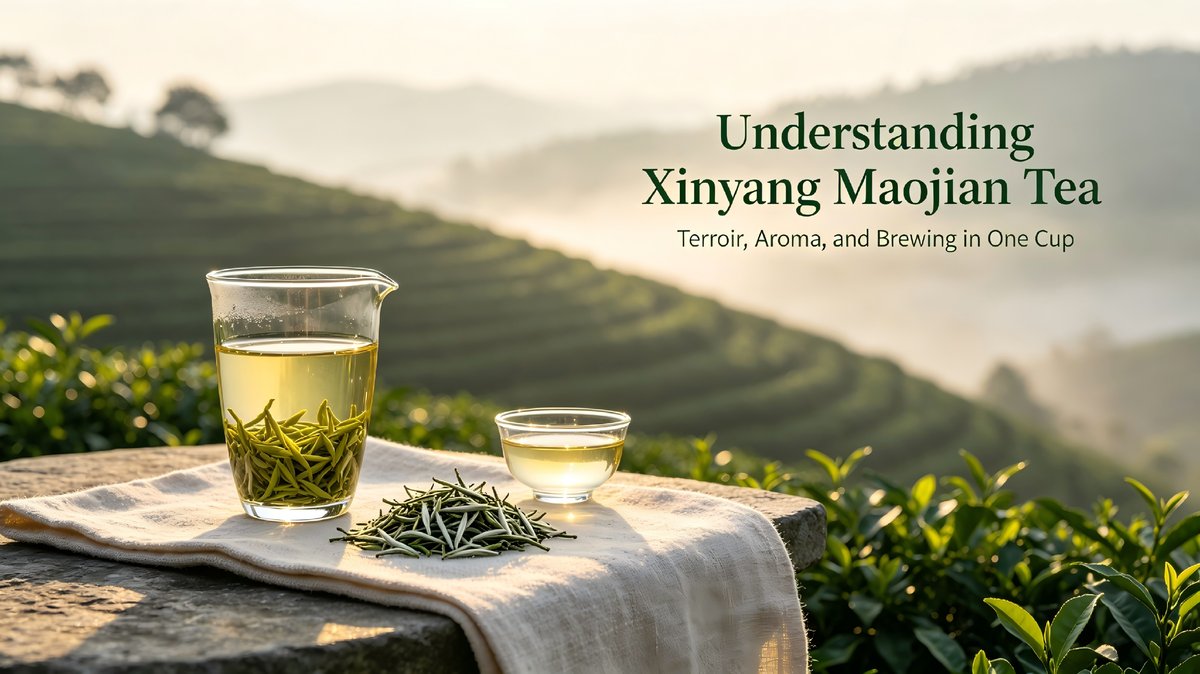
Most of China's famous green teas grow near water. Longjing has West Lake. Biluochun has Taihu. Huangshan Maofeng has the clouds of the Yellow Mountains. Xinyang Maojian (信阳毛尖) has snow. Every winter, the Dabie Mountains in southern Henan get blanketed, and when the snow melts in March, the tea bushes wake up in soil that hasn't been dry in four months. The result is a green tea that tastes like roasted chestnuts and flowers, with a mineral backbone that lingers on the tongue long after the cup is empty.
Xinyang Maojian isn't as famous in the West as Longjing or Biluochun, but in China it's firmly in the top tier. It's one of the ten famous teas. It wins gold medals at national competitions. In Henan, serving anything else to a guest is considered a minor insult. And unlike its coastal cousins, this tea comes from a landlocked province better known for noodles and coal — which makes its existence feel like a secret the rest of China has been keeping from the world.
Mountains, Mist, and the Latitude Surprise
Xinyang sits at roughly 32 degrees north — the same latitude as northern Morocco or the southern tip of Japan. This is the northern edge of where tea can grow in China. Tea plants at this latitude grow slower, which concentrates their amino acids and produces leaves with more body and less bitterness than southern-grown teas. Combine that with the elevation (400-800 meters in the Dabie range), the high humidity from mountain fog, and the winter snow melt, and you get a tea that defies the stereotype of green tea as light and fleeting. Xinyang Maojian is substantial. It has weight.
The plucking standard is one bud and one leaf, picked in early to mid-April. The leaves are tiny — a finished batch of Maojian looks like a pile of dark green needles, each one no longer than a fingernail. The name means "fur tip," referring to the fine white hairs that coat the buds. These hairs are a sign of tenderness and quality; they're what give the first steep its signature pale-green cloudiness.
The Taste of Roasted Chestnuts
If Longjing tastes like toasted soybeans and Biluochun tastes like a fruit orchard, Xinyang Maojian tastes like roasted chestnuts — warm, nutty, slightly sweet, with a floral undercurrent that rises as the tea cools. The aroma hits before the first sip: chestnut, fresh grass, a hint of orchid. The liquor is pale jade, almost translucent. The mouthfeel is smooth but structured — it coats the tongue without clinging. And then the aftertaste arrives, and it stays. This is the famous hui gan (回甘) — the returning sweetness — and in Xinyang Maojian it's unusually persistent. Twenty minutes after you finish the cup, you can still taste it.
The traditional description is "green in three steeps" (三绿): the dry leaves are green, the liquor is green, and the spent leaves are green. A good Maojian never turns yellow or brown, even after five infusions. This is a tea with staying power.
How to Brew It
Xinyang Maojian is more forgiving than Biluochun but less tolerant than Longjing. The sweet spot is 85°C (185°F) — slightly hotter than what you'd use for a pure-bud tea, but still well below boiling. Use a glass or a tall porcelain cup. Three grams of leaves for 250ml of water. First steep: one minute. Second: thirty seconds. Third: forty-five seconds. You'll get four good infusions, and the third is often the best — the chestnut note peaks there.
Don't use a gaiwan unless you know what you're doing. The leaves are too fine and will slip through the lid gap into your mouth. And don't ever brew it with boiling water. Xinyang Maojian doesn't scald as easily as Biluochun, but 100°C will strip the floral layer and leave you with a flat, vegetal cup. That's a waste of good tea.
Where to Buy
FTC Disclosure: As an Amazon Associate, I earn from qualifying purchases.
The tea: Oriarm Xinyang Maojian Green Tea — 100g of spring-picked loose leaf from Henan's Dabie Mountains. Look for leaves with visible white hairs (the "fur tips" that give Maojian its name). If the dry leaves are uniformly dark without the telltale silver down, you're getting a late-season pick.
The kettle: To hit that 85°C sweet spot consistently, I use the Govee Smart Electric Kettle — variable temperature gooseneck, 1200W quick heating, all stainless steel, 0.8L. Pours like a gooseneck, heats like a workhorse.