Longjing: One Leaf, One Spring
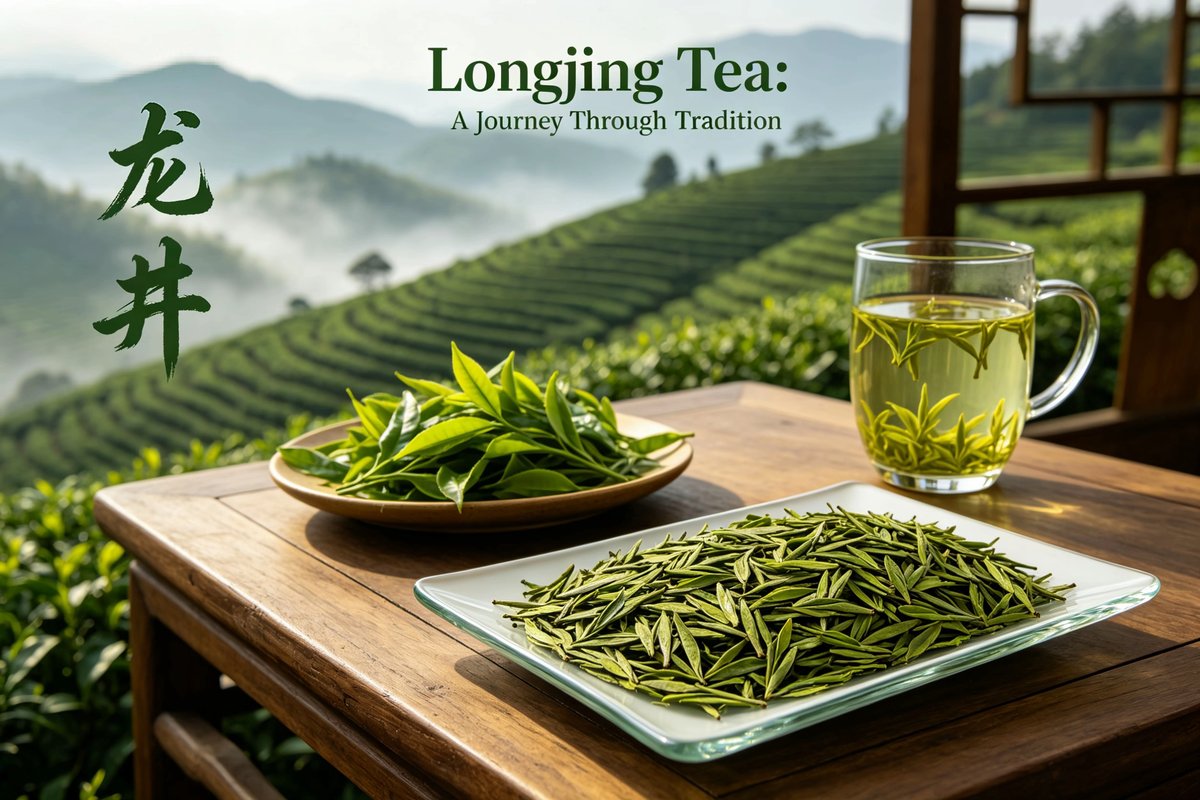
The first time I saw Longjing leaves hit hot water, I was twenty-three and standing in a tea house on the southern shore of West Lake. The tea master — a woman in her seventies with hands that looked carved from cypress — poured from a long-spout kettle in a single continuous arc. The leaves didn’t float. They stood upright. One by one, pale green needles rose from the bottom of the glass like a forest coming awake. It was February. The air outside was forty degrees. Inside, the glass was seventy degrees and smelled like roasted chestnuts and fresh-cut grass and something else I couldn’t name. I asked her what the something else was.
“Spring,” she said. “They picked these leaves in March of last year. This is what March smells like.”
She wasn’t being poetic. She was being precise.
The Wok That Never Stops
Longjing (龙井, Dragon Well) is the most famous green tea in China, grown on the hillsides around Hangzhou’s West Lake in Zhejiang province. The name comes from a well in the village of Longjing itself — the story goes that the water in the well swirls in a way that resembles a dragon moving beneath the surface. The tea took the name, and the name took over the world.
What separates Longjing from every other green tea is the kill-green step — sha qing (杀青). Most green teas are steamed (Japan) or pan-fired in a machine (everywhere else). Longjing is pressed by hand against a smoking-hot iron wok at roughly 200°C. The tea maker’s palms are the only tool. Ten distinct hand movements — pressing, shaking, pushing, smoothing — repeated in sequence for forty minutes per batch. The leaves come out flat as willow blades, with a faint yellow-green color that fades to jade when steeped.
It looks simple. It’s not. The temperature window between “perfect” and “burned” is maybe five degrees. The timing window between “flat” and “crushed” is maybe ten seconds. Every autumn, the tea makers of Hangzhou train their hands by pressing hot sand in the same wok, building calluses that can feel a degree of heat through a millimeter of leaf.
I spent thirteen years debugging systems where small errors compound into catastrophic failures. Tea making is the same class of problem. The difference is that in software you can roll back. In a wok, you throw the batch away and start over.
What Longjing Actually Tastes Like
Bad Longjing tastes like lawn clippings steeped in disappointment. It’s bitter, astringent, and makes your mouth feel like you licked a brass doorknob. This is almost always because the water was too hot, or the leaves sat too long, or both.
Good Longjing tastes like roasted sweetcorn and edamame and a faint mineral sweetness that hangs in the back of your throat for a full minute after you swallow. There is no bitterness. There is no grass. There is a warmth that radiates downward from your chest — the Chinese call it hui gan (回甘), “returning sweetness.” It’s the tea’s aftertaste folding back onto itself.
The best Longjing — the stuff that sells for more per gram than gold — has a chestnut aroma so precise you’d swear someone roasted nuts in the next room. This comes from the amino acid theanine, which concentrates in tea leaves grown under the diffuse light of Hangzhou’s spring mist. The same compound is responsible for the calming focus that replaces caffeine jitters about twenty minutes into your cup. Tea drinkers call it “tea drunk.” Neurochemists call it theanine modulating glutamate receptors. Same thing.
How to Brew It (Without Ruining It)
Three rules. Break any of them and you’re drinking lawn water.
One: cool your water. Boiling water murders green tea. Let it sit for two minutes after boiling — you want 75-80°C, which is when the bubbles clinging to the side of your kettle have just disappeared.
Two: use a glass. Not a teapot. Not a mug. A tall, clear glass. Longjing is meant to be watched. The leaves stand up because the bud end is heavier than the stem end — it’s a gravity trick that only works in loose-leaf green tea. You drink with your eyes first.
Three: don’t dump the first cup. Longjing can be steeped three or four times from the same leaves, and the second steep is often better than the first — more chestnut, less vegetal. The third steep is when the sweetness peaks. By the fourth, the leaves have given everything. You’ll know because the standing leaves finally lie down.
Pour water along the side of the glass, not directly onto the leaves. Let them wake up slowly. Thirty seconds for the first steep. Add ten seconds for each subsequent one.
The first sip should hit the front of your tongue — that’s where sweetness registers. Let it roll back. The chestnut will land mid-palate. The mineral finish will wait for you at the back. If you’re doing it right, by the third sip you’ve stopped thinking about the steps entirely. That’s when you’re actually drinking tea.
Next in the tea series: Tieguanyin — the oolong that smells like orchids and gets better every time you pour. Same wok, different magic.