
The Six Types of Chinese Tea: A Complete Guide for People Who Just Want Good Tea
Green, black, oolong, white, yellow, dark — what's the actual difference? A …
Green, black, oolong, white, yellow, dark — what's the actual difference? A …

The three-piece porcelain teapot that fits in your palm — how to brew any Chinese tea …

Oxygen, light, water and smell end more tea than bad leaf ever does — what a caddy actually does, and how to keep a cake aging instead of killing it.

Two hours in a Chengdu tea house, one cup of oolong, and a thousand-year-old question: what does Buddhism have to do with tea? Everything, it turns out — if you sit still long enough to notice.

Before silk, before porcelain, before Marco Polo — there was tea, carried on the backs of men and horses across the highest passes of the Himalayas. This is the road that built an empire's taste, one brick of pu'er at a time.

Flat-fired in a smoking wok by bare hands, steeped in a glass so you can watch …

Rolled into tight spirals, covered in silver down, and grown among fruit trees …

Grown on mist-shrouded peaks, picked as tiny sparrow-tongue buds, and processed so gently the leaves keep their mountain silhouette …
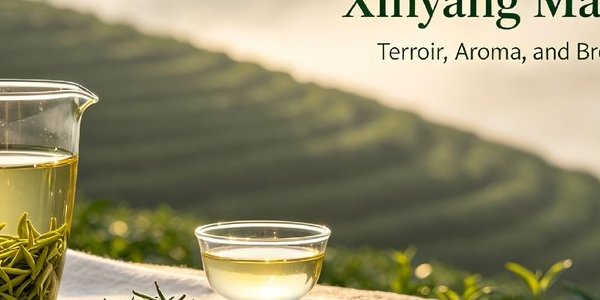
Grown at the northernmost edge of China's tea country, where winter frost kills pests and concentrates flavor into every needle-thin bud — a green tea that smells like roasted chestnuts and tastes like survival.

Flat as bamboo leaves, grown on China's most sacred Buddhist mountain — the green tea that tastes like altitude and was perfected by monks a thousand years ago.
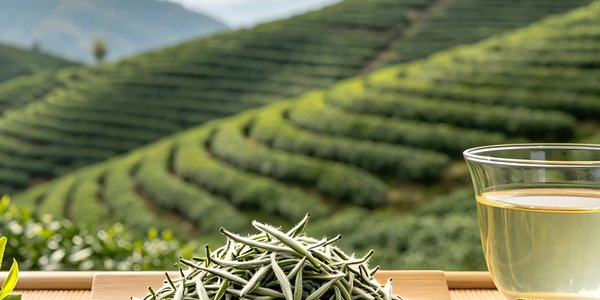
Pale as a ghost and sweet as a spring morning — the albino green tea from China’s bamboo capital that isn’t actually a white tea.
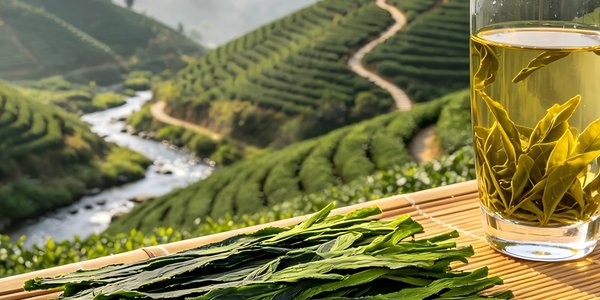
The largest-leaf green tea in China, pressed flat between cloth and shaped like calligraphy — the orchid-sweet Monkey Chief of Huangshan.

Lu'an Guapian is the only green tea in China made from bare leaves — no buds, no stems — roasted twice over charcoal until it tastes like chestnuts and honey.

An oolong that smells like orchids and tastes different every time you pour. …

The heaviest, most roasted oolong in existence — grown on near-vertical cliffs in Fujian's Wuyi Mountains where tea roots grip bare rock and a 350-year-old legend guards the original bushes.

The workhorse rock tea of Wuyi — large-leaf, medium-roasted, and quietly more beloved by tea farmers than Da Hong Pao. Honey, stone fruit, and a mineral finish that outlasts the legend.

The most aggressive rock tea in Wuyi — high-fired, spice-packed, and named after cinnamon without tasting like it. Sandalwood, cassia bark, and a cooling menthol finish that stays for minutes.

From single bushes on Phoenix Mountain — the oolong that smells like honey orchids, tastes like stone fruit, and has zero interest in subtlety. No roast tricks, just the leaf speaking for itself.

The dark tea fermented in piles for six weeks until it tastes like old libraries …

Raw pu'er — sun-dried, pressed into cakes, and left alive to age for decades like wine, until it turns from bitter and green into something sweet and worth more than a car.

The world's first black tea — born by accident in Fujian's Tongmu Pass and smoked over pinewood until it tastes of campfire and longan fruit.

China's most expensive black tea — made only from unopened golden buds picked before dawn on the same Wuyi mountains as Lapsang Souchong, tasting of honey and roasted sweet potato.

The black tea from Anhui that quietly became the backbone of English Breakfast — orchid-sweet, honeyed, with a faint whisper of smoke.

Dianhong is the honey-sweet black tea from Yunnan's ancient trees — the same big-leaf bushes as pu'er, oxidized into a cup that drinks like dessert.

Silver Needle is the only tea in China made from buds alone — picked before dawn, withered in the sun, never fired, never rolled. The gentlest cup in the world.

Bai Mudan keeps two leaves on the bud — more body and less money than Silver Needle, and the white tea Fujian families drink every day.

Shou Mei is the coarse, stem-heavy leaf the premium white tea grades leave behind — the cheapest way into aged white tea, and the one that gets better while you ignore it.