Li Bai Drank a Bucket a Day: What Was Actually in the Cup

The wind on the cliff at Caishi Rock comes off the Yangtze carrying silt and diesel. Late afternoon in Ma'anshan, Anhui, and I am on a walkway bolted to the rock face, a few hundred metres from a pavilion that hangs over the water. People call it Catch-the-Moon Terrace. Below me the river is the colour of weak tea. A barge pushes upstream, loaded so low its deck almost touches the waterline.
The story goes that Li Bai died here in 762. Drunk, in a boat, he reached over the side for the moon's reflection and went in after it. Nobody believes that. The records say he died of illness at Dangtu, and the terrace is a later invention for people who preferred the other version. I stood there anyway, because the other version explains what wine meant in Tang China. Not a drink you finish. A thing you reach for. And not the 53% spirit on a modern shelf, either. Something closer to warm rice wine, drunk by the litre.
One Dou, a Hundred Poems
Almost everything the English-speaking world knows about Li Bai's drinking comes from one poem by Du Fu, written in Chang'an in the 740s about eight men who could hold their drink. Li Bai is the sixth, and Du Fu gives him four lines that have followed him for twelve hundred years.
李白一斗诗百篇,长安市上酒家眠。
天子呼来不上船,自称臣是酒中仙。A dou of wine, a hundred poems. He sleeps it off in the taverns of Chang'an. The emperor calls for him and he does not come aboard. He says: I am the immortal in the wine.
Read that as reporting, not worship. Du Fu is describing a working method: drink, write at speed, sleep where you land, ignore the summons. The hundred poems are a production rate, and the dou is the fuel. The two men met in 744 and travelled together for a season. Du Fu then spent the rest of his life writing more than ten poems about him; Li Bai, as far as anyone can tell, sent back two.
Six Litres, Which Is a Units Bug
The Tang dou was ten sheng, and a Tang sheng held roughly 594 millilitres. So a dou of wine was about six litres, a little over eight standard bottles.
Now the alcohol. Tang wine was fermented grain, not distilled, and most estimates put it between three and eight percent. Take the middle, five. Six litres of that carries 300 millilitres of pure alcohol, the load of seven and a half bottles of 40% spirits. Nobody drinks that and then writes a hundred poems. They stop writing permanently.
So one of three things is true: 斗 was also a vessel name and Du Fu meant a cup; the dou was the small dou, a third the size; or the number is rhetoric, as every Chinese reader since the Tang has understood it.
The clue is that Li Bai borrowed the phrase himself. In Bring in the Wine he writes 陈王昔时宴平乐,斗酒十千恣欢谑: Lord Chen feasted at Pingle, a dou of wine cost ten thousand coins and they laughed. That line is Cao Zhi's, four centuries earlier. 斗酒十千 was a set piece by the Tang. It means expensive wine spent without counting, not a receipt.
I spent thirteen years debugging other people's code, and this is the oldest units bug I know. Someone wrote a number with a unit attached, the unit drifted, and the number has been breaking readers' intuitions ever since. The fix is not to divide by ten. It is to stop executing the number and read what it was for.
What Was Actually in the Cup
Tang wine was cloudy. Grain was steamed, inoculated with qu, fermented, then pressed through cloth that never got everything out, so fine solids stayed in suspension. The Chinese had a word for the foam that floated on top: 绿蚁, green ants. Not a poetic flourish. Sediment catching the light really does read greenish-white.
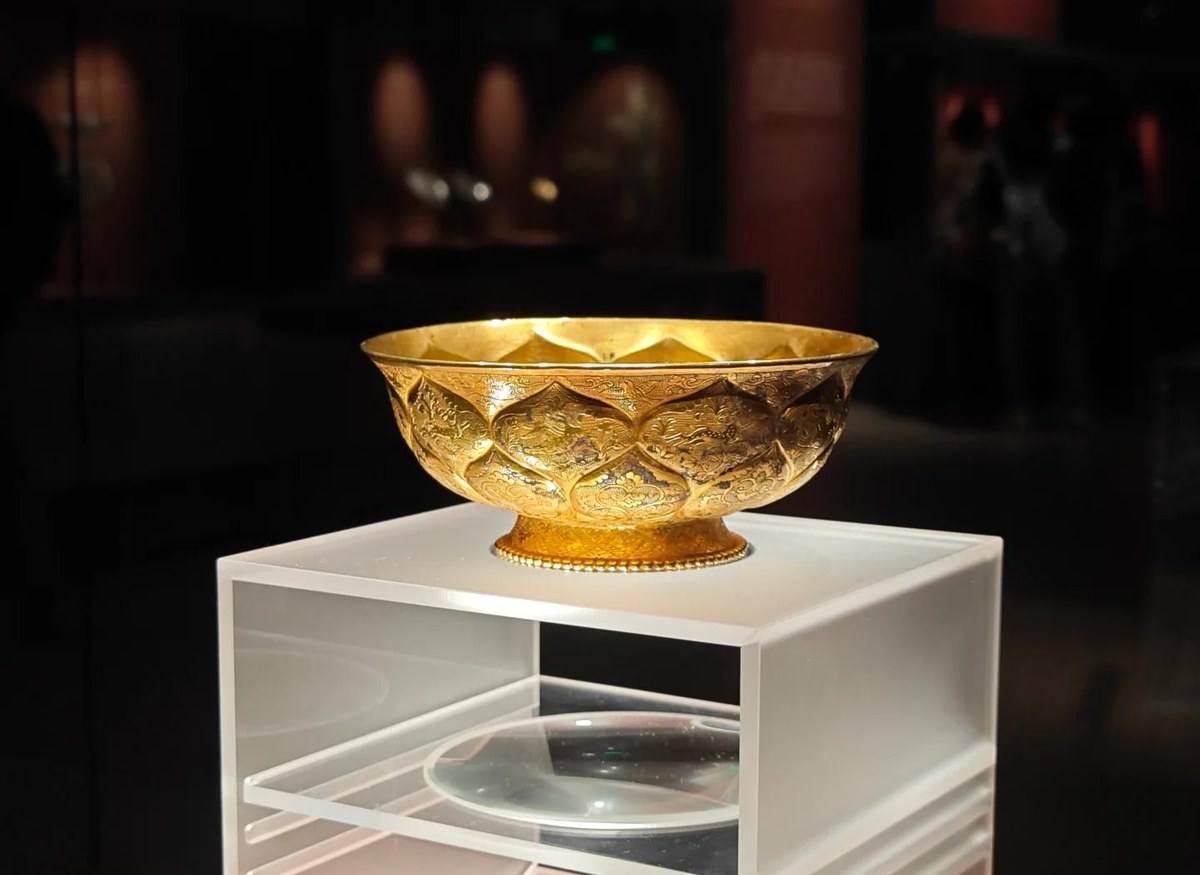
Bai Juyi, a generation later, opens a poem with 绿蚁新醅酒,红泥小火炉: new wine still carrying its green ants, a small red clay stove. That is the picture, and it is domestic. Unclarified grain wine, warmed, in winter, indoors. Li Bai's own colour reference is the luxury end of the same drink: 兰陵美酒郁金香,玉碗盛来琥珀光, the wine of Lanling in a jade bowl, giving off amber light. Amber means aged and oxidised. Fresh wine was pale and cloudy; old wine went gold.
Distillation came later. That fight over the Yuan and Ming dating of 烧酒, the clear spirit that became baijiu, is its own story. When Li Bai drank, a strong wine was maybe ten percent and a bad one was sour. He drank in taverns run largely by Sogdian families from Central Asia, whose serving women had their own stock character in Tang verse, the 胡姬: 落花踏尽游何处,笑入胡姬酒肆中. Where do you go when the blossom is trampled flat? Laughing, into the Sogdian girl's tavern.
The Poem Changed Its Own Title
The most famous drinking poem in Chinese is 将进酒, usually translated Bring in the Wine. Li Bai wrote it in the 750s, after being pushed out of the capital, and it opens with the Yellow River coming down out of the sky and closes with him pawning his coat for another round.
The manuscripts complicate it. In the Dunhuang copies the poem circulates as 惜罇空, Regretting the Empty Cup. And a line everyone knows as 高堂明镜悲白发, white hair grieved before the bright mirror of the high hall, reads 床头明镜悲白发 there: the mirror beside the bed. Smaller room. Same despair. I prefer the earlier title. Bring in the Wine is an instruction to a servant. Regretting the Empty Cup is the thing itself.
The Moon in the River
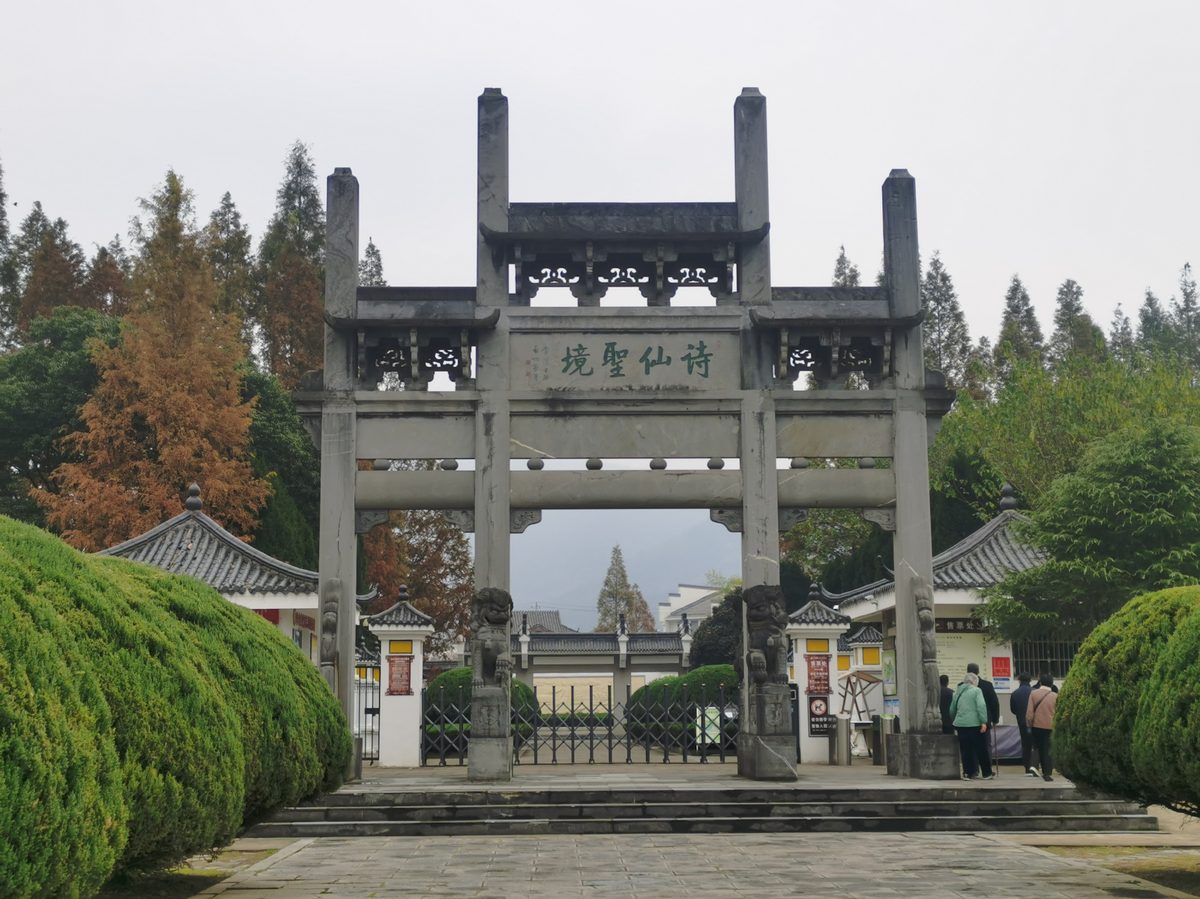
Li Bai died at Dangtu, and his grave sits at the foot of Green Mountain a few kilometres inland. The site at Caishi is a 衣冠冢, a clothes-and-hat tomb, the Chinese answer to a cenotaph: the body went one place, the story went another. The terrace, the pavilion, the rebuilt Tang-style tower above them are architecture around a rumour, and the rumour outlived every dynasty that maintained the building.
Wine in Chinese literature is rarely about pleasure. It is a technology for saying things that could not otherwise be said, to the emperor, to the dead, to a friend being exiled three thousand li west. Sober, Li Bai was a courtier politely removed from his post. Drunk, he could tell the emperor to come and fetch him himself.
How to Drink Like Him
Nobody makes unfiltered six-percent grain wine for export, so you cannot drink a Tang wine. The nearest relative is Shaoxing huangjiu, and the closest thing to a night in a Chang'an tavern is a bottle of it, warm, with food, over two hours. Four rules.
Do not start with baijiu. Wrong drink, wrong strength. A 53% spirit reached Chinese tables a thousand years after Li Bai; three cups and the evening is over. Buy a 绍兴 加饭 or 花雕 at 15 to 18 percent instead. If you have never bought one, start here.
Warm it to about 40°C. Hand-hot, not steaming. Heat drives off the sharp aldehydes and pushes the rice sweetness forward, which is why every household that drinks huangjiu owns a small metal warmer. The method, and the ginger question, is here.
Small cups, salty food. A 酒盅 holds about 15 millilitres. Peanuts, cold braised pork, salted duck, fava beans. The salt is not garnish. It keeps you drinking slowly, which is the whole point. Six litres was always a joke; two hours was not.
Drink with someone, or alone under a moon. Li Bai's most famous solo drinking poem is 月下独酌, Drinking Alone by Moonlight, where his answer to having no company is to invite the moon and his shadow and count that as three. Pour one cup and write down whatever the second cup makes you think. The poems were never the point. They were the residue.
Next: Su Shi, who drank alone on a river at Mid-Autumn, asked the sky a question, and got an answer Chinese families still sing every year. More in Chinese Drinks.