Ginger, Plum, and a Bowl of Hot Water: How to Drink Huangjiu
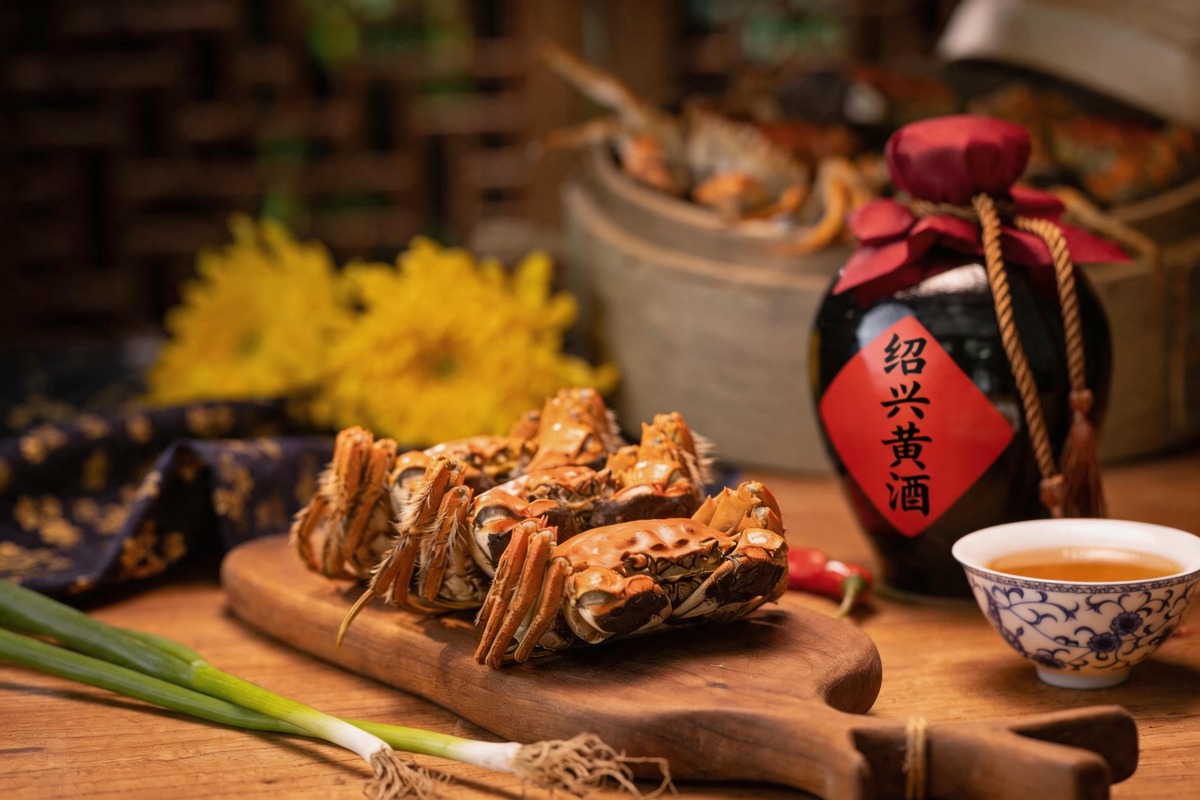
The woman behind the counter lowers a bamboo ladle into the jar, brings it up, and lets the wine fall into a small tin pot. Then she stands the pot in a basin of hot water, tilts the lid, and goes back to her newspaper. Nobody in the room is in a hurry. It is January in Shaoxing, the windows are fogged, and the wine is the only warm thing in the building.
She sets down a blue-rimmed bowl, the kind Chinese taverns used before anyone thought about glassware, and fills it a third of the way. The color is dark tea held up to a lamp. The smell arrives before the taste: burnt sugar, dried dates, and under that something savory, like a soy pot left on the stove too long. The first sip warms my whole mouth from the inside out. Not the burn of spirits. More like putting on a coat.
Huangjiu is the only alcohol I know that reaches the table unfinished. The last step of its making happens in front of you, in a bowl of hot water, and it takes five minutes. Skip that step and you will conclude, as most foreigners do after one bad bottle, that Chinese yellow wine tastes like cold cough syrup.
What Forty-Five Degrees Actually Does
The chemistry is not mysterious. The compounds that make huangjiu smell like huangjiu, the esters and aldehydes and the furans from toasted rice, are heavier and less volatile than ethanol. In a cold room they sit in the liquid and reach your nose as a vague sweetness. Between 40 and 45°C they lift off in the right order, and the wine suddenly has a top note and a bottom note. Push past 60 and ethanol takes over the headspace; the aroma flattens into pure alcohol, and the amino acids and leftover sugar start to read as bitter and sour. Boil it and you have made a bad sauce.
Here is the part that confuses people. Huangjiu is heated twice in its life. Before a jar is sealed, the maker warms the wine to 85–90°C for a few minutes, a step called jianjiu (煎酒), to kill the microbes that would otherwise keep fermenting in the bottle. That is preservation, not service. A wine that has already survived 90°C will not be improved by another 90.
I spent thirteen years at Microsoft, Google and NVIDIA before I started writing about food and drink, and the closest thing I can compare warming to is a log level. Heat turns up the volume on the compounds you want to hear. Past 60°C it turns up everything at once, alcohol included, and the signal disappears into the noise. Forty-five is the setting where you can still tell one wine from another.
Different styles want different numbers. Young, dry yuanhong (元红) and standard jiafan (加饭) are best at 40–45°C. An aged huadiao (花雕), ten years or more, takes 45–50, because the nutty, sherry-like notes it spent a decade building need more heat to leave the liquid. Sweet xiangxue (香雪) is the exception: chill it to 10–12°C in summer, or drink it at room temperature, and it behaves like a dessert wine. Northern styles such as Jimo laojiu, which taste of burnt sugar and toast, are traditionally taken hotter still, sometimes with a slice of ginger dropped straight into the pot.
Why the Chinese Warm It
Warming wine is older than the still, and the reasons given for it were medical long before anyone described them as sensory. Bai Juyi, writing around 817, invited a friend over with four lines that every Chinese child still memorizes:
绿蚁新醅酒,红泥小火炉。
晚来天欲雪,能饮一杯无?New wine, still cloudy with its own lees; a small stove of red clay. The sky looks like snow tonight — can you come drink a cup?
Note what is being warmed. Not the room, not the food, but the wine, next to a stove the size of a teapot.
Nine hundred years later the medical theory had hardened into household advice. In Dream of the Red Chamber, when Baoyu is about to drink his wine cold, Xue Baochai stops him: 酒性最热,若热吃下去,发散的就快;若冷吃下去,便凝结在内,以五脏去暖他,岂不受害 — wine is hot by nature; drunk warm it disperses quickly, drunk cold it congeals inside and your organs have to warm it for you, which does you harm. It is not physiology anyone would defend today. It is also almost word for word what a grandmother in Shanghai will still tell you.
The literary version of the same habit is the most famous bar order in Chinese fiction. In Lu Xun's story, Kong Yiji counts nine coppers onto the counter and says: 温两碗酒,要一碟茴香豆 — warm two bowls of wine, and a dish of fava beans. The tavern Lu Xun grew up beside opened in 1894 and still serves that order, at tourist prices, on Lu Xun Middle Road. Two bowls, warm, is still the correct way to spend an afternoon.
Ginger, Plum, and the Repair Kit
Two things go into the pot that are not wine, and both have a job.
Ginger is the honest one. Gingerol, the compound behind the heat of fresh ginger, trips the same TRPV1 receptor that capsaicin does, so a few slivers genuinely make the drink feel hotter without raising its temperature by a degree. It also cuts the richness of whatever you are eating. The old explanation is that ginger 驱寒, drives out the cold. Same observation, different vocabulary.
Smoked plum is more interesting and more controversial. Huamei (话梅) are green plums packed in salt and then in sugar until they wrinkle; dropped into a pot of huangjiu they bring salt, acid and sweetness at once, which rounds off a thin, sharp wine and makes it taste older and softer than it is. That is a repair, not a recipe. In a cheap yuanhong it earns its place. In a fifteen-year huadiao it is vandalism: you have paid for fifteen years of aging and then covered it in candy. A Shanghainese friend's father, who has warmed the same wine for forty years, calls the plum 坏酒的药, medicine for bad wine. Restaurants add it anyway, because customers expect the sweetness.
How to Do It at Home
You need a pot, a bowl and a thermometer. A small porcelain teapot or a Pyrex jug works; you do not need to buy a warmer. Water straight off the boil, rested two minutes, sits around 85°C, which holds the wine near 45 without touching it. Five minutes. Taste at three and again at five and you will feel the difference yourself. Never microwave it: the heat is uneven and it drives off the aromatics you just paid for.
Drink it from something small. A 15–20ml porcelain cup keeps the wine warm between sips and makes you refill often, which is the rhythm the whole thing is built around. The 200ml blue-rimmed bowl is for a long lunch with food, not for tasting. A wine glass looks better and is wrong: the wine is cold in four minutes.
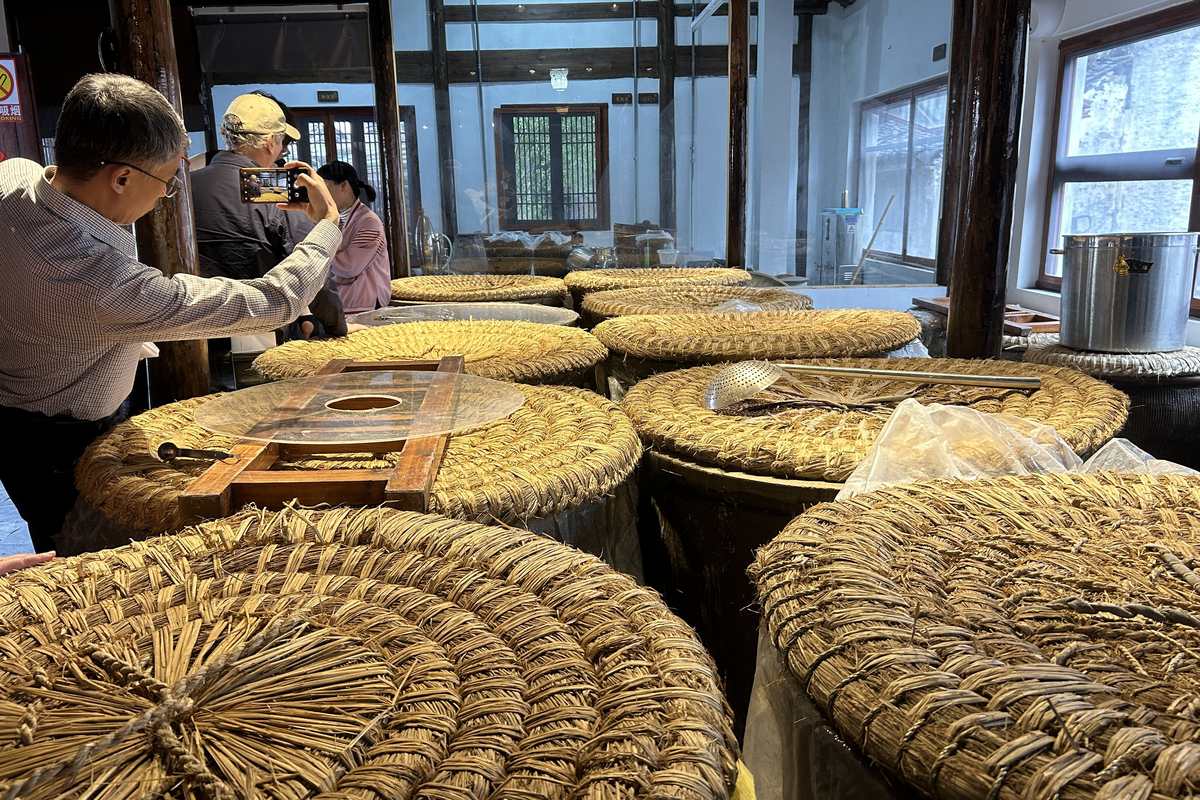
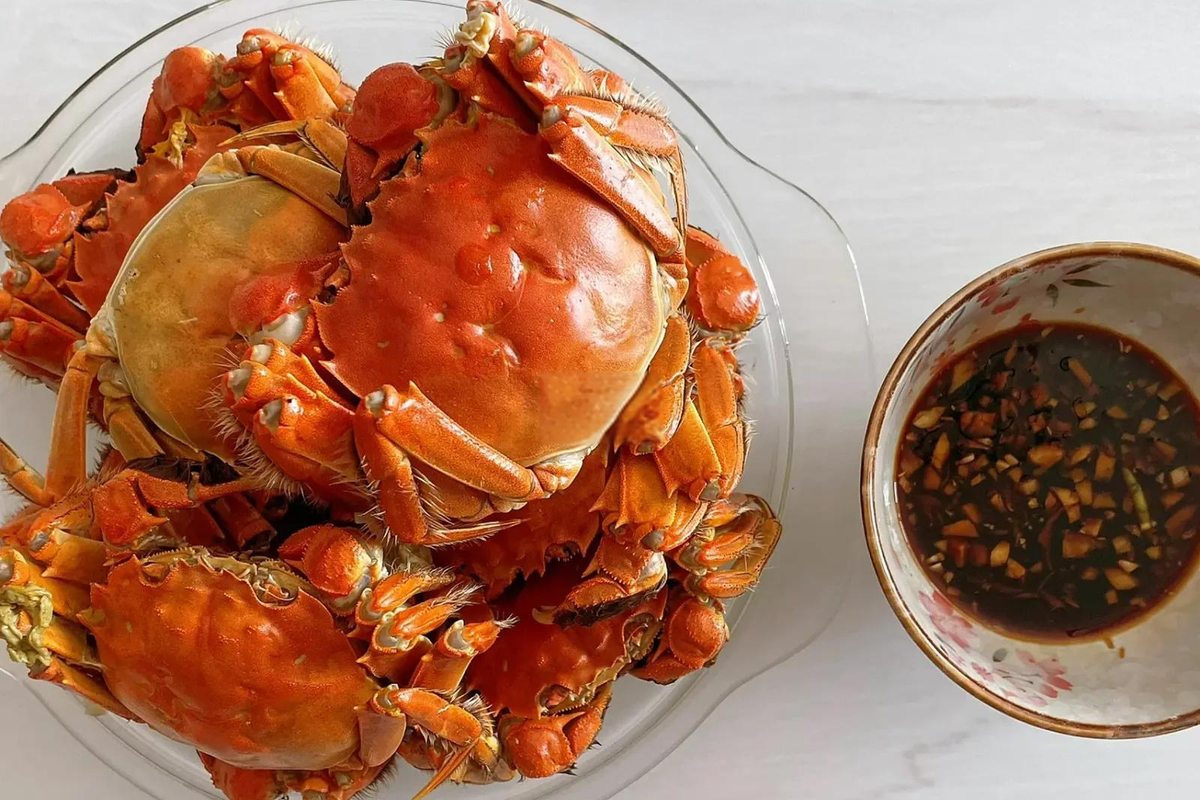
Then food. Steamed dazhaxie (大闸蟹) with a ginger-and-black-vinegar dip is the pairing this wine was effectively designed for: the savory sweetness against the roe, the ginger against the cold. If crab is out of season (they run from the ninth lunar month, females first, then males into the tenth), fava beans, brined soybeans, braised pork belly or a plate of soy-braised duck all work. What does not work is anything mala. Chili flattens the wine's aromatics completely. You have paid for a wine and are using it as water.
Buying is easier than it used to be. Look for 绍兴酒 and the standard number GB/T 17946 on the label. That is the protected-origin standard, and it rules out the sweetened, caramel-colored imitations sold abroad as "Shaoxing style". A 500ml bottle of jiafan or five-year huadiao costs less than one cocktail in Shanghai. Keep it in the fridge once opened and finish it within two weeks. Huangjiu is a living wine. It dies in the bottle, quietly, without announcing itself.
Next: Li Bai, who was said to drink a dou of wine and finish a hundred poems — how much a dou actually was, what was really in the cup, and why the greatest drinking poems in Chinese were written on a wine that had never seen a still.