Zhanjiang Grilled Oysters: The Three Minutes Between Sea and Smoke
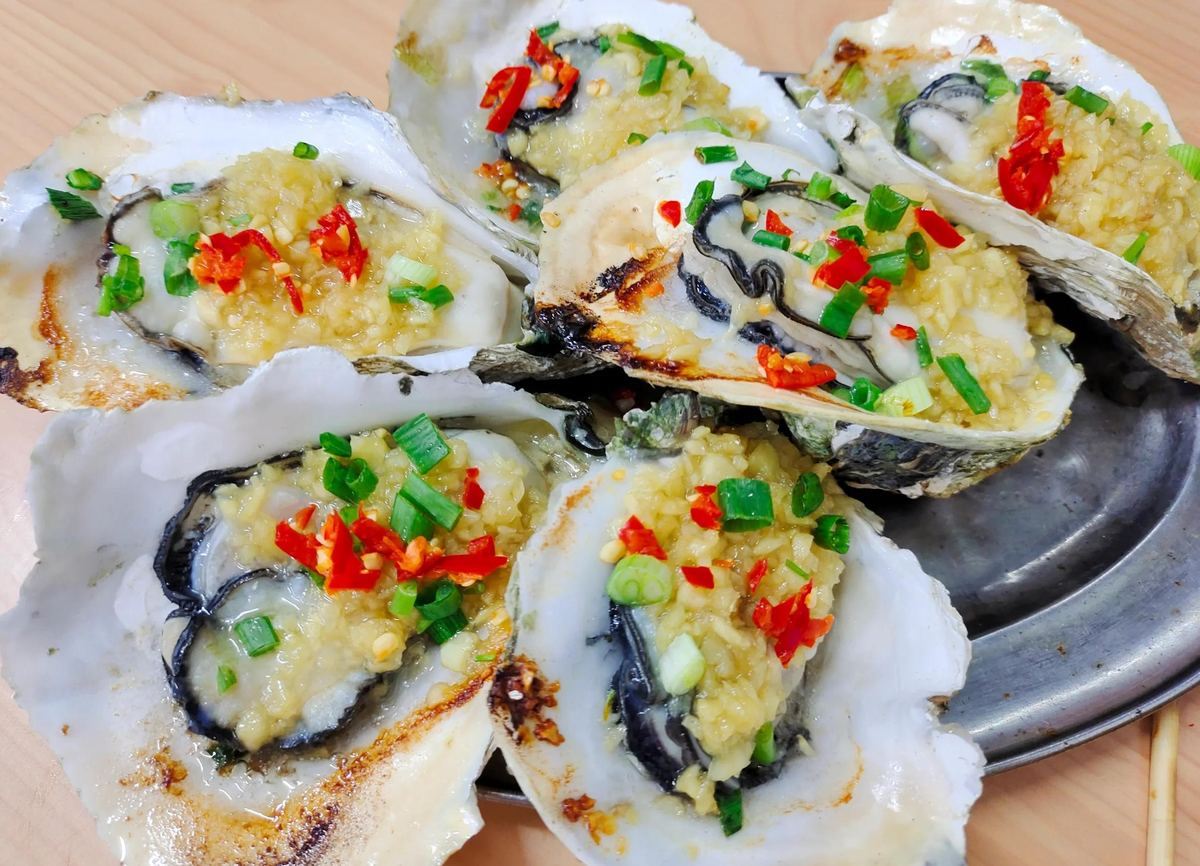
The man at the grill has a pry bar as long as his forearm, and he never looks at what he's doing. Oyster out of the basin, bar into the hinge, one turn of the wrist, top shell tossed onto the pile at his feet. It lands with a clatter. Then another, and another. By two in the morning the pile is knee-high and still growing.
Smoke comes off the charcoal in slow sheets. First you get the sea — cold, mineral, a little sweet — then the fat dripping into the coals and coming back up, then garlic hitting hot oil somewhere behind him. The tables are plastic, the stools are plastic, the beer is warm, and nobody is in a hurry.
This is Chikan, the old quarter of Zhanjiang (湛江), at the bottom of the Leizhou Peninsula. Here, grilled oysters (烤生蚝, kǎo shēngháo) are not a luxury order. They're what you eat with beer after midnight, the way Shanghai eats shengjianbao at seven in the morning.
I got there on a work trip that had nothing to do with food. A colleague from the south drove me west from Shenzhen, six hours, to see his family, and his cousin took us to a stall she'd been going to since she was a kid. Until then my oyster experience was hotel buffets and a place in San Francisco that served them on crushed ice with a fork and a short lecture. All of it tasted like the sea the way a photograph tastes like the sea.
The first one arrived with the liquor still boiling at the rim of the shell. I burned my lip. Worth it.
The meat was barely set — firm at the edge, soft enough in the middle to collapse under your tongue. It tasted of iodine and cream at the same time, and the garlic hadn't taken over yet. Then the stall owner said something to the cousin and laughed, and a minute later I understood the joke, because the second oyster was already a different thing. Three minutes on the grate is the whole dish. Under three, the middle is raw and the garlic is still sharp. Over, and the meat tightens into something you could bounce off a wall.
The shell is the pan
Nothing here is cooked in a kitchen. The oyster's own shell is the pan, the plate and the bowl, and the liquor inside it — seawater, oyster juice, a little oil — reduces against the heat until it's a brine you drink straight off the shell after the meat is gone. Do that once and you stop wondering why nobody bothers with sauce.
What goes on top is 金银蒜 (jīn yín suàn), "gold and silver garlic." Half the garlic is fried slowly to the colour of dark honey; half stays raw and sharp. They get mixed with oil, salt, a pinch of sugar, chopped chili, scallion. The fried half gives you sweetness and weight. The raw half cuts the fat. Use only one of them and the oyster either tastes flat or tastes like a mouthful of garlic.
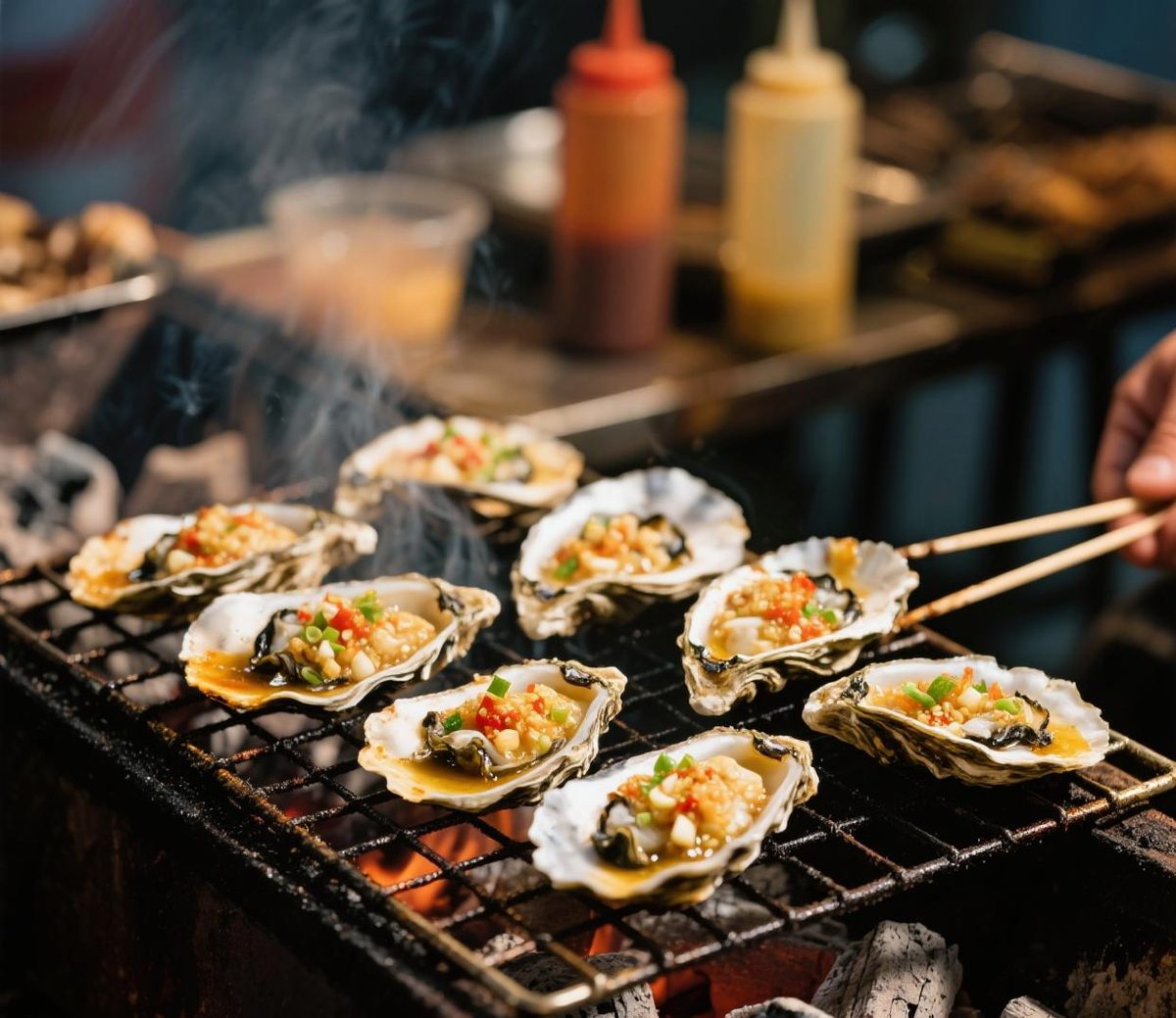
And charcoal, always charcoal. Gas gives you heat. Charcoal gives you heat and smoke, and when the fat drips it comes back up as flavour. You know it's ready when the shell blackens at the rim and the edge of the oyster curls. That's the moment. Ten seconds later is a different, lesser dish.
What the garlic is hiding
Which is why most of what gets sold as grilled oysters in China's bigger cities isn't worth the calories.
The vermicelli version. A nest of glass noodles goes into the shell before the garlic, and by the time it reaches your table the oyster underneath has steamed into a grey rag. In Zhanjiang, noodles on an oyster are a confession. They fill the shell because the oyster is too small to fill it alone.
The frozen oyster. Pre-shucked, packed in water, sold by the tray. It looks plump. It tastes of nothing and shrinks to a raisin on the grill. Ask to see them opened. A live oyster fights the pry bar for a second; a dead one gives immediately, and the shell is already empty of liquor.
The garlic landslide. A fistful of paste so thick you're eating garlic soup out of a shell. Garlic is a condiment. If you can't see the oyster, the cook doesn't trust it.
The electric grill. No smoke, no char, no point. If there's no charcoal in the place, order the squid.
Oysters have been farmed in the shallow bays around Zhanjiang for centuries, and the Guandu oysters from the tide flats north of the city are the local aristocracy. The good ones come in winter and early spring, when the water is cold and the meat is fat. Nobody in Chikan talks about any of that. They talk about whether this stall's oysters were opened this afternoon or last Tuesday.
How to order without getting taken
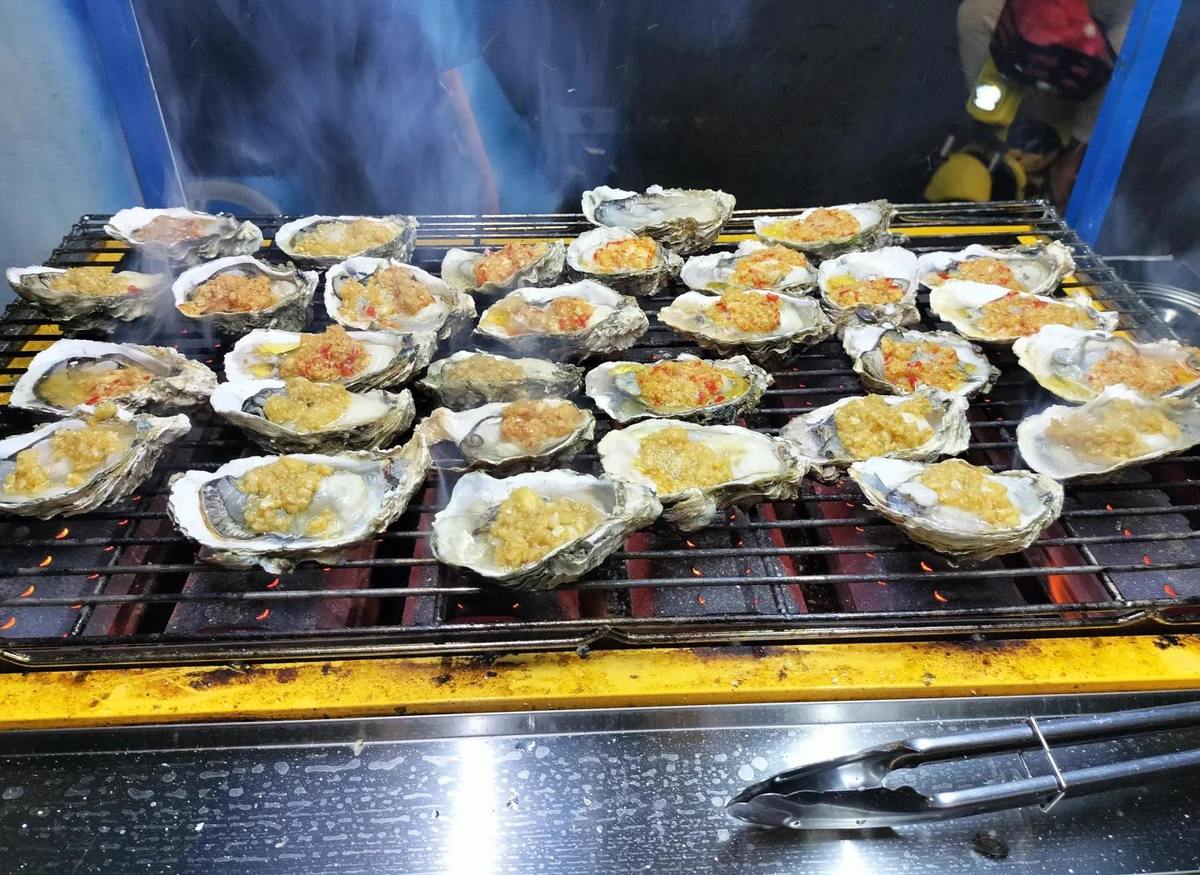
Order by the dozen, not by the piece, and order the second dozen before you finish the first. The grill works in batches. If you wait, you sit for twenty minutes watching everyone else's shells pile up.
Don't ask for lemon. Don't ask for hot sauce. Drink cold beer, or the local rice wine if the stall keeps it, and eat with your hands. The pile of empty shells in front of you is the bill. Nobody counts anything; at the end they just look at the table.
And watch the man with the pry bar for a minute before you sit down. If he's opening them to order, with a basin of seawater beside him and shells growing at his feet, take a seat. If there are trays of pre-opened oysters sweating in a cooler, keep walking.
It's almost four when we leave. The pile at his feet has become a small hill, and he's still going. The sea is maybe ten minutes from where we're standing, and you can taste the distance in every shell: salt, smoke, and about three minutes of patience.
💬 Comments