Zha Jiang Mian: The Noodle That Beijing Builds Its Mornings Around
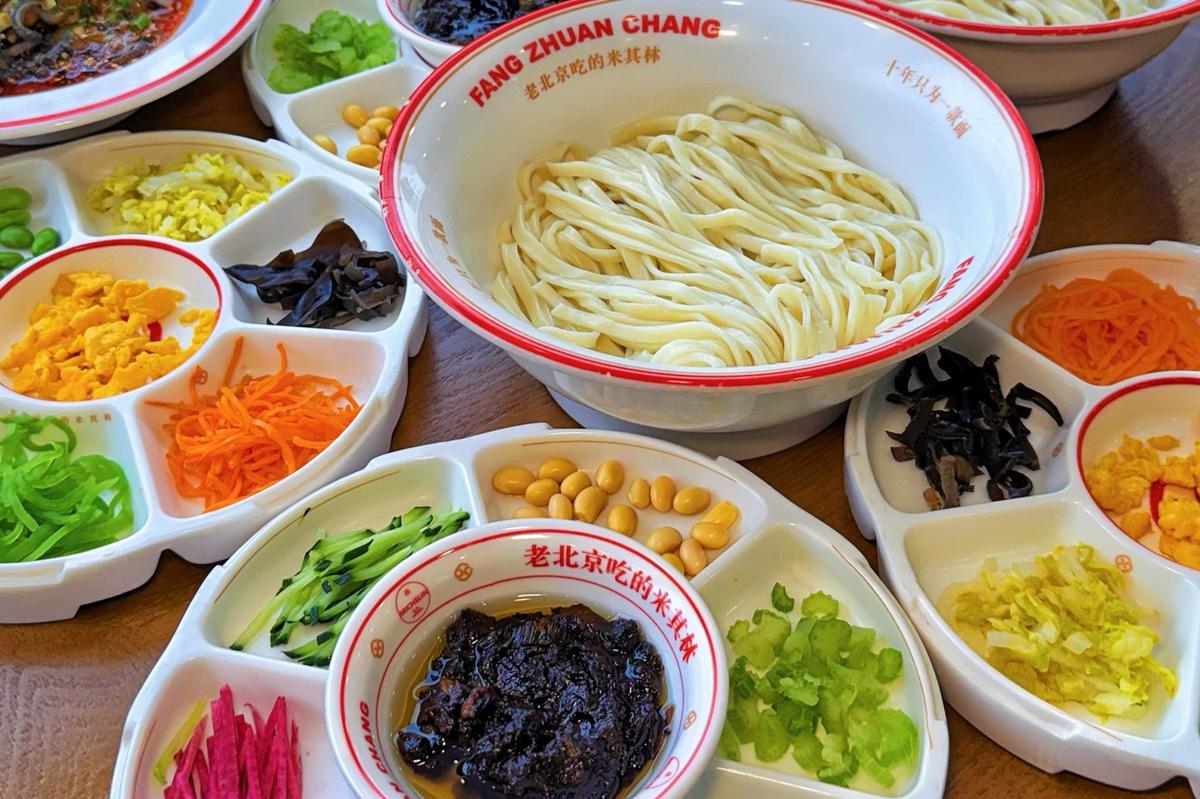
I was 24, fresh off a redeye from Shanghai, sitting in a plastic chair on a Beijing sidewalk at seven in the morning. A woman in an apron the color of old flour was working a wok the size of a satellite dish. Pork belly, diced to the size of fingernails, sizzled in oil. Then fermented soybean paste — yellow dried blocks, not the dark liquid I knew — went in. The smell that rose up rearranged something in my brain. Pork fat. Toasted soy. Caramelized sweetness. Deep and savory and slightly funky, the way miso is funky, only bigger.
She tossed julienned cucumber on top. Bean sprouts. Radish. Soybeans. Seven toppings in total, a salad's worth of vegetables burying the noodles beneath. Then she handed me the bowl. I stirred. The dark sauce clung to every strand like it meant it.
I had eaten noodles every week of my life in Shanghai. Scallion oil noodles. Dan dan noodles. Soup noodles, cold noodles, fried noodles. I thought I knew noodles. I did not know this.
Zha Jiang Mian (炸酱面, zhá jiàng miàn): fried sauce noodles. The name undersells it the way "tomato sauce and dough" undersells pizza. It's Beijing's signature noodle dish. And it is unlike anything else in China.
The Architecture of a Bite
I spent thirteen years optimizing compute pipelines. A good zha jiang mian works on the same principle: every component handles one job, but the system only works when they all land in the same bowl.
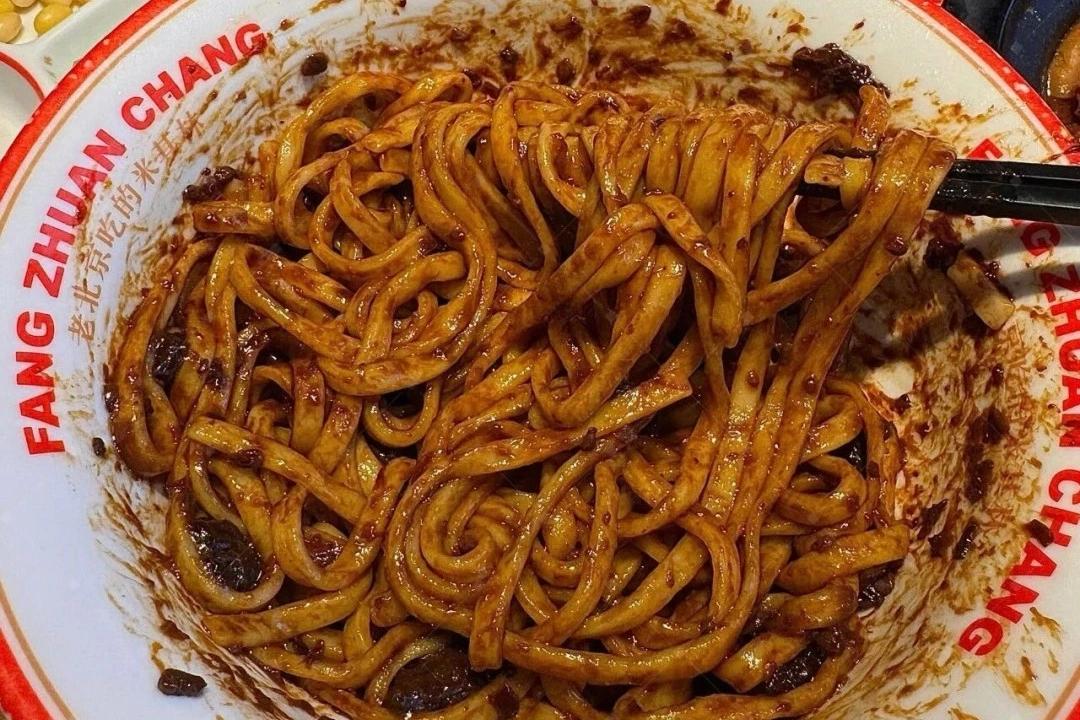
The bite. Chopsticks dive through the cold cucumber first — snap, fresh, watery. Then the noodles hit — thick wheat strands, hand-rolled, boiled to exactly the moment of jīndào (筋道), the Chinese word for elastic resistance against your teeth. They bounce. They fight back. Then the sauce reaches your tongue: dark and savory, fermented soybean paste slow-fried with diced pork belly until the oil separates and floats on top. The pork bits are soft but not dissolved. Little meaty landmines of fat and caramelized soybean paste. The bean sprouts and radish provide cold crunch against the hot weight of the sauce.
There is no chili. No numbing. No Sichuan peppercorn. Beijing does not do spice — it does depth. The heat in this bowl is structural, the kind that comes from pork fat and fermented beans and forty minutes of patient stirring. Each bite lands differently. One mouthful is all pork and sauce. The next is cucumber-dominant, almost a salad. The one after that is pure noodle, chewy and wheaty, the sauce just a whisper. You keep eating because you're chasing the perfect ratio, and the perfect ratio is different every time.
A good bowl of zha jiang mian is not loud. It's heavy. It doesn't announce itself. It just sits there, dark and unphotogenic, and waits for you to figure it out.
The Woman Who Brought Noodles to the Empress
Legend says zha jiang mian started in the Qing dynasty imperial kitchens. The Empress Dowager Cixi was traveling through the countryside, stopped in a village, and a local cook fried up soybean paste with diced pork — a peasant's dish, nothing fancy. She loved it and brought it back to the Forbidden City.
The trick was yellow soybean paste (黄酱, huáng jiàng) — fermented, earthy, entirely different from the dark soy sauces of the south. Four hundred years later, Beijing still swears by it.
The Enemies of Zha Jiang Mian
Bad zha jiang mian tastes like wet cardboard with regret. You'll find this version in airport food courts and pan-Asian restaurants that also serve sushi and pad thai. Here's what makes it wrong.
The sauce. Real zha jiang uses gan huang jiang (干黄酱) — dry fermented yellow soybean paste, the kind that comes in a block and smells like a dare. Bad versions reach for hoisin sauce (too sweet, no funk) or black bean garlic sauce (wrong country entirely). If your zha jiang tastes like stir-fry sauce, the cook cut corners.
The pork. Hand-diced pork belly, cubes the size of pencil erasers, fried until the fat renders completely. What's left: chewy, intensely porky morsels that carry the sauce. Ground pork is faster. It's also sandy texture passing itself off as substance.
The noodles. Shou gan mian (手擀面) — hand-rolled wheat noodles, thick and irregular, boiled to jīndào. That elastic resistance against your teeth is not negotiable. Spaghetti gives up. Udon is too soft. Soba is too thin. The noodle must fight back.
The toppings. A proper bowl has seven: shredded cucumber, bean sprouts, cooked soybeans, radish, celery, cabbage, and green soybeans. Each one brings cold and crunch against hot and heavy. Bad bowls give you cucumber and call it done. That's not garnish. That's surrender.
Zha Jiang Mian vs Dan Dan Noodles
People confuse these two constantly. They are both "noodles with meat sauce." They could not be more different.
| Zha Jiang Mian | Dan Dan Noodles | |
|---|---|---|
| Shape | Thick wheat, hand-rolled | Thin wheat, alkaline |
| Method | Sauce fried separately, piled on | Sauce mixed into the bowl beneath |
| Texture | Chewy and resistant | Silky and yielding |
| Flavor | Deep, savory, pork-driven | Fiery, numbing, sesame-driven |
| Origin | Beijing (north) | Sichuan (southwest) |
| Soul | Hearty. Breakfast fuel. | Addictive. A snack you chase. |
The simplest test: pick up a mouthful with chopsticks. If the noodles bounce and the sauce clings like tar, it's zha jiang mian. If the noodles slide and chili oil pools at the bottom, it's dan dan noodles.
Korean jajangmyeon is the diaspora remix — black bean paste, sweeter, darker, often with potatoes and zucchini. It's its own thing. It's not zha jiang mian.
How to Eat It
The first time I ate zha jiang mian, I made the rookie mistake: picking at the toppings separately, trying to appreciate each component. My Beijing coworker watched me for thirty seconds, then reached across the table, grabbed my chopsticks, and stirred my bowl himself.
"You're killing it," he said. "Mix."
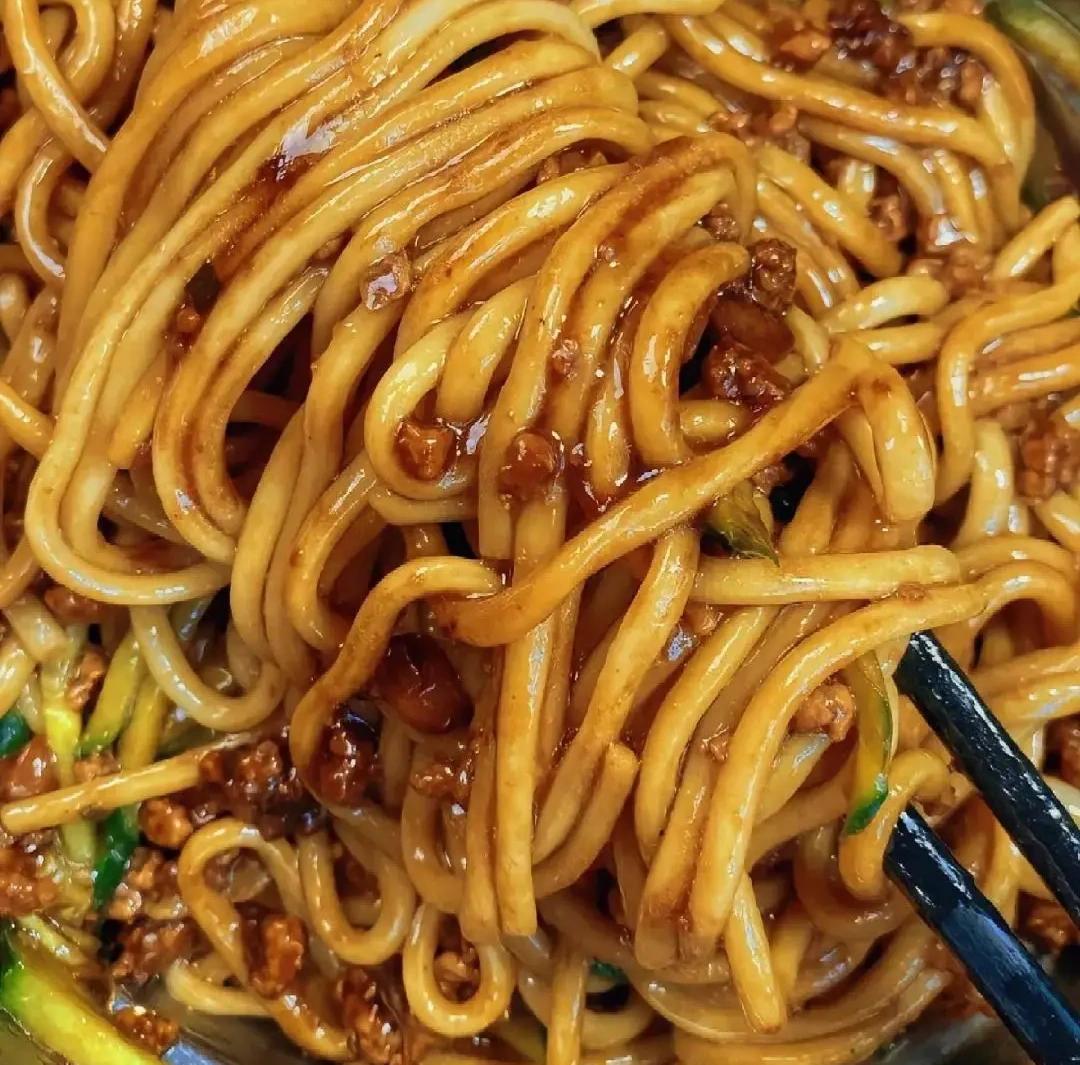
Step one: pour the sauce over the noodles while the bowl is hot. Heat wakes up the fermented soybean paste. Step two: add every topping — all seven. No skipping. Step three: mix like you mean it. Stir until every strand is the same shade of brown, until the cucumber is woven through, until the sauce coats every surface. This takes thirty seconds of aggressive chopstick work. If your wrist doesn't hurt, keep going. Step four: eat fast. Zha jiang mian waits for no one. The noodles absorb the sauce as they cool, and what was transcendent at minute one becomes merely good at minute five.
My coworker watched me take the first real bite. "Well?"
I didn't answer. I was already reaching for the vinegar — a splash of black vinegar at the end, Beijing style, cutting through the richness like a knife through fog.
My grandmother in Shanghai made noodles too — delicate, refined, the way Shanghainese food always is. I loved them. But Beijing noodles are different. They don't ask for your approval. They just show up, heavy and dark and impossibly deep, and you either get it or you don't.
I got it.
Recipe coming soon. The secret is patience — zha jiang takes forty minutes of slow stirring. No shortcut. The sauce knows.
💬 Comments