Zha Jiang Mian: Twenty Minutes of Stirring
Editor’s Note: This is the kitchen companion to Zha Jiang Mian: The Noodle That Beijing Builds Its Mornings Around. Quantities, temperatures and the failure points are below. Read the technique once before you shop.
Why the Sauce Takes Twenty Minutes and Cannot Be Rushed
The name of this dish is the instruction. Zha jiang mian means fried sauce noodles, and zha is a verb that describes paste driven around a hot pan until it darkens, thickens and separates from the fat. It is not a stir-fry and not a braise. It is a slow fry at medium-low heat, 15 to 20 minutes of constant motion, and every shortcut makes a different dish.
The paste is the first decision. Two tablespoons of tian mian jiang, the sweet fermented flour paste, to one of huang jiang, the saltier yellow soybean paste. That 2:1 is sweeter than most restaurant versions and it is the home ratio in Beijing, where sweetness balances the salt and the pork fat. Loosen both with 50ml of water first: neat paste hits hot fat and seizes into lumps, and by the time you have pressed them out the sugar has begun to catch.
The pork is 250g of belly diced to 5mm. Not minced, not chopped in a machine. A 5mm dice holds its shape through twenty minutes of stirring and releases fat slowly, so the sauce has something to fry in. Minced pork collapses into a grainy paste in five minutes, and the texture, which is half of what this dish is about, is gone. Why this matters: you cannot recover a dice from a mince, and the cubes are what make each mouthful taste of pork rather than of salt.
The order is fat first, paste second. The pork goes into a dry wok and fries until the water has gone and the cubes are edged with gold, about 8 minutes. Only then does the paste go in, and the heat comes down. Over the next 15 to 20 minutes the sugars in the sweet paste and the amino acids in the pork and the beans darken together. The sauce goes from milk chocolate to near black, the fat renders and pools at the edges, and the pan smells of toasted flour and caramel rather than raw bean.
You stir constantly and never let it catch. The paste carries enough sugar and starch to stick within seconds of standing still, and a burnt patch tastes bitter through the batch. Stir with a flat spatula, scraping the curve of the wok, and keep the sauce at a gentle bubble.
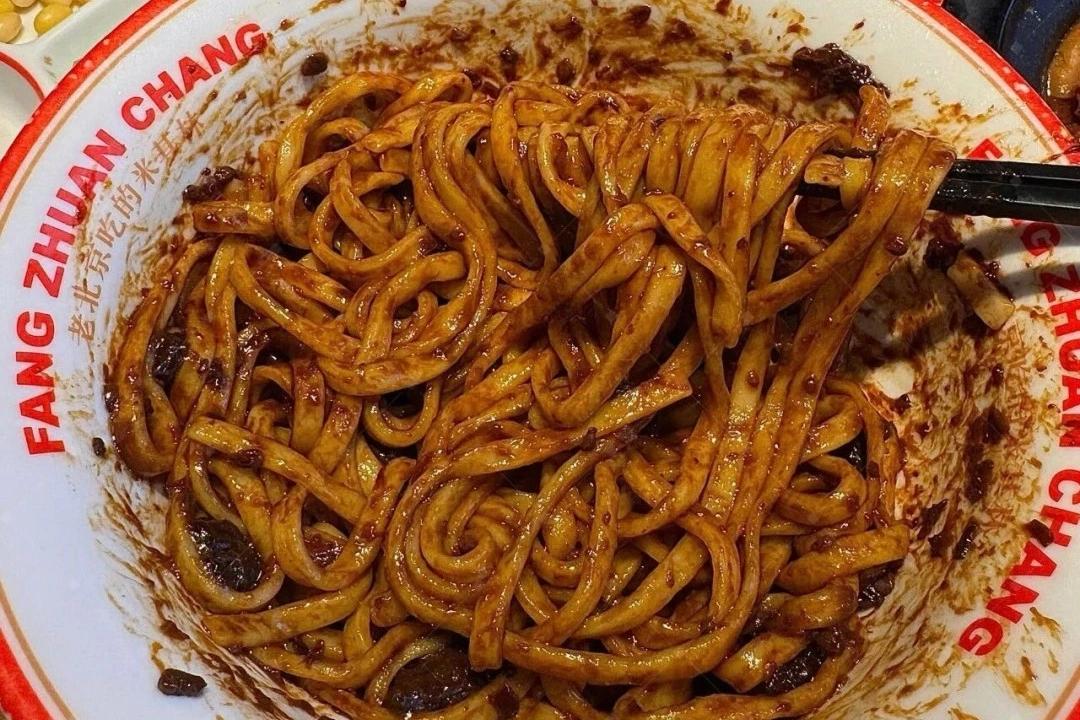
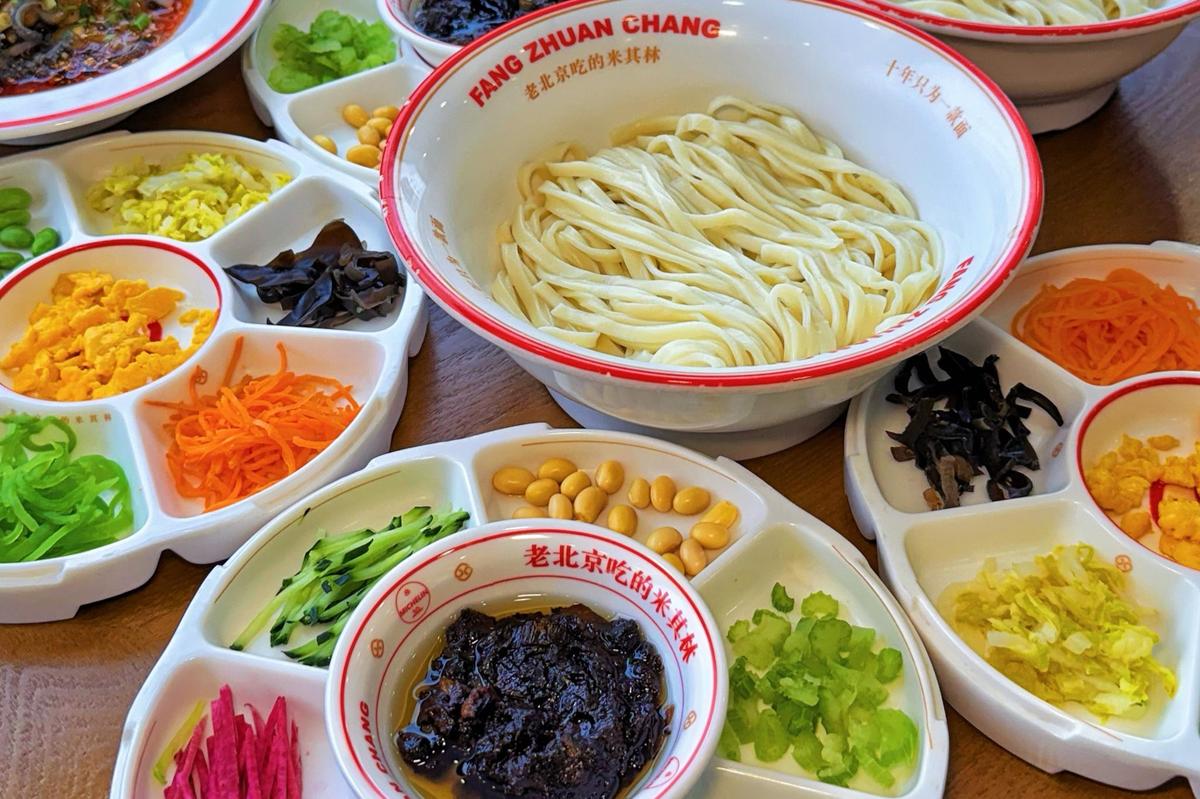
The noodles are 400g fresh or 300g dried, thick and wheaty. The toppings are raw or blanched vegetables cut into matchsticks: cucumber, radish, soybean sprouts. Two tablespoons of sauce per bowl, and the bowl is mixed hard before eating, until every strand is brown.
Ingredients
For the sauce
- 250g pork belly, rind removed, diced to 5mm
- 2 tbsp (60g) tian mian jiang, sweet bean paste
- 1 tbsp (30g) huang jiang, yellow soybean paste
- 50ml water, for loosening the pastes
- 1 tbsp (15ml) neutral oil, only if the belly is lean
- 1 tsp (5ml) Shaoxing wine
- 1 tsp (4g) caster sugar, optional
For the noodles
- 400g fresh wheat noodles, or 300g dried
- 2 litres water, for boiling
- 1 tbsp (18g) fine salt, for the noodle water
For the toppings
- 150g cucumber, cut into 5cm matchsticks
- 100g white radish, peeled, cut into matchsticks
- 150g soybean sprouts, blanched 45 seconds
- 2 scallions (40g), greens sliced thin
- 1 tsp (5ml) black vinegar, at the table
- 1 tsp (4g) toasted sesame seeds, optional
Substitution notes: Tian mian jiang is sweet and dark; if you cannot find it, use 2 tbsp of hoisin sauce and reduce the sugar to nothing, though the result will be more aromatic and less fermented. Huang jiang can be replaced by 1 tbsp of white miso, which is saltier and less sweet, so taste before adding any salt at all. Do not use both substitutions at once.
Pork shoulder works if belly is unavailable, but add 1 tbsp of oil with the meat, since shoulder carries far less fat and the paste needs fat to fry in. Fresh noodles can be swapped for dried at 300g; they take longer to cook but hold the sauce better.
Prep: A 5mm Dice and a Pourable Paste
1. Dice the pork belly to 5mm (10 minutes)
Chill the belly in the freezer for 20 minutes so the fat firms, then cut it into 5mm slices, 5mm strips, and finally 5mm cubes. Use a sharp knife and a light hand; pressing on cold fat crushes it. You should have about 250g of even cubes, roughly the size of a lentil. Why this matters: uneven cubes cook at different rates, and the small ones burn before the large ones have rendered.
2. Loosen the pastes (2 minutes)
Put both pastes in a bowl, add the 50ml of water, and stir with a spoon until smooth. It should fall off the spoon in a thick ribbon. If it still holds a mound, add another tablespoon of water.
3. Cut the toppings (5 minutes)
Cut the cucumber and radish into matchsticks about 5cm long and 3mm thick, and keep them cold and separate so they stay crisp. Blanch the soybean sprouts in boiling water for 45 seconds, then drain and cool under cold running water to stop them cooking.
Step by Step: Fry the Pork, Then the Paste
Step 1: Fry the pork dry (8 minutes)
Set a wok over medium heat and add the pork with no oil. Spread it in one layer and leave it two minutes; the fat begins to render and the meat squeaks against the metal. Then stir and press for six more minutes, until the water has gone, the cubes are gold at the edges, and the fat in the pan is clear rather than cloudy. If the belly was lean, add the tablespoon of oil now, not earlier.
Step 2: Add the paste and turn the heat down (2 minutes)
Pour in the loosened paste and the Shaoxing. Stir immediately and continuously, scraping the bottom. The paste thins as it heats and then begins to bubble. Turn the heat to medium-low so it bubbles gently, around 100 to 110°C at the surface, and no higher.
Step 3: The twenty minutes (15 to 20 minutes)
Stir without stopping, scraping the full curve of the wok every few seconds. At 5 minutes the sauce is milk-chocolate brown and smells of raw bean. At 10 minutes it has darkened and thickened, and fat shows at the edges. At 15 minutes it is almost black, glossy, and the oil has separated into a clear red-brown pool around the pork. That pool is the signal. Taste a cube: it should be salty, sweet and savoury, with no raw flour edge. If it still tastes of bean, give it 3 more minutes.
Step 4: Cook the noodles (4 minutes)
Boil 2 litres of water with the salt. Fresh noodles take 2 to 3 minutes, dried 5 to 6. Pull them 30 seconds before the packet time, drain, and do not rinse. If the sauce cooled while the water boiled, loosen it with 2 tbsp of noodle water and stir over low heat for 30 seconds.
Step 5: Two tablespoons per bowl, then mix hard (1 minute)
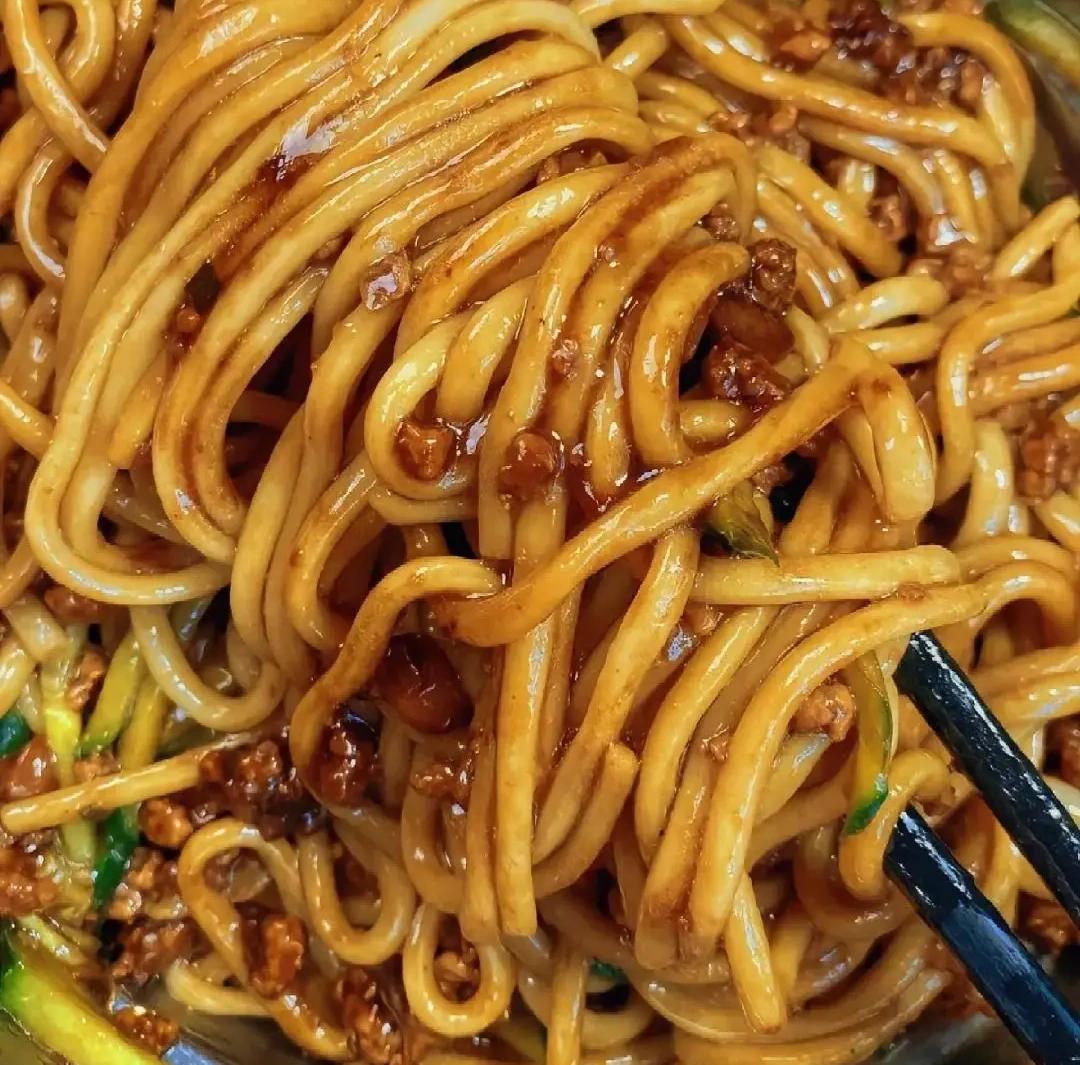
Put 2 tbsp of sauce in each warm bowl, add the noodles, and set the toppings alongside in small piles. At the table, mix from the bottom with chopsticks and a spoon for a full 30 seconds, until every strand is dark brown. Add a few drops of black vinegar if you want the salt cut.
Key Pitfalls
The sauce tasted bitter and smelt of burnt flour. The paste sat still against hot metal for a few seconds too long, or the heat was medium-high. Keep it at a gentle bubble and scrape the bottom of the wok continuously with a flat spatula. If it has caught, do not stir the burnt layer in; tip the sauce into a clean pan and leave the crust behind.
The pork turned to a grainy paste. It was minced, or chopped in a processor, rather than diced. Hand-cut 5mm cubes hold their shape through twenty minutes of stirring. There is no fix once it has collapsed; the texture is the dish.
The sauce was pale and tasted raw. It was not fried long enough. The colour change from milk chocolate to near black is the timer. Fifteen minutes is a minimum, and the sauce is ready when the oil separates and pools clear at the edges.
The paste went in as lumps. It was added neat instead of loosened. Whisk both pastes with 50ml of water until they pour, then add them to the pork in one movement and stir at once.
The finished bowl was dry and the noodles clumped. The sauce was too thick or the noodles were rinsed. Hold back 2 tbsp of the starchy noodle water and stir it into the sauce before the noodles go in; it loosens the paste without diluting the salt.
The bowl was salty enough to make your eyes water. Huang jiang varies a lot between brands, and the sauce reduces. Taste at 10 minutes, before the sauce tightens, and add the optional sugar or a splash of water rather than more paste.
The vegetables went limp and wet in the bowl. They were mixed in at the start or left sitting in the hot sauce. Keep the cucumber and radish raw, cold and piled on top, and blanch the sprouts no longer than 45 seconds.
Serving Suggestions
Three bowls, each with two tablespoons of sauce and a handful of cold vegetables, is a complete meal. If you want more, add blanched spinach with sesame oil or a bowl of egg drop soup; the sauce is heavy enough that fried food alongside it is too much. Some Beijing households keep a spoonful of sauce on the side of the plate and dip the vegetables in it first.
Drink jasmine tea or cold beer. The sauce keeps a week in the fridge and improves on the second day, when the bean flavour has settled, so make a double batch. Reheat it in a dry pan with 1 tbsp of water, not a microwave, which makes it grainy. Leftover noodles do not keep; cook them to order.
This is the companion recipe to Zha Jiang Mian: The Noodle That Beijing Builds Its Mornings Around. Read the story, then cook the dish.
💬 Comments