Yu Xiang Rou Si: The Sichuan Dish Whose Name Has Lied to You Your Whole Life
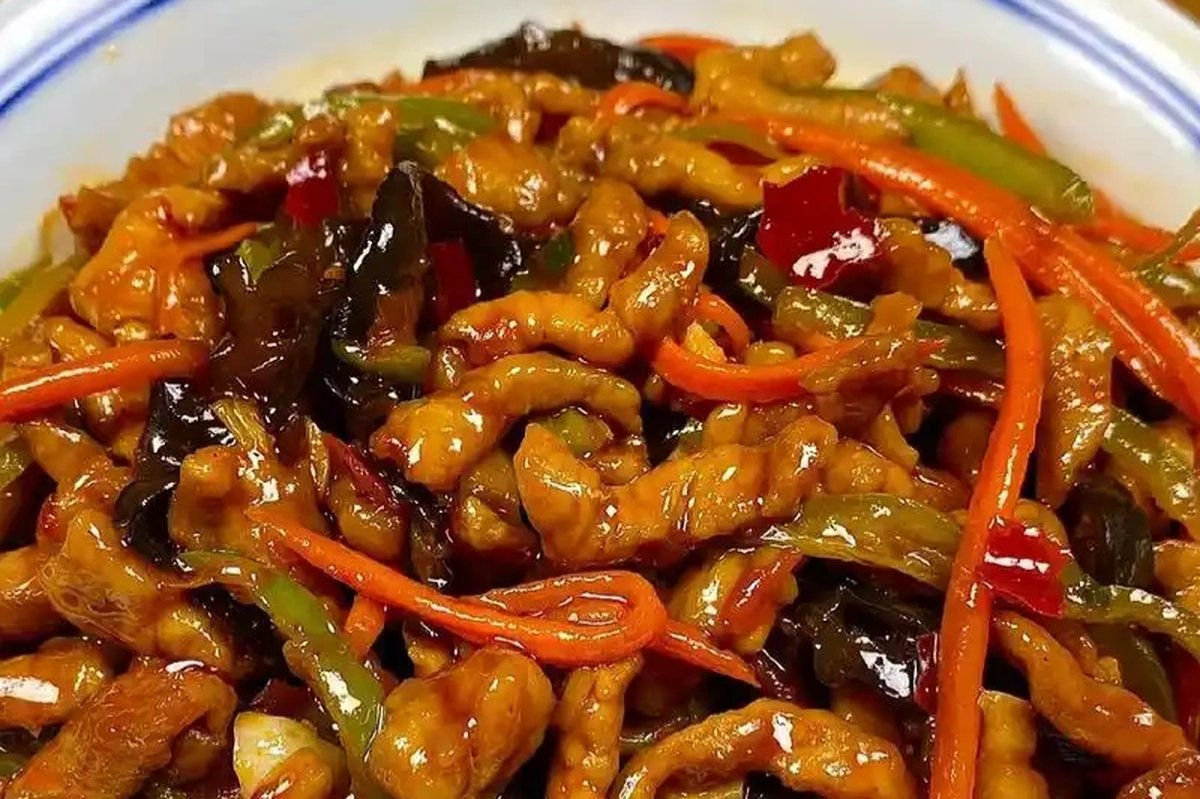
The wok makes a sound like tearing silk. It’s the sound of shredded pork hitting oil at exactly the right temperature — hot enough to sear instantly, not so hot it smokes. A beat later the pickled chili paste goes in and the kitchen fills with something that smells like vinegar and caramel and fire all at once. You’re standing in a Chengdu apartment the size of a New York walk-in closet. The cook — someone’s grandmother, probably — moves faster than your eyes can track. Thirty seconds, start to finish. The plate lands on the table. The rice is already waiting.
This is Yu Xiang Rou Si (鱼香肉丝, yú xiāng ròu sī). Fish-Fragrant Shredded Pork. A name that has confused every foreigner who’s ever opened a Chinese menu. There is no fish in this dish. There never was. The “fish fragrance” refers to a specific sauce architecture — pickled chilies, ginger, garlic, scallion, sugar, vinegar, soy sauce — originally used for cooking freshwater fish in Sichuan. Someone figured out it tasted just as good on pork. That someone was a genius.
The Architecture of a Bite
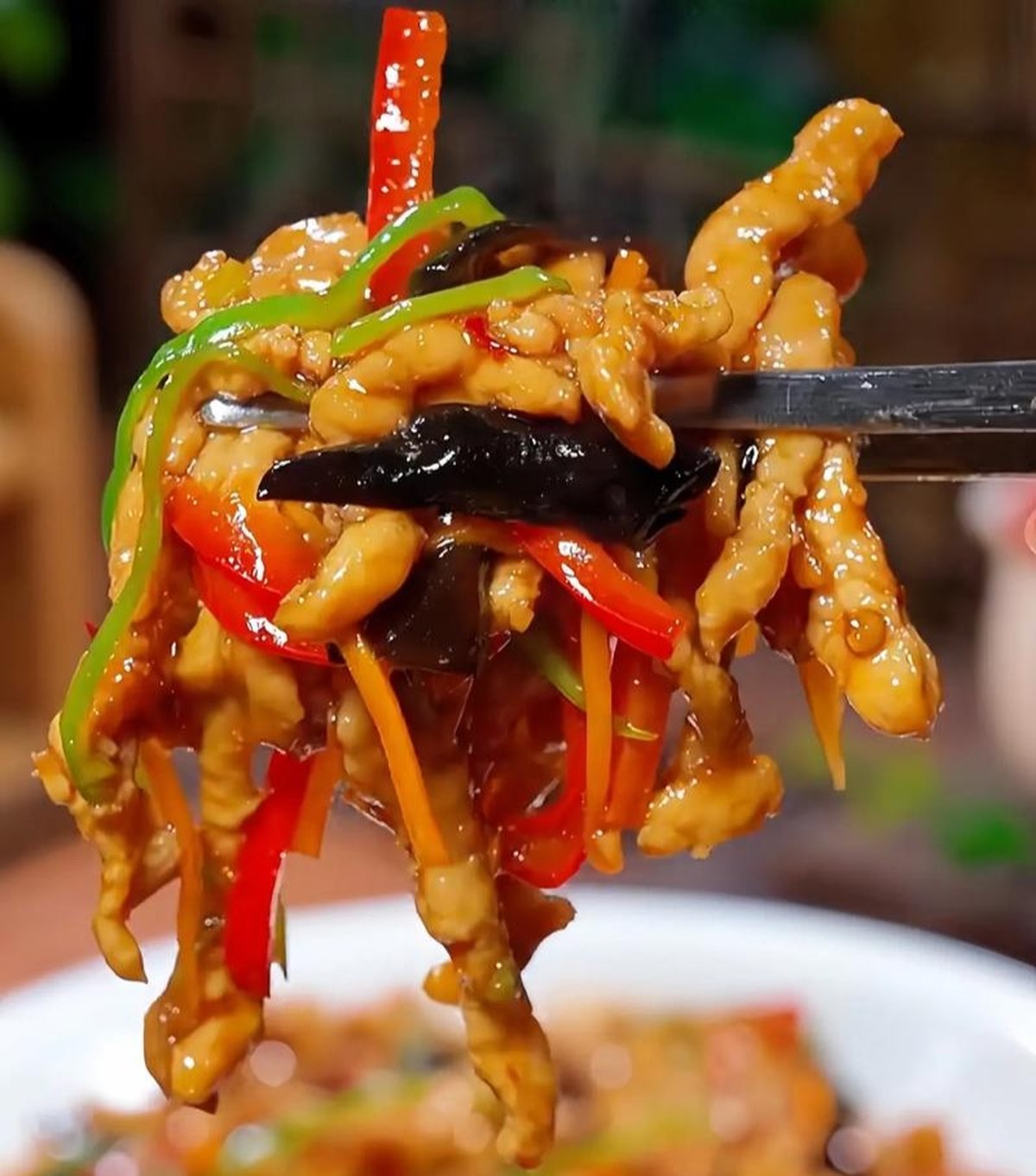
I spent thirteen years debugging distributed systems. The best ones work because every component knows exactly what it contributes. Yu Xiang Rou Si is the same. A perfect bite delivers seven things simultaneously: the slippery-soft resistance of velveted pork against your teeth, the sour-sweet punch of the sauce hitting the sides of your tongue before the heat registers in the back of your throat, the snap of wood ear mushroom, the crunch of scallion, and then — this is the part that separates good from great — a ghost of Sichuan peppercorn that numbs your lips just enough to make the next bite feel brand new.
The sauce is the architecture. No starch-thickened goo. No ketchup. The body comes from the sugar dissolving into the vinegar and soy at high heat, reducing into something that coats each strand of pork without pooling on the plate. A good plate of Yu Xiang Rou Si doesn’t leave a puddle. It leaves a shine.
The Woman Who Never Smiled
Every Sichuan dish has an origin story, and they’re almost certainly fake. The legend goes that a housewife in late Qing Chengdu accidentally poured her fish-cooking sauce into a pork stir-fry, served it to her husband, and he loved it. I’ve heard three versions of this story. They all involve a wife, a mistake, and a husband who can’t tell the difference. The real story is probably simpler: restaurants in Sichuan river towns wanted to sell leftover sauce. Pork was cheaper than fish. The math worked.
The dish spread. Then it mutated.
The Enemies of Yu Xiang Rou Si
You know the version I’m talking about. The one with carrot shreds and green bell peppers and bamboo shoots and an unnaturally orange sauce that tastes like sweet-and-sour chicken from a mall food court. That dish shares a name with Yu Xiang Rou Si and nothing else. Send it back.
The real thing has four main ingredients, period: shredded pork, wood ear mushrooms, scallion, and pickled red chilies (pào jiāo, 泡椒). Not carrots. Not bell peppers. Not peas. Not pineapple — yes, I’ve seen this. The Chongqing version is even more austere: pork, scallion, pickled chili, done.
The carrot-and-pepper version isn’t “wrong” in the sense of being inedible. It’s wrong in the sense of being a different dish wearing the same name. Beijing restaurants started adding vegetables in the 1980s to stretch the pork. Fine. But when that version became the default in every Chinese restaurant from San Francisco to Sydney, something was lost. The minimalist version — the one with nothing to hide behind — is the one worth chasing.
The Japanese version (ebi chiri for shrimp, using the same sauce base) is sweeter and milder. It’s a valid remix. It’s not Yu Xiang Rou Si.
The “quick” version uses ketchup instead of pickled chili paste. This is a crime. Ketchup brings sugar and acid but none of the fermented depth that makes pickled chilies irreplaceable. You can taste the difference in the first half-second.
How to Eat It
I first ate real Yu Xiang Rou Si in 2011, in a Chengdu alleyway restaurant with plastic stools and a ceiling fan that threatened decapitation. I’d been at Microsoft for a year, back in China for the holidays. The dish arrived and I did what every twenty-year-old idiot does — I took a huge first bite and immediately aspirated chili oil. My cousin laughed so hard he knocked over his beer.
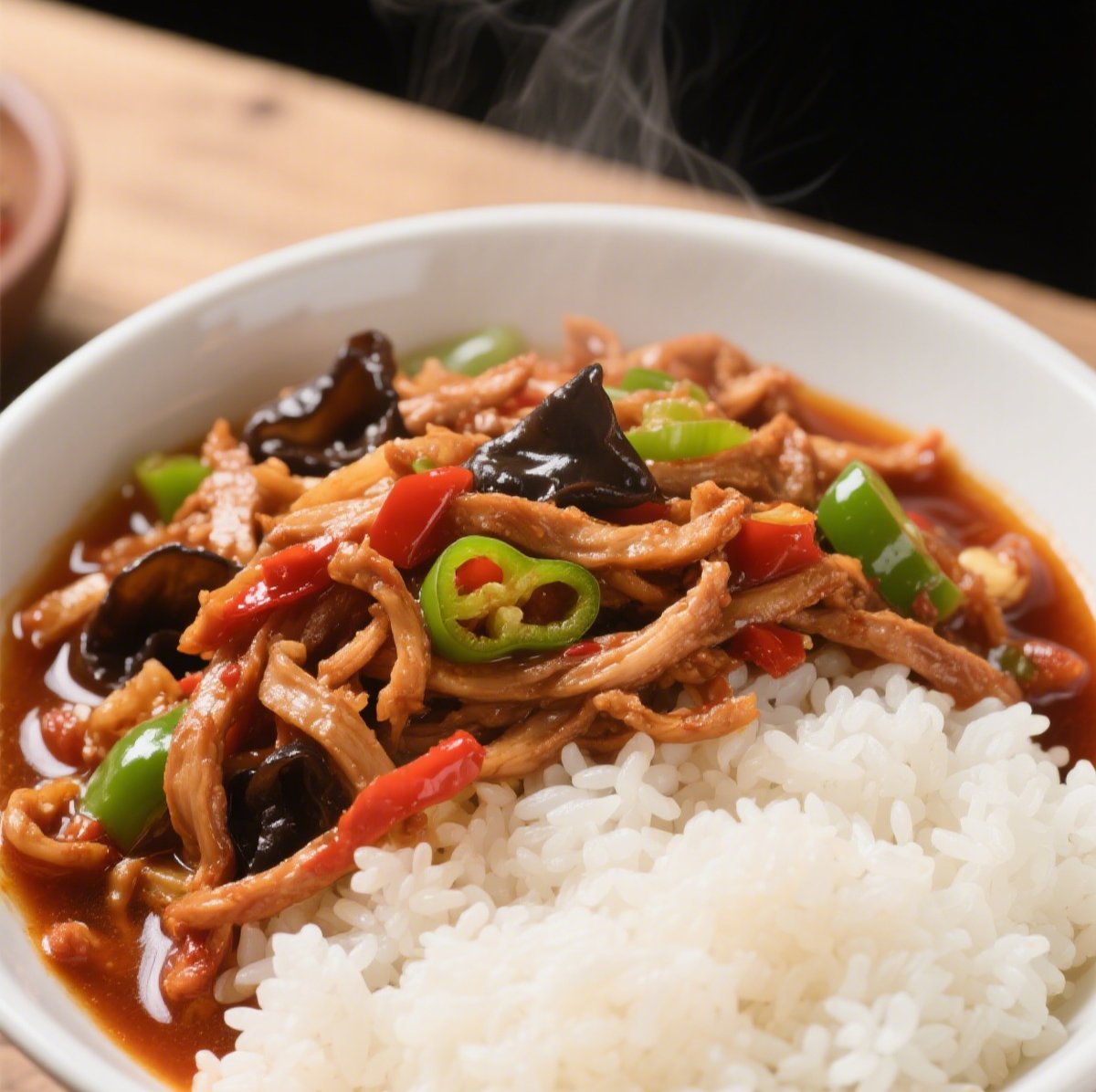
The right way: small bites. The dish is intense. You want each mouthful to include a little pork, a little wood ear, a little scallion. The rice isn’t optional — it’s the canvas. Without rice the sauce overwhelms. With rice it becomes something you’ll order three times in one meal and not feel bad about.
If your lips aren’t slightly numb by bite three, the Sichuan peppercorn was skimped. Ask for more. If the plate has a puddle of sauce at the bottom, they used cornstarch instead of reduction. Finish your rice and leave.
Don’t order this in a restaurant that also serves General Tso’s chicken. Don’t order it if the menu photo shows carrots. And for the love of everything — don’t ask if there’s fish in it. The waiter has heard that joke.
Out of space for today — I’ll save the home-cooking breakdown for another post. Getting the sauce ratio right at home means nailing the sugar-vinegar balance without the insane heat of a restaurant wok. That deserves its own deep dive. Recipe coming soon.
💬 Comments