Yu Xiang Rou Si: The Sauce That Never Had Fish
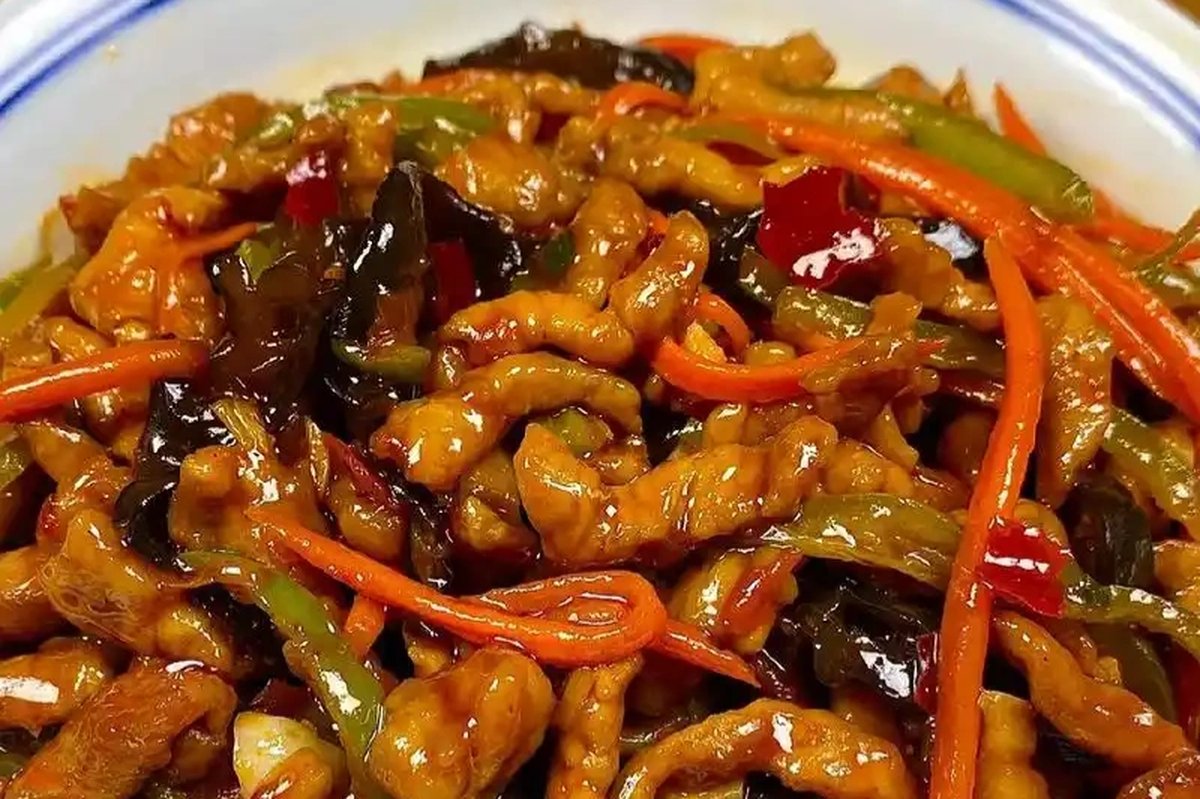
Editor’s Note: This is the kitchen companion to Yu Xiang Rou Si: The Sichuan Dish Whose Name Has Lied to You Your Whole Life. Quantities, temperatures and the failure points are below. Read the technique once before you shop.
Why Six Minutes Is Enough Time
Everything that decides this dish happens before the wok is lit; six minutes of cooking cannot build flavour, only apply heat.
Start with the cut. Pork loin is a bundle of long parallel fibres, and the julienne has to cross them. Cut with the grain and every strand is a 6cm rope your teeth have to saw through; cut against it and each strand is 3mm of fibre that gives way at the first bite. Thinner than 3mm and the strands snap when you toss them; thicker and they need more than six minutes, so the vegetables overcook while the pork catches up.
Then the velvet: 1 tsp cornstarch, 1 tbsp water, 1 tsp Shaoxing and a pinch of salt, tossed through 350g of pork and left for 15 minutes. The starch hydrates into a slurry that coats each strand. The salt makes the surface proteins tacky, so the starch sticks instead of sliding off.
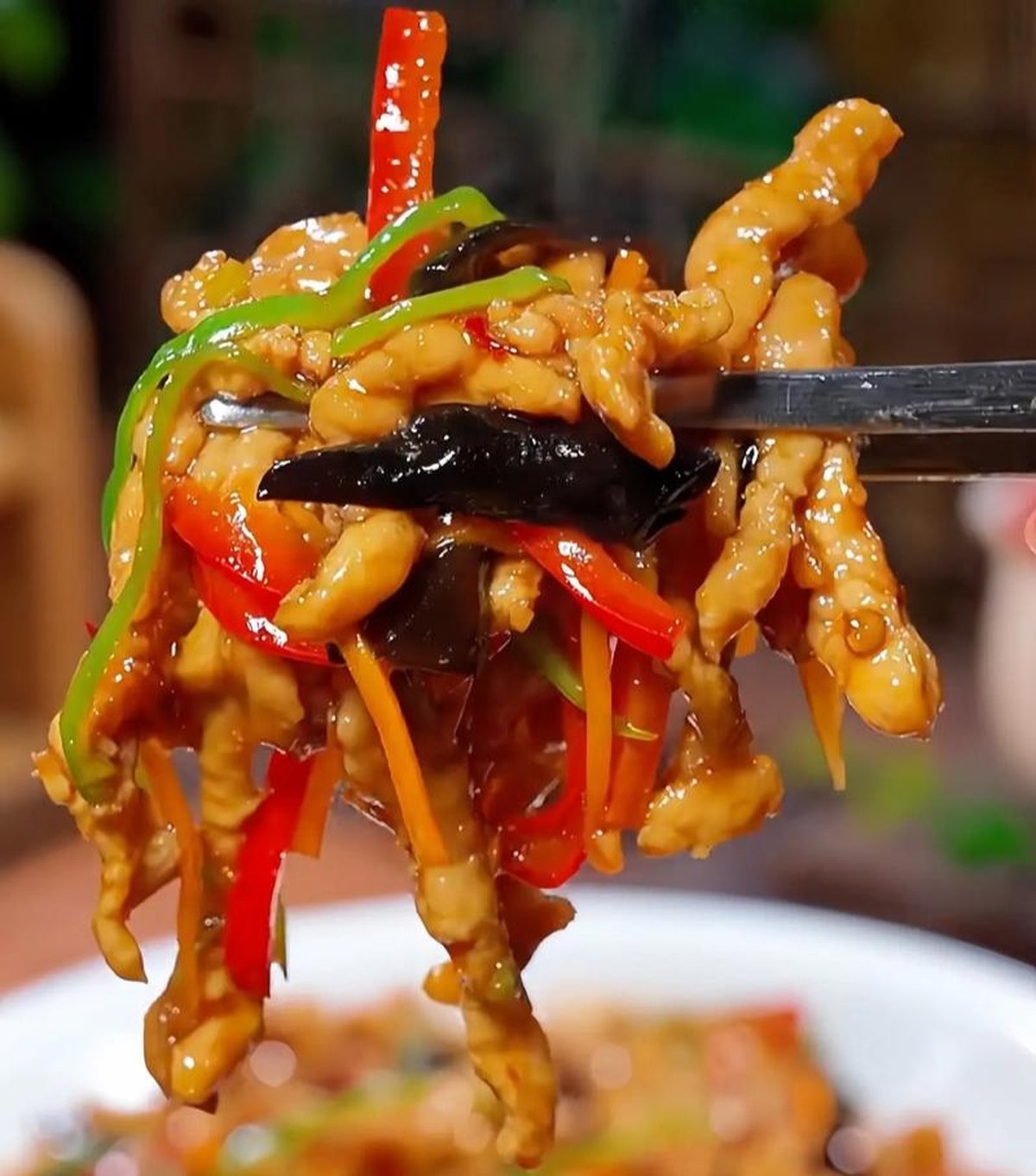
The wok must be smoking, and the pork goes in as one loose layer: 30 seconds with no movement, then 20 seconds of hard stirring. Why this matters: the starch needs uninterrupted contact with hot metal to set into a skin, and every second of stirring in that first half minute smears it off against other strands instead of the pan. Once the skin exists, the strands stop sticking to each other. Stir from the first second and the pork sits in its own expressed water at 90°C, which is poaching.
Wood ear and bamboo shoot are there for resistance. The sauce is soft, sweet and glossy, and without something that pushes back the dish eats like porridge. Wood ear snaps, bamboo gives a fibrous crunch that survives 90 seconds of tossing. Cut both to the same 3mm julienne so a chopstick picks up all three at once.
The sauce goes in for the last 30 seconds, and you stop stirring the moment it glosses. Starch gelatinises between 62°C and 80°C, and 4 tbsp of liquid with 1 tsp of starch thickens at wok heat in about 20 seconds. Stir past that and you shear the gel you have just formed, which is why an overworked sauce goes cloudy and slack.
This is the same sauce as yu xiang qie zi, with one difference: water. Eggplant is over 90 percent water and gives it back into the pan, so that version needs a looser sauce to survive the dilution. Velveted pork gives up almost nothing, which is why 4 tbsp here is a hard limit and a fifth would keep the glaze from forming.
Ingredients
For the pork
- 350g pork loin, cut into 3mm x 3mm x 6cm julienne against the grain
- 1 tsp (4g) cornstarch, for velveting
- 1 tbsp (15ml) cold water
- 1 tsp (5ml) Shaoxing wine
- 1/4 tsp (1.5g) fine salt
For the stir-fry
- 15g dried wood ear, rehydrated to about 60g
- 100g winter bamboo shoot, julienned
- 2 tbsp (30ml) neutral oil
- 4 cloves garlic (16g), minced
- 16g fresh ginger, minced
- 3 spring onions (45g), whites minced, greens sliced
- 2 tbsp (30g) Sichuan pickled chilli (pao jiao), chopped
For the sauce
- 2 tbsp (30ml) aged Chinkiang vinegar
- 2 tbsp (30g) caster sugar
- 1 tbsp (15ml) light soy sauce
- 1 tsp (4g) cornstarch
- 4 tbsp (60ml) cold water
Substitution notes: Pork tenderloin stands in for loin and needs no trimming, though it takes the marinade in 10 minutes rather than 15 because it is leaner. Without pao jiao, use 1.5 tbsp of Pixian chilli bean paste and cut the soy to 2 tsp, since the paste is already salty.
Fresh wood ear can be used at 60g, blanched for 30 seconds first. With neither wood ear nor bamboo shoot, use 80g of celery sliced on the diagonal to 3mm; it keeps the crunch but adds a green note the original does not have.
Prep: Twenty Minutes, Mostly Knife Work
1. Trim and julienne the loin (10 minutes)
Cut the loin into 6cm lengths, then square each piece so it sits flat. Slice into 3mm planks, stack two and cut into 3mm strips. The fibres run in one direction and your knife should cross them at a right angle. Work with cold meat, because warm pork smears under the blade and you get ragged strips.
2. Velvet the pork (15 minutes, unattended)
Dissolve the cornstarch in the water first, then add the Shaoxing, the salt and the pork. Mix with your fingers for 30 seconds until every strand is slick and slightly tacky, with no dry patches. Leave covered at room temperature for 15 minutes, or in the fridge for up to four hours, then let it lose the chill for 5 minutes before cooking.
3. Soak and cut the vegetables (10 minutes, overlapping)
Cover the wood ear in hot water for 8 minutes, rub each piece to dislodge grit, trim the hard knuckles and cut into 3mm strips. Julienne the bamboo shoot to match. Mince the garlic, ginger and scallion whites in equal volume, about 16g each, and chop the pao jiao separately and finer.
4. Mix the sauce and set up the wok (3 minutes)
Stir the cornstarch into the cold water until smooth, then add the sugar, soy and vinegar. Put it within arm’s reach of the hob with the oil and the aromatics. Six minutes of cooking leaves no time for opening cupboards.
Step by Step: Six Minutes at the Wok
Step 1: Heat the wok until it smokes (3 minutes)
Set a wok over the highest heat for 2 to 3 minutes, until a drop of water flicked in evaporates on contact rather than beading. Add the 2 tbsp of oil and swirl it up the sides. It should shimmer and slide at close to 190°C; if it smokes heavily, pull the wok off the heat for 10 seconds.
Step 2: Sear the pork in one layer (50 seconds)
Scatter the pork across the wok in a single loose layer, separating the strands with your fingers as they go in. Do not drop it in a heap. Then do nothing for 30 seconds. You should hear a hard, dry sizzle, not a wet one. At 30 seconds, stir hard for 20 seconds, until the pork is opaque but still glossy.
Step 3: Add the aromatics and the vegetables (90 seconds)
Push the pork to one side, add the pao jiao to the bare metal and press it against the wok for 20 seconds until the oil reddens. Add the garlic, ginger and scallion whites and stir for 15 seconds. Add the wood ear and bamboo shoot, toss everything together and cook for 45 to 60 seconds, only long enough to heat them through.
Step 4: Glaze in the last 30 seconds
Stir the sauce again, pour it around the rim of the wok so it runs into the hot metal, and toss twice. At 20 seconds the liquid has thickened and the pork looks varnished. Stop there. Why this matters: the glaze is a starch gel, and stirring after it sets breaks it apart, which is why an overworked yu xiang sauce goes cloudy and thin instead of glossy. Add the scallion greens, lift the wok off the heat and turn everything onto a warm plate in one movement.
Key Pitfalls
The pork strands were tight and grainy. The wok was not hot enough, or the pork went in as a heap and stewed in its own water. Heat until a water drop evaporates on contact and leave the pork untouched for 30 seconds.
The coating slid off into the sauce. The starch was never hydrated, or the salt was left out. Salt makes the surface tacky and holds the starch on. Mix the cornstarch with water first and rest the full 15 minutes.
The sauce turned cloudy and slack. You kept stirring after the starch set. The gel forms in about 20 seconds at wok heat and breaks if you work it. Toss twice, watch for the varnish, then stop.
The plate was soupy at the bottom. Too much liquid. Four tablespoons is the ceiling for velveted pork, which releases almost no water. Dry the vegetables in a towel if they were just rinsed.
The vegetables went limp and lost their crunch. They were cooked instead of heated. Wood ear and bamboo are already prepared and need 45 to 60 seconds, added only after the pork has been seared.
Everything smelled of burnt garlic. The aromatics went into oil hot enough to brown them. Push the pork aside, cook the pao jiao first, and give garlic, ginger and scallion 15 seconds.
The sauce tasted of vinegar and nothing else. The vinegar went in early, or the sugar was under-measured. Two tablespoons of each, added with the starch at the end, keeps the balance; a sauce boiled for two minutes tastes flat and sour at once.
Serving Suggestions
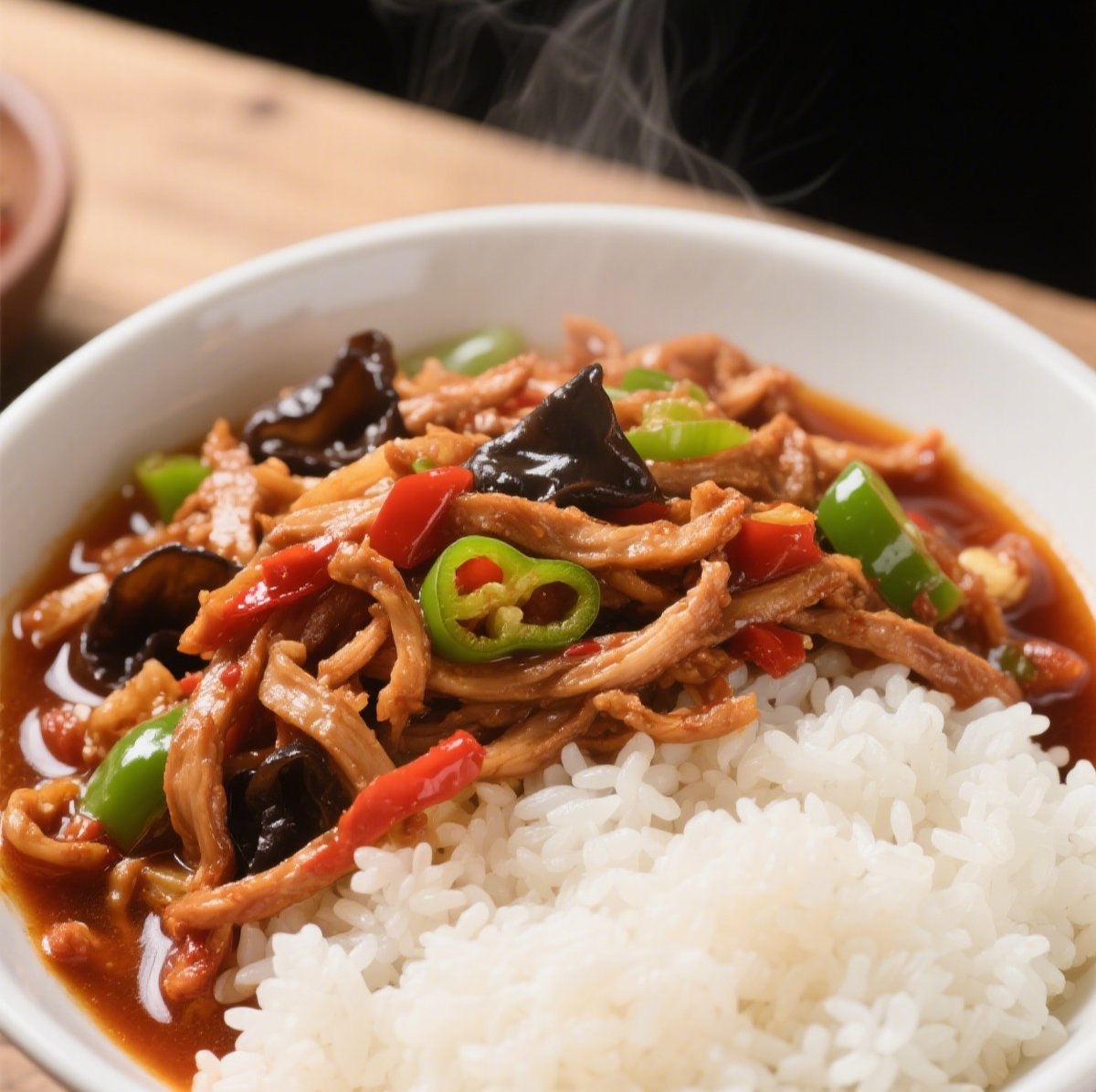
Serve it family-style in the middle of the table with a bowl of rice each and one clean vegetable alongside, steamed bok choy or smashed cucumber. The rice is not a side dish but part of the recipe; without it the pork reads as too salty and too sour. Plate within a minute, because the glaze tightens and the wood ear loses its snap as it sits.
It does not keep past a day. Reheated, the starch glaze breaks and the pork goes firm; if you must, add a splash of water and warm it covered on the hob rather than in a microwave, which will rubber the meat. Cold, it fills a plain omelette well. Drink jasmine tea or a cold lager.
This is the companion recipe to Yu Xiang Rou Si: The Sichuan Dish Whose Name Has Lied to You Your Whole Life. Read the story, then cook the dish.
💬 Comments