Fish-Fragrant Eggplant: Give a Boring Vegetable Ninety Seconds of Real Heat
Raw eggplant is a liar. Cut one open and you get something the color of dirty snow — bland, faintly bitter, shot through with seeds that lodge between your teeth. It's a dull purple club with the charisma of a damp sponge. Nothing about it says dinner, let alone the best thing you'll eat this week.
Then it hits a screaming wok, and all of that changes.
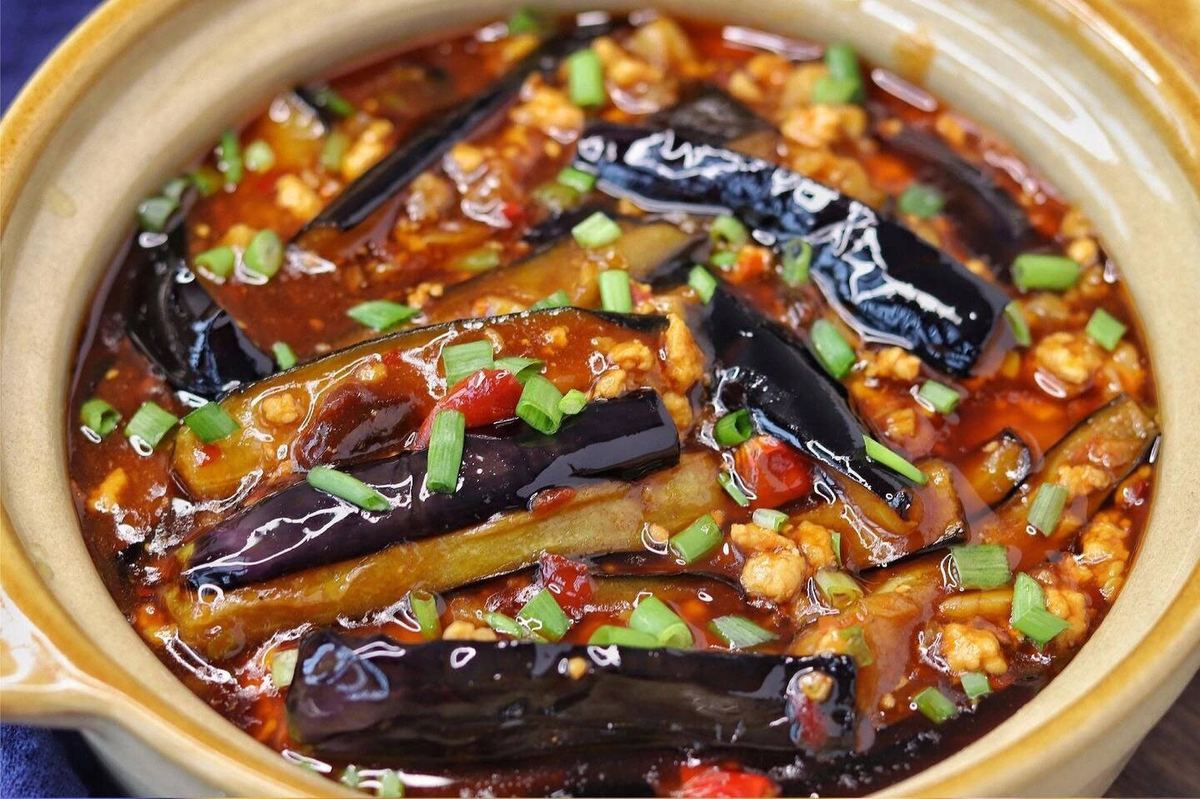
The oil is hot enough to shimmer, one degree short of smoking. The eggplant goes in and the kitchen fills with a sound like hard rain on a tin roof, then a smell — pickled chilies, garlic, sugar caramelizing against hot steel, a sharp thread of vinegar underneath. Ninety seconds later that same dull purple club comes out glossy and black-violet, soft enough to collapse under a spoon, glistening with something that looks alive. This is Fish-Fragrant Eggplant (鱼香茄子, yúxiāng qiézi), and it is my favorite argument for giving boring things a second chance.
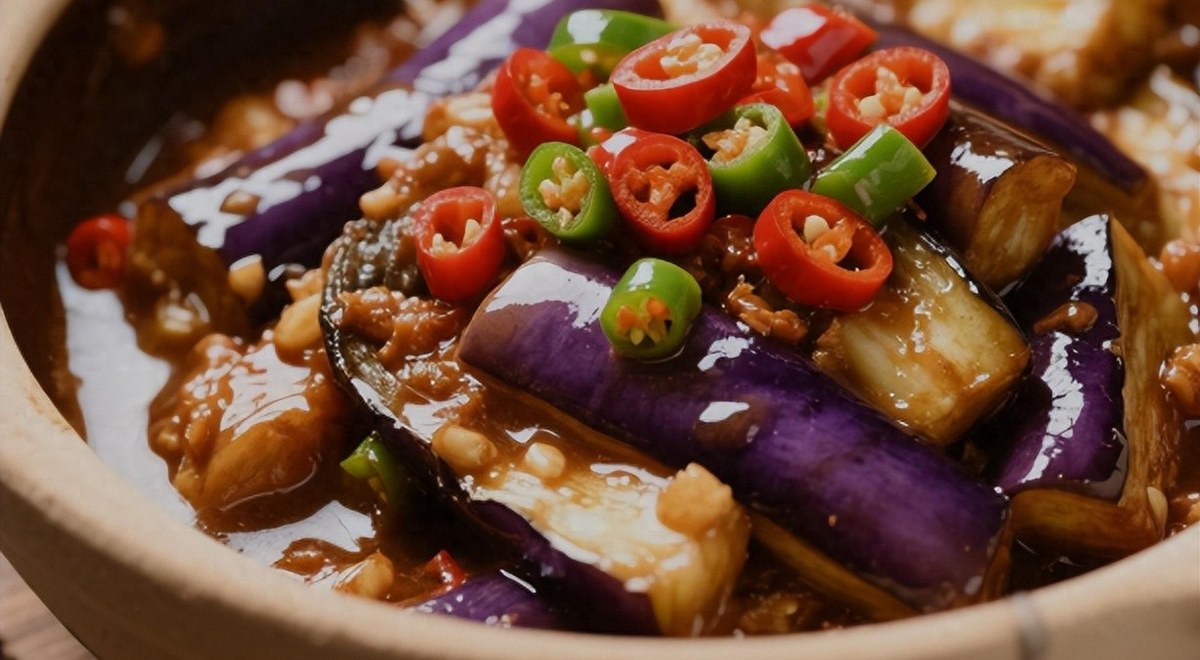
Yes, the name is a lie. There's no fish, and there never was. The "fish fragrance" is a sauce — pickled chilies, ginger, garlic, scallion, sugar, vinegar, soy — that Sichuan cooks built for freshwater fish and then, being Sichuan cooks, tried on everything else in the kitchen. The pork version gets the press. The eggplant version is better, and I will die on that hill, because eggplant doesn't compete with the sauce. It delivers it.
The sponge problem
Here is the thing nobody tells you about eggplant until it is too late: it's a sponge. Its flesh is mostly water locked in a honeycomb of air pockets, and it will drink whatever you put near it — oil, water, sauce, all of it, greedily. Cook it wrong and it swallows half a cup of oil and arrives heavy and slick and faintly nauseating. Cook it right and it does the opposite: it steams in its own juice, collapses into silk, and drinks sauce instead of grease.
The whole trick is two steps. Salt the cut eggplant and let it sweat, then squeeze out the bitter water. That collapses those air pockets so there is less room for oil. Then it goes into oil hot enough to sear the outside before the inside can start drinking. Seal the surface and the sponge can't sponge. The sauce goes in last, and the eggplant drinks that instead.
Restaurants skip the salt and drop it straight into a deep fryer at the right temperature — the instant sear does the same job. Same goal either way: don't let the sponge drink the oil.
The sauce is one flavor with four corners. Sweet from the sugar. Sour from the vinegar. A low savory hum from the soy. And heat with real teeth, the fermented-funky kind that comes from pickled red chilies (pào jiāo, 泡椒) — not from a jar with a rooster on the label. That funk is the whole point. Strip it out and you have sweet-and-sour gloop. Leave it in and the sauce tastes like a Chengdu alley at eleven at night.
The one that drank too much
Every dish has a bad version, and eggplant's is the one that drank too much. You know it the second the plate lands: glossy in a way that looks wet instead of lacquered, every piece heavy, oil already pooling at the bottom. The sauce is there but it's swimming. One bite and your mouth is coated in grease, and the eggplant — which should feel like it's dissolving — fights back, rubbery and sad.
That's what happens when the oil wasn't hot enough, or the eggplant never got salted, or somebody decided the shortcut was fine because it's just a vegetable. The shortcut is never fine. Eggplant punishes impatience harder than most meat does.
Then there's the American version — the unnaturally red sauce, the bell peppers and carrots, sweet enough to pass for dessert. That dish shares a name with this one and nothing else. Send it back. And if it's on a menu next to General Tso's chicken, keep walking.
I grew up hating eggplant. I was a Shanghai kid, and eggplant was what summer tasted like after summer ran out of ideas — stewed, pale, soft in the wrong way, a vegetable that seemed engineered to make you miss meat. My grandmother cooked it differently. She salted it, squeezed it, and dropped it into a wok so hot the whole apartment smelled of garlic and vinegar for an hour. She called it yúxiāng qiézi and never once mentioned the fish that wasn't in it.
I didn't understand then. I understand now: she wasn't cooking a vegetable, she was cooking the technique that makes a vegetable worth eating — the sear, the squeeze, the sauce that only lands if you've done the first two right. Years later, in an American kitchen with an electric stove that refused to get hot enough and no pào jiāo for a hundred miles, I tried to recreate it. The eggplant drank the oil. I ate the greasy mess anyway, out of homesickness, and finally understood why she never rushed the salt.
Eat it over rice
This part is non-negotiable. The rice is the canvas; the eggplant, collapsing and sauce-soaked, is the paint. A proper bite is a spoon of hot white rice with one glossy piece of eggplant dragged through the pool — and you want the piece that's been sitting in the sauce the longest, because that's the one that drank the most. Don't order it as a side vegetable. Order it as the main event and let it carry the meal the way a braise would.
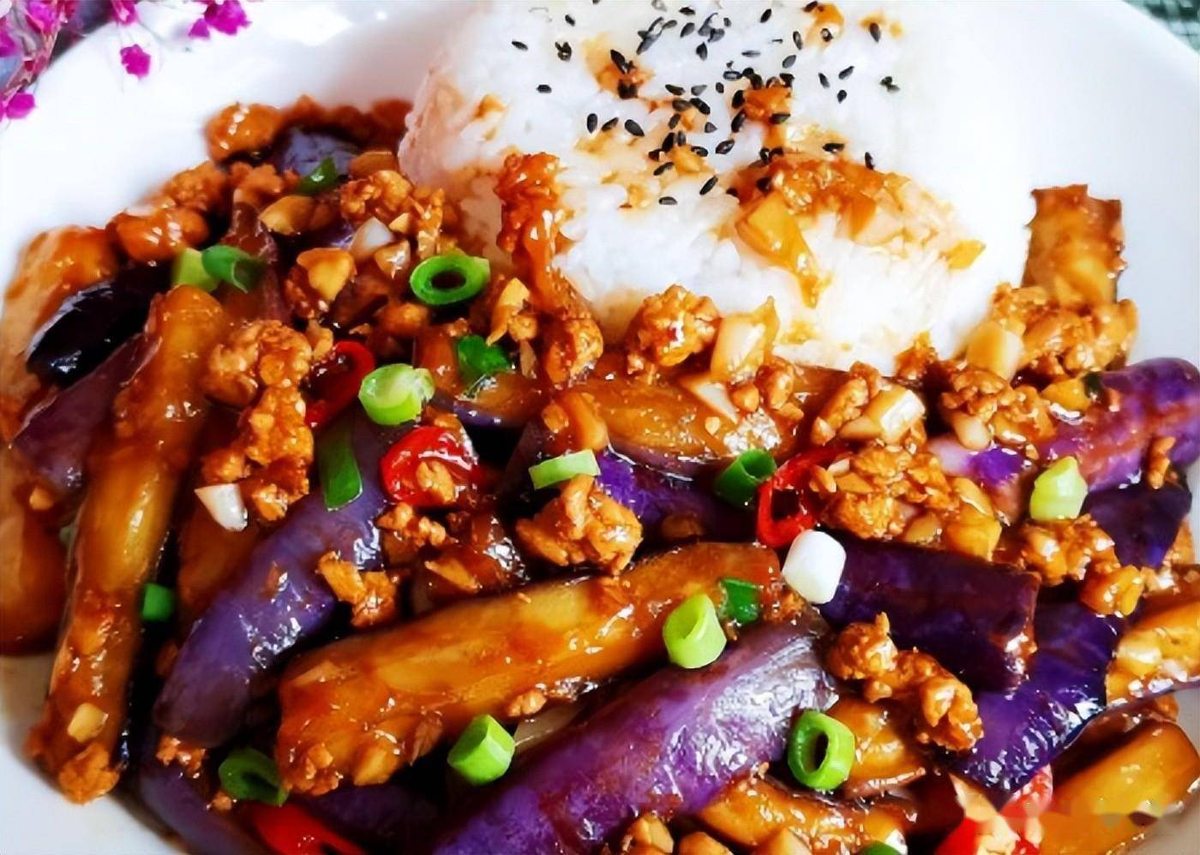
The last piece is always the best. By then it's given up entirely — nothing left but surrender — and it's soaked through into something that barely resembles the dull thing that started. Which, I suppose, is the whole point. Give a boring thing ninety seconds of real heat and the right sauce, and it will surprise you every time.
Out of space for today — I'll save the home-cooking breakdown for another post. Doing eggplant justice at home means nailing the salt-and-squeeze step before the oil ever touches the pan. That deserves its own deep dive. Recipe coming soon.
💬 Comments