Yu Xiang Eggplant: Frying It Without Drinking Oil
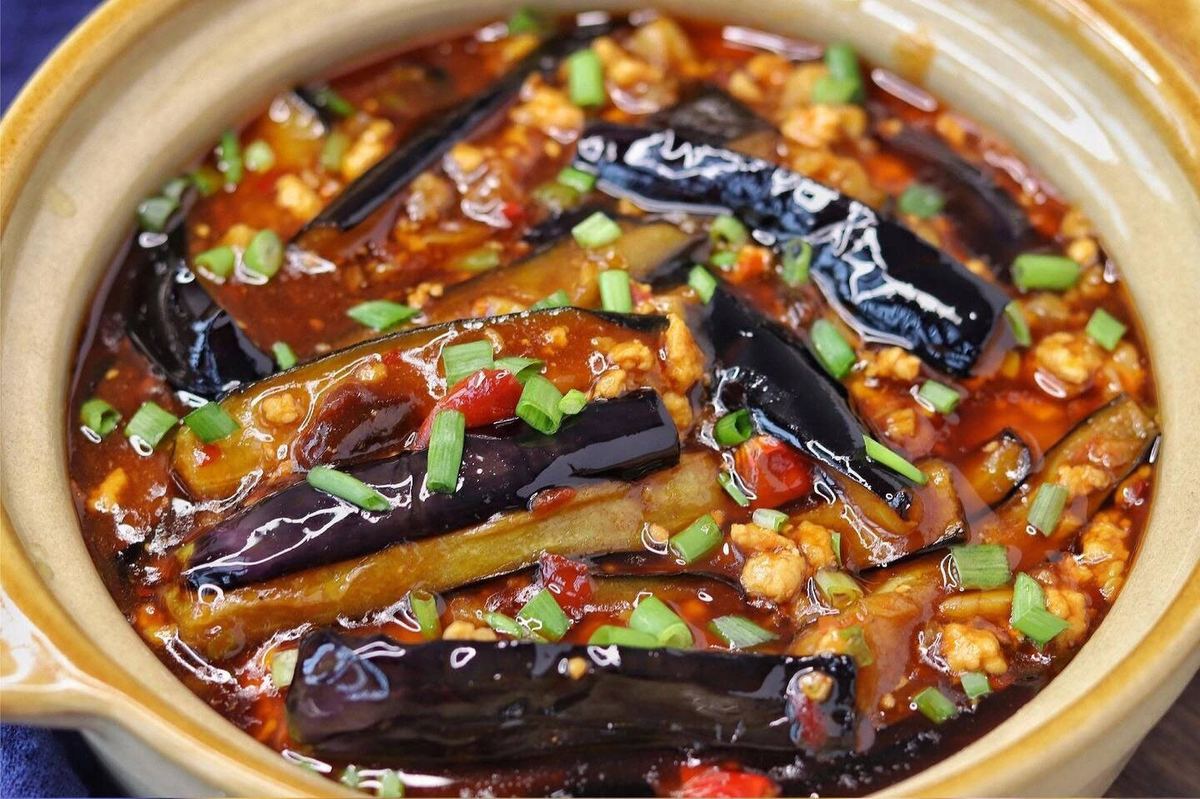
Editor’s Note: This is the kitchen companion to Fish-Fragrant Eggplant: Give a Boring Vegetable Ninety Seconds of Real Heat. Quantities, temperatures and the failure points are below. Read the technique once before you shop.
Why Eggplant Drinks Oil, and the Two Ways to Stop It
The first time you shallow-fry eggplant, the oil disappears. You measure 300ml into a 30cm pan, fry three batches, and by the last the pan is nearly dry while the eggplant sits there heavy. Nothing has burned. The oil is inside the vegetable.
The reason is the structure of the flesh. Eggplant is built like a foam: columns of thin-walled cells with air pockets between them, closer to a sponge than to a carrot. At 175°C the air expands and the water inside the cells turns to steam, and both push out through the cut faces. That is what the bubbling at the surface is. As the water leaves, the channels stay open, and when you lift a piece out and the internal pressure drops, oil moves into the space the steam vacated.
None of that can be fixed in the pan. It has to be handled beforehand, and there are two reliable ways. Why this matters: both pre-collapse the cell structure, so there is far less steam to drive the exchange.
The slow way is salt. Toss 600g of batons with 1.5 tsp of fine salt, leave them in a colander for 10 minutes, then gather them in a tea towel and squeeze. Forty to sixty millilitres of cloudy water comes out and the batons go limp. That is the water that would otherwise have boiled into the oil.
The fast way is the microwave. Spread the batons in a covered bowl and cook on high for 3 minutes. The vegetable steams in its own water and collapses evenly, without salt. Use this when the eggplant is dense or you have not planned ahead. Do not do both; salting an already-steamed batch gives you a pulp.
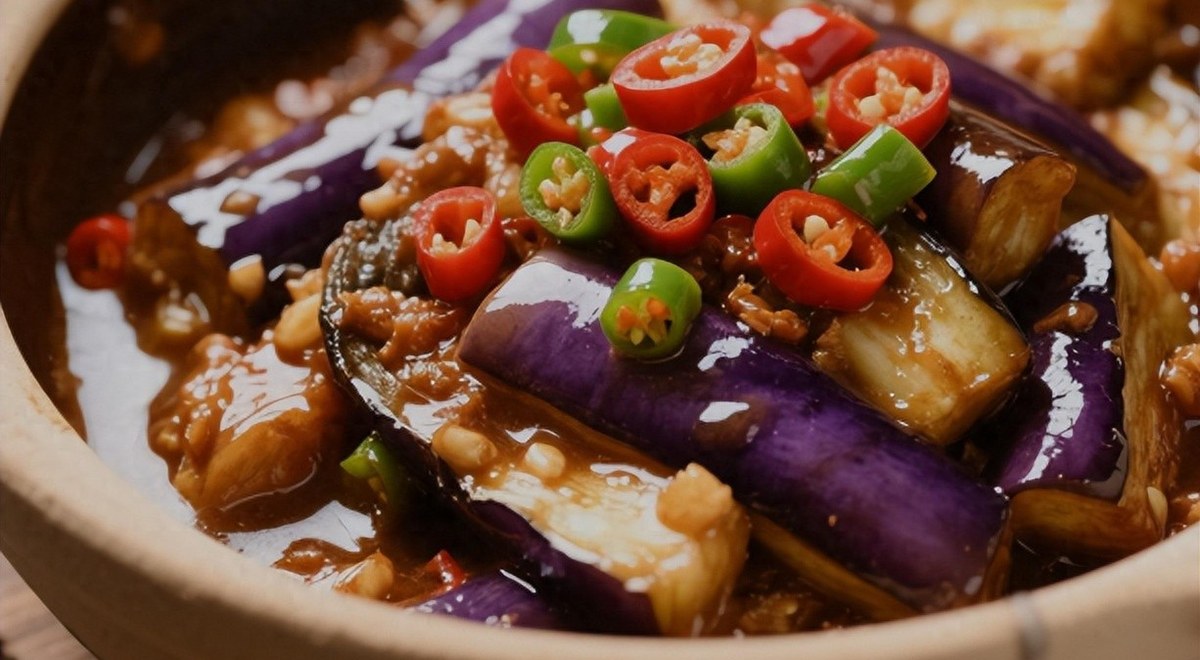
The second half of the fix is temperature. A 1.5cm baton dropped into oil at 175°C sets a skin in about 20 seconds and loses a fifth of its weight in water over the next 90. That skin keeps the rest of the oil out. Below 160°C there is no skin, only a wet surface, and the piece keeps drinking; above 190°C the outside browns before the inside collapses.
Keep the pan uncrowded. 300ml of oil comes 1cm up the side of a 30cm pan, enough for a shallow fry. Add 200g at a time. A full pan drops the oil to 140°C, and then you are braising, not frying.
The name needs explaining. Yu xiang means fish-fragrant, and it names the seasoning Sichuan cooks use for fish: pickled chilli, vinegar, sugar, garlic, ginger, scallion. There is no fish in it and never was. The pickled chilli, pao jiao, is what makes the combination yu xiang; without it you have a sweet-sour sauce.
Ingredients
For the eggplant
- 600g long Asian eggplant, about 3, cut into 6cm batons 1.5cm thick
- 1.5 tsp (8g) fine salt, for drawing water
- 300ml neutral oil, for shallow frying
For the yu xiang sauce
- 2 tbsp (30ml) aged Chinkiang vinegar
- 2 tbsp (30g) caster sugar
- 1 tbsp (15ml) light soy sauce
- 1 tsp (4g) cornstarch
- 4 tbsp (60ml) cold water
For the aromatics
- 2 tbsp (30ml) neutral oil, for the sauce base
- 4 cloves garlic (16g), minced
- 16g fresh ginger, minced
- 3 spring onions (45g), whites minced, greens sliced thin
- 2 tbsp (30g) Sichuan pickled chilli (pao jiao), chopped
- 1 tsp (3g) ground Sichuan peppercorn, optional
- 1 tsp (5ml) sesame oil, off the heat
Substitution notes: Without pao jiao, use 1.5 tbsp of Pixian chilli bean paste and add 1 tsp of rice vinegar with the sauce; the paste brings the fermented note but not the clean sourness. Rice or cider vinegar can replace Chinkiang at the same volume, but add another half teaspoon of sugar, since Chinkiang’s malt sweetness is what the 2 tbsp is calibrated against.
Globe eggplant works: cut it into 2cm wedges, salt for 15 minutes rather than 10, and fry for 2 minutes rather than 90 seconds.
Prep: Fifteen Minutes, Ten of Them Waiting
1. Cut the batons (5 minutes)
Trim the calyx, cut each eggplant into 6cm lengths, then split each length into batons about 1.5cm square. Leave the skin on; it holds the shape and gives the sauce something to cling to. Match thickness rather than weight, because thickness decides when the inside collapses.
2. Draw the water (10 minutes, unattended)
Toss the batons with the salt in a colander and leave them for 10 minutes. Squeeze a handful at a time in a tea towel until no more water runs, but do not wring; crushed batons break up in the oil and cloud it. For the microwave version, cover and cook on high for 3 minutes, then cool for 2 minutes on a plate.
3. Mix the sauce in the ratio (2 minutes)
Stir the cornstarch into the cold water until smooth, then add the sugar, soy and vinegar. The ratio is two parts vinegar, two sugar, one light soy, one starch, four water. Taste it: sharp first, then sweet, then salty, and thin on the spoon.
4. Cut the aromatics one to one to one (4 minutes)
Mince the garlic, ginger and scallion whites in equal volume, about 16g each, and keep them in one pile. Chop the pao jiao finer and separately, since it goes into the oil first. Slice the greens for the end.
Step by Step: Twelve Minutes, Three Batches
Step 1: Bring the oil to 175°C (4 minutes)
Pour the oil into the pan and heat over medium-high. A chopstick held at the edge should send up a ring of small bubbles at about 170°C; a cube of bread browns in 45 seconds at 175°C. Keep the oil between 170°C and 180°C for the whole fry.
Step 2: Fry in three batches (90 seconds each)
Lay in 200g of batons, one layer, cut faces down where you can. The oil drops to about 165°C and recovers within 40 seconds. Leave them for 60 seconds, then turn once. They are done when the edges are pale gold and the surface has blistered. Lift onto a wire rack, not kitchen paper, which traps steam and softens the crust. Repeat twice, skimming stray bits between batches so they do not burn and bitter the oil.
Step 3: Build the sauce base (45 seconds)
Pour off all but 2 tbsp of the oil and let the pan cool for 30 seconds. Add the pao jiao over medium heat and stir for 20 seconds, until the oil reddens and smells fermented rather than raw. Add the garlic, ginger and scallion whites and stir for 15 seconds only. The moment they smell toasted, they are heading for bitter.
Step 4: Return the eggplant and glaze it (90 seconds)
Tip the batons back in, stir the sauce once because the starch settles, and pour it down the side of the pan. Turn the heat to high and fold, two or three times, for 60 seconds, until the glaze turns glossy and clings. Add the vinegar now, if you held it back, and fold once more for 20 seconds. Why this matters: vinegar added at the start boils for a minute and a half, and the sharpness cooks off along with the aroma that makes the dish smell like a Sichuan kitchen. Kill the heat, add the sesame oil and greens, and slide everything into a warm dish. Serve within five minutes.
Key Pitfalls
The pan went dry and the eggplant was greasy. You skipped the salt or the microwave and fried below 160°C, where there is no skin to keep the oil out. Salt for 10 minutes and squeeze, or microwave for 3, then fry at 175°C.
The batons were limp with no crisp edge. The pan was crowded, so the oil fell to 140°C and the pieces steamed each other. 200g per batch in a 30cm pan, and let the oil recover between batches.
The sauce turned into a gluey paste. The starch went in dry, or the sauce boiled after it thickened. Slurry the cornstarch in cold water and pull the pan off the heat as soon as the glaze coats, about 60 seconds.
The dish tasted of raw vinegar. The vinegar went in off the heat and the dish was plated at once. Give it 20 seconds over high heat, enough to soften the edge without driving off the aroma.
It was sweet and sour but nobody called it yu xiang. There was no pickled chilli. Vinegar, sugar and garlic alone make a sweet-sour sauce; 2 tbsp of pao jiao fried in the oil is what makes it fish-fragrant.
The eggplant collapsed into mush. It was fried twice, or microwaved and then fried for two minutes. Keep each batch to 90 seconds and add the sauce only at the very end.
The garlic turned bitter. The aromatics hit oil hot enough to brown them. Cool the pan for 30 seconds after pouring off the frying oil, and give the garlic, ginger and scallion 15 seconds.
Serving Suggestions
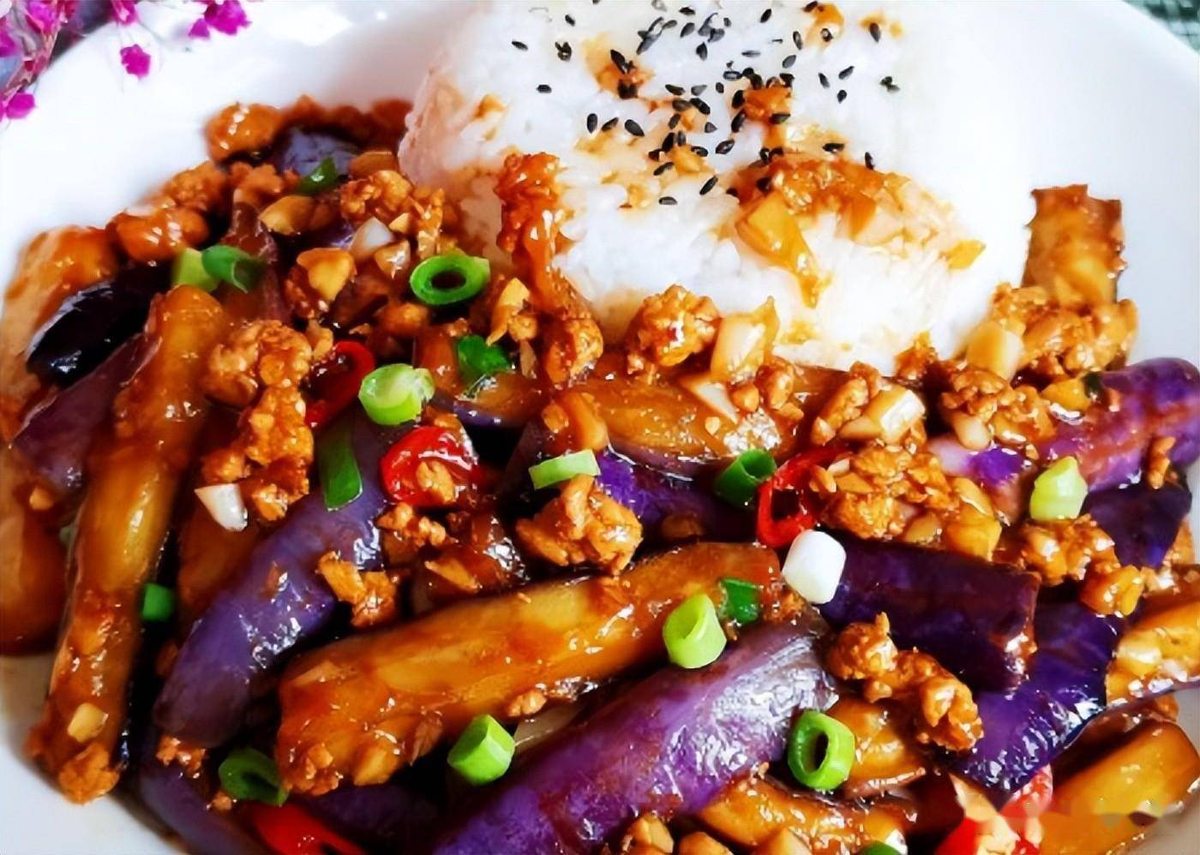
Serve it with plain white rice and nothing competing. The sauce is strong, sweet and sour at once, and rice is the only thing that needs to be there. If you want a second dish, make it a cold one, smashed cucumber or blanched greens with salt, so the table has something clean against the oil. The dish is best warm rather than hot, because the glaze tightens as it cools.
Leftovers keep two days but do not reheat well; the batons soften and the sauce separates. Eat them cold, or loosen with a spoonful of hot stock and toss through wheat noodles, where the softness stops mattering. Drink a light lager or jasmine tea, since the vinegar and chilli flatten anything delicate.
This is the companion recipe to Fish-Fragrant Eggplant: Give a Boring Vegetable Ninety Seconds of Real Heat. Read the story, then cook the dish.
💬 Comments