You Po Mian: The Shaanxi Noodles That Scream When You Pour the Oil
I was twenty-three, alone in Xi'an for the first time, walking down a back alley behind the Drum Tower at eleven at night. I had no plan. I had a hundred kuai and a stomach that hadn't eaten since lunch on the train.
The alley was narrow. Smoke pouring out of doorways. Every few meters another cook working a wok, scraping a grill, pulling dough. Then I heard it: a hiss so sudden and violent it sounded like something breaking. I turned toward the sound.
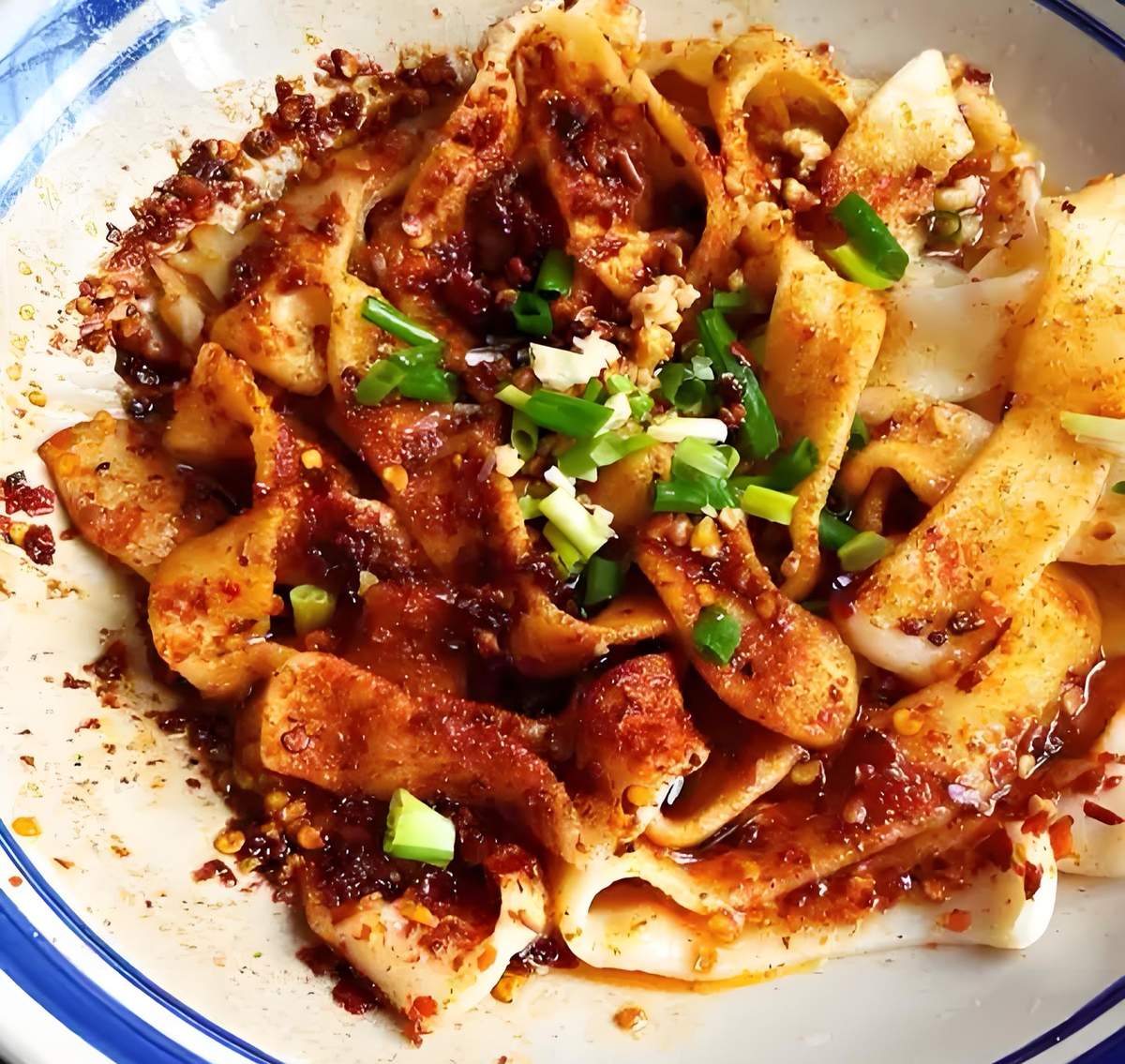
A man in a white apron had just poured a ladle of smoking oil over a bowl of noodles. The oil was still crackling when he set the bowl on the counter. On top: a mound of hand-pulled noodles the width of two fingers, dusted with chili flakes, minced garlic, chopped scallions. The oil had bloomed the chili into a crimson slick, toasted the garlic into gold, and the scallions — the scallions were still sizzling.
He pushed the bowl toward me without a word. The smell hit: toasted wheat, burnt chili, raw garlic flash-cooked in oil, the kind of smell that bypasses thinking and goes straight to hunger. I paid eight kuai.
You Po Mian (油泼面, yóu pō miàn) is not a dish that asks for your attention. It takes it. And once you've heard the sound of hot oil hitting a bowl of noodles, you don't forget it.
The Architecture of a Bite
I spent thirteen years building systems at Microsoft, Google, and NVIDIA. The best architectures are the ones where removing one component destroys the whole thing. You Po Mian has five. Every one is load-bearing.
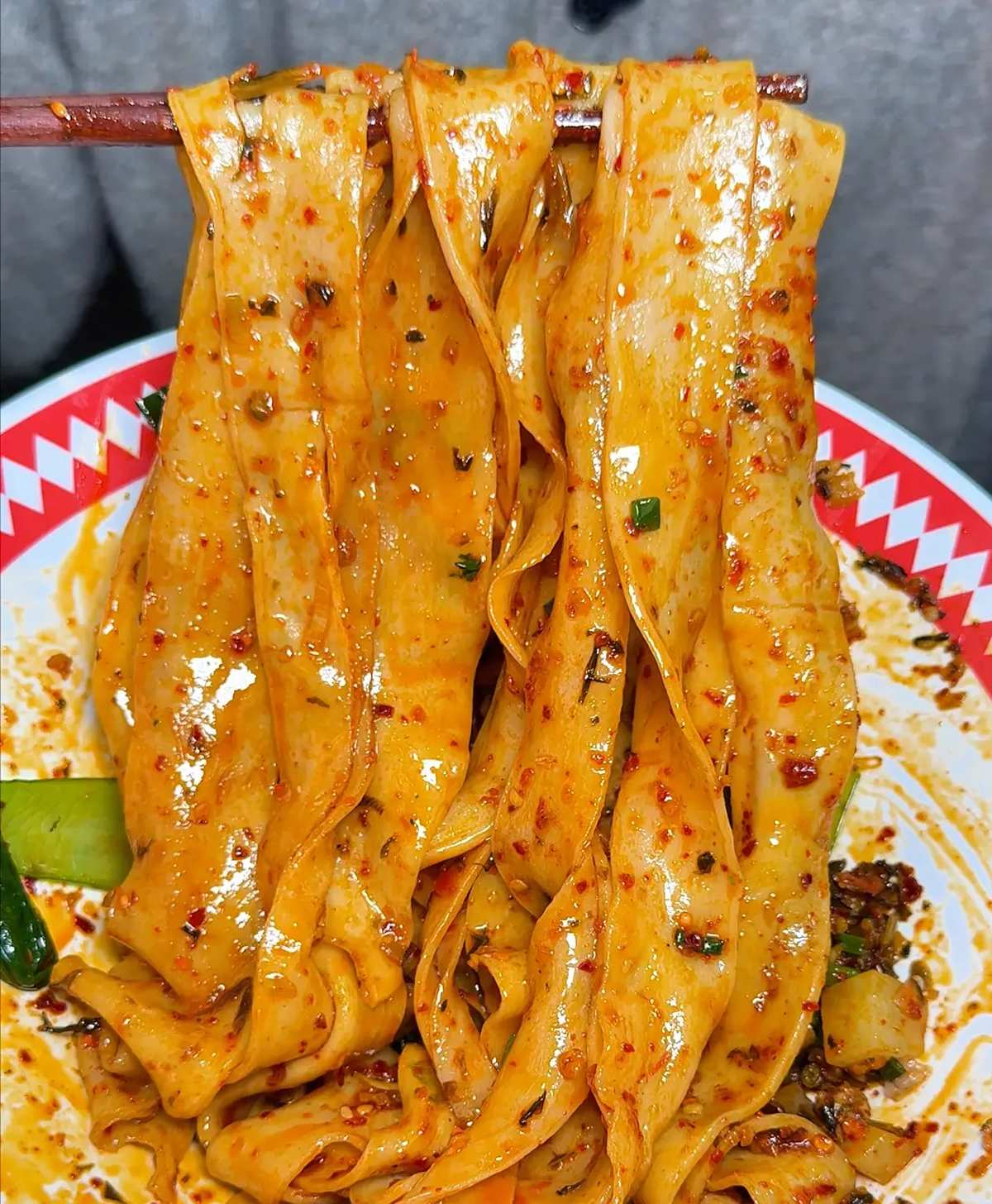
The noodles: handmade biang biang noodles, pulled wide and flat. A single belt can stretch two feet. The puller grabs both ends, slaps the dough against a floured counter — thwack — then stretches again until the belt is maybe an inch wide and the thickness of a worn leather belt. Machine-pulled noodles can't do this. They fracture under their own weight.
The chili flakes: coarsely ground, not powder. Specific variety: Qínjiāo (秦椒), the local Shaanxi chili. Bright red, medium heat, a fruitiness that cheaper chilies don't have. Fine powder burns in the oil. Coarse flakes bloom — they release their color and fragrance without turning bitter.
The garlic: minced raw, piled on top of the chili flakes. Never cooked beforehand. The hot oil flash-fries it on contact. You get raw garlic sharpness at the center, toasted garlic sweetness at the edges, both in the same bite.
The scallions: chopped green parts only, scattered last. They cook in the oil for maybe three seconds. Still bright green. Still crisp. They're the fresh note that cuts through all the heat and oil.
The oil: rapeseed oil (菜油, càiyóu). Smoking hot. 190°C minimum. If the oil doesn't smoke, the chilies don't bloom. If it smokes too long, everything burns. The window is about fifteen seconds.
A good bowl of You Po Mian sounds like a kitchen accident and tastes like it was planned for a thousand years.
The Origin
A Qing dynasty scholar in Shaanxi — nobody agrees on which one — supposedly saw a poor family making this and wrote a poem so long it created the biang character: 58 strokes, the most complex Chinese character still in use. Whether the poem came first or the noodles came first is a Shaanxi bar argument that nobody wins. What matters: this was peasant food. Flour, water, chili, oil. Four ingredients from the land. No meat. No pretense.
The Enemies of You Po Mian
The Thin Noodle Version. If your You Po Mian arrives with spaghetti-thin noodles, you're eating the wrong dish. Biang biang noodles must be wide — an inch minimum. Thin noodles can't hold the weight of the oil. They become a slick, sad pile at the bottom of the bowl.
The Pre-Mixed Version. Some places toss the noodles in oil in the kitchen and bring it to your table already dressed. This is culinary cowardice. The hot oil pour must happen at the table or directly before serving. You need to hear it. You need to see the scallions still sizzling. A silent You Po Mian is a dead You Po Mian.
The Overloaded Version. I've seen versions with bean sprouts, shredded carrot, cucumber matchsticks, fatty pork, pickled mustard greens — a whole salad bar dumped on top. You Po Mian is not bibimbap. The dish works because it's spartan. Chili, garlic, scallion, oil, noodles. That's it. Every addition is an apology, and this dish has nothing to apologize for.
The Lukewarm Oil Version. The oil must be smoking. Not warm. Not "heated through." Smoking. If the chili flakes don't sizzle when the oil hits, send it back. Cold oil on noodles is just an oily noodle salad. The flash-cooking of aromatics is the entire technique. Without it, you're eating raw garlic and chili powder on boiled dough.
The right You Po Mian: wide hand-pulled noodles in a ceramic bowl, piled with coarse chili flakes and minced raw garlic, hit with smoking rapeseed oil that blooms the chili and toasts the garlic on contact, scallions still green and crisp. A splash of black vinegar and light soy at the bottom. You mix it yourself, scraping the sides, coating every belt of noodle, while the oil still crackles.
How to Eat It
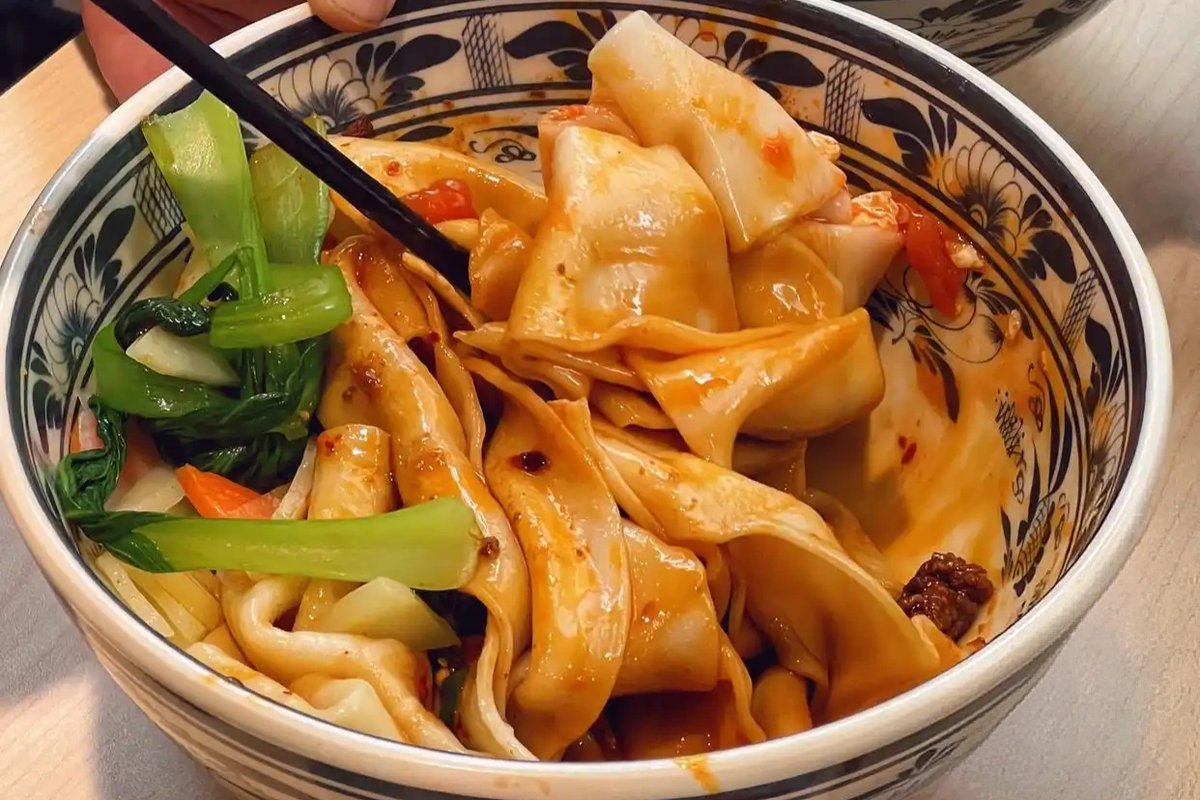
You mix immediately. The second the oil stops crackling, grab your chopsticks and go. Lift from the bottom — the vinegar and soy pool there — and fold the noodles over themselves until every strand is the color of sunset. Don't wait. Cold You Po Mian is an oxymoron.
I learned this the hard way. First bowl in Xi'an, I sat there admiring it for thirty seconds, taking a photo, doing the tourist thing. By the time I mixed, the oil had cooled into a film. Still good. Not transcendent. The second bowl — the next night, same alley — I mixed while the oil was still popping. Different dish entirely.
Eat it fast. Slurp it loud. The noodles should fight back just slightly — that's the gluten, the hand-pull, the structure. When the bowl is empty, there should be a thin slick of chili-red oil at the bottom. Drag your finger through it. Nobody's watching. And if they are — 伐要怕龌龊. Don't be afraid of the mess. My grandmother's rule. She never made You Po Mian, but she would have understood it completely.
Out of space for today — I'll save the home-cooking breakdown for another post. Making biang biang noodles from scratch — getting the dough hydration right so it stretches two feet without tearing — that deserves its own deep dive. Recipe coming soon.
💬 Comments