You Po Mian: The Oil Has to Smoke
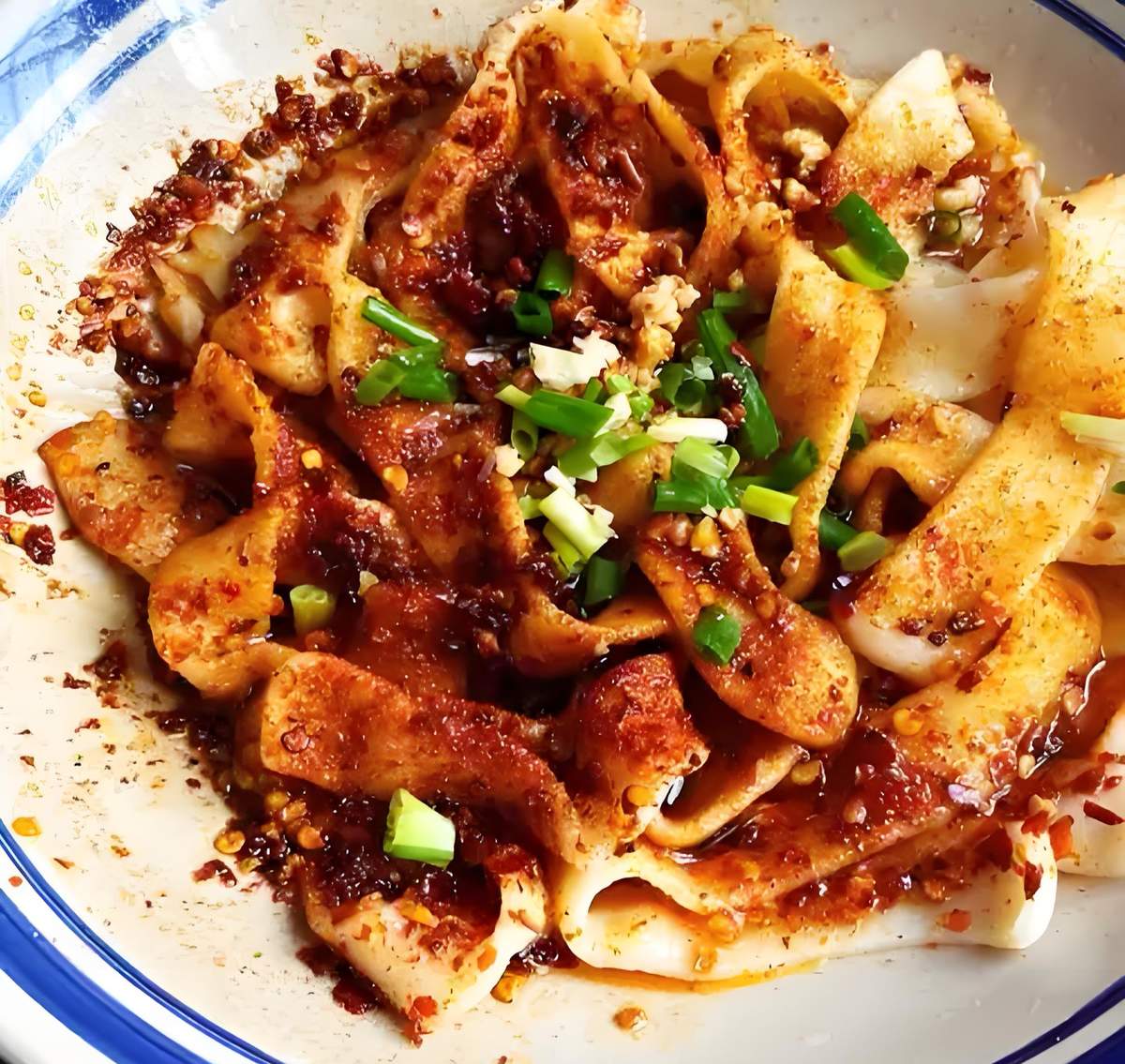
Editor’s Note: This is the kitchen companion to You Po Mian: The Shaanxi Noodles That Scream When You Pour the Oil. Quantities, temperatures and the failure points are below. Read the technique once before you shop.
Why the Second Rest Is the Whole Recipe
You Po Mian is four ingredients and one violent gesture: flour, water, salt, and oil heated until it smokes, poured onto a mound of chilli flakes and raw garlic. Each stage can fail quietly. The dough tears instead of stretching, the chilli turns to ash, and the bowl arrives tasting of greasy noodles rather than chilli oil.
The dough is stiff on purpose. 300g of bread flour to 150ml of water is 50 percent hydration, dry enough that the gluten forms fast and tight, and dry enough that the noodle keeps a bite after its short boil. Bread flour at 11.5 to 12.5 percent protein has the strength to take a 30cm piece out to a metre without a rip, provided the gluten relaxes first.
That relaxation is the recipe. The first rest of 20 minutes lets the flour finish taking up water, and the shaggy mass turns smooth. The second rest, after the dough is divided and oiled, decides whether you get noodles. Dividing re-tensions the gluten, and a strand pulled straight after portioning springs back and splits at its thin points. Twenty minutes later it hangs slack. Why this matters: the second rest undoes the damage that dividing did, it is not a repeat of the first.
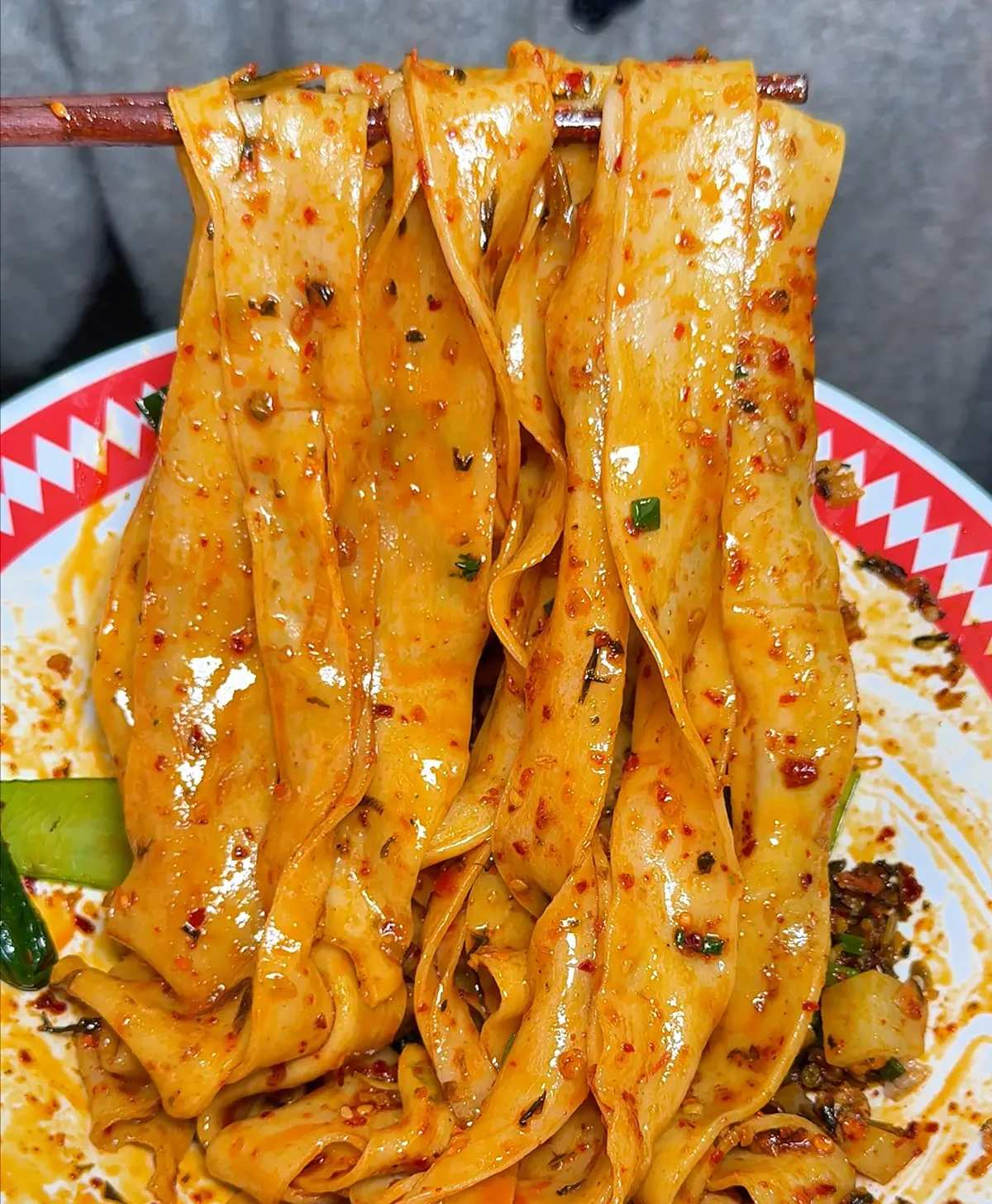
The oil is the other half. Rapeseed at 200-210°C, just past its smoke point, drives the water out of the flakes, which is the sizzle, and dissolves the pigments that turn it red. Below 180°C the flakes taste raw and dusty. Above 220°C they scorch and go bitter in ten seconds, and nothing added afterwards brings them back.
Ingredients
For the dough
- 300g bread flour (11.5-12.5% protein)
- 150ml water, at room temperature
- 3g fine salt
- 15ml rapeseed oil, for oiling the dough
For the topping, per bowl
- 2 tbsp (16g) coarse chilli flakes, Sichuan erjingtiao if you can get them
- 1 tbsp (10g) garlic, minced to about 2mm
- 1 tsp (2g) ground Sichuan pepper, freshly ground
- 2 tbsp (30ml) Chinkiang black vinegar
- 1 tbsp (15ml) light soy sauce
- 100g bok choy or choy sum, halved lengthwise
- 1 tsp (4g) fine salt, for the blanching water
- 60ml rapeseed oil, for the pour
- 2 spring onions (30g), greens sliced thin, optional
- 1 tsp (5ml) toasted sesame oil, optional, added off the heat
Substitution notes: With plain flour at around 10 percent protein, drop the water to 140ml and rest 30 minutes rather than 20, or the strands break at the first slap. Coarse gochugaru works in place of Sichuan flakes but is milder and sweeter, so add a pinch of cayenne and use the full 2 tbsp for colour. Without Chinkiang vinegar, use 2 tbsp rice vinegar plus 1 tsp dark soy; the bowl will be sharper.
Bok choy is usual, but spinach, choy sum, or garlic chives all work. Whatever you use, blanch it and shake it dry, or it waters down the chilli oil at the bottom of the bowl.
Prep: Mix, Rest, Portion, Rest Again
1. Mix and knead (6 minutes)
Dissolve the 3g of salt in the 150ml of water. Put the flour in a wide bowl, add the water in three goes, and stir until no loose flour is left. Tip onto the bench and knead 6 minutes: heel of the hand, fold, quarter turn. It is ready when the surface is smooth and springs back slowly.
2. First rest (20 minutes)
Shape into a ball, cover with an inverted bowl, and leave 20 minutes. This is hydration, not flavour. Uncovered, the dough should feel softer at the edge and press in without resistance.
3. Divide, roll, oil (5 minutes)
Cut into 4 pieces, about 115g each, and roll each into a cylinder 12cm long and 3cm thick. Roll each in the 15ml of rapeseed oil until slick and lay them in a dish, not touching. Oil, not flour: flour dries the surface and makes it slip and tear when slapped.
4. Second rest (20 minutes)
Cover and wait 20 minutes. Lift one at both ends; if it droops and stretches without pulling back, it is ready. If it holds rigid, give it 10 more minutes. Cold dough will not stretch, so keep the dish away from the window.
Step by Step: Pull, Tear, Pour, Toss
Step 1: Press and slap the noodle (2 minutes per strand)
Press one oiled cylinder flat with your palm into an oval 15cm long and 8cm wide. Lift both ends, let the middle hang, and slap the centre down on the bench. The impact stretches it; your hands only guide. Two or three slaps take it to 60-70cm, thin enough at the centre that light comes through. Work on a bare, dry patch of bench so the strip grips and stretches instead of sliding.
Step 2: Tear into 3cm widths
Lay the sheet flat, pinch the near edge, and tear lengthwise into ribbons 3cm wide, pulling steadily rather than sawing. A torn edge is rough on purpose and holds sauce better than a cut one. Lay the ribbons on an oiled tray in one layer, covered, while you shape the rest.
Step 3: Blanch the greens (45 seconds)
Bring a large pot to a rolling boil with the 1 tsp of salt. Drop in the 100g of greens for 45 seconds, lift with tongs, and shake hard.
Step 4: Boil the noodles (75 to 90 seconds)
Slide the ribbons in one at a time so the water keeps moving. They are done when they float and the thickest point turns from chalky to translucent, 75 to 90 seconds. Lift straight into the bowls, letting the water drip back.
Step 5: Build the bowl in order
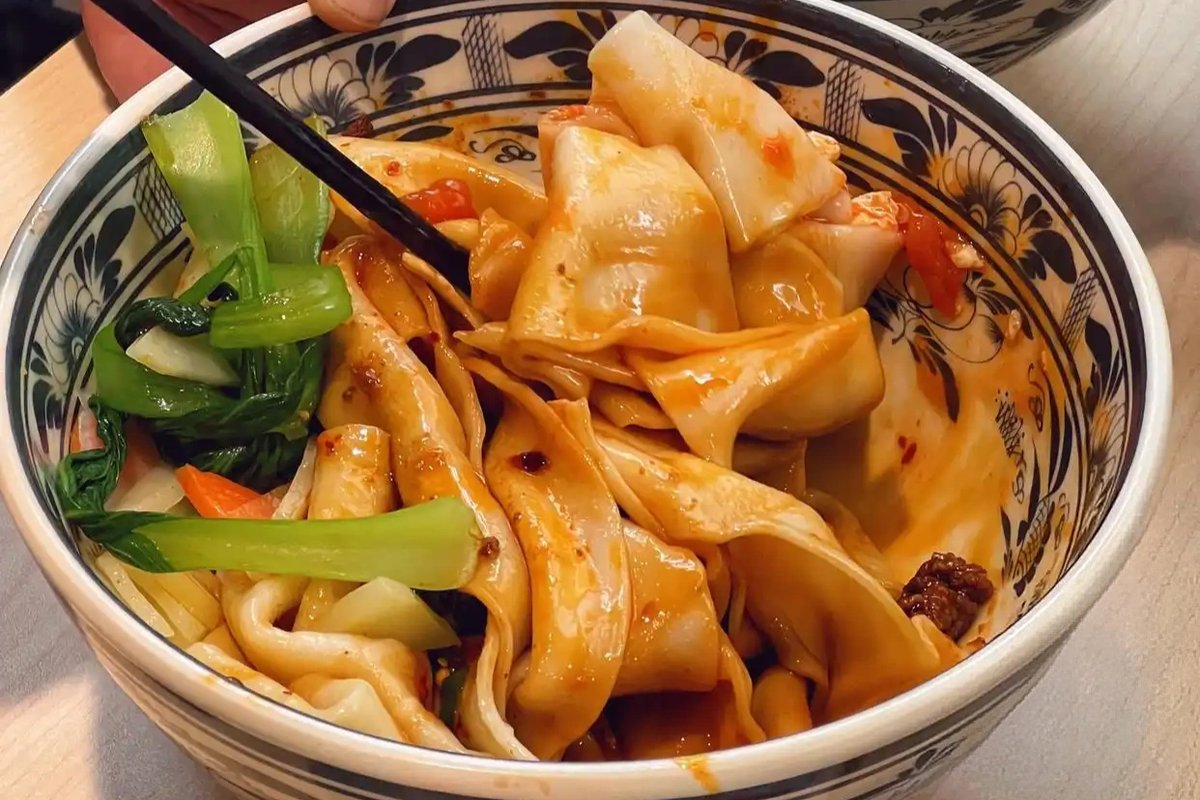
Warm the bowls with boiling water first: a cold bowl pulls the heat out of the oil before it reaches the chilli. Mound 2 tbsp of chilli flakes, 1 tbsp of garlic, and 1 tsp of ground Sichuan pepper together in the centre of each bowl. Pour the 2 tbsp of vinegar and 1 tbsp of soy around the rim, not over the chilli, or the liquid washes the flakes to the bottom. Lay the greens over the far side and keep the mound bare. Why this matters: oil on bare noodle greases it without flavouring it.
Step 6: Heat the oil to 200-210°C (3 to 4 minutes)
Put 60ml of rapeseed oil in a small pan over medium-high heat. It is ready when a wisp of smoke rises and a dropped flake fizzes at once, 200-210°C. Take the pan off the heat the moment it smokes.
Step 7: Pour in three stages (20 seconds)
Pour a third onto the chilli and garlic and wait 5 seconds while it roars. Pour the second third over the same spot, which cooks the raw edge off the garlic. Pour the last third in a circle around the mound so it runs into the noodles. Hold the pan 15cm above the bowl; from higher it spits and scorches.
Step 8: Toss within 30 seconds
Fold from the bottom with chopsticks and a spoon so the vinegar and soy come up through the noodles. Thirty seconds is the window; after that the chilli settles, the noodles cool, and they start to clump.
Key Pitfalls
The dough tore into ragged holes as you pulled. It is under-rested, or the flour is weaker than you thought. Do not add water. Press the torn piece together, cover it, wait 15 minutes, then pull slower and leave the centre thicker.
The strand sprang back to half the length you pulled. The gluten is still tight, usually because the second rest was cut short or the dough went cold. Rest it 10 more minutes at room temperature. Pulling harder only moves the failure to the thinnest point.
The chilli flakes went black and tasted of ash. The oil passed 220°C, or it went on in a thin fast stream from too high and scorched the surface. Heat to 200-210°C, take the pan off the flame, hold it 15cm up, and pour in three stages.
The bowl tasted greasy instead of hot and sharp. The oil landed on bare noodle instead of the aromatics, and the vinegar was poured over the chilli and washed it down. Mound the chilli, garlic, and pepper together and put the liquids around the rim.
The noodles welded into a single lump. A cold bowl, too little oil on the strands, or a slow toss. Warm each bowl with boiling water for 30 seconds, oil the resting ribbons, and fold within 30 seconds of the pour.
The garlic tasted raw and caught at the back of the throat. The second pour was below about 180°C, so the allicin never softened. If the sizzle goes quiet between stages, put the pan back on the heat for 20 seconds before the next pour.
The bottom of the bowl turned watery. The greens went in wet. Blanch them 45 seconds, lift with tongs rather than tipping the pot, and press them against the colander. Water at the base dilutes the vinegar and stops the oil clinging.
Serving Suggestions
Take the bowls to the table as you toss them, with the oil still moving, and put extra chilli flakes and black vinegar on the side for anyone who wants more acid. A cold cucumber salad with salt and a little vinegar is the usual thing alongside, and it cuts the oil without competing with it.
Drink cold beer, cold soy milk, or plain hot tea. Leftover dough keeps oiled in the fridge for 24 hours and pulls nearly as well after 20 minutes at room temperature. Leftover noodles do not keep; if you must, refresh them in boiling water for 20 seconds and dress them with fresh chilli oil.
This is the companion recipe to You Po Mian: The Shaanxi Noodles That Scream When You Pour the Oil. Read the story, then cook the dish.
💬 Comments