Yangzhou Fried Rice: Every Grain Counts
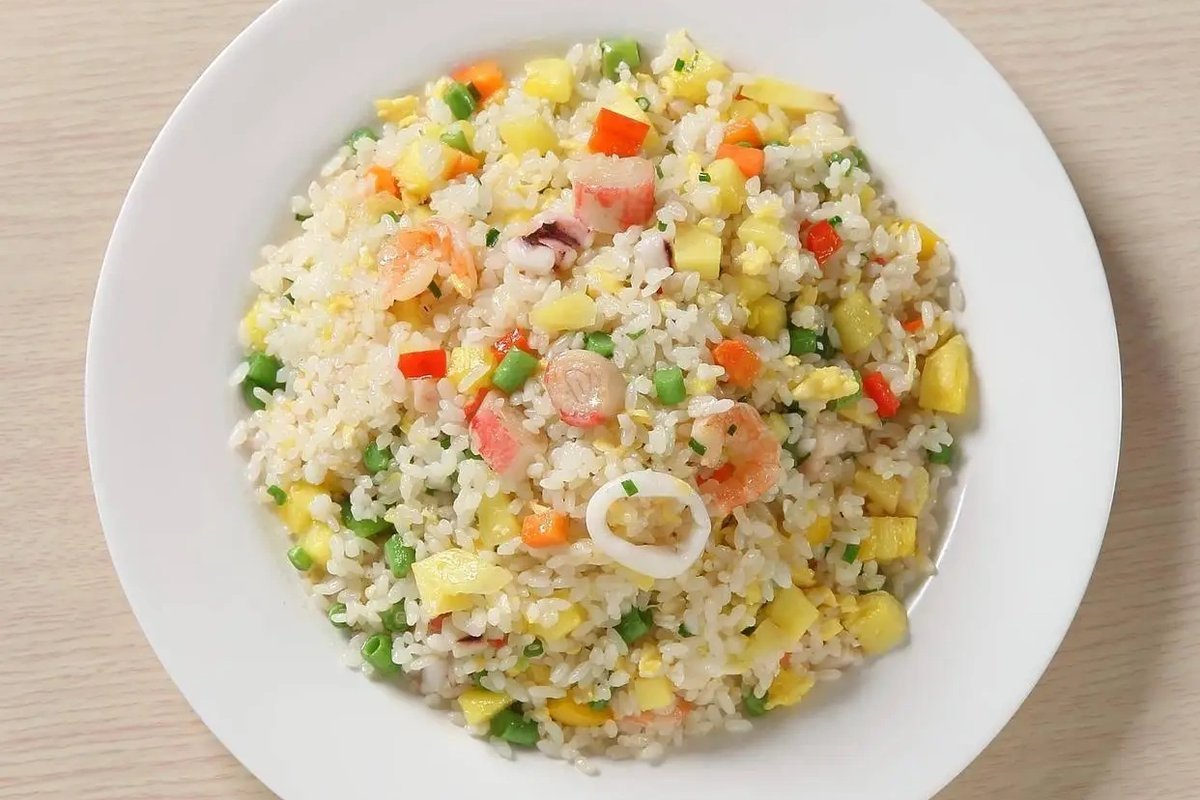
The wok sounds like a jet engine at takeoff.
You’re standing outside a shop in Shanghai’s Huangpu district at half past midnight. The sign says 扬州炒饭 in red neon, and underneath it a man in a stained white apron is working a carbon-steel wok over a flame that looks like it could weld rebar. He tosses the rice with one hand and cracks an egg with the other — not showing off, just moving at the speed of someone who’s done this forty thousand times. The egg hits the hot oil and explodes into a yellow cloud. The rice follows half a second later, every grain hitting the wok separately, and the smell of toasted starch and scallion oil barrels into the street.
I was twenty-five, back in Shanghai for the first time since college, and I had just realized I had never eaten actual fried rice before. What I’d been eating — in Palo Alto cafeterias, in Seattle food courts, in the sad fluorescent glow of a Google micro-kitchen at 11pm during a production incident — was rice that had been stir-fried. Different thing. Different species. This was something else: each grain separate, each grain carrying its own tiny coat of oil and egg, the whole plate breathing steam and tasting like fire.
Yangzhou Fried Rice (扬州炒饭, Yángzhōu chǎofàn) is the most famous Chinese dish that almost nobody outside China has eaten correctly. It’s on every menu and it’s wrong on almost every one of them.
The Architecture of a Bite
I spent thirteen years at Microsoft, Google, and NVIDIA debugging systems where the difference between working and broken was a single misplaced semicolon. Yangzhou Fried Rice works on the same logic. Every grain matters. Every grain is accountable.
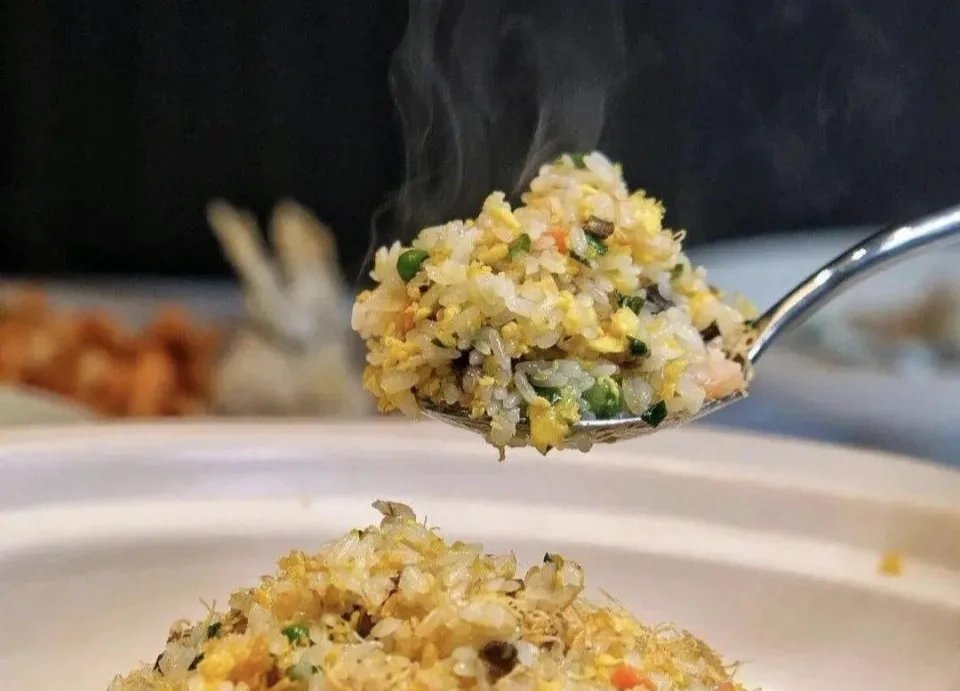
Pick up a spoonful. Don’t stab it — slide the spoon under and lift. Proper Yangzhou fried rice should scatter slightly as it rises, individual grains breaking away from the mass. If it lifts in a solid clump, someone used fresh rice. Fresh rice has too much moisture; the starch granules haven’t retrograded yet. You want rice that’s been in the fridge overnight — grains firmed up, separated, ready to be coated rather than glued.
Now the bite. First, the egg. Not scrambled into dry yellow pebbles — the Cantonese method coats the rice in liquid egg before it hits the wok, so each grain gets wrapped in a thin golden film. It’s called “gold wrapping silver” (金裹银, jīn guǒ yín). Then the char siu (叉烧, chāshāo) — diced small, edges caramelized from a second pass in the wok, hitting you with sweet-savory pork fat right when you need it. The shrimp arrive next, small river shrimp (河虾, héxiā), not the jumbo tiger prawns that Westernized versions use as a flex. Their job is texture: a quick bounce between the teeth, then gone. The peas and corn are the mercy rule — tiny pops of sweetness that reset your palate between bites.
And underneath all of it: wok hei (镬气). That breath of the wok. That slightly smoky, slightly metallic, impossible-to-replicate-on-a-flat-top flavor that comes from oil vaporizing the instant it kisses superheated carbon steel. It’s the difference between hearing a song on your phone speaker and hearing it live. You can’t describe it. You know it when it’s there.
A good plate of Yangzhou fried rice leaves nothing behind. No oil slick. No sauce puddle. Just the faint ghost of scallion.
The Scholar’s 2AM Craving
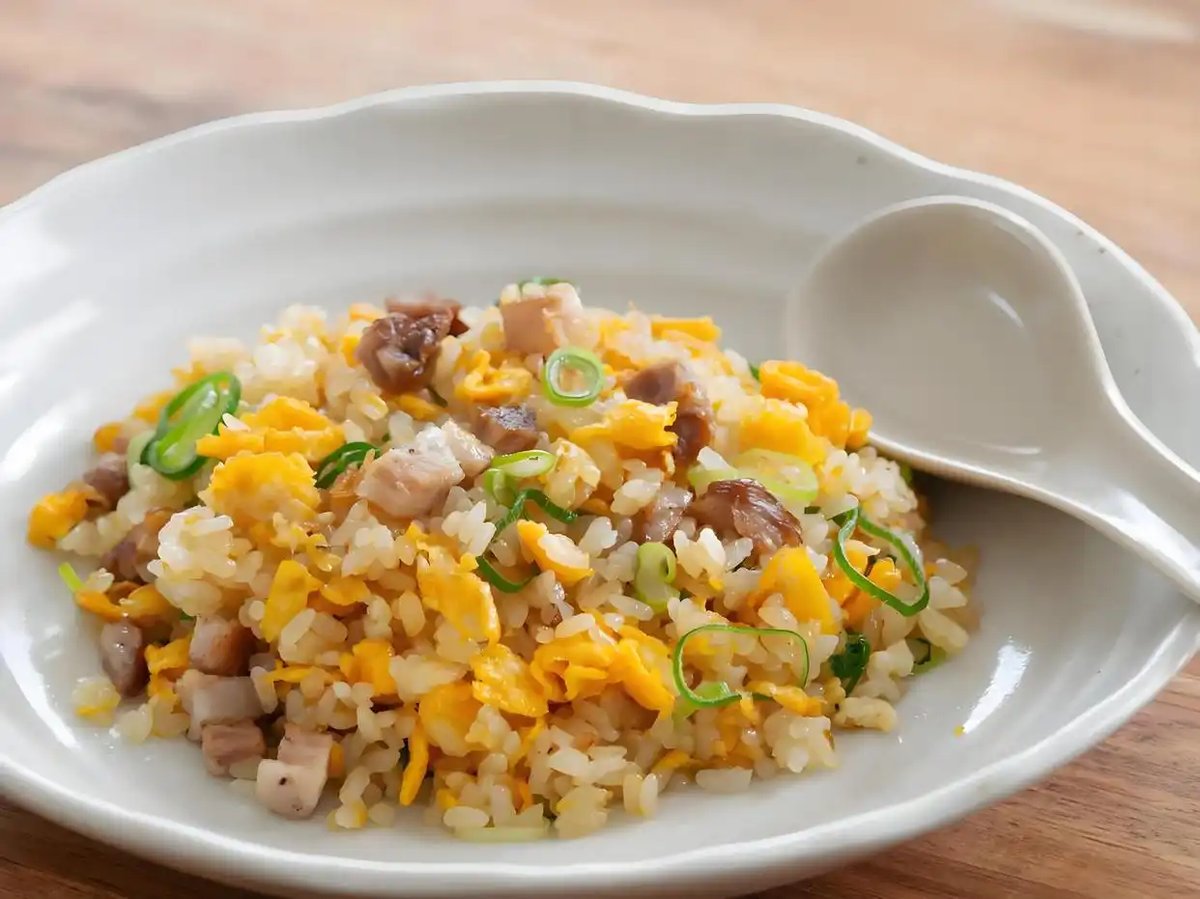
Yangzhou fried rice was invented by Yi Bingshou (伊秉绶), a Qing dynasty scholar-official posted to Yangzhou around 1800. He hosted late-night poetry sessions, and his chef needed something fast and impressive for a room full of drunk intellectuals who’d been arguing about verse structure for three hours.
The trick was cold rice and whatever was left in the pantry — eggs, ham, shrimp, scallions. Cooked in under two minutes. The scholars loved it, the recipe leaked, and within a generation every restaurant in Yangzhou had a version. It’s now the benchmark dish for Cantonese chefs. In traditional kitchens, you don’t earn the wok station until you can make Yangzhou fried rice in your sleep.
The Enemies of Yangzhou Fried Rice
Most of what calls itself fried rice outside China is a crime scene.
The frozen pea-and-carrot medley is the most visible offender — those perfect orange dice and radioactive-green spheres that taste like freezer burn and corner-cutting. They’re what you add when you don’t know what else to add. Real Yangzhou fried rice uses fresh or barely-blanched peas. The carrot, if it appears at all, is a whisper, not a shout.
Then there’s the soy sauce problem. Walk into any American mall food court and look at the fried rice. Is it brown? That’s soy sauce dumped in because they can’t get wok hei from a flat-top griddle. Yangzhou fried rice is pale gold, not brown. The color comes from the egg coating and from the char siu bleeding slightly into the oil. If your fried rice matches the color palette of a UPS truck, someone is hiding something.
The real thing has exactly:
- Day-old rice. Non-negotiable. Fresh rice steams in the wok instead of frying. Let it sleep in the fridge first.
- Egg. Coated onto the rice before it hits the wok — gold wrapping silver. Not scrambled separately and folded in.
- Char siu. Diced to rice-grain scale. Sweet, smoky, with burnt edges from the wok.
- River shrimp. Small. Shelled. Cooked just long enough to curl. Giant prawns are for Instagram, not for fried rice.
- Scallions. Green parts only, added in the last ten seconds so they stay sharp and bright.
- Lard. The secret nobody admits. Vegetable oil works. Lard is better. It carries flavor into every grain and gives the rice a gloss oil alone can’t match.
How to Eat It
You don’t eat Yangzhou fried rice. You finish it before you realize you’ve started.
I learned this at a wedding banquet when I was twelve. The fried rice arrived as the eighth course — the “filler” course after seven rounds of escalating seafood — and I made the mistake of turning to talk to my cousin. By the time I looked back, the lazy Susan had spun the platter to the far side and my father was spooning the last portion onto his plate with the serene satisfaction of a man who understands physics.
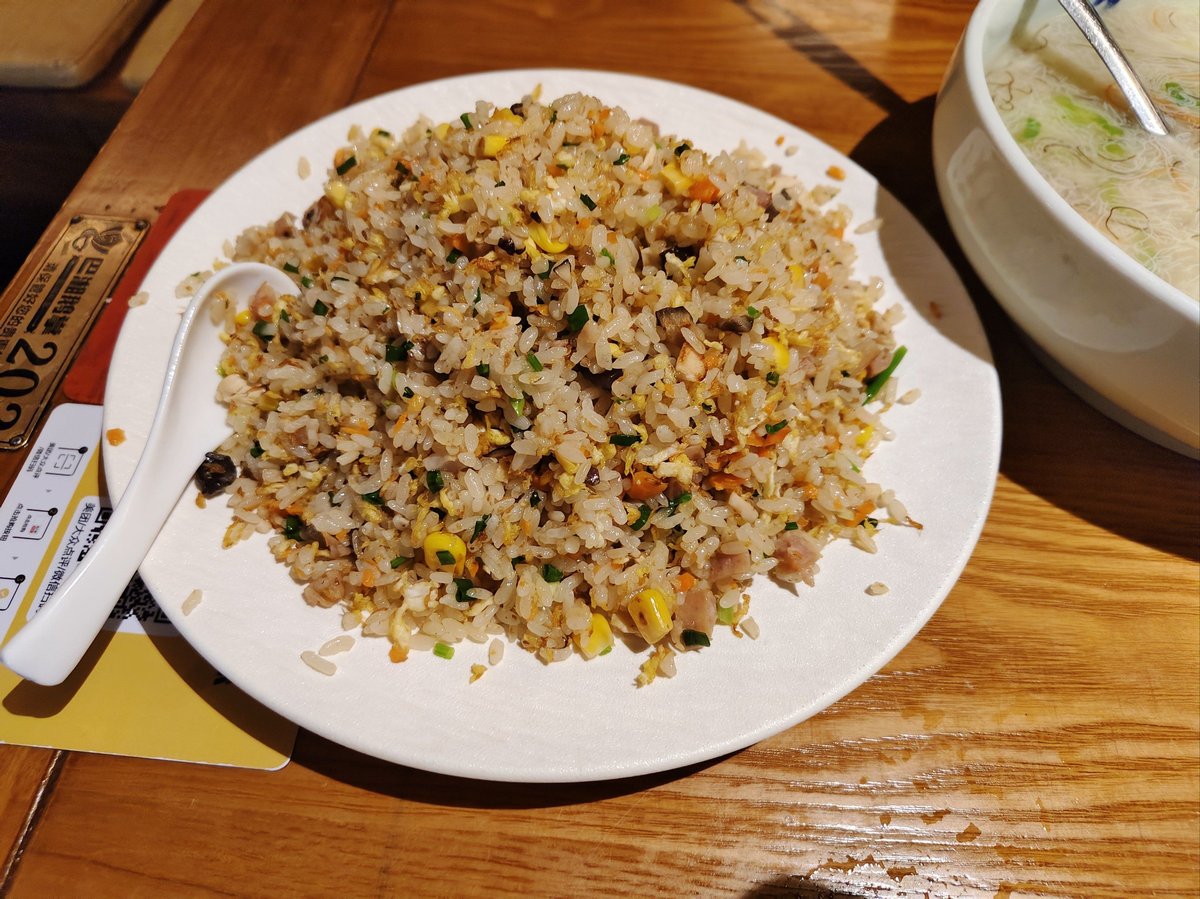
Use a spoon. Not a fork. Not chopsticks — well, chopsticks work, but a Chinese soup spoon, the wide flat-bottomed ceramic kind, lets you scoop rice, char siu, and shrimp in a single motion. Don’t add soy sauce. Don’t add chili oil. Don’t add anything. This dish has been balanced by someone who spent a decade learning how. Trust them.
My grandmother used to say a good plate of fried rice is like a good conversation: every element gets heard, nobody dominates, and you’re sad when it’s over. She’d been making it since before I was born, in a wok older than me, and she never once measured anything. The recipe lived in her hands.
Out of space for today — I’ll save the home-cooking breakdown for another post. Doing fried rice justice at home means nailing wok hei on a residential stove, which is a whole engineering problem. Recipe coming soon.
💬 Comments