Yangzhou Fried Rice: Cold Rice, One Egg at a Time
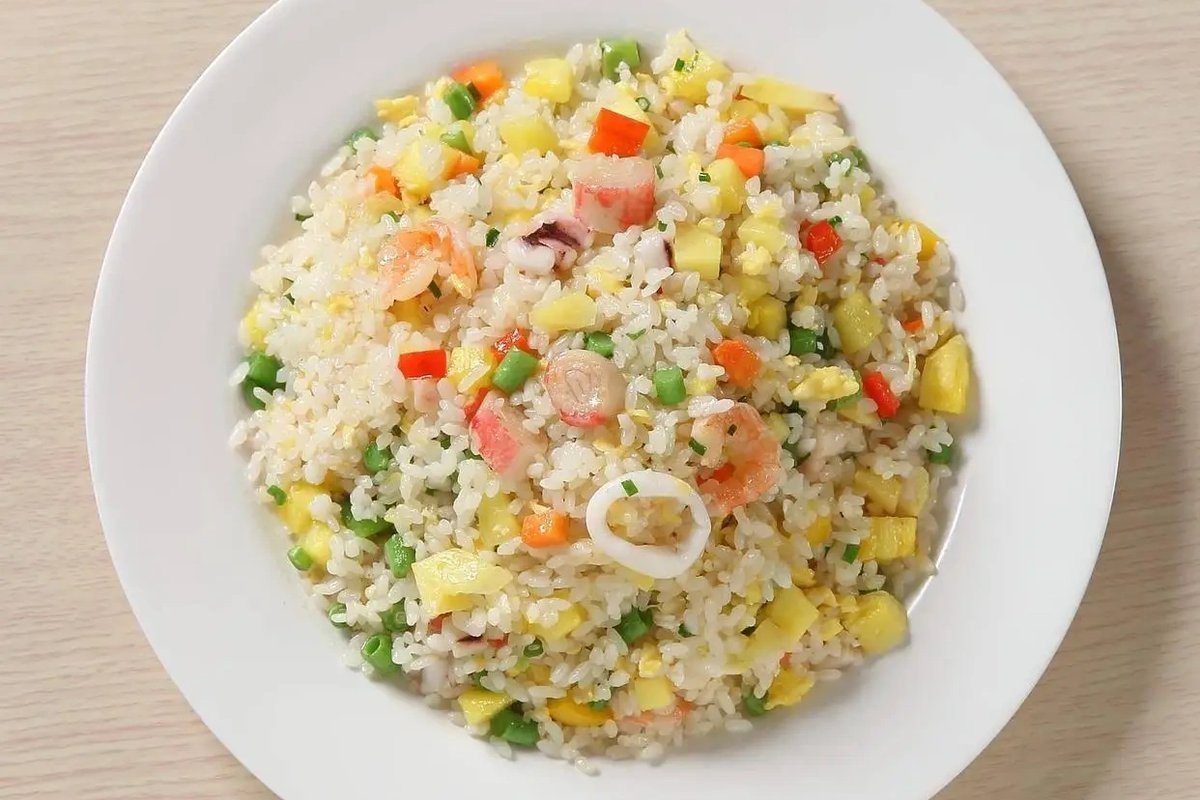
Editor’s Note: This is the kitchen companion to Yangzhou Fried Rice: Every Grain Counts. Quantities, temperatures and the failure points are below. Read the technique once before you shop.
Why the Rice Goes In Cold and the Egg Goes On First
Freshly cooked rice is the wrong starting point, and the reason is water. A grain straight from the pot holds around 65 percent water inside swollen starch. In a 220°C wok the surface water flashes to steam faster than the interior can release it, and the steam pushes out through the soft starch layer, gluing grain to grain. You can hear it: fresh rice hisses, then squeaks as the bottom of the pile compacts. Day-old rice has lost about a tenth of that water and its starch has retrograded into a firmer structure, so it rattles instead of hissing. Break it up with your fingertips, not a spoon, which shears grains and frees starch that gelatinises again on contact with oil.
The ratio is 400g of cooked rice to 3 eggs, and the eggs go on before the pan. Beat them with the salt until no thick ribbon slides off the whisk, pour over the cold rice, and mix for a minute until every grain looks wet and slightly yellow. Egg white is about a tenth protein and sets near 63°C, forming a film a few microns thick around each grain within fifteen seconds, and that film keeps the grains apart. Cooks in Yangzhou call the result gold wrapping silver: yellow outside, white rice inside.
Scrambling the egg first is not wrong, only different. A beaten egg in 2 tbsp of oil at 220°C sets in twenty seconds and is rubbery by forty, so you get curds among separate grains, which cannot give an even coating. Do it that way when you have 200g of rice and want the egg to read as an ingredient, or when the rice is still damp and will not take a coating.
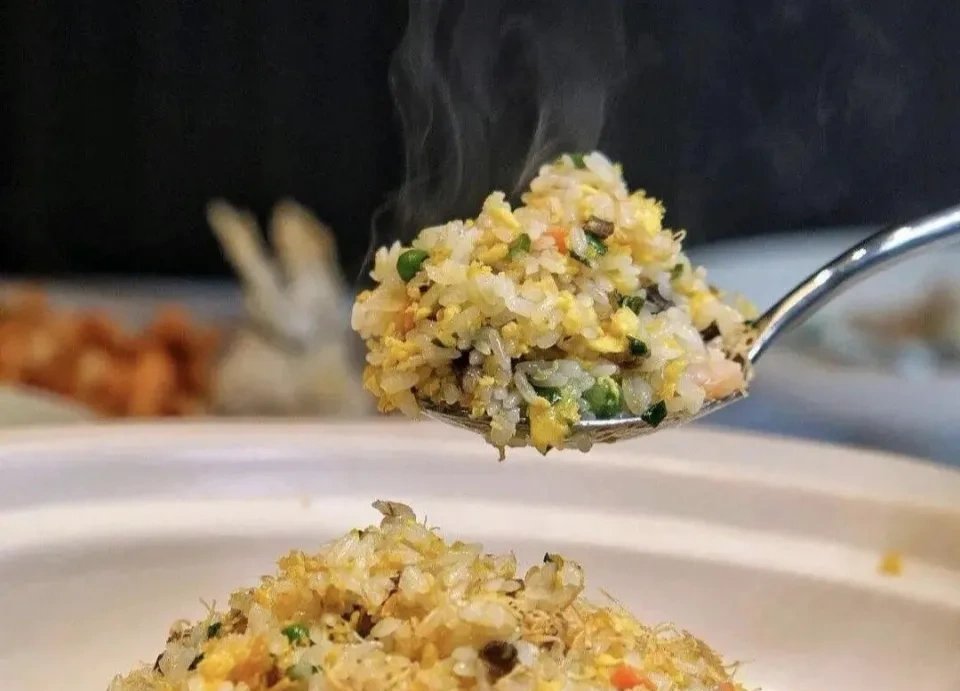
Heat is the constraint at home. A domestic burner gives about 3.5 kW against 25 kW under a restaurant wok, and 400g of cold rice drops the metal 60 to 80°C in seconds. Hence two batches of 200g.
Soy goes in at the end, and only 1 tsp. Light soy is 70 percent water, with sugars and amino acids that scorch at wok heat; added early it burns bitter and browns the rice evenly, hiding the egg. One teaspoon seasons 400g just short of salty, and the char siu and shrimp are already seasoned.
Ingredients
For the rice and egg
- 400g cooked jasmine rice, cooked the day before and refrigerated
- 3 large eggs (150g), beaten
- 1/2 tsp (3g) fine salt, for the eggs
- 1 tsp (5ml) Shaoxing wine, in the eggs
For the wok
- 200g char siu, cut into 8mm cubes
- 100g raw shrimp, peeled, 21 to 25 count
- 1/4 tsp (1g) bicarbonate of soda, for the shrimp
- 50g frozen peas
- 2 scallions (40g), whites sliced thin, greens cut 1cm
- 3 tbsp (45ml) peanut oil, divided
- 1 tsp (5ml) light soy sauce
- 1/4 tsp (0.5g) ground white pepper
To serve
- 1 tsp (5ml) sesame oil, optional
- 1 spring onion curl, in iced water, optional
Substitution notes: With no char siu, use 200g of cold roast pork loin or good ham cut the same way; both are cured and salty, so drop the egg salt to 1/4 tsp. Dry sherry replaces Shaoxing at the same volume, though it is sharper. Basmati is drier than jasmine and needs only 2 eggs to 400g, or the coating turns pasty.
Prep: Hands, Knife, and Twenty Minutes of Waiting
1. Break up the rice by hand (5 minutes)
Tip the cold rice into a wide bowl and work it between your fingertips, pressing clumps against the side rather than squeezing them. Throw out hard dry patches from the edge of the container; they stay hard in the wok. Why this matters: a lump of cold rice is dense enough that the wok heat cannot reach its centre, and it will still be cold when the outside has browned.
2. Coat the rice with egg (3 minutes)
Beat the eggs with the salt and Shaoxing until uniform, pour over the rice, and fold with your fingers until every grain is slick and pale yellow. Let it sit five minutes while you cut the rest; the coating clings better for the wait, and the rice absorbs nothing because the starch is already set.
3. Cut the char siu and prepare the shrimp (8 minutes)
Cut the char siu into 8mm cubes, the size of the peas, so each spoonful carries some. Toss the shrimp with the bicarbonate of soda and a pinch of salt, leave ten minutes, then rinse and dry; the alkali firms the surface proteins so they stay springy at high heat. Warm the frozen peas in hot water for two minutes so they do not drop the wok temperature.
4. Set up beside the hob (2 minutes)
Everything within arm’s reach: oil, rice in two bowls of 200g each, shrimp, char siu, peas, scallions, soy, pepper. Fried rice gives you no time to open a cupboard.
Step by Step: Two Batches, Ninety Seconds Each
Step 1: Heat the wok to 220°C (3 minutes)
Set a 30cm carbon steel wok over the highest heat and let it stand three minutes, until a drop of water flicked in beads and vanishes in under a second. Add 1 tbsp of the peanut oil and swirl it up the sides. The oil should shimmer, not smoke hard; if it does, pull the pan off for fifteen seconds.
Step 2: First batch of rice (2 minutes)
Add 200g of the coated rice, press it flat with the back of your spatula, and leave it for twenty seconds; that pause is where the toasted note at the edges comes from. Then toss and scrape for ninety seconds, breaking up anything that clumps. The grains should start to jump and the sound should change from a wet hiss to a dry crackle. Tip it into a warm bowl.
Step 3: Second batch (2 minutes)
Wipe the wok with a folded paper towel, add 1 tbsp of oil, and bring it back to heat for thirty seconds. Repeat with the remaining 200g. Two passes is not fussiness; it is the only way a home burner keeps the metal above 180°C for ninety seconds. Why this matters: rice below 180°C releases its water into the pan and steams, and no amount of tossing afterwards can undo that.
Step 4: The shrimp and the char siu (2 minutes)
Push the rice to one side. Add the last tablespoon of oil to the bare metal, then the shrimp in one layer. Leave them forty seconds until the undersides turn pink, turn them, and add the char siu and peas. Toss for thirty seconds; the char siu only needs warming, and longer cooking draws out its fat.
Step 5: Season at the end and plate (30 seconds)
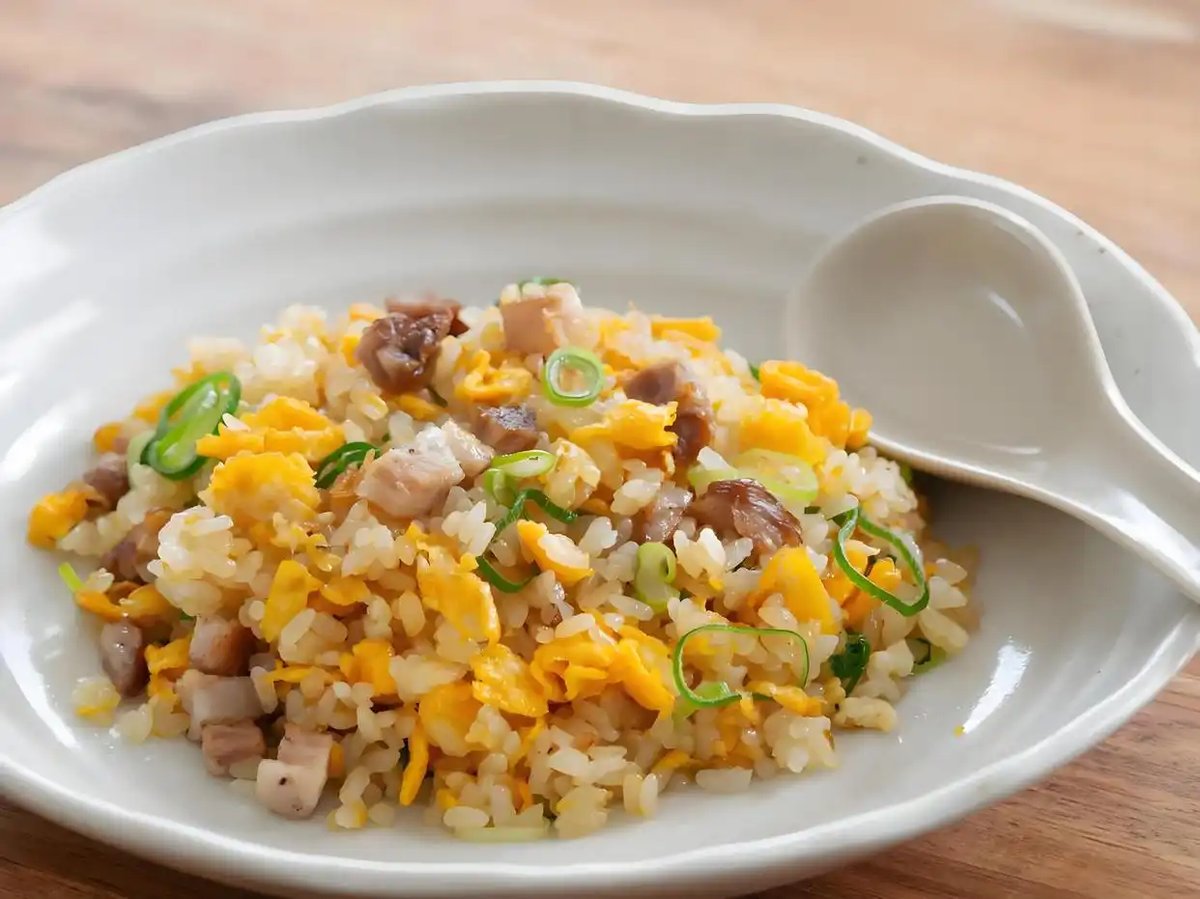
Return the first batch to the wok. Scatter the scallion whites and white pepper over, pour the teaspoon of light soy around the rim rather than into the middle so it hits hot metal and flashes, and toss four or five times. Taste a grain, plate, and scatter the scallion greens and sesame oil on top.
Key Pitfalls
The rice came out as one soft cake. Either the rice was too fresh or the wok was too cool. Rice cooked the same day still holds enough water to steam. Spread it on a tray for thirty minutes, and heat the empty wok for three full minutes before the oil goes in.
The grains were greasy and the plate was slick. Too much oil, added a spoon at a time out of nerves. Three tablespoons for 400g of rice is the ceiling, and the last of it goes in only where the wok looks dry. If it has happened, tip the rice into a colander for ten seconds and back into the dry wok.
The egg formed rubbery yellow lumps instead of a coating. The egg was scrambled in the pan before the rice went in, or the rice was wet. Coat the cold rice in a bowl and let it sit five minutes so the film clings before it meets heat.
The rice tasted bitter at the back of the throat. The soy went in early and scorched, or the wok smoked before the oil. Add soy in the last thirty seconds, poured around the rim, and never let a bare wok smoke for more than a few seconds.
The shrimp were tight and squeaky. They cooked for two minutes instead of one. A 21 to 25 count shrimp needs forty seconds a side at 220°C. Pull them while the centre is still slightly translucent; the rice finishes them.
The char siu tasted dry and leathery. It went in at the start and fried like raw meat. Char siu is already cooked: add it with the peas and only warm it through. Cut 8mm cubes, not thin slices, so the interior stays moist.
The rice was pale and looked boiled. The wok never got hot enough to brown anything, the signature of a domestic burner and a full wok. Cook in two batches of 200g and give each twenty still seconds against the metal before you start tossing.
Serving Suggestions
Serve on warm plates within two minutes of the last toss. A small bowl of clear soup, winter melon and pork rib, is the Yangzhou way to round out the meal; pickled cucumber with garlic does the same job faster and adds the acid the rice lacks.
Nothing sweet needs to follow. Jasmine tea or a light lager works better than wine, which fights the salt in the char siu. Leftovers keep two days and reheat in a hot dry pan, not a microwave, which steams them back into the cake you just avoided.
This is the companion recipe to Yangzhou Fried Rice: Every Grain Counts. Read the story, then cook the dish.
💬 Comments