Yangrou Paomo: Twenty Minutes of Tearing Before the First Bite
You think yangrou paomo (羊肉泡馍, yángròu pàomó) is lamb soup with bread in it. It isn't. The bread is not an ingredient in the soup. The soup is a delivery system for the bread, and the bread does not exist until you have spent twenty minutes taking it apart with your own fingers. Xi'an people say the dish starts before the kitchen touches it. They are not being poetic.
The shop opens at six. By seven the tables are full and the air is wet with steam and mutton fat. A plate lands in front of you with two pale discs on it, 饦饦馍 (tuótuó mó) — unleavened, ninety percent cooked, still warm, hard enough to knock on. The waitress does not ask what you want. She asks 几个馍, how many breads. Two is a normal lunch. One is a joke. Three means you skipped breakfast and you are not planning to do anything this afternoon. Then she stands there. Not impatient. Waiting. Because nothing happens until you start.
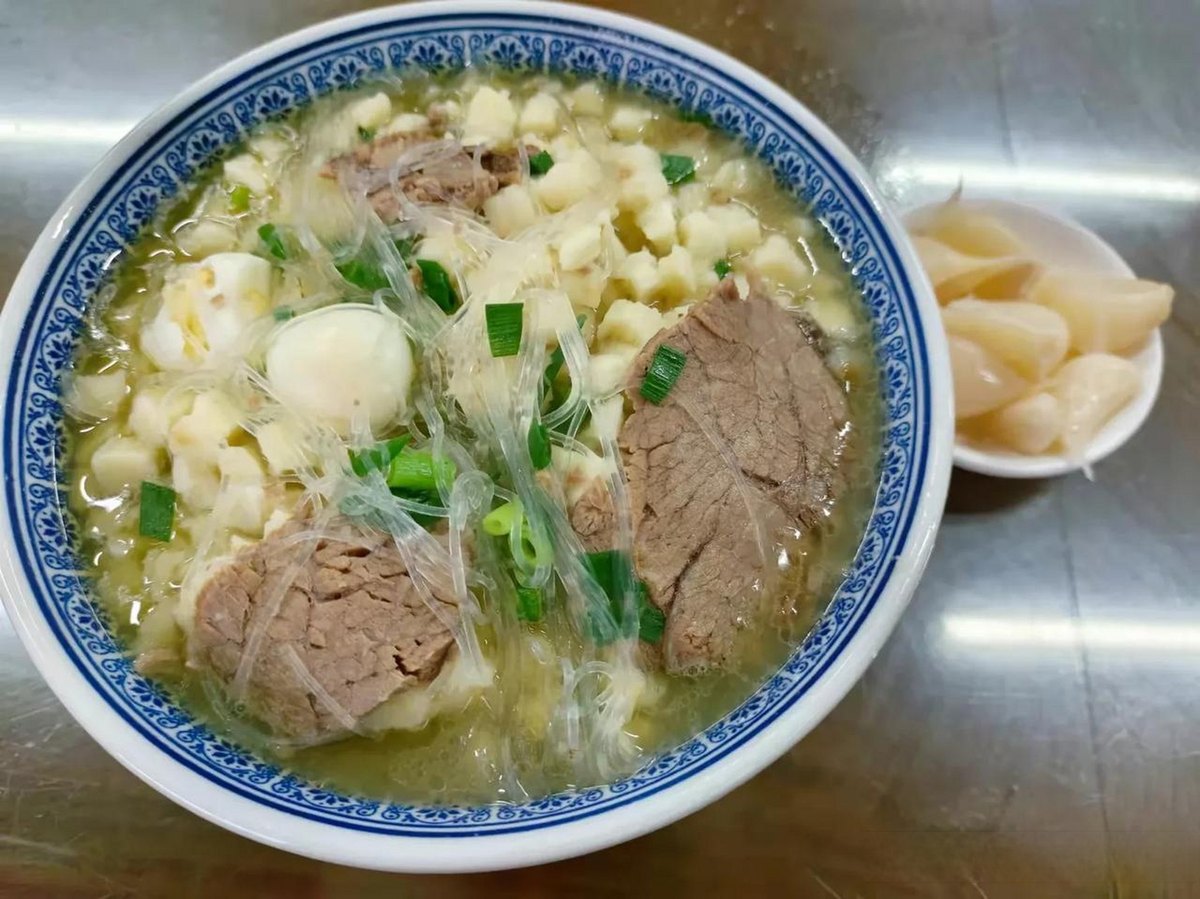
So you tear. Break a disc in half, then quarters, then keep going until the pieces are the size of a soybean, roughly, with ragged edges and a rough face. This is 掰馍 (bāi mó), and it is the whole test. Too big and the broth only wets the outside; you get chalk in the middle. Too small and by the time the bowl comes back it is porridge, and the man at the next table looks at it the way a bartender looks at someone ordering a well-done steak.
The room sounds like rain on a tin roof. That is forty people tearing bread at once, a dry clicking rustle, punctuated by the clack of a bowl being set down. Your fingertips go tender around the ten-minute mark. Somebody's grandmother is doing it twice as fast as you and talking the whole time. Around minute eighteen you develop opinions about your own work — these ones are good, that corner was lazy — and that is exactly the point. You have been made to participate, so you have already started eating with your hands.
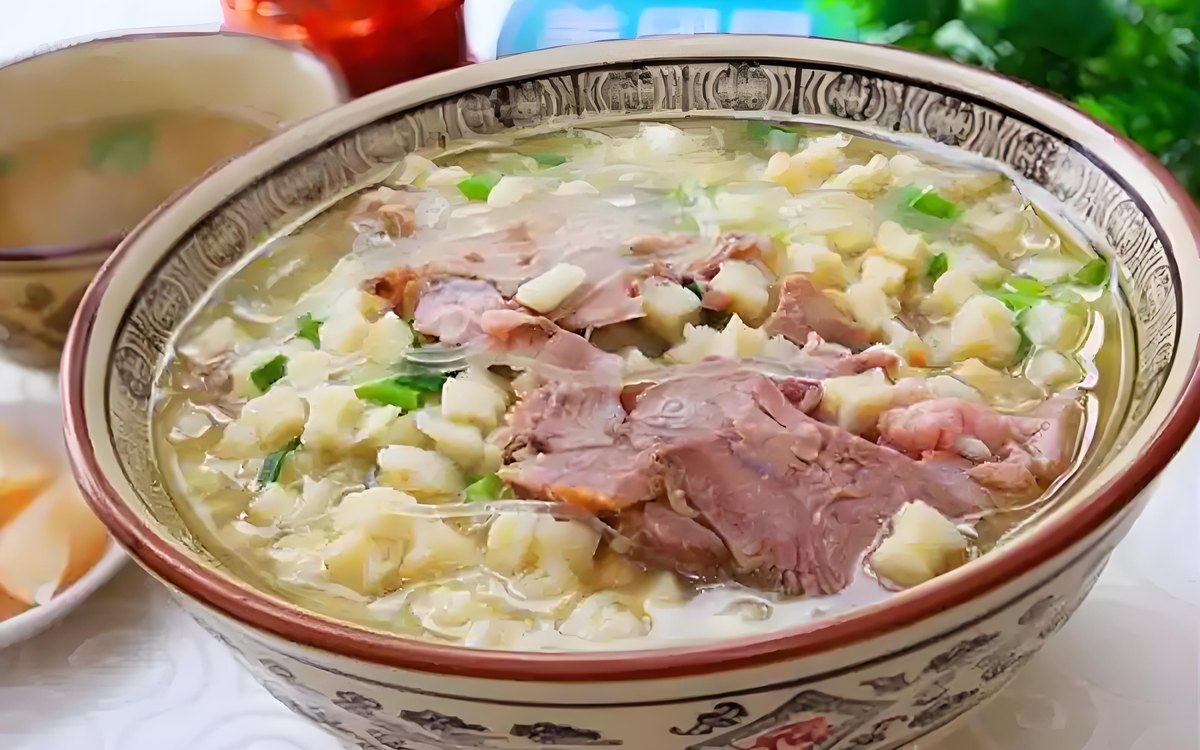
The bowl goes back to the kitchen with a numbered clip on the rim. It comes back in about ninety seconds, and here is where first-timers get confused: the cook has made a judgment about you. If your pieces are tight and even, the broth goes in shallow and the bowl returns as 干泡 (gān pào), dry-soaked, almost no liquid, the bread drinking everything. If you were sloppy, you get 口汤 (kǒu tāng), broth to the level of the bread, one good mouthful of soup left at the bottom. Ask for 水围城 (shuǐ wéi chéng), "water surrounding the city," and the broth comes up high around a mound of bread in the middle. Same dish, three textures, and the kitchen picks for you based on how you tore.
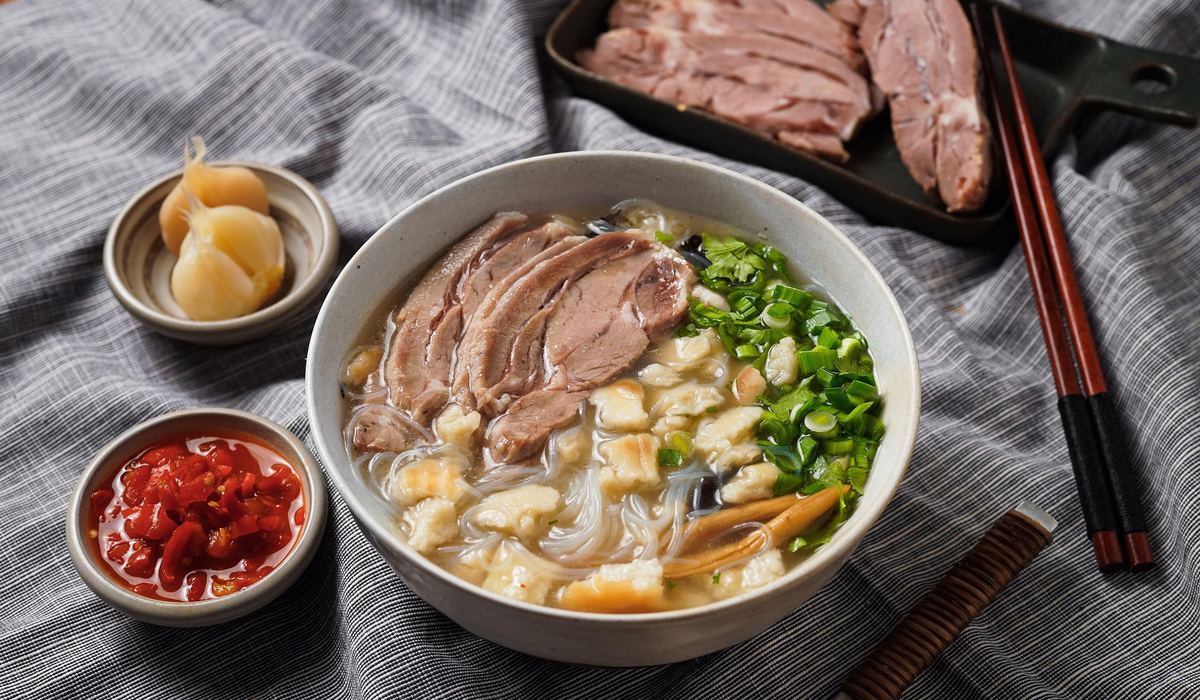
The broth is the part you cannot fake at home: lamb bones and a knuckle, 花椒, 八角, 草果, a knob of ginger, simmered overnight, skimmed, simmered again. It arrives almost clear, gold at the edge, with a film of fat that clings to the spoon. Two or three slices of lamb on top, cooked to the point where it pulls apart with no resistance. A nest of glass noodles, a few strips of wood ear, a scatter of yellow daylily. Chopped scallion and cilantro going soft in the heat.
Eat the first three spoons plain. Do not touch the chili paste yet. What you are tasting is lamb and wheat and salt, and it is sweeter than you expect, closer to a good consommé than to the heavy spice bomb people imagine when they hear "Xi'an food." Then stir in 辣子酱 (làzi jiàng), the dark red paste on the side, more savory than hot, and the bowl changes character completely: the fat goes bright, the bread tastes toasted. Then bite a clove of 糖蒜 (táng suàn), sweet pickled garlic, and the whole thing resets so you can start over. That is the rhythm. Broth, chili, garlic, broth. The bowl stays hot for a suspiciously long time; the ceramic holds it and the fat cap keeps the steam in.
A short version of where it comes from, since someone will ask: Xi'an, the Hui Muslim kitchens, wheat from the Silk Road and mutton from the north, a dish that at least claims Tang-dynasty ancestors. The technique that matters is not old or mystical. The flatbread is deliberately undercooked so it can absorb broth without collapsing. Everything else is logistics.
Which brings me to the enemies. Machine-cut bread is the first one. Some shops now hand you a bowl of perfect little cubes, uniform as dice — faster, and wrong. A straight cut seals the surface, so each cube holds broth on its skin and stays dry at the core. If every piece is the same size and the same shape, put the spoon down. Leavened bread is the second: if the "mo" is fluffy, if it has a crumb like a dinner roll, it dissolves into paste in ninety seconds. Paomo bread is dense on purpose, closer to a cracker than a loaf. Powdered broth is the third, and you can smell it — salt and hydrolyzed protein, no marrow, no sweetness, and the aftertaste goes flat instead of lingering. A real 老汤 (lǎo tāng) leaves your lips slightly tacky. The fourth is the impostor bowl served in other cities: a noodle soup with three slices of lamb and a whole bread roll on the side, as if the bread were something you dip. That is lamb noodle soup with a bread basket. It is fine. It is not this.
I first ate paomo at twenty-four, on a trip to Xi'an with a college roommate whose uncle drove us to a shop near 洒金桥 at 6:40 in the morning. I remember being handed the bread and being told, in English, "Don't eat it." I remember tearing for what felt like half an hour while the uncle watched my hands and said nothing, then nodding once. The bowl came back and I understood he had not been judging my technique. He was checking whether I was willing to do the work. Years later, in Shanghai, I found a Shaanxi place in 虹口 that served paomo with pre-cut bread. I went twice. The second time I ordered something else.
How to eat it without embarrassing yourself. Tear smaller than feels reasonable — soybean, not grape; if your fingers do not hurt a little, the pieces are too big. Add nothing before the bowl comes back: no chili, no vinegar, no request for hot sauce, because the kitchen is still working. Eat the first three spoons clean, then chili, then garlic, then repeat. And finish the broth, tipping the bowl if you have to. Everyone does. The last mouthful, with the softened bread settled at the bottom, is the best one, and the people who leave it are the people who ordered one bread.
You walk out with sore fingertips, a lamb taste that stays for an hour, and a small, unreasonable pride in a bowl of torn bread. That is the receipt. Nothing on it but your own handwriting.
💬 Comments