Yan Du Xian: The Soup With a Three-Week Window
You hear it before you smell it. From the kitchen, at a volume just above the refrigerator: duk. duk. duk. A clay pot with the lid on, breath escaping around the rim, three things inside taking their time. Then the smell arrives — cured pork first, that deep salty sweetness of a winter's worth of ham, and under it something green and faintly grassy. Bamboo shoots. Which means it's March, which means your grandmother is standing over the stove doing almost nothing at all, and doing it correctly.
Yan Du Xian (腌笃鲜, yān dǔ xiān) is the soup Shanghai drinks for about three weeks a year. The name is the recipe. 腌 (yān) is cured pork. 鲜 (xiān) is fresh pork. 笃 (dǔ) is that sound — the low, patient bubbling of a covered pot on a small flame. In the Shanghainese kitchen sense it means slow down. Not "simmer until reduced." Simmer until the only thing you can hear in the apartment is the pot.
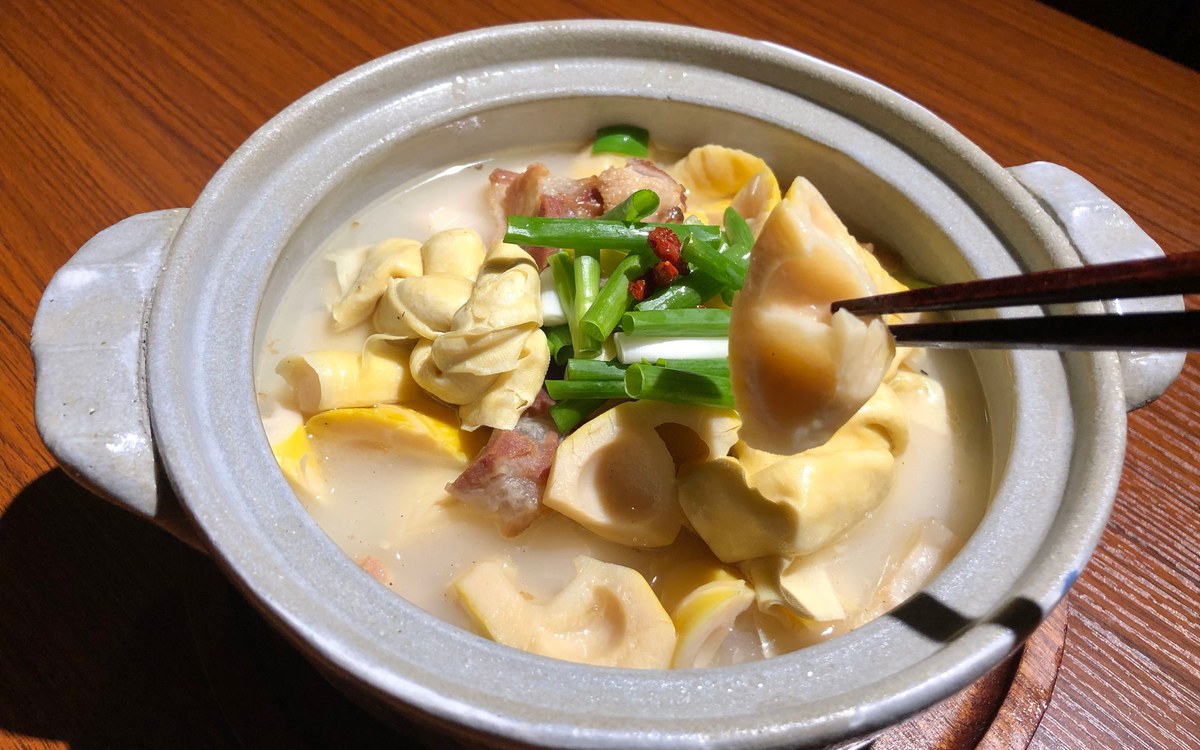
What comes out is a broth the color of weak tea, a little cloudy where the pork fat has emulsified into it, and it tastes like the first warm week of spring. Nothing in it is complicated. Everything in it is on a schedule.
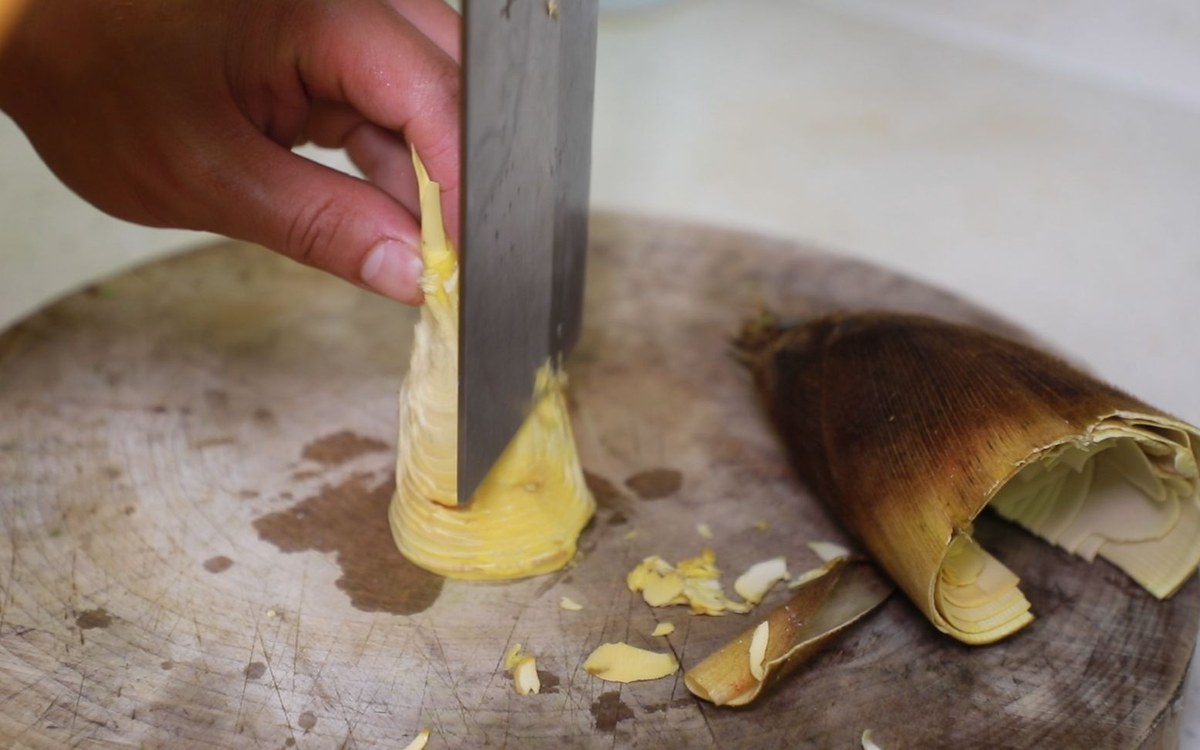
The schedule is the shoots. Spring bamboo shoots — 春笋 (chūn sǔn) — are the whole point and the whole problem. They're sweet and faintly nutty when they're young, and they turn woody and bitter inside a few weeks. Cook them the day you buy them if you can. My grandmother bought them the way she bought fish: fast, and with her thumbnail. She'd bend a shoot near the base and listen for the crack. If it snapped clean, it went in the bag. If it bent like a hose, she put it back without a word, which was worse than a lecture. A shoot that doesn't snap has already started turning to fiber, and no amount of simmering will forgive it.
The other half of the name is the 腌 half, and it needs handling before it goes anywhere near the pot. 咸肉 (xián ròu) — cured salt pork — or Jinhua ham if the family is showing off. Either one is salty enough to season the entire soup, which is why there's no salt on the table. Soak it. Blanch it. Pour the water off. Skip that step and you get a soup that tastes like the East China Sea and a family that mentions it for the next decade.
Then the 笃: lid on, flame low, an hour and a half of nothing. The pot does the work. You're just there so it isn't alone.
Here's what the bad version looks like, and you will meet it. Canned bamboo shoots, any month of the year. They come out of the tin already sour, and an hour in the pot doesn't fix it — a flat, tinny bitterness that sits on the back of your tongue and stays there. A restaurant serving yan du xian in August is telling you exactly which tin it opened. Second enemy: soy sauce. Some kitchens darken the broth for looks. Real yan du xian never sees soy sauce; the pale amber comes from the ham, and it should stay pale. Third: ingredient inflation. Corn, carrots, mushrooms, a handful of goji berries, "for color." This soup has three ingredients in it, four if you count 百叶结 (bǎi yè jié), the little tofu skin knots that soak up broth like sponges — and you may. Adding more isn't generosity. It's a cover-up.
You eat it in a bowl, with rice, at a table with the windows open for the first time since October. Broth first: it's clean and porky and slightly sweet, and it finishes with that green bamboo edge. Then the shoots, which have gone soft but kept a little resistance, sweet at the center. The pork belly is soft enough to break with chopsticks. The ham is there to be chewed slowly, dark and salty, the part you save for last.
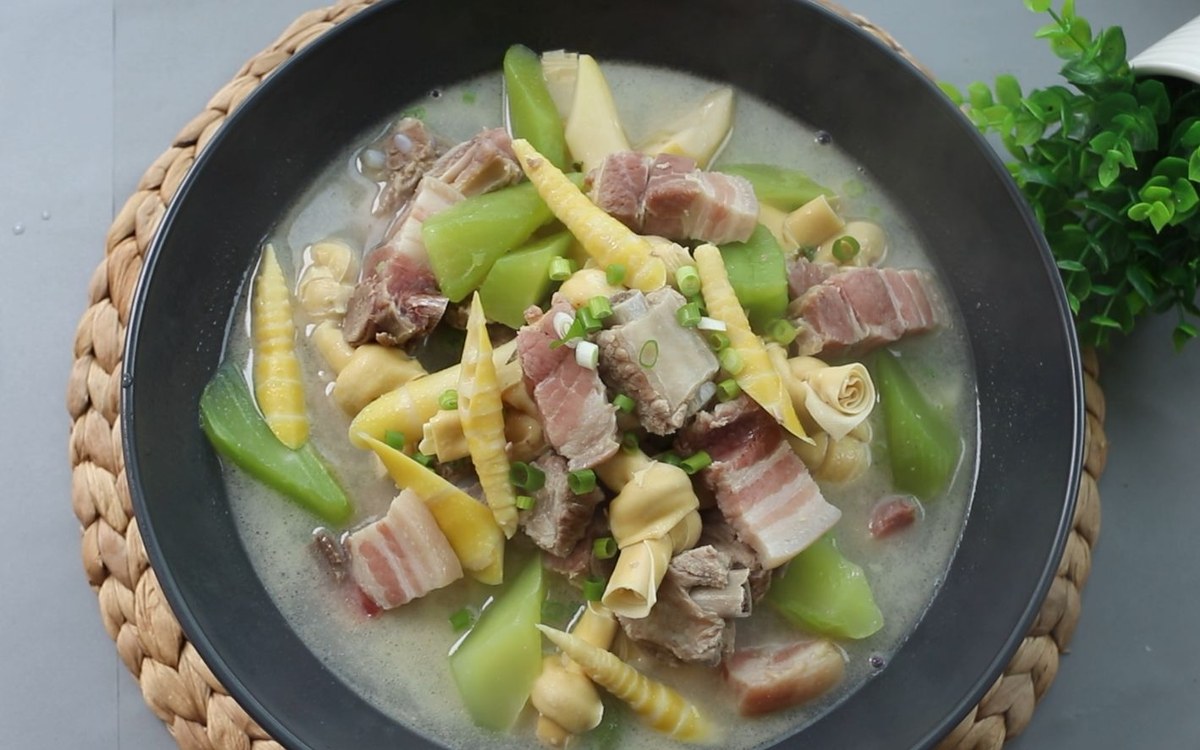
My grandmother served it in a clay pot older than I am, set on a trivet in the middle of the table, and she never ladled it out for us. She put the lid back on and let us serve ourselves, one bowl at a time, which kept the pot hot down to the last spoonful. That's the whole ceremony. There isn't a second one.
What I can't get back is the timing. I've found vacuum-packed salt pork in the back of a Chinese grocery, and I've found shoots in April, flown in, priced like cherries. The method travels fine — soak, blanch, simmer, wait, don't add anything. It comes out close. But close isn't the same as eating it because the market finally has shoots and everyone in the city is doing the same thing that week. This soup tastes like a season. Made out of season, it's just pork and bamboo, which is fine, and isn't the dish.
So if you get one shot at it — Shanghai in March, a clay pot going duk duk duk on the smallest burner, the windows open, the shoots still cool from the market — take the second bowl. By then you'll know what the third character is for.
💬 Comments