Wuhan Hot-Dry Noodles: Thirty Seconds to Eat, or It's Ruined
Wuhan's most famous breakfast has no soup in it. Not a splash, not a spoonful to loosen the strands — the noodles come out of the boiling water and go straight into the bowl, dressed and dry. If liquid is pooling underneath them, you are not eating hot-dry noodles (热干面, rè gān miàn). You are eating a tourist version, or whatever gets sold abroad under the same name.
In Wuhan, breakfast is a verb. 过早 (guò zǎo), "passing the morning," and it happens fast: at a counter, in a paper bowl, standing up, sometimes at a full walk down the middle of the pavement with the chopsticks held vertical in one hand like a torch. This city does not sit down for breakfast. Most of it is already late.
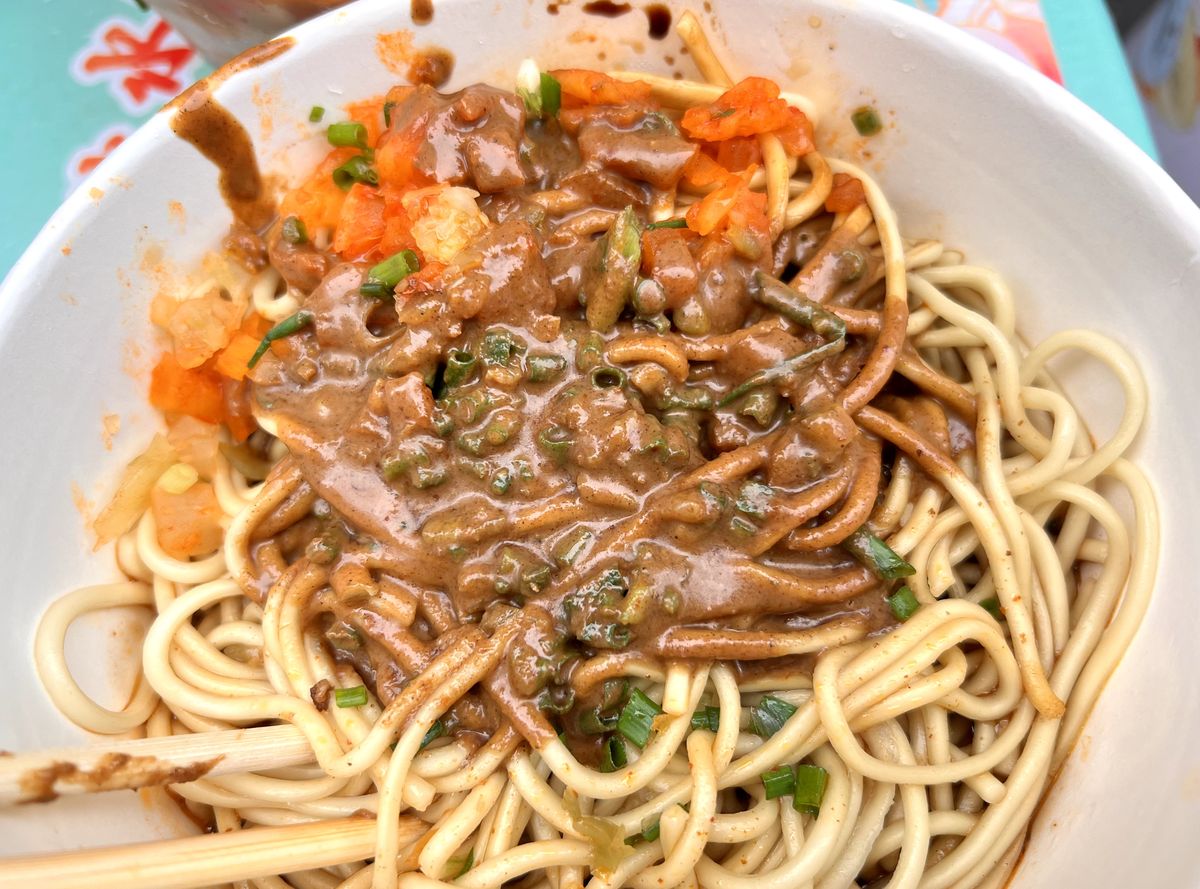
What lands in front of you is not pretty. The noodles are the color of a manila envelope, stained through by lye, and they are warm rather than steaming. On top: a slick of sesame paste the color of wet cement, chili oil so red it looks lit from inside, a scatter of chopped scallion and diced pickled radish. The smell is sesame first, then something faintly alkaline and clean, like rain on hot pavement. Stir, and the steam finally comes up.
Here is the part outsiders always miss: the noodle is already cooked before you order it. Noodle shops in Wuhan work two shifts. The night before, the noodles are boiled to about seventy percent, drained, tossed through sesame oil, then spread across a wide bamboo tray and turned under a fan until they stiffen and stop sticking to each other. That step is called 掸面 (dǎn miàn), "dusting the noodles." By morning the strands are cool, yellow and slightly rigid, and all the shop has left to do is drop them into boiling water for eight seconds. That is not cooking. It is a resurrection.
Eight seconds is enough because alkaline noodles keep their bite. 碱面 (jiǎn miàn) are wheat noodles made with lye water, which leaves them springy, faintly bitter and yellow all the way through. They survive the second bath. Spaghetti does not. Neither do the fresh egg noodles in a supermarket fridge case, which go soft and apologetic the moment they hit hot water. This is where most versions of the dish die, and the sauce has not even been considered yet.
And you have about thirty seconds to eat.
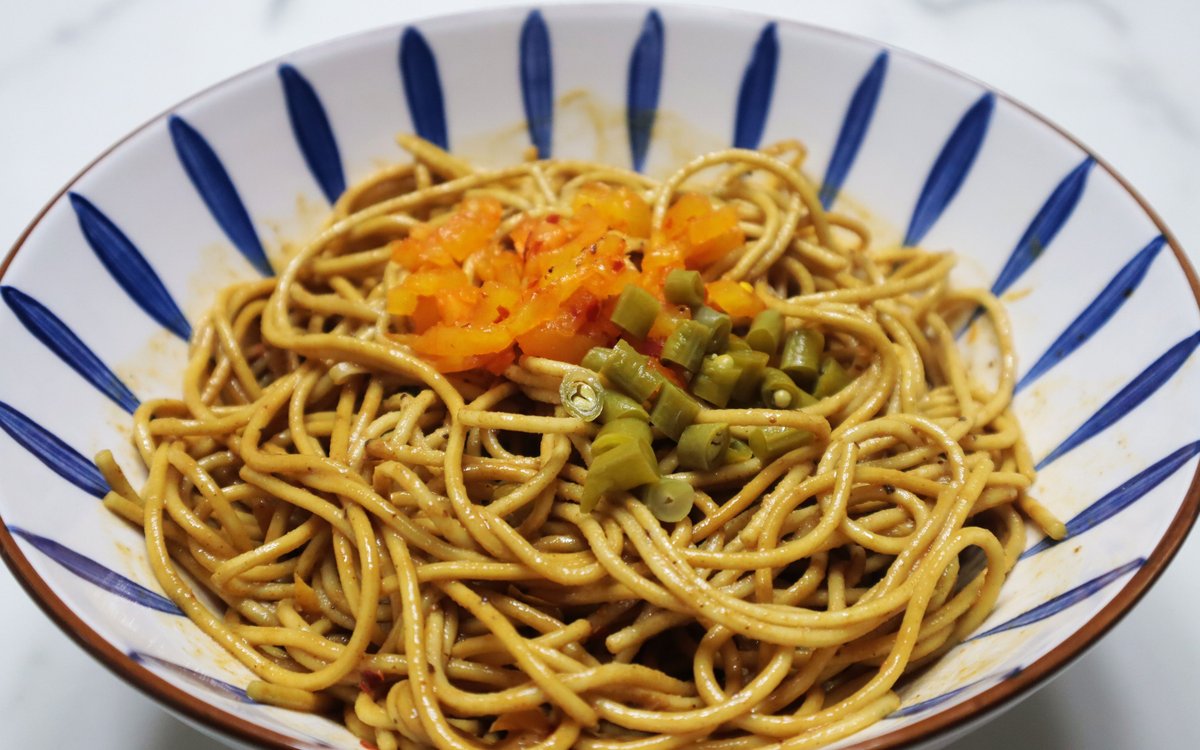
Sesame paste is not a sauce that waits politely in the bowl. 芝麻酱 (zhī ma jiàng) stiffens the second it meets air, and noodles cool faster than you think. So you mix immediately, and you mix from the bottom: chopsticks in, two full rotations, then lift the noodles high and let them fall back so the strands separate and drag air between them. The lift is not a flourish. It is the only way to cool them slightly and keep the paste moving instead of clumping into a grey rope. If yours does seize, there is one legal rescue — a spoonful of the hot noodle water, then mix again. Anyone reaching for a ladle of broth has made soup.
The dish is younger than the city's reputation for it. The story goes that in 1930s Hankou a noodle vendor knocked a jar of sesame oil across a tray of cooked noodles, fanned them dry to save the batch, then sold them the next morning after a quick re-dip in boiling water. Locals still argue about who deserves the credit. Everyone agrees the accident was a good one.
Which brings me to the versions that should be thrown out of the window. Peanut butter is the great lie: somewhere between Wuhan and an American strip mall, sesame paste became peanut butter, and peanut butter turns this into a cold noodle salad with the personality of a school lunch. There is nothing wrong with peanut butter. It is simply a different dish. Second, if your noodles are pale and chewy like lo mein, nobody boiled them with lye and nobody fanned them dry, and what you are eating is spaghetti with a garnish of regret. Third, the soup version. Hubei people eat 汤面 (tāng miàn) too, with broth and toppings, and it is a fine bowl — but it is not this, and the two are not interchangeable no matter how many menus abroad insist otherwise.
My first real encounter was not in Wuhan. It was in a Fudan dorm room, where my roommate, a Wuhan kid who kept a jar of sesame paste in his drawer like contraband, passed judgment on every noodle shop in Shanghai and found all of them guilty. He talked about 过早 the way other people talk about a hometown beach. It took me years to understand that he was not exaggerating, only hungry.
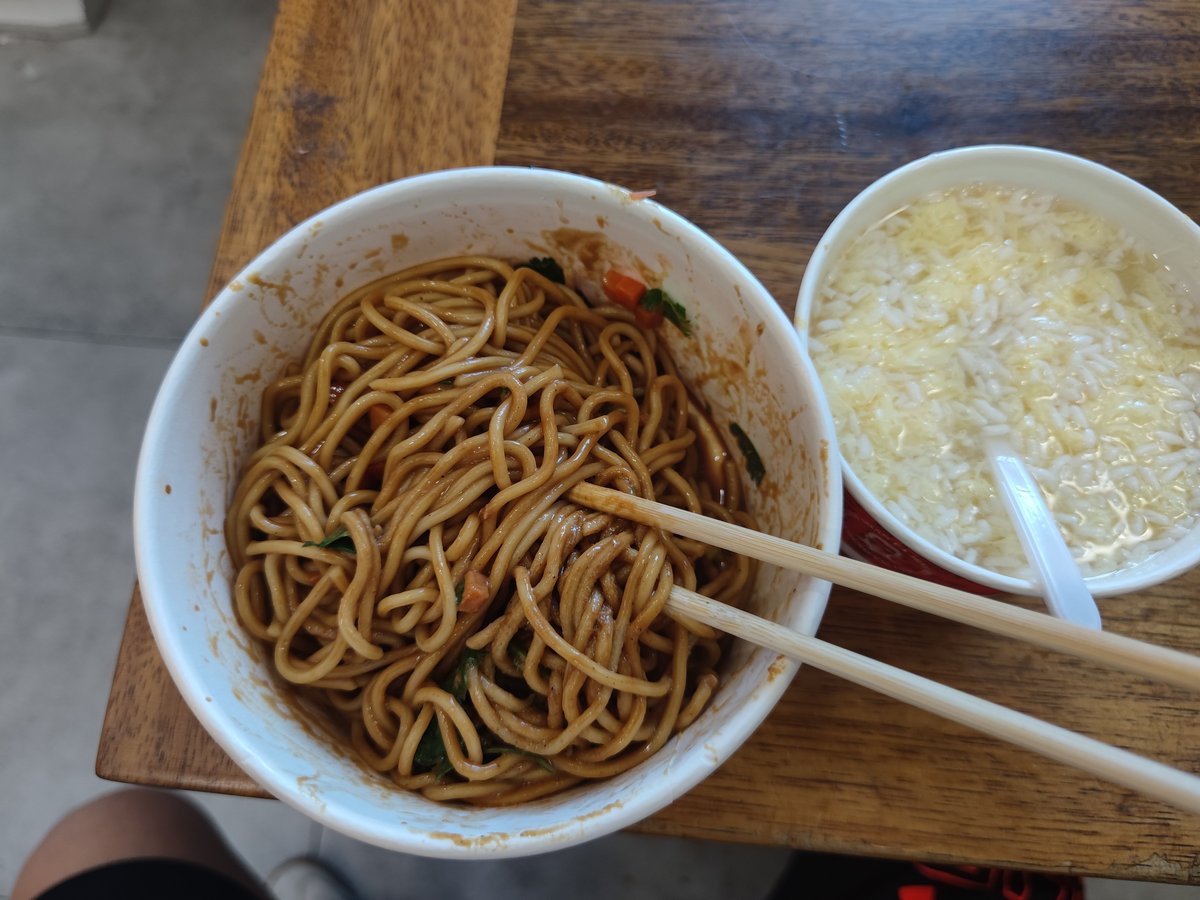
Years later I finally ate one at a stall in Hankou, at ten to seven in the morning, from a paper bowl, standing at a ledge of greasy tile with a dozen men who had all finished theirs before I had finished mixing mine.
So, how to do it right. Mix within thirty seconds of the bowl reaching your hand, bottom to top, lifting as you go. Eat fast. Add the pickled radish (辣萝卜, là luóbo) if it comes on the side rather than buried in the bowl; the sour crunch cuts straight through the paste. Chili oil and a few drops of black vinegar are yours to calibrate, and a little vinegar makes the whole bowl taste cleaner. Order 蛋酒 (dàn jiǔ) alongside — rice wine with a beaten egg stirred through it, served hot and sweet — and drink it between bites; the sugar resets your mouth for the next round of sesame. If someone in Wuhan tells you the secret is one particular shop on one particular street, believe them, go there, and do not ask for extra sauce.
You will finish in five minutes. You will not be hungry again until two. And nobody will take your chair, because there was never a chair.
I will save the home-cooking breakdown for a later post. The step that actually takes practice is the 掸面 — boiling the first batch short enough that the noodles stiffen without going chalky. That deserves its own deep dive. Recipe coming soon.
💬 Comments