White Cut Chicken: The Dish That Hides Behind Nothing
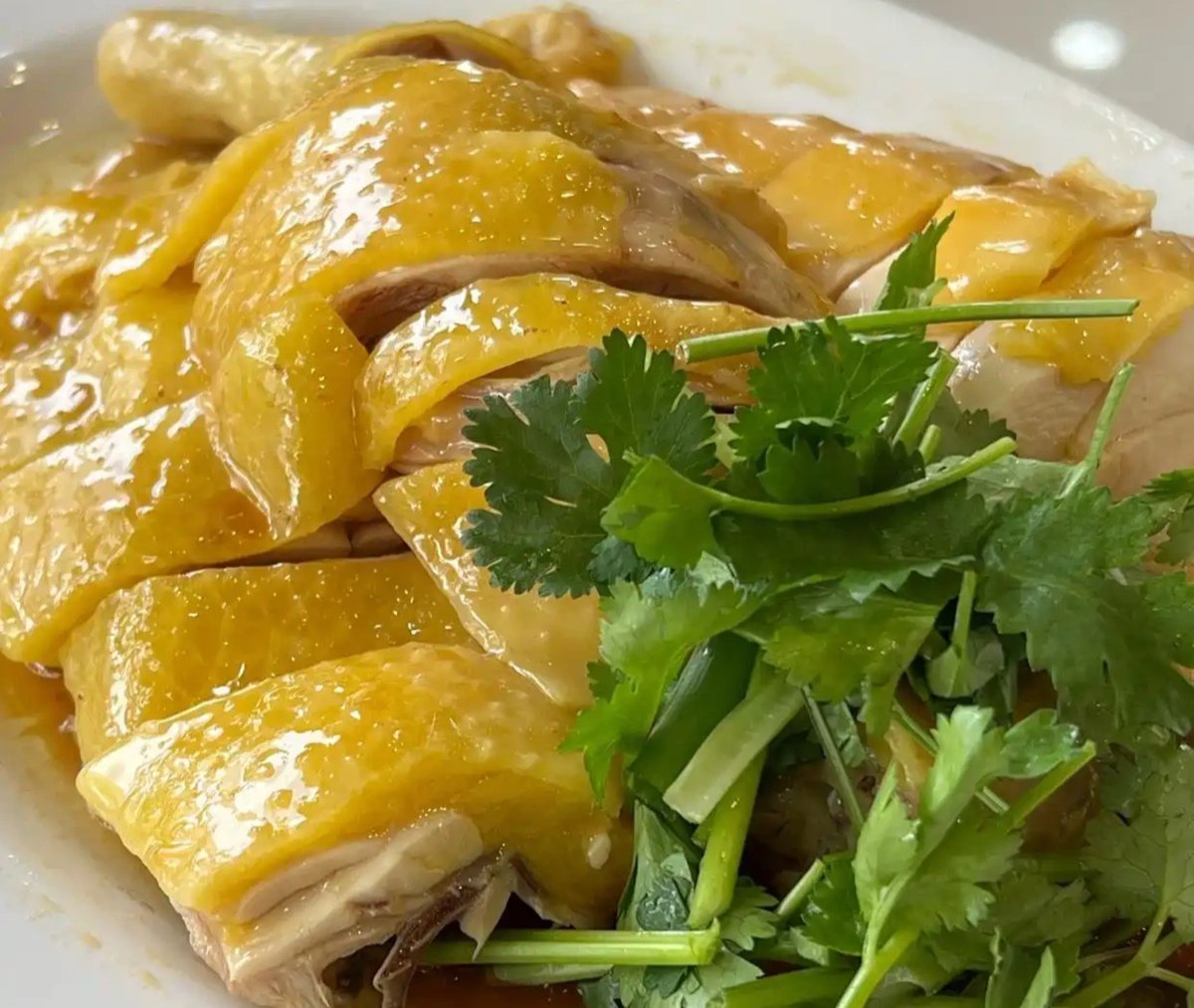
In Guangzhou's Xiguan district, there's a shop with no sign. At 4:30 in the afternoon, twenty people are standing in line. There's no menu — the shop sells exactly one thing: white cut chicken.
The chef pulls a whole chicken from an ice-water bath. The cleaver comes down. Between the skin and the flesh, there's a translucent layer of jelly — not fat, but collagen that set during the plunge from hot to cold. The marrow at the bone still shows a faint blush of pink. An old man at the next table picks up a piece of breast meat, doesn't touch the ginger-scallion oil, puts it straight into his mouth. Chews twice. Nods.
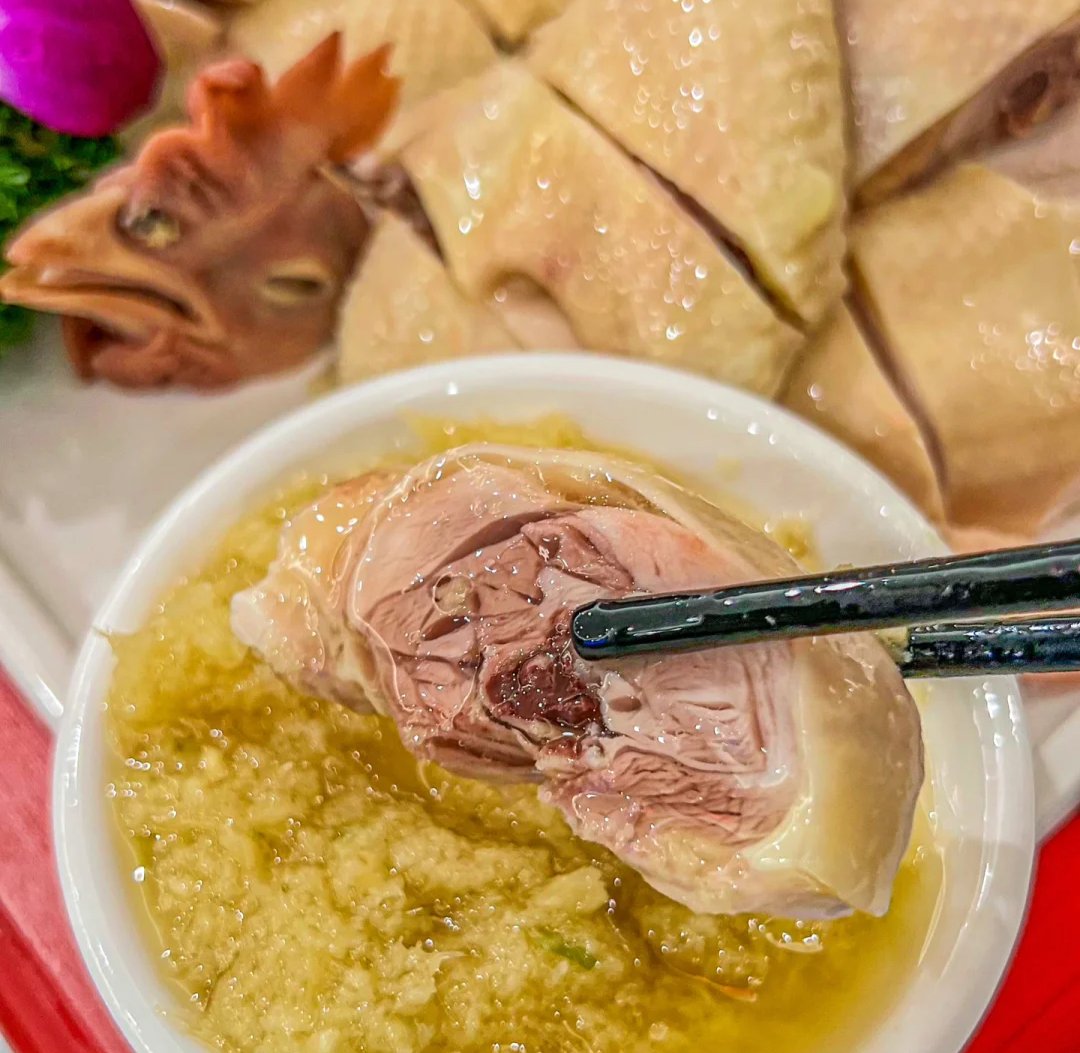
I would later learn that a white cut chicken must pass through three gates before it reaches the table. Gate one: the bird itself. It has to be a Qingyuan or Zhanjiang chicken — free-range, at least a hundred and twenty days old, yellow-skinned, tight-fleshed. Anything less, and the dish fails before the water even boils.
Gate two: the poach. Whole chicken into the pot. The water must not boil — boiling water shatters the skin and turns the meat to cotton. The Cantonese call it "shrimp-eye water": bubbles the size of shrimp eyes rising gently from the bottom, holding steady between 85 and 90 degrees Celsius. You grip the chicken by the neck and perform "three ups, three downs" — submerge for thirty seconds, lift to drain, submerge again, repeat three times. This equalizes the temperature inside the cavity and out. Then the whole bird goes in, lid on, heat set to the lowest flame, maintaining that shrimp-eye state. The chicken is not boiled; it is gently steeped to doneness — a process the Cantonese call jin shu, "steeped to done," and the art lives entirely in that word steep. Twenty minutes. Then turn off the heat. Do not open the lid. Let the chicken rest in the residual warmth for another ten minutes. This is where patience earns its keep: the bone marrow fades from raw crimson to pale pink, the meat stops at the exact threshold of tenderness. One minute more and it's overdone. One minute less and the bone is raw.
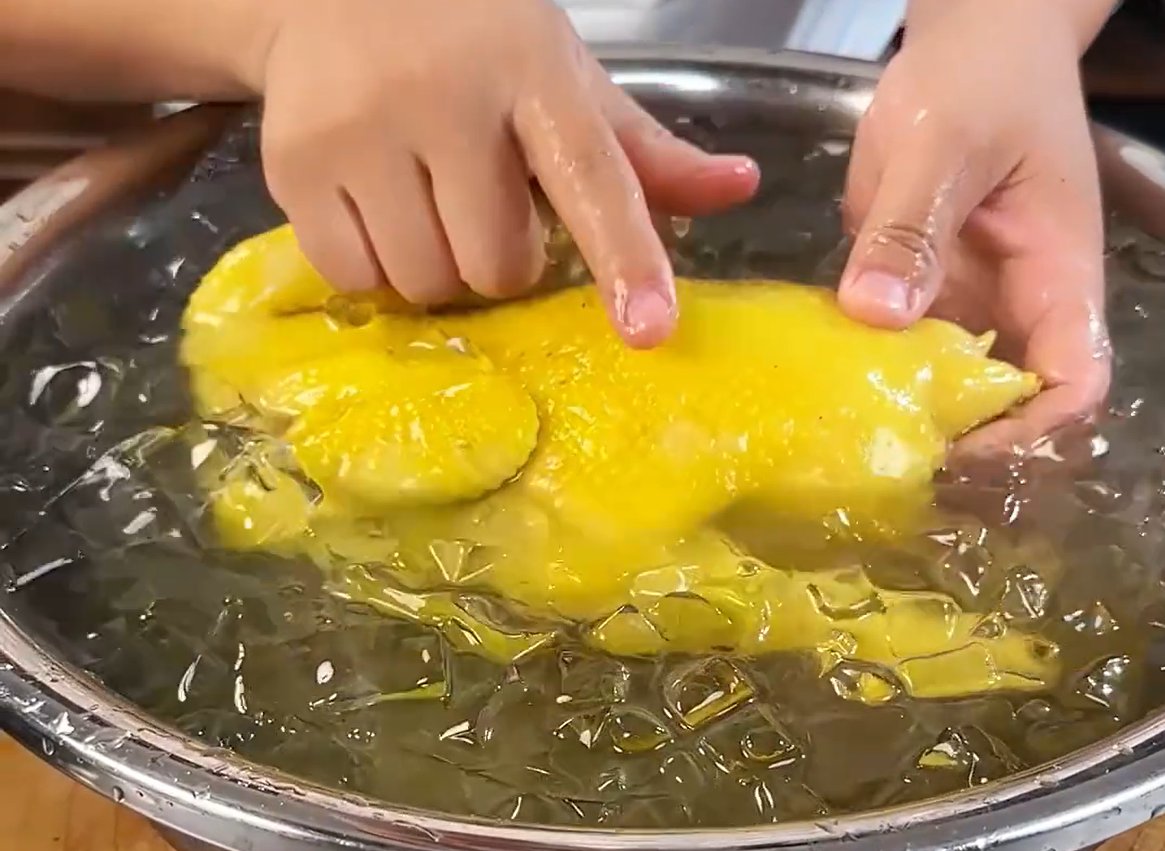
Gate three: the ice bath. The moment the chicken leaves the pot, it plunges into ice water — a step called "crossing the cold river." The skin seizes on contact, snapping tight and crisp, while the collagen beneath it sets into that signature jelly. Skip this step, and you've made boiled chicken. Do it right, and you've made something else entirely.
Three gates passed. The cooking is over. The seasoning, by Cantonese logic, is a separate discipline.
Ginger-scallion oil. Three things: old ginger, scallion whites, and smoking-hot oil. The ginger must be mature, ground to a paste. The scallions, only the white parts, sliced impossibly fine. A pinch of salt. Heat peanut oil until it shimmers, then pour it over the ginger and scallion — tsssss — and the soul of both ingredients releases into the air. This is not a sauce. It is the other half of the chicken. Without it, white cut chicken is a lead actor standing center stage with no lines, not knowing what to say.
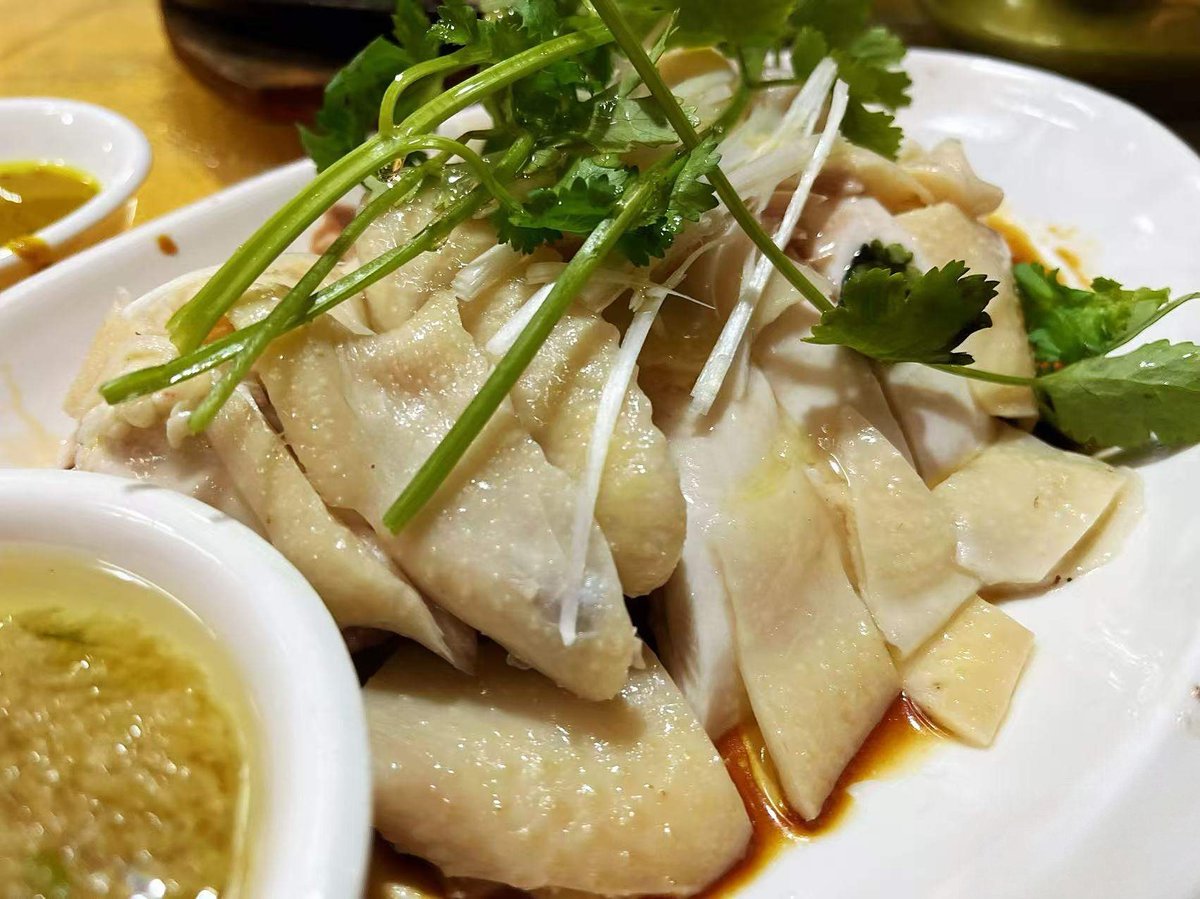
I've always thought that white cut chicken is the least "Chinese" dish in Chinese cooking. It doesn't assault your palate with seven condiments like mapo tofu. It doesn't require a day of advance prep like Peking duck. It doesn't throw half the ocean into the pot like Buddha Jumps Over the Wall. It has exactly three things: a good bird, a pot of shrimp-eye water, and a bowl of ginger-scallion oil. And precisely because it has nothing, it can hide nothing. The chicken is either good or it isn't — you'll know in one bite. The chef's hands are either steady or they aren't — you can tell by the color of the bone. A dish that refuses to lie.
In Guangzhou, there's a saying: mou gai m sing jin — no chicken, no banquet. The Lunar New Year table can survive without fish. It can survive without soup. It cannot survive without chicken. And that chicken, nine times out of ten, is white cut — not salt-baked, not soy-braised, not deep-fried. White cut. Because white cut is the most honest way to meet a chicken. From this baseline, you can build anything: toss the pieces into a clay pot and it becomes chicken hotpot, drench it in soy sauce and it becomes soy sauce chicken, throw it into a master stock and it becomes braised chicken. But white cut is the origin point. You return to the origin to find out whether today's bird is worth cooking into anything at all.
At that signless shop in Xiguan, I asked the owner how long he'd been at it. Thirty-seven years, he said. I asked how many chickens he sold a day. Not many, he said. Eighty, ninety. I asked if he'd ever thought about opening a second location. He looked at me and said something I've never forgotten:
"Open a second shop? Where would I find that many good chickens?"