White Cut Chicken: The 90-Degree Poach
Editor’s Note: This is the kitchen companion to White Cut Chicken: The Dish That Hides Behind Nothing. Quantities, temperatures and the failure points are below. Read the technique once before you shop.
Why the Bird Goes into Water at 90°C, Not 100°C
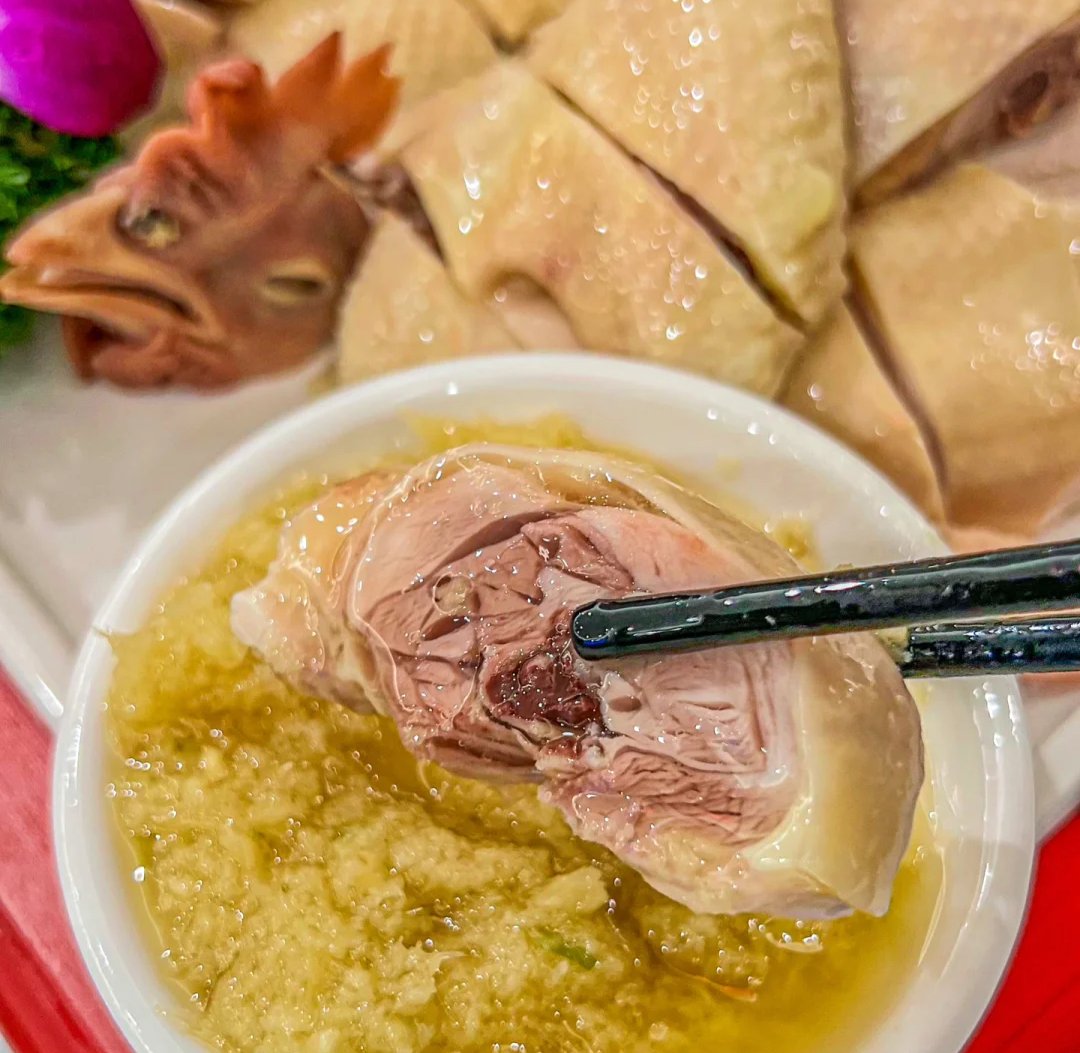
White cut chicken is the dish Cantonese cooks use to judge each other. Two ingredients, one pot, and nowhere to hide: if the poach is right, the skin is golden and tight, the meat is barely set and still juicy, and there is a layer of jelly between the two. If it is wrong, every fault shows on the plate.
A rolling boil is the classic mistake. At 100°C the outside of the bird is cooked long before the inside catches up, so you get dry breast meat and a thigh still pink at the bone. At 90°C the heat moves through more slowly and more evenly. The skin stays intact because it is not being knocked around by moving water, and the meat keeps its moisture because the fibres never contract hard. Why this matters: at a boil the outer centimetre of a chicken reaches 80°C while the bone is still near 45°C, so the two ends of the bird can never be right at the same time.
You do not need a thermometer, though one helps the first time. Bring the pot to a boil, turn the heat to its lowest setting and watch the surface. At 90°C there are small bubbles the size of pinheads climbing at the rim, one every second or two, and no movement at all in the middle. The chicken should sit still. If it bobs and drifts, the water is too hot.
Count 25 minutes for a 1.2kg bird and 30 for 1.5kg, from the moment the water returns to its tremble after the chicken goes in. Turn it once at the halfway point so the breast spends equal time up and down. Then the pot comes off the heat and the bird sits covered in the water for 10 more minutes. That carryover finishes the joint at the bone without pushing the outer meat past setting point. Why this matters: the difference between 25 and 32 minutes in the pot is the difference between juicy and chalky, and the 10 minutes off heat buys the margin.
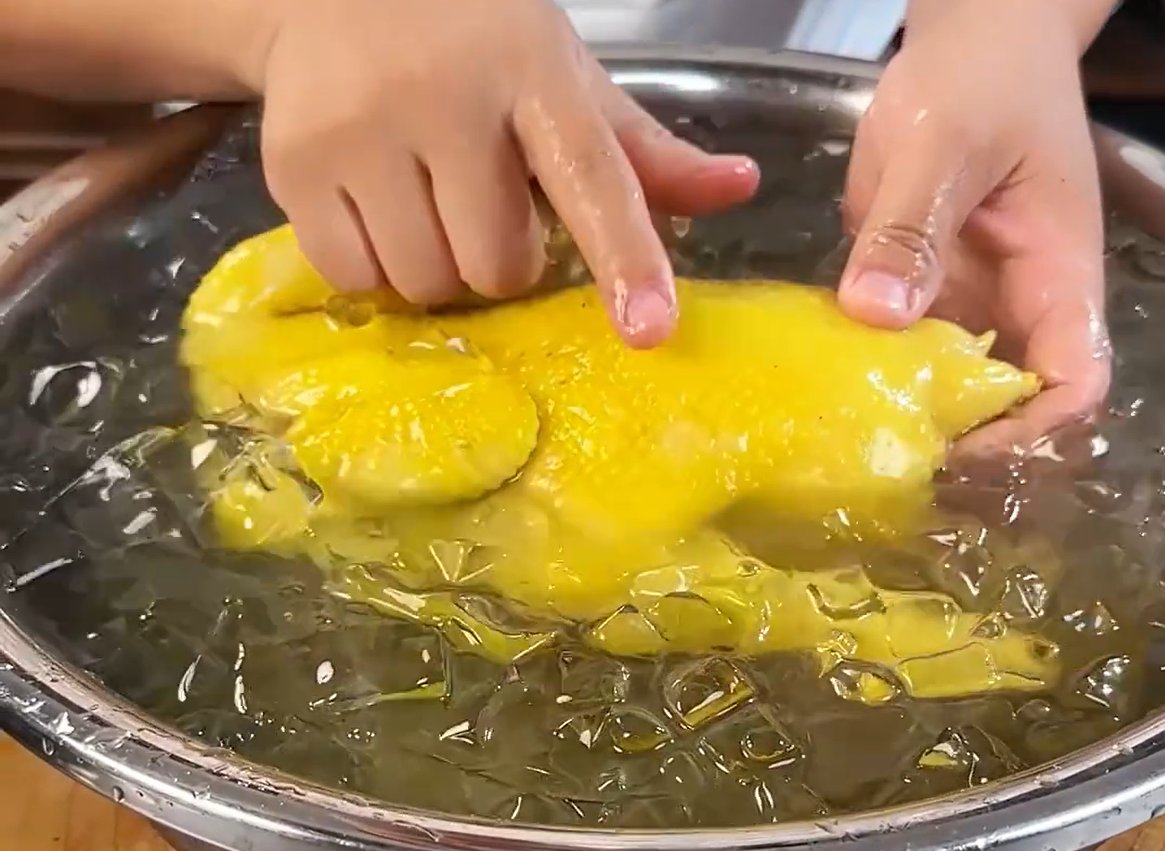
The ice bath is what makes the skin worth eating. Ten to fifteen minutes in iced water stops the cooking and contracts the skin against the meat. The surface turns taut and springy, the fat beneath sets, and the collagen that has dissolved under the skin gels into the thin jelly layer that defines the dish.
Faint pink near the bone is normal and is not a sign of a raw bird. It comes from myoglobin in a young chicken, and a 90°C poach never takes the bone itself to temperature. Judge by the juices at the thigh joint, which should run clear, and by meat that is white and opaque to the bone with only a rose tint where it touches it.
Ingredients
For the poaching stock
- 1 whole chicken (1.2 to 1.5kg), at room temperature, cavity rinsed
- 3.5 litres water, enough to submerge the bird by 5cm
- 60g ginger, sliced 3mm thick, unpeeled
- 4 spring onions (60g), bruised with the flat of a knife
- 1 tbsp (15ml) Shaoxing wine
- 1 tbsp (12g) fine salt
- 1 tsp (3g) white peppercorns, optional
For the ginger-scallion oil
- 60g ginger, grated or minced as fine as you can manage
- 60g spring onion, green and white parts, sliced thin
- 1 tsp (5g) fine salt
- 150ml neutral oil, peanut or rice bran
- 1 tsp (5ml) sesame oil, added off the heat
To serve
- 2 tbsp (30ml) light soy sauce
- 1 tsp (4g) caster sugar
- 1 tbsp (15ml) strained poaching liquid
- 1 cucumber (200g), cut into sticks, optional
Substitution notes: A 1.2kg bird is the practical minimum, since anything smaller has too little meat to chop neatly, and anything over 1.6kg needs a pot most home kitchens do not own. If you have no Shaoxing wine, dry sherry at the same quantity is close enough. For the oil, any neutral oil works, but olive oil does not, because its own flavour fights the ginger at exactly the temperature where the ginger is most aromatic.
Prep: Fifteen Minutes of Work, an Hour of Waiting
1. Temper the chicken (60 minutes, 2 minutes of work)
Take the bird out of the fridge an hour before cooking and leave it in the coolest part of the kitchen. A fridge-cold chicken drops the pot to 70°C and takes eight minutes to climb back, during which the outside is cooking and the inside is not.
2. Grate the ginger and slice the scallions (8 minutes)
Peel the ginger for the oil and grate it on the finest side, or chop it to a pulp with a knife. You want 60g of wet, fibrous paste, not matchsticks. Slice the spring onions thin, green and white, and put both in a heatproof bowl with the teaspoon of salt.
3. Set up the ice bath and the stock (5 minutes)
Fill a large bowl or the sink with cold water and a tray of ice. Put the water, ginger, spring onion, wine, salt and peppercorns in a pot wide enough to hold the chicken lying down, and bring it to a boil while you finish the ginger.
Step by Step: Thirty-Five Minutes, Then Ice
Step 1: Lower the bird into 90°C water (6 to 8 minutes)
When the stock boils, turn the heat to its lowest setting and let it settle for two minutes. Lower the chicken in breast side up, holding it by the legs, and let the cavity fill as it goes under. The temperature will drop; wait for it to return to a tremble before you start the clock.
Step 2: Hold it there, turning once (25 to 30 minutes)
25 minutes for 1.2kg, 30 for 1.5kg. At the halfway point, lift the bird by the legs and turn it breast side down, then back again after five minutes so it finishes breast up. If the surface starts to roll, pull the pot half off the burner.
Step 3: Rest off the heat (10 minutes)
Turn the heat off, put the lid on and leave the chicken in the water for 10 minutes. Residual heat finishes the meat at the bone while the outside stops climbing.
Step 4: Ice bath (12 to 15 minutes)
Lift the bird out, let it drain a few seconds and lower it into the iced water. Leave for 12 minutes, 15 if the ice is sparse, until the skin is cold and firm. Strain the poaching liquid and keep it as stock.
Step 5: Chop through the bone (8 minutes)
Dry the chicken and lay it breast up on a board. With a heavy cleaver, cut straight down through the joint to remove the legs, then the wings, then split the carcass lengthwise. Chop each piece into 3cm blocks, striking firmly through bone rather than hacking.
Step 6: Pour the oil at 180°C (2 minutes)
Heat the 150ml of oil to 180°C, or until a slice of spring onion dropped in sizzles hard and rises at once. Pour it over the ginger and scallion in one steady stream, then stir in the sesame oil. Above 180°C the ginger turns bitter in seconds and the scallion goes from green to olive; below it you get raw ginger sitting in grease.
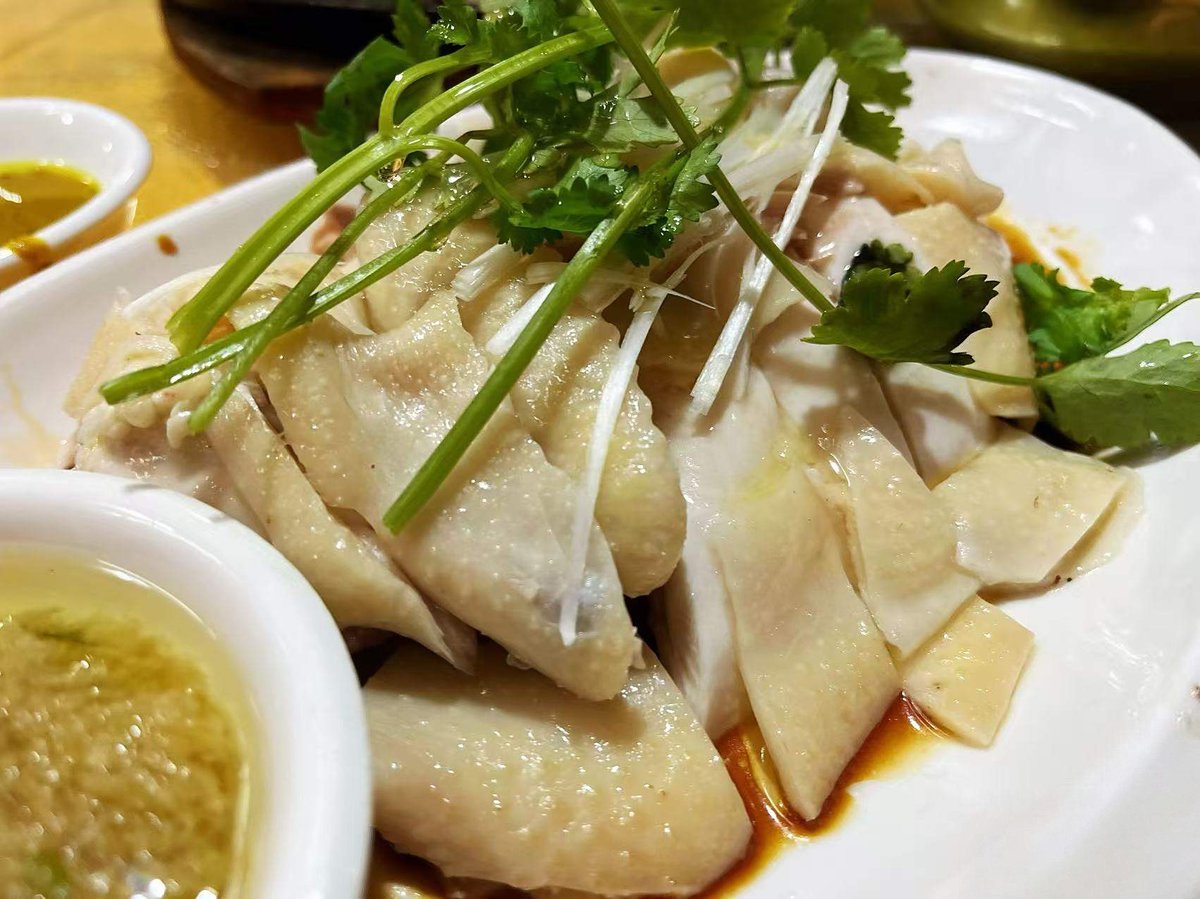
Arrange the chicken skin side up, spoon over a little of the ginger-scallion oil, and mix the soy, sugar and poaching liquid in a small dish to pass separately.
Key Pitfalls
The breast was dry and the thigh was still pink. The bird went in cold, so the outside overcooked before the inside caught up. Temper it for an hour, or 25 minutes in cool water, and start timing only once the pot is back at a tremble.
The skin split and peeled away in the pot. Either the water was boiling, or the chicken was dropped in from a height. Hold 90°C with pinhead bubbles at the rim and lower the bird slowly by the legs.
There was no jelly layer under the skin. The bird cooked too fast and cooled too slowly. Jelly needs collagen dissolved at 90°C and then set in ice, so both halves matter, and the ice bath should last at least 12 minutes.
The ginger-scallion oil tasted bitter. The oil was past 180°C when it hit the ginger. Take the pan off the heat for 30 seconds before pouring, and pour in one steady stream rather than dribbling.
The chopped pieces were ragged and full of bone shards. A light cleaver and a sawing motion. Use the heaviest cleaver you own, set the blade on the joint line, and strike once through with the heel of your palm on the spine.
The meat was grey and tasted of the fridge. The chicken was covered while still warm, or chilled before it was fully cold. Ice it properly, then rest it uncovered on a rack so air reaches the skin.
The soy dip overwhelmed the chicken. Straight light soy is too concentrated for a poached bird. Simmer 2 tbsp soy with 1 tbsp poaching liquid and 1 tsp sugar for 30 seconds, then cool before serving.
Serving Suggestions
Serve at room temperature, never straight from the fridge, with plain rice cooked with a little of the strained poaching liquid in place of some of the water. The ginger-scallion oil goes in the middle of the table and everyone spoons their own.
The carcass and the strained stock are worth more than the leftovers. Simmer the bones with the spent ginger and scallion for 40 minutes and you have a light broth for noodles. Any chicken left over should be sliced and dressed with sesame oil, soy and a little ginger oil, eaten cold, which is how it turns up in Cantonese homes the next morning.
This is the companion recipe to White Cut Chicken: The Dish That Hides Behind Nothing. Read the story, then cook the dish.
💬 Comments