Wensi Tofu: The Soup That Quiets a Table
Four in the afternoon is the quiet hour in a Yangzhou kitchen. Lunch service is over, dinner prep hasn't started, and the only sound in the room is a cleaver. One soft click a second. Then another. Nobody talks, because everyone in the kitchen knows what the clicking means: somebody is cutting tofu, and if you make him look up, the block is finished.
The blade comes down eighty times one way and eighty times the other. Then the cook slides the flat of the knife under the whole block — still white, still soft, still holding the shape it had when it came out of the box — and lowers it into a bowl of clear water. It opens. Not falls apart. Opens, the way a paper flower opens when you drop it in a glass. Thousands of threads, each one about the width of a hair, none of them broken, almost none of them touching.
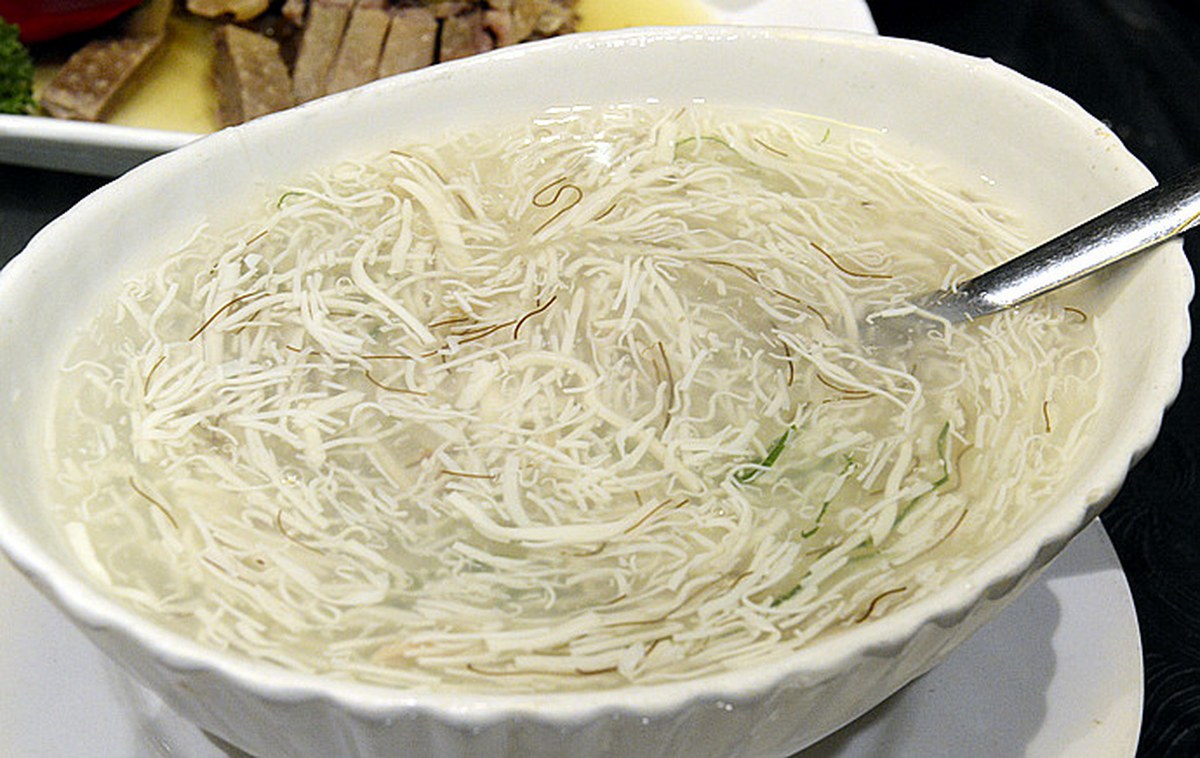
That is Wensi Tofu (文思豆腐, wénsī dòufu): the softest thing in the Chinese pantry, cut so fine it behaves like noodles, served in a broth so clean you can read the pattern on the bottom of the bowl through it.
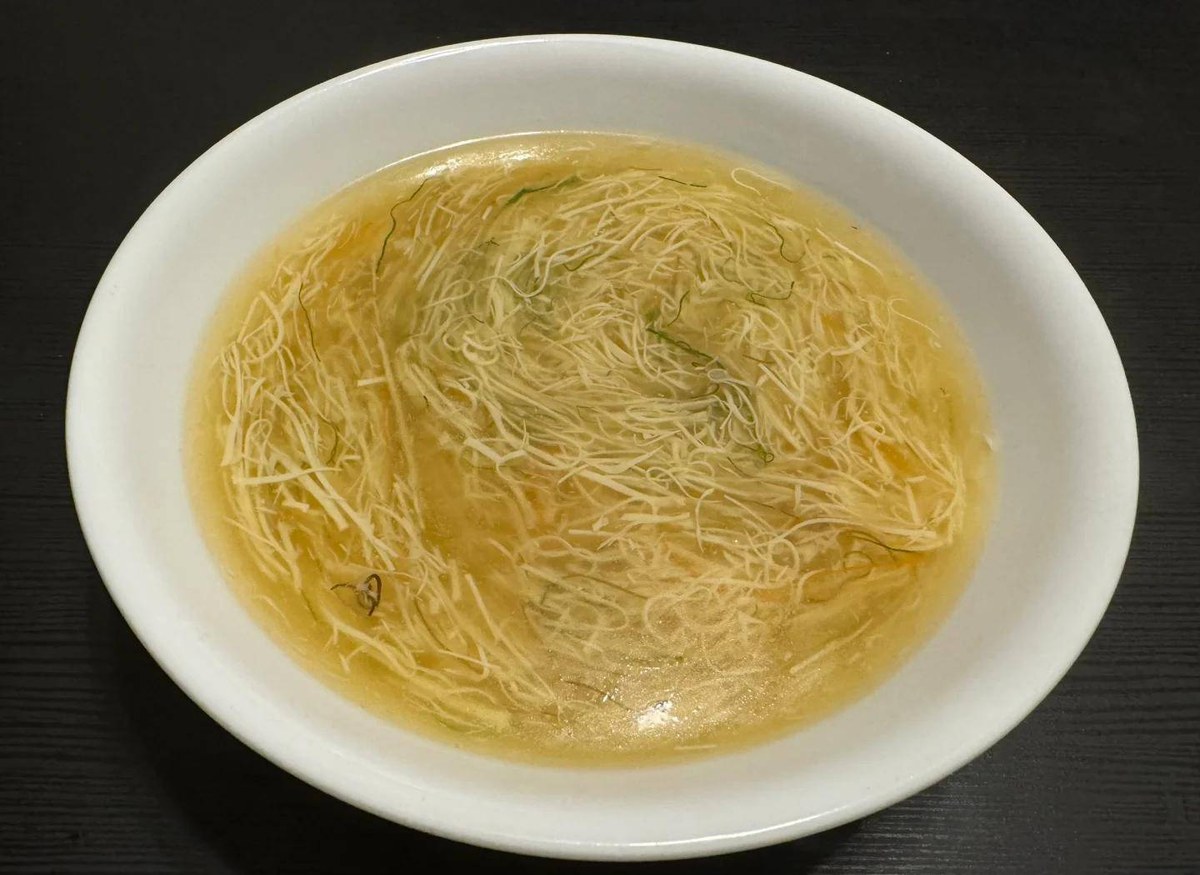
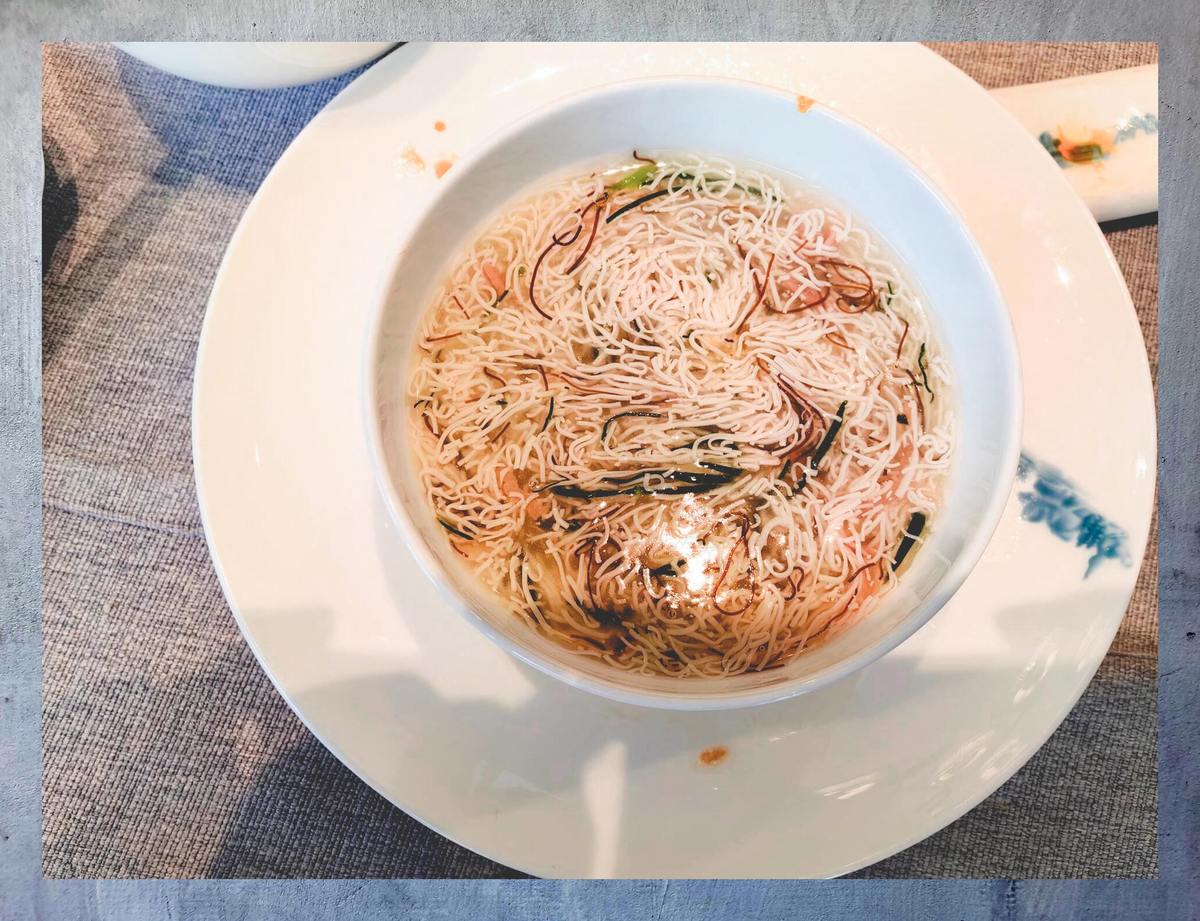
What reaches the table looks like almost nothing. Pale gold liquid. A fan of white threads suspended in it, drifting slowly when the bowl settles. A few shreds of ham, a few of chicken, a handful of thin green vegetable, sometimes a knot of enoki mushroom. No oil slick, no chili, no garnish doing tricks. You put in your spoon and the threads collapse against your tongue before you have time to chew them. With your eyes closed there is no tofu at all — only broth, carried by something even softer than broth.
The first time I saw it I was eleven, at a wedding in Yangzhou on my mother's side of the family. My uncle, a man who has never cooked anything in his life, spent five full minutes trying to lift one single thread out of his bowl with chopsticks. He got one, eventually, and held it up like a fish he'd caught. My grandmother looked at it, told him the dish was wasted on him, and went back to her soup. It was one of the only times I can remember twenty Chinese relatives going quiet for a full minute. Not out of respect. Out of attention.
The man behind the dish was a monk. Wensi (文思) lived at Tianning Temple in Yangzhou during the Qing dynasty, and he had the problem every vegetarian cook in China has had: how do you serve a soup a guest will remember when you can't use meat? His answer was a knife. He cut tofu into threads fine enough to hold a broth, and let the temple's mushroom-and-bamboo stock do the rest. Two hundred years on, most restaurants make it with chicken stock, the temple is a ticket booth, and the knife is exactly the same.
Here is why it stays rare. Tofu has no structure. Leave the block out of the fridge for ten minutes and it starts to give under the blade; push instead of draw and the slice goes fat; hesitate and the block shifts. A shifted slice tears, and a torn thread is a visible failure in a bowl of clear soup. There is nowhere to hide it — no sauce, no batter, no fryer, no chili oil. That's why Huaiyang kitchens use this dish to grade a new cook, the way other kitchens use a consommé or a poached egg. You can fake almost anything in a stir-fry. You cannot fake a thread.
The fakes
Cut by machine. A julienne slicer gives you threads of perfect, dead uniformity: same width, square edges, no taper. It photographs well and tastes like shredded tofu that fell into soup. A knife leaves a slightly irregular edge, and that irregularity is what the broth clings to.
Cut thick. If you can pick the threads out one at a time with chopsticks, it isn't this dish. At three millimeters it is a perfectly nice home soup, and a different one.
Cloudy broth. If you can't see the pattern on the bowl through the liquid, something is hiding in there — usually cornstarch, usually because the threads have already started to dissolve.
Cut this morning, served tonight. Threads have a shelf life of hours. When they go, they go quietly: the ends fray, and a pale silt collects at the bottom of the bowl. Tip the bowl and look. Silt means yesterday's knife work.
How to eat it
Spoon, not chopsticks. Don't stir — the fan of threads is the dish, and one lazy circle turns it into soup with tofu in it. Take broth and threads in the same spoonful and let the threads work, which is to keep the broth on your tongue a second longer than it wanted to stay. Finish the liquid. At a good Huaiyang restaurant you can also simply ask how far ahead the tofu was cut; the serious ones know, and they will tell you.
My uncle never got a second thread out of that bowl. The threads are not built to be picked out one at a time. That isn't a flaw in the design. It's the design: enormous skill, arranged to be invisible.
I'll save the home-cooking version for another post. A home cook with a very sharp cleaver and a well-chilled block of silken tofu can get surprisingly close, but the thing worth writing about isn't the recipe — it's the rhythm, and the fact that a stop-start cut ruins the block. Recipe coming soon.
💬 Comments