Twice-Cooked Pork: The Sichuan Home Classic That Tests Every Cook
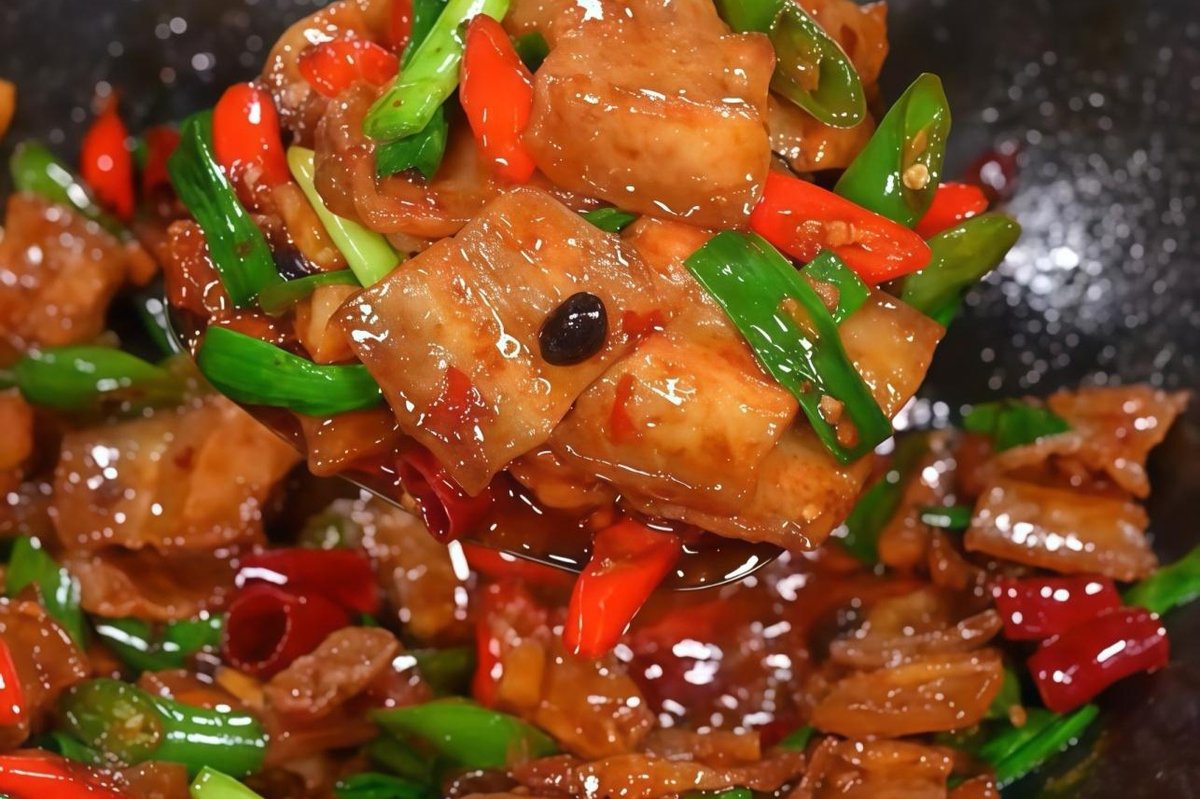
The slab of pork belly hits the wok of cold water with a soft thud. Ginger slices, a knot of scallion, a splash of Shaoxing wine. Your grandmother brings it to a boil, drops the flame to a whisper. Forty minutes. The kitchen fills with the clean, porky scent of simmering fat and ginger — not the aggressive smell of a stir-fry, but something patient. She lifts the pork out with chopsticks, sets it on the cutting board. The skin is pale, the fat layer translucent, wobbling slightly as it cools. You reach for a piece. She slaps your hand away without looking.
Half an hour later, the same pork — now sliced into thin, uniform rectangles, each one a cross-section of skin, fat, and lean — hits a smoking wok. The sound is different this time. Not the wet sizzle of raw meat. Something drier, sharper. The slices curl at the edges as they sear, rendering their own fat into the wok. Then the doubanjiang goes in: fermented broad bean paste from Pixian, dark red, granular with salt and time. The kitchen fills with a smell so deep and funky and savory it makes the back of your jaw ache.
This is Twice-Cooked Pork (回锅肉, huíguō ròu). The name is literal: meat that returns to the wok. But the name undersells it. This is the dish Sichuan grandmothers use to test sons-in-law. The dish that separates cooks who understand heat from the ones who think stir-frying means tossing raw ingredients into a hot pan and hoping.
The Architecture of a Bite
I saw my first GPU kernel trace in 2012 — thousands of parallel operations executing in lockstep. Twice-cooked pork runs on the same principle. Every component has a job. Nothing is decorative. The timing is everything.
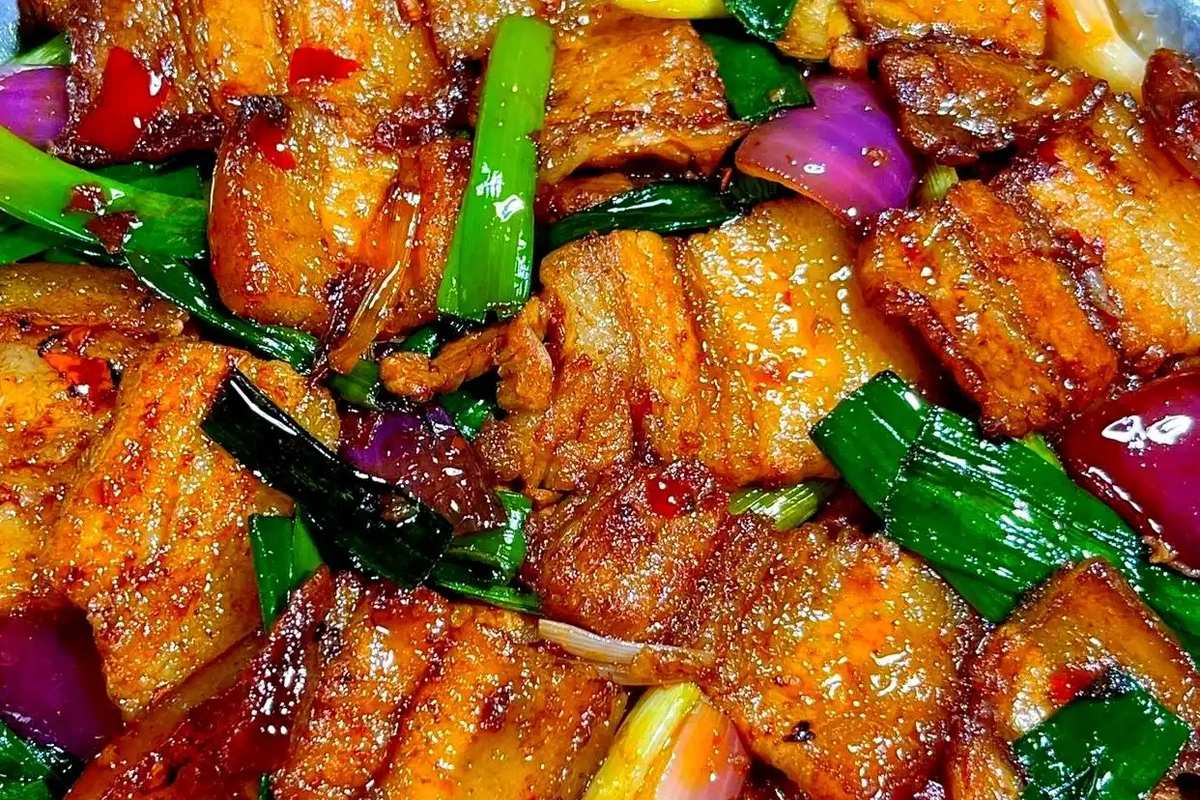
You pick up a slice with your chopsticks. The cross-section is unmistakable: a stripe of chewy skin on top, a band of white fat rendered until translucent and buttery, and a layer of lean meat the color of weak tea. The whole thing has curled into a slight cup, what Sichuan cooks call dēngzhǎn wān (灯盏窝): “lantern-cup curl,” the visual proof that the pork hit the wok at exactly the right temperature.
First bite: the skin resists, then gives with a snappy chew. The fat isn’t greasy. It’s been boiled first, then fried, which converts the lard into something closer to pork butter. The lean meat is firm but tender, carrying the salt of the doubanjiang. And that paste — fermented broad beans and chilies aged a minimum of six months — delivers a flavor that’s not just spicy. It’s deep. Earthy. Almost meaty in its own right, the way miso tastes like more than the sum of its ingredients.
Then the garlic sprouts (蒜苗, suànmiáo) arrive. Not garlic. Not scallions. The green stalks of garlic plants, cut into finger-length segments, flash-fried until they wilt slightly but keep their snap. They hit with a vegetal sharpness that cuts through the pork fat like a reset button. A few slices of fresh red chili add brightness without heat. The fermented black beans scattered throughout are salt bombs that explode at random intervals.
Every bite is different. One mouthful is all pork and doubanjiang funk. The next is garlic-sprout crunch with a black-bean detonation. The dish doesn’t repeat itself. That’s the point.
A good twice-cooked pork is never the same dish twice. That’s why the name fits: each time, you’re chasing a version one degree different from the last.
The Origin
Twice-cooked pork is so old nobody knows exactly who invented it. The technique — boil first, fry second — appears in Sichuan kitchen manuscripts from the Qing dynasty. The folk story says it started with farmers near Chengdu who would boil a cut of pork for the ancestral altar during festivals, then fry the leftovers with garden vegetables and fermented bean paste the next day. Waste nothing, feed everyone. The dish was home cooking before home cooking was a category. Every Sichuan family has a version, and every Sichuan family thinks theirs is correct.
The Enemies of Twice-Cooked Pork
Outside Sichuan, this dish gets murdered in specific, predictable ways.
The one-fry fraud: raw pork belly sliced and stir-fried directly. The meat comes out tough and chewy, the fat never renders properly, and the whole thing tastes like a sad pork chop someone poured chili paste over. You can spot this version from across the room — no lantern-cup curl on the slices, no translucency in the fat. Just grey meat in red oil.
The vegetable substitution: broccoli, cabbage, bell peppers, celery — anything but garlic sprouts — dumped into the wok because “close enough.” The garlic sprout is not negotiable. It has a specific sharpness and a specific structure that holds up to heat. Broccoli releases water and steams everything. Cabbage wilts into a wet blanket. Bell peppers add sweetness where you need bite. If your twice-cooked pork doesn’t have garlic sprouts, you’re eating a stir-fry with an identity crisis.
The doubanjiang switch: supermarket chili-garlic paste instead of Pixian doubanjiang (郫县豆瓣酱). Pixian douban is fermented — aged in clay pots for months or years, developing a deep, funky umami that fresh chili paste cannot fake. The supermarket version is just ground chilies and salt. One-dimensional. The difference between aged cheese and American singles.
Real twice-cooked pork is:
- Pork belly, boiled whole for 40 minutes with ginger and Shaoxing wine, cooled, then sliced thin — ideally 3mm. Thicker slices won’t curl. Thinner ones disintegrate.
- Pixian doubanjiang (郫县豆瓣酱), the fermented broad bean paste from Pixian county. This is the soul of the dish. Buy the kind with whole beans visible in the jar. The factory-ground paste is inferior.
- Garlic sprouts (蒜苗), not scallions, not leeks, not garlic scapes. Fresh, green, cut into 3cm segments. They go in at the very end and cook for maybe 45 seconds.
- Fermented black beans (豆豉), rinsed and lightly crushed. Salt bombs. Use sparingly.
- A splash of sweet wheat paste (甜面酱), optional but traditional, to round the doubanjiang’s salt with a whisper of sweetness.
How to Eat It
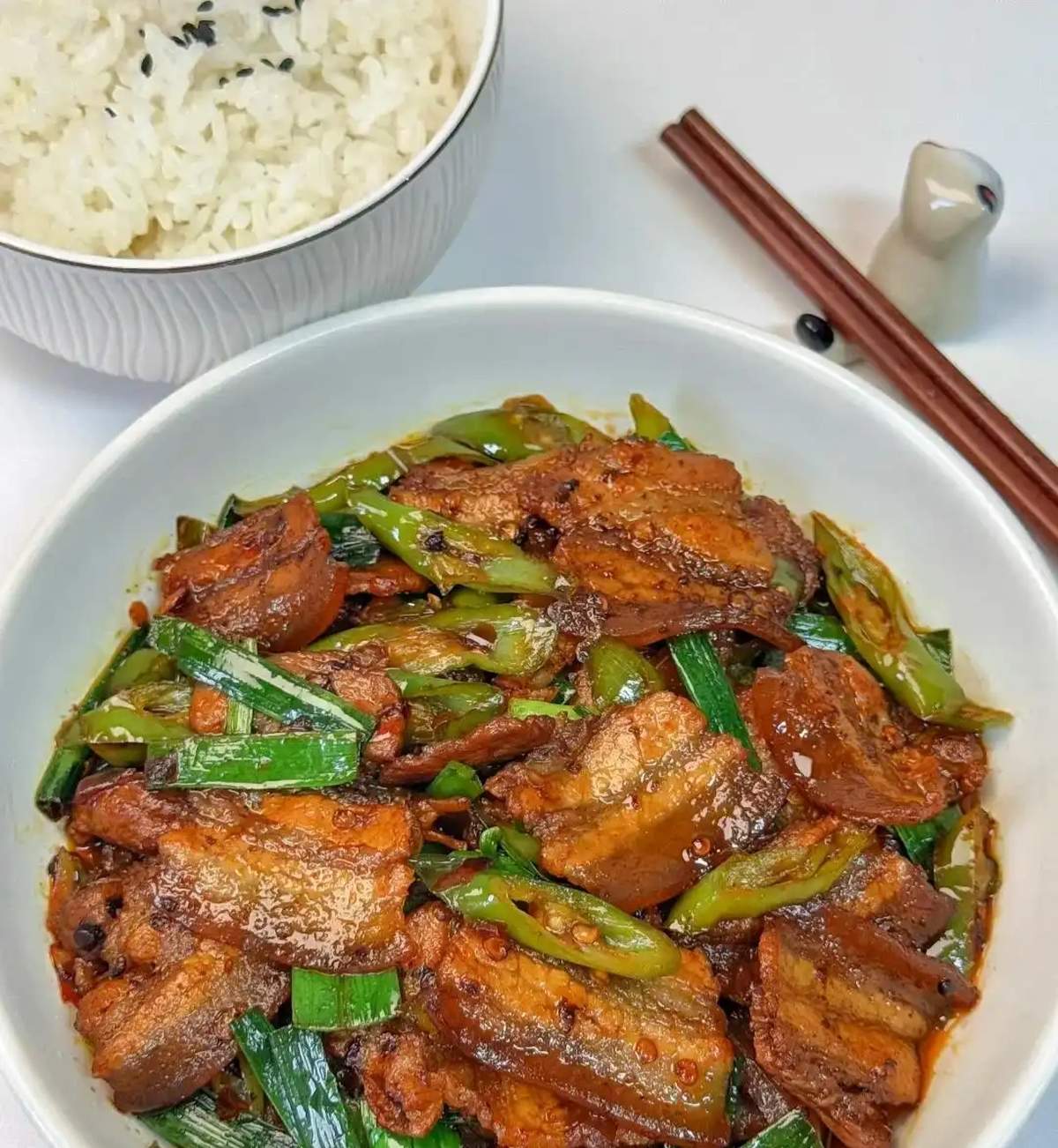
Over rice. There is no other correct answer. The pork fat and doubanjiang oil soak into the grains, turning each spoonful red and rich. Build every bite differently: one with extra garlic sprout, one with a chunk of black bean, one where you drag a slice through the chili oil pooled at the bottom of the bowl.
My grandmother made this dish once a week for thirty years. Every Wednesday. She never wrote down the recipe because there wasn’t one — she adjusted the doubanjiang by smell, the timing by sight, the garlic sprouts by how fresh they looked at the market that morning. When I asked her, at 25, to teach me, she stood next to me at the wok and said exactly three things: “The water must boil before the pork goes in. The pork must be cold before you slice it. And never apologize for the amount of oil.”
She was right about all three.
Want to cook this? Here’s our step-by-step Twice-Cooked Pork recipe .
💬 Comments