Tangyuan: The South Wraps Them, the North Shakes Them
The window is fogged and the kitchen smells of two things: toasted sesame and cold pork fat. It is 冬至 (dōngzhì), the shortest day of the year, and my grandmother has the tin of lard down from the shelf — the one she keeps for exactly this. She spoons it into a bowl of ground black sesame and sugar and presses it with the back of the spoon until it stops being three things and becomes one: a dark, damp paste that she rolls, with her palms, into a brick.
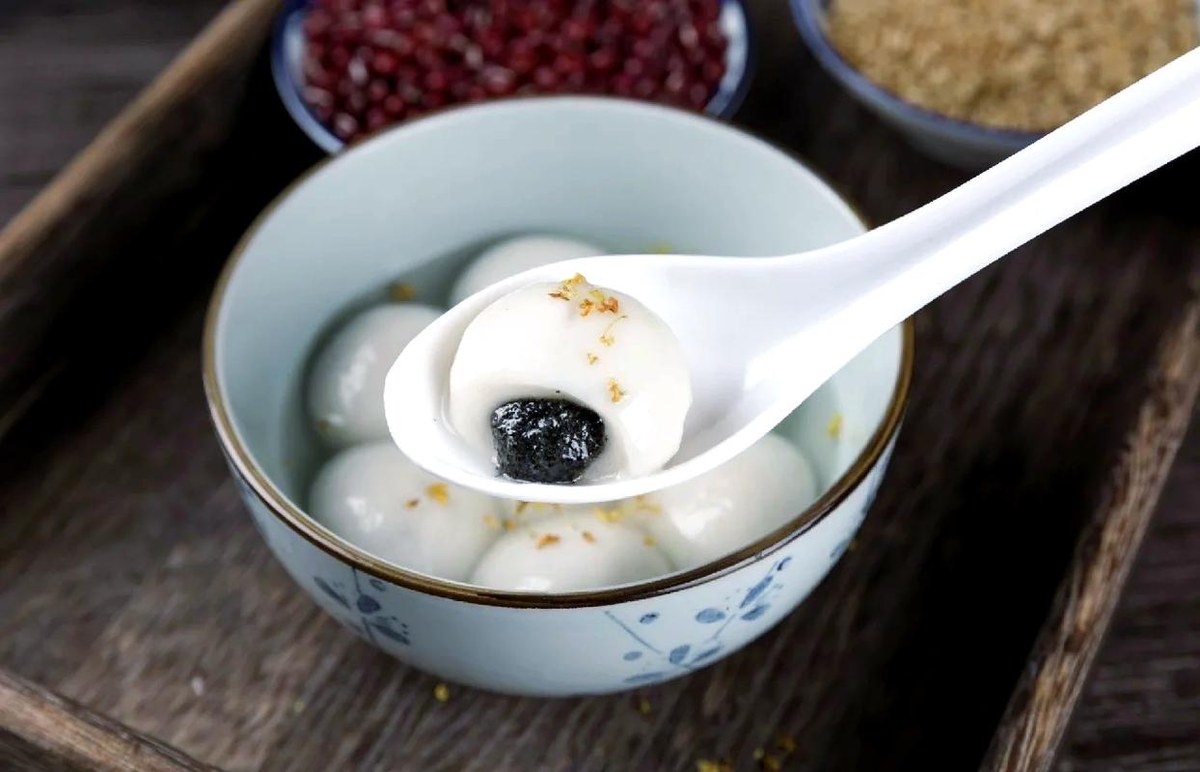
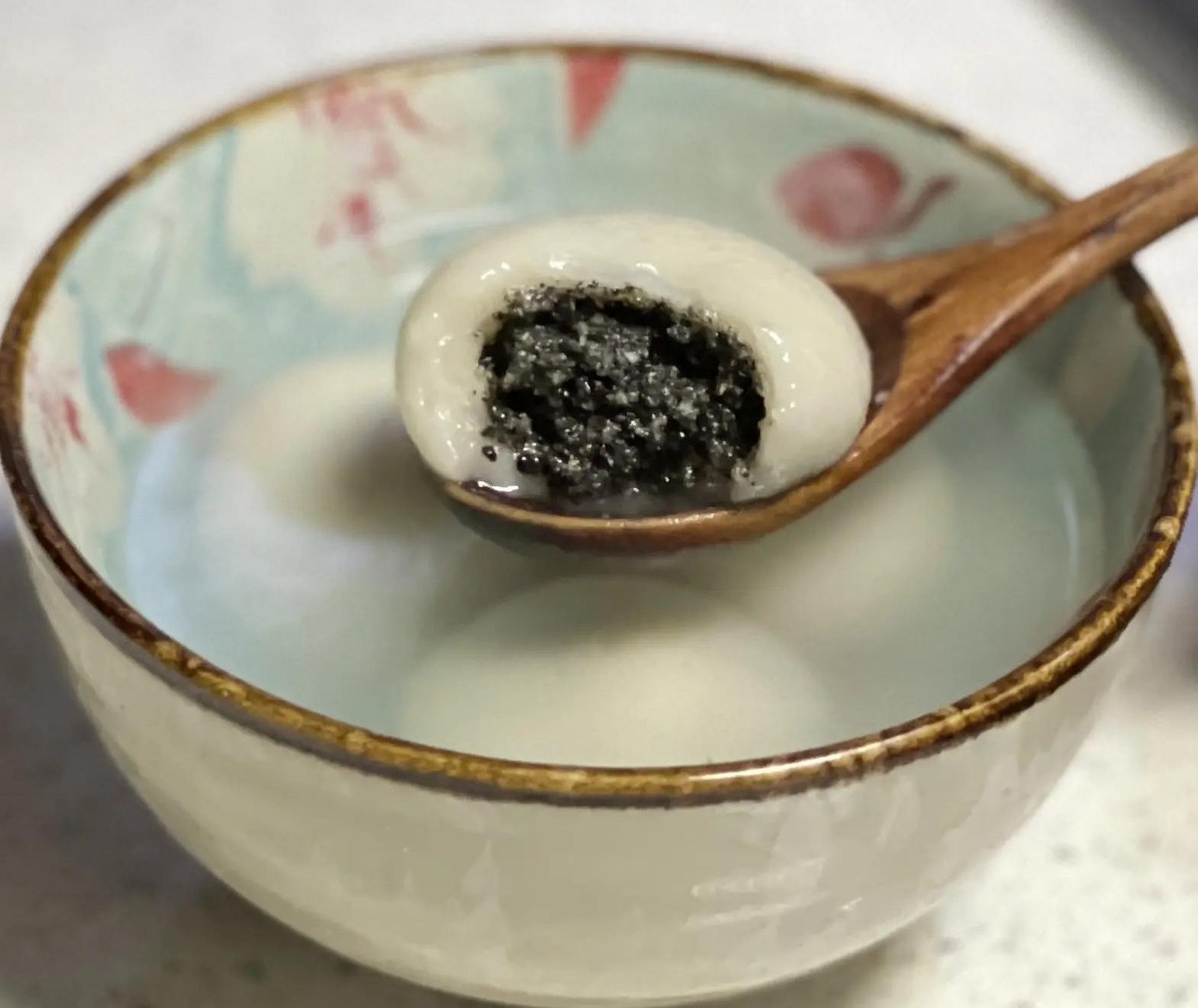
That brick is the whole dish. 汤圆 (tāngyuán) is a ball of glutinous rice dough wrapped around a core of 黑洋酥 (hēi yáng sū): black sesame, sugar, lard, nothing else. The lard is not a guilty secret or a shortcut. It is the mechanism. Sesame and sugar alone sit in the middle of the ball like sweet sand. With lard, the core goes liquid at the temperature of boiling water, and the first bite floods your mouth with something that tastes like the inside of a sesame-scented candle, in the good way.
Shanghai eats these on the morning of 冬至 and again on the first day of the new year. My grandmother counted them into the pot out loud — four per person, five for my uncle, because he was tall. Four is correct. Anyone who serves you a bowl of twelve has never made them.
The dough is glutinous rice flour and boiling water. Not warm — boiling, poured straight in, stirred with chopsticks while it is still too hot to hold, then kneaded by hand once your palms can take it. The hot water gels some of the starch before the dough ever meets the pot, which is why the skin comes out soft and slightly elastic instead of chalky and cracked. My grandmother's test was an earlobe. Pinch the dough: if it feels like your earlobe, it is right. If it feels like your cheek, add flour. If it feels like the table, add water. It is not a precise test. It has never once been wrong.
Six hundred miles north, nobody wraps anything. 元宵 (yuánxiāo) is built in a basket. 笸箩 (pǒluo), a wide shallow tray of woven bamboo, gets filled with dry glutinous rice flour. The filling is pressed into hard little cubes, firmer than tangyuan filling, often just sugar and sesame with no lard at all, because it has to survive being thrown around. Drop the cubes in and shake the tray. They tumble, pick up a coat of flour, get lifted out, dipped in water, dropped back, shaken again. Five passes, sometimes seven. Each one adds a millimetre. A cube becomes a ping-pong ball, and the skin has been assembled from the outside in.
You can hear it from the next room: dry flour hissing against bamboo, the hollow clatter of a dozen hard cores knocking into each other. Sweets that announce themselves.
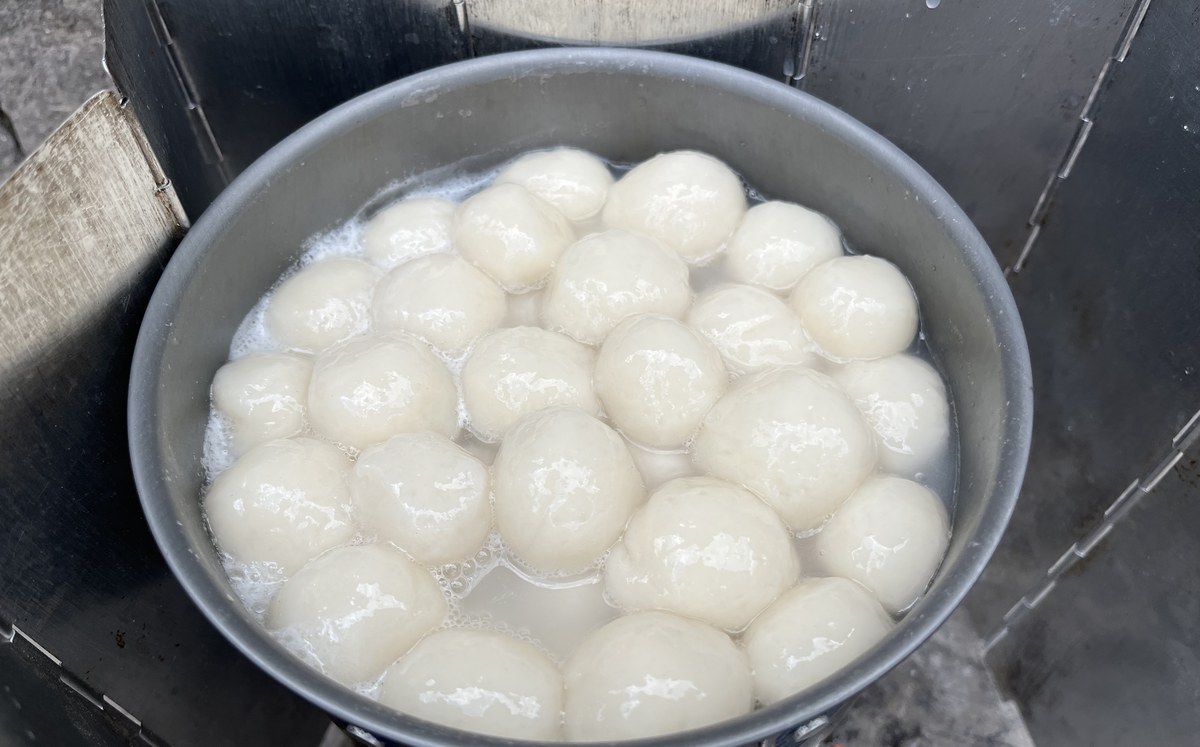
They do not cook the same way. A yuanxiao's skin is rough and dusty and the water goes cloudy in a minute — which is the point; the soup thickens itself, and in Beijing it is served in exactly that cloudy water with a spoon of sugar. A tangyuan is smooth, and the water stays almost clear, which means somebody has to decide what the broth is going to be. Boil a tangyuan in plain water and serve it as it is, and you get a bowl of nothing: slippery skin, hot filling, no third flavour.
In our house it was 酒酿 (jiǔniàng) — fermented glutinous rice, sweet and faintly alcoholic, loosened with water, warmed with a pinch of dried 桂花 (guìhuā), and never boiled hard or the rice turns sour. The smell of it, floral and fermented at the same time, is the smell of winter mornings to me. The tangyuan go in last, for the two or three minutes it takes them to float.
Shanghai also makes a pork one, 鲜肉汤圆 (xiānròu tāngyuán), the size of a golf ball, with seasoned minced pork and a spoonful of hot broth sealed inside that has nowhere to go but out when you bite it. It horrifies visitors from Beijing. It is the best thing in the shop. If a stall sells both, order one of each and eat the sweet one last.
The bad version is everywhere and it always fails the same way: too much wall, too little core. A frozen supermarket tangyuan has three millimetres of glue around a teaspoon of paste, and when you bite it there is no flood — just a polite smear of sweetness. The ratio is the dish. The skin should be thin enough that you can see the dark of the sesame through it before it is cooked. If you cannot, you are eating a dumpling with a rumour inside.
The second failure is the broth: plain boiling water, poured from the same pot it cooked in, cloudy and starchy and tasting of nothing but rice. The third is the "lighter" version, where somebody has swapped the lard for vegetable oil. It does not set, it does not melt, it just leaks, and the sesame tastes like dust.
I tried to make them myself one 冬至 in California, in a rented kitchen, with a jar of black sesame paste from an Asian grocery and no lard, because I had decided the lard was optional. They came out perfect. Round, sealed, floating in a clean syrup. And they were completely wrong — the filling sat in the middle like a sweet coin. No lava. No smell. Nothing to remember. A Mexican grocery two blocks away sold rendered pork fat in a tub, and the next batch was the first one that tasted like the kitchen I grew up in.
Three or four to a bowl, broth to cover them, osmanthus on top. Do not bite straight through. The filling is at the temperature of boiling water, sealed inside a skin with nowhere to vent, and it will take the roof of your mouth off — I know this from the age of nine and I can still point to the spot. Nip a small hole at the top, let the steam out, sip. Then the skin, which should give like an earlobe and taste faintly of rice rather than of nothing. Then the last of the filling, scraped up with the spoon, and then the broth, which by now has a slick of sesame floating on the surface.
My grandmother never weighed anything, never owned a thermometer, and made the same tangyuan for fifty years by feel. The tin of lard lived on the counter from the first cold day until spring. Four per person. Five for my uncle, because he was tall.
💬 Comments