Tanghulu: The Candy With a Winter Expiry Date
The Sound Comes First
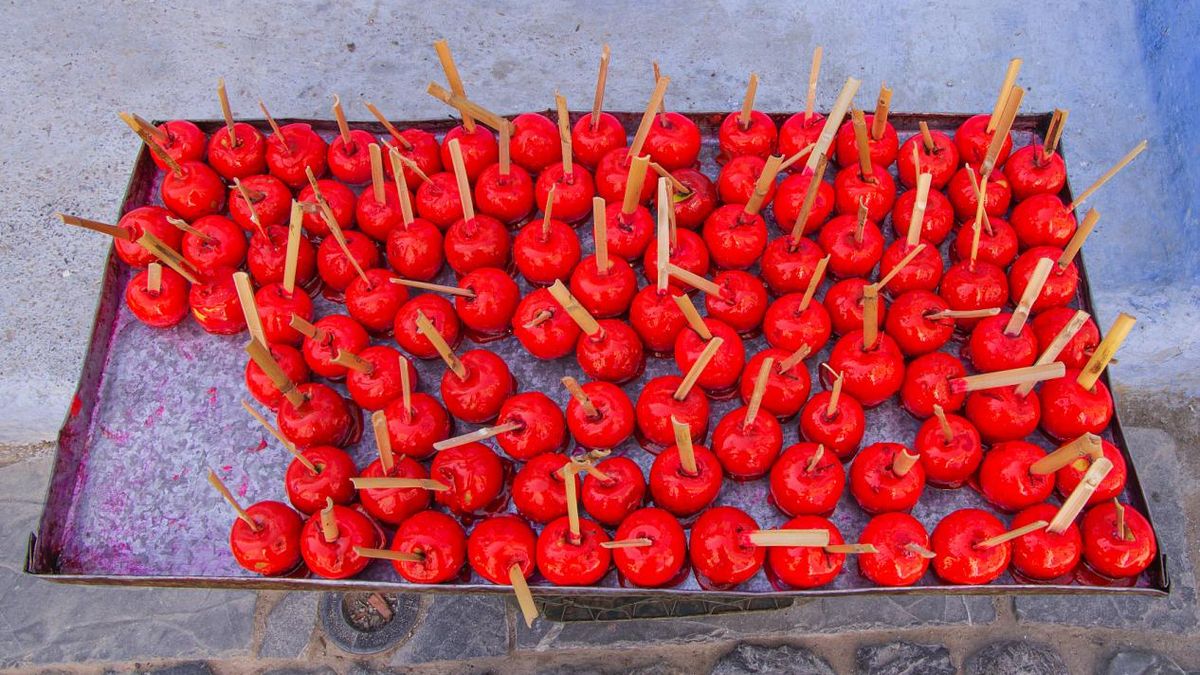
Houhai, January, minus nine. The lake is frozen solid enough that people are skating on it in rented chairs, and at the south gate there's a man with a straw-covered pole over his shoulder. Stuck into that pole are forty skewers of red glass.
That's the whole shop. A pole.
You hear them before you see them, because people eat as they walk and every bite makes the same noise: one high clean crack, like someone stepping on a lightbulb, then a wet crunch, then the fruit.
I bought one. I always buy one. The hawthorns are frozen through, so the first bite is cold enough to ache at the roof of your mouth, and the sugar shatters into pieces thin enough to cut your lip if you're careless. It isn't candy, not quite. It's a sheet. Under it: sour, sharp, astringent, a little like a green apple left too long in a cellar. The sweetness arrives late, at the back, because there's so little of it. That's the trick. The sugar isn't the point. It's the announcement.
Fruit in a Lollipop Is Not Tanghulu
Around 2021 the internet found tanghulu. Somebody dipped strawberries in candy and posted the shatter, and for about eighteen months every second video was a person biting through a shell the color of a fire engine. Then grapes. Then gummy bears, which is where I stop being amused and start being annoyed.
Here's the difference. Candy-apple sugar gets cooked to hard-crack and laid on thick, three or four millimeters, so the shell becomes the food. Tanghulu sugar hits the same temperature but comes off the fire earlier, gets poured thinner, and the skewer is twisted through it once. What you end up with is a coating you can see the fruit through. Maybe half a millimeter. It exists to break, not to chew.
A strawberry tanghulu, then, is a fruit inside a lollipop. Fine. Just not the thing. The thing needs acid. A strawberry has none to speak of, so the sugar wins on the first bite and you're eating candy with a strawberry buried in it. That's a dessert. It's not something you eat outdoors in a coat with your fingers going numb.
The other enemy lives closer to home: the shrink-wrapped skewer on a mall kiosk counter in July. Sugar is hygroscopic. Leave tanghulu in warm humid air for two hours and the glass pulls water out of the room, goes tacky, then soft, then cloudy, and at the end it's a sweet sleeve gluing itself to the plastic. You bite in and get a mouthful of syrup and a hawthorn that tastes like a vitamin tablet. If the sugar bends instead of snapping, throw it out. Don't be polite about it.
Sugar Is a Seasonal Ingredient
Here's what nobody tells you: tanghulu is winter food not because of tradition but because of chemistry. Northern China in January is a free refrigerator. Ten percent humidity, minus ten on a good day. The sugar sets in seconds, stays glassy, stays transparent. Try the same thing in Guangzhou in June and you're fighting the air itself.
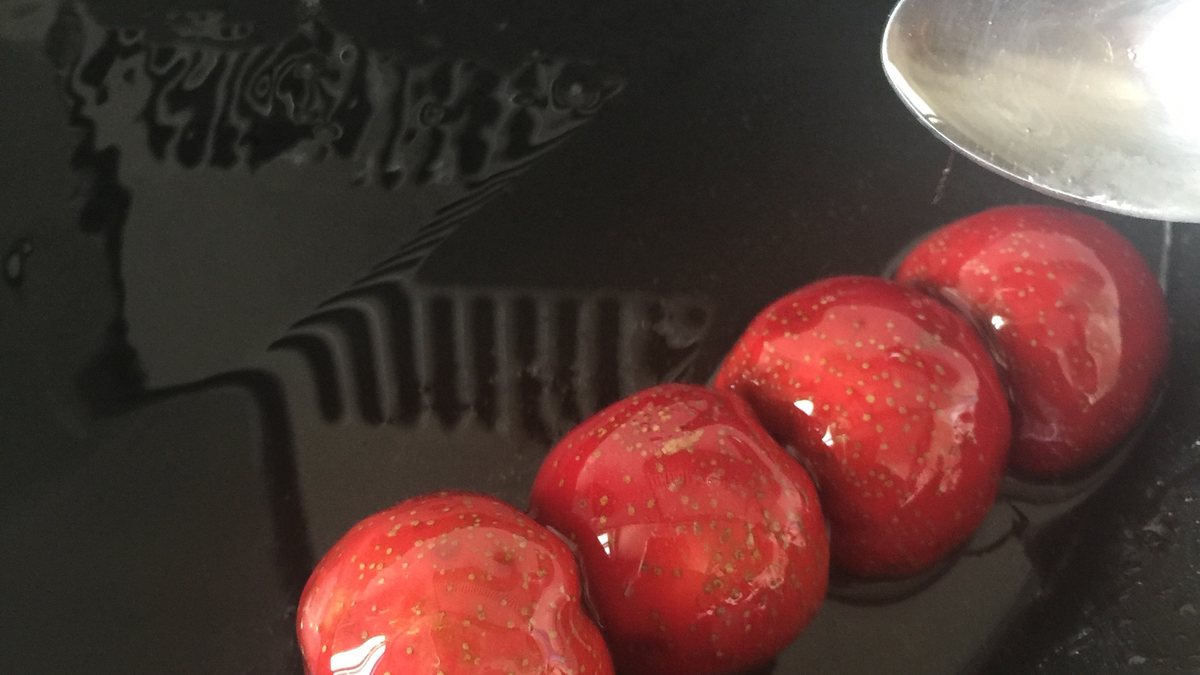
The vendors know. Watch one work: a copper wok of sugar and water on a low flame, no stirring after the first minute or the syrup crystallizes — 返砂, fǎnshā, sugar going back to grit — and he tests it by dipping a skewer and snapping the thread. The smell off that wok is burnt sugar and cold air and nothing else. Then he lays the skewer on a greased board, twists it half a turn, lifts. If the sheet is right it goes transparent at the edges as it cools. If it's cloudy he cooked it too long, and the batch is sweet but dull.
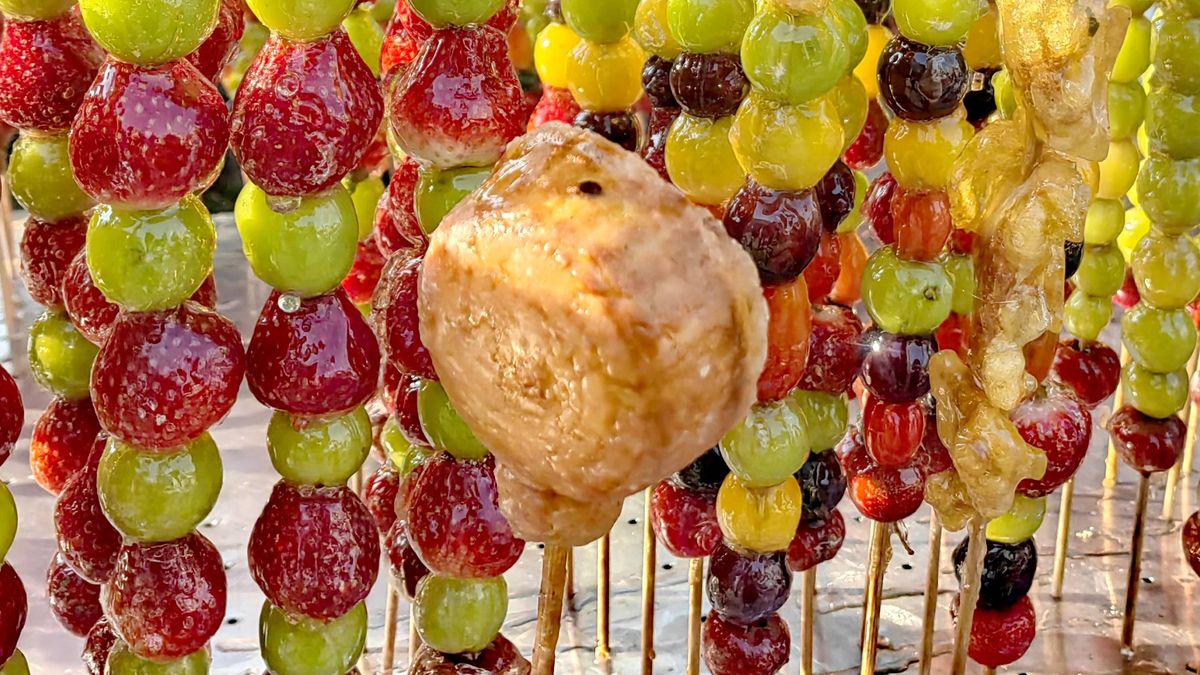
Everything else about the stand is improvised around that one fact. The straw pole, 草靶子 (cǎo bǎzi), isn't folklore. It's a drying rack that keeps forty skewers upright and apart so nothing touches and nothing sweats. The whole apparatus is a humidity control device made of straw.
A short history, because it's the only part worth keeping: the story goes that in the Southern Song an imperial concubine, Huang Guifei, fell ill and stopped eating, and a doctor prescribed hawthorns stewed in sugar. She recovered. True or not, the pairing has been sold on sticks in the north for centuries, and the name comes from the shape the skewers make when they're stacked on the pole. 糖葫芦, tánghúlu. Sugar gourd.
The Fruit Fights Back
Hawthorn (山楂, shānzhā) is a strange thing to build a candy around. Raw, it's mealy — the flesh breaks into powder instead of juice — and sour in a way that's almost medicinal, with five hard seeds in the middle that you spit into the street without embarrassment. Nobody eats a plain hawthorn and smiles.
Candied, it turns into the best snack in Beijing. The acid cuts the sugar so precisely that you never get the sick, coated feeling a candy apple leaves behind. Three in a row and you still want the fourth.
The variations are all attempts to fix the fruit's one weakness, which is that it's all edge. 夹豆沙 (jiā dòushā): split the haw, pack red bean paste inside, sweet against sour, soften the assault. 夹核桃: a walnut half, for crunch and bitterness. 山药豆 (shānyàodòu), the little yam beans, are starchier and milder, for people who find hawthorn too much. Strawberries do show up in Beijing in winter, and they're acceptable there because the fruit is actually in season and tastes like something. The gummy bear version is a crime and I won't discuss it further.
My own history with this runs backwards. I grew up in Shanghai, where tanghulu arrived as a northern import sold on Nanjing Road by people who had clearly never kept a batch cold — sugar always a little soft, hawthorn always a day past its best. For years I thought the whole idea was overrated. Then I went to Beijing in January at nineteen, bought one near the Drum Tower for four yuan, and stood in the cold with an aching mouth while the thing I'd been eating my whole life turned out to have been a photocopy.
Buying One
Four rules and I'll let you go.
Pick the stand with the fewest skewers left. A full pole at four in the afternoon means nothing has sold. A pole with gaps means the batch is fresh and moving.
Look at the sugar, not the fruit. It should be translucent, pale amber, thin enough that the hawthorn's skin shows through. Opaque, thick, or beaded at the bottom of the fruit means the syrup was too hot or too old.
Bite the top hawthorn off sideways, in one motion, with your back teeth, and let the shell break inside your mouth. Nibbling at the sugar first is how people cut their lips.
Eat it outside. Not a suggestion. Carry it into a heated room and you have ten minutes before the surface goes tacky and starts collecting lint, twenty before the whole thing is a sticky mess sliding down a stick. The candy has a serving temperature, and the weather is what holds it.
Which is the oddity of the whole thing: a food that only exists in the conditions that made it. Summer tanghulu is a lie told by a refrigerator. Winter tanghulu — bought from a man with a straw pole, eaten while your fingers go numb — is one of the few things in China that can't be shipped, copied, or ordered online. You have to go there. In January. That's the price of admission.
💬 Comments