Tang Cu Pai Gu: The Sweet and Sour Ribs That Shanghai Won't Share
I was eight years old when I learned that sugar and vinegar belong together. My grandmother was at the stove — the same stove she’d cooked on since before I was born, a two-burner gas range with knobs that required a specific wrist angle to ignite. The wok was smoking. Not the bad kind of smoke — the intentional kind, the kind that means oil is hot enough to sear meat on contact. She tipped in a handful of rock sugar, pale yellow crystals that clinked against the steel like tiny wind chimes. They melted. They browned. They started to smoke too, and that’s when she poured in the black vinegar. The kitchen exploded with a smell I still can’t describe without using the word "alchemy" — sharp and sweet and deeply savory all at once, a chemical reaction that felt like it shouldn’t work but absolutely did.
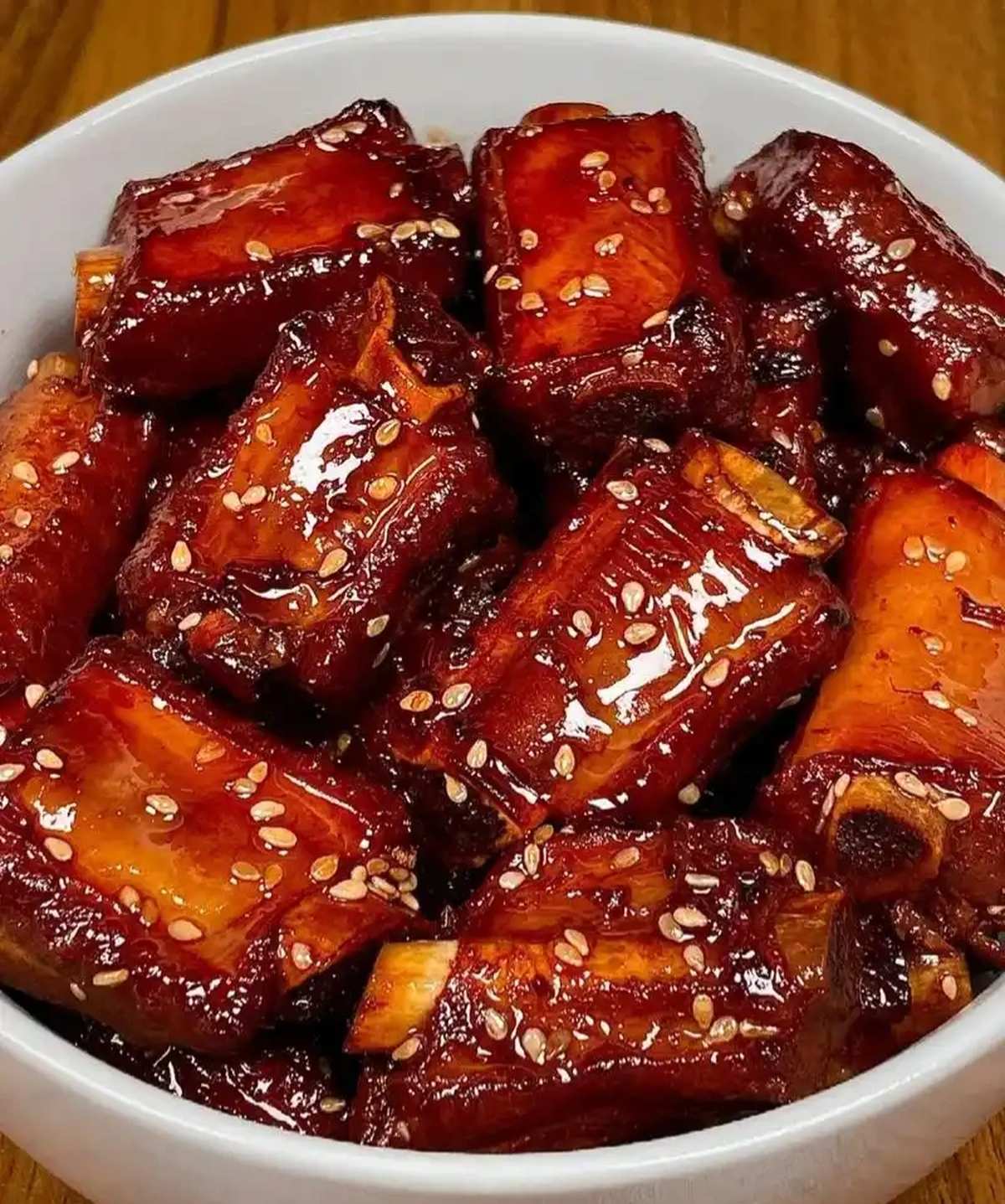
The ribs went in next. They came out twenty minutes later, lacquered the color of dark amber, each one wearing a glossy coat that caught the fluorescent kitchen light like wet paint. She moved them to a plate with chopsticks — one by one, precise, arranging them in a circle the way she’d arrange flowers. Sesame seeds went on last, a scatter of white against the mahogany glaze. I reached for one. She let me. That’s how you know a dish is important — when the grandmother who slaps your hand away from everything else lets you grab the ribs with your fingers.
Tang Cu Pai Gu (糖醋排骨, táng cù pái gǔ) is not the sweet-and-sour dish you think you know. It’s not bright orange. It doesn’t have pineapple. It’s what happens when Shanghai takes a Wuxi invention and makes it its own — dark, glossy, and sharp enough to make your jaw tingle.
The Architecture of a Bite
I spent thirteen years in tech — Microsoft, Google, NVIDIA — and I’ve debugged systems with a million moving parts. Tang Cu Pai Gu has five components. Every single one matters.
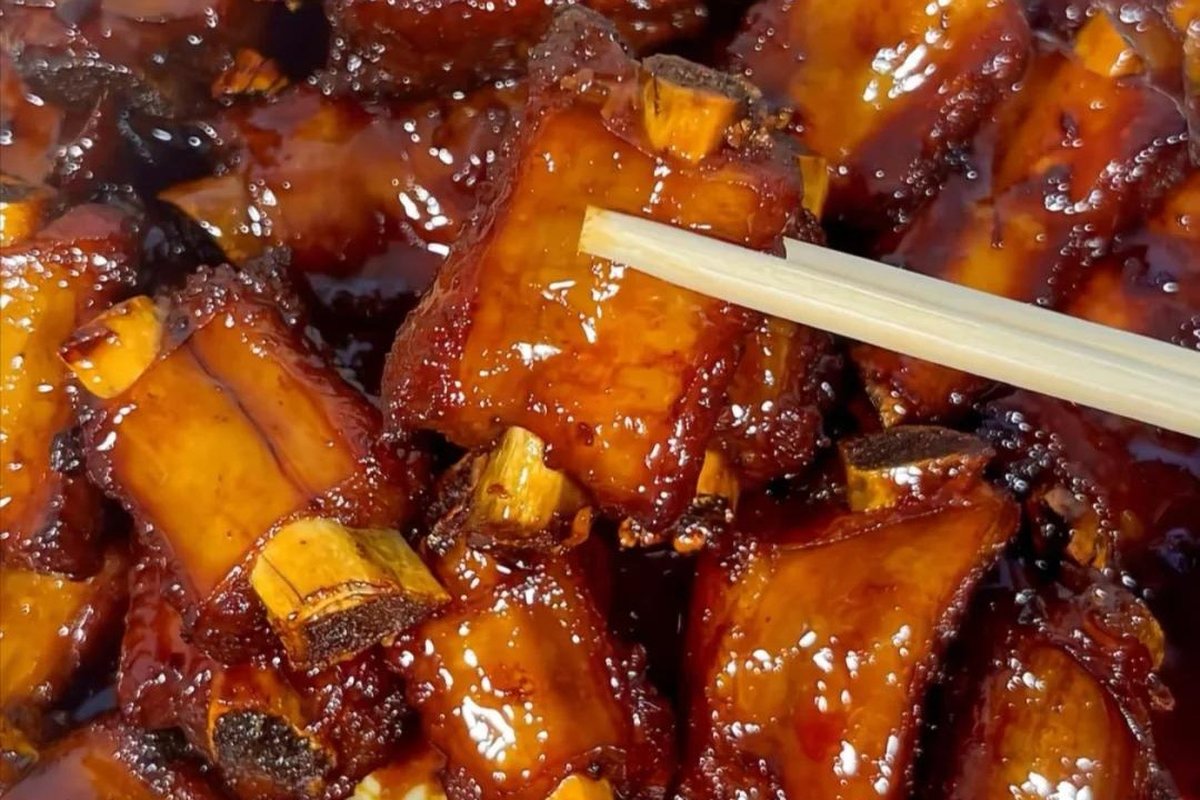
The shell: a whisper-thin layer of caramelized sugar and reduced black vinegar that crackles when your teeth hit it, then gives way immediately. Not batter. Not breading. Just sugar, vinegar, soy, and heat — transformed into something that behaves like glass but melts like candy. You feel it before you taste it. That’s intentional.
The meat: pork spare ribs, cut into bite-size sections, blanched first to pull out the blood and scum, then braised, then glazed at high heat. The blanching step is the one home cooks skip. Don’t. Ten minutes in boiling water with ginger and scallion is the difference between clean pork flavor and something that tastes vaguely of barnyard.
The bone: present but not the point. You work around it. The best pieces are the ones where the meat has shrunk back slightly from the bone during cooking, exposing a half-centimeter of clean white rib. That’s the sign of a rib that’s been cooked long enough to surrender its collagen.
The sauce: not a pool. A coat. Bad Tang Cu Pai Gu sits in a puddle of sticky liquid like sweet-and-sour soup with rib croutons. Good Tang Cu Pai Gu wears its sauce — every rib individually glazed, the plate underneath nearly dry. The sauce-to-meat ratio should be exactly one to one, with nothing left over.
The finish: sesame seeds, scattered at the last possible second. White, toasted until golden at the edges, not an afterthought. They cling to the glaze and give each bite a nutty punctuation mark that cuts through the sweetness.
A good plate of Tang Cu Pai Gu doesn’t drip. It gleams.
The Origin
The dish started in Wuxi, an hour west of Shanghai, famous for making everything sweeter than anyone else thinks is reasonable. A Qing-dynasty riverside restaurant began caramelizing rock sugar with black vinegar for braised carp. Someone tried the sauce on pork ribs. Shanghai stole the idea, dialed back the sugar by about forty percent, and never gave it back. That’s the whole story.
The Enemies of Tang Cu Pai Gu
The Ketchup Version. Some cooks make Tang Cu Pai Gu with ketchup. Industrial tomato paste from a squeeze bottle. The result is bright orange, cloyingly sweet, and tastes like a hamburger crashed into a Chinese kitchen. This is not Tang Cu Pai Gu. This is a cry for help.
The Gloop Pool. Restaurants that serve ribs drowning in a half-inch of cornstarch-thickened sauce. The sauce should cling to the meat, not form a protective moat around it. If your ribs arrive looking like they were rescued from a flood, you’re at the wrong restaurant.
The Unblanched Ribs. The funk of raw pork blood cooked directly into the sauce is unmistakable. It tastes like a wet market smells at 7am. Blanch your ribs. Ginger, scallion, Shaoxing wine, ten minutes. Skip this and you’re eating boiled pig, not Tang Cu Pai Gu.
The right way: pork spare ribs, cut small — bite-size, not caveman-size. Blanch them. Braise with rock sugar, Chinkiang black vinegar (镇江香醋), light soy, dark soy, Shaoxing wine, ginger, and one star anise until tender — about forty minutes. Fish the ribs out. Crank the heat. Reduce the braising liquid until it’s thick enough to coat the back of a spoon and stay there. Toss the ribs back in. High heat, constant movement, ninety seconds. The sauce tightens around every rib like a second skin. Sesame seeds. Plate. Done.
The Cantonese version (生炒骨) uses white vinegar and a batter coating — crispier and paler. It’s good. It’s a different dish.
Tang Cu Pai Gu vs Sweet and Sour Pork
They share a concept — sugar meets vinegar — but they are not the same dish.
| Tang Cu Pai Gu | Sweet and Sour Pork | |
|---|---|---|
| Shape | Bite-size rib sections, bone-in | Chunks of pork loin or shoulder |
| Method | Braised then glazed | Double-fried in batter |
| Texture | Tender, lacquered, glossy | Crispy shell, soft interior |
| Flavor | Dark, deep, caramel and aged vinegar | Bright, tangy, pineapple-fruity |
| Origin | Wuxi / Shanghai | Guangzhou (Cantonese) |
| Soul | Patience and reduction | Speed and batter precision |
The simplest test: pick up a piece. If it’s heavy and requires navigation around a bone, it’s Tang Cu Pai Gu. If it’s light, round, and uniform, it’s Sweet and Sour Pork. Both earn their place on the table. They earn it differently.
How to Eat It
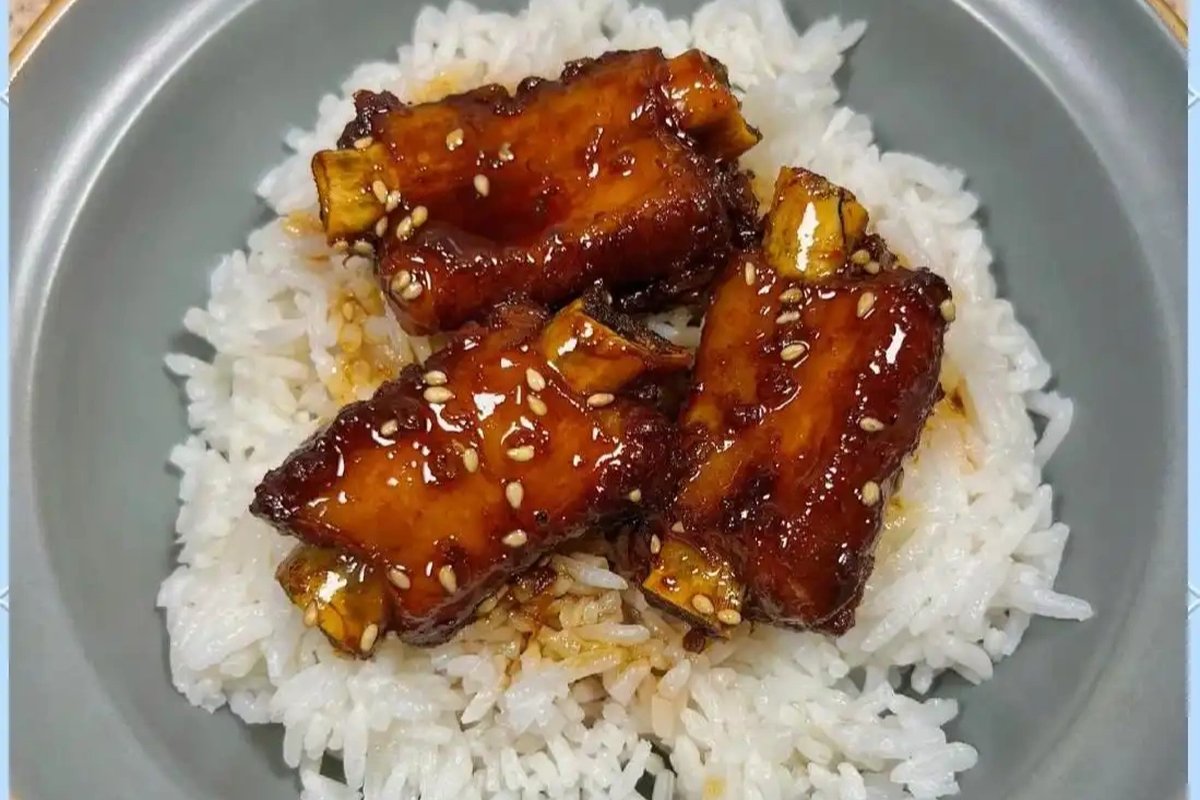
White rice. Short-grain, steaming, piled into a bowl that’s slightly too small for how much you’re about to eat. The rice is not optional. It’s the reset button between ribs.
I learned to eat Tang Cu Pai Gu with my fingers. My grandmother disapproved in principle — we had chopsticks, we were not barbarians — but she also knew the best way to get every last strand of meat off a rib was to pick it up. So she’d look away. That was permission.
Pick up a rib by the bone end. Bite the meat off in one motion — clean, decisive, the way you’d strip a mango pit. Chew three times. The sugar hits first, coating your tongue. The vinegar cuts through half a beat later, sharp and clean. Then the pork fat spreads across your palate like a slow exhale. Swallow. Reach for rice. The rice clears the stage for the next rib. Don’t skip it.
The last rib on the plate is always the best one. By then the sauce has cooled and concentrated into something closer to caramel than liquid, thick enough to pull into strings when you lift the bone. My sister and I fought over it every single time. She usually won. I still haven’t forgiven her.
Recipe coming soon — nailing the sugar-to-vinegar ratio at home takes some practice, and the blanching step deserves its own deep dive.
💬 Comments