Tang Cu Pai Gu: The Vinegar Goes In Twice
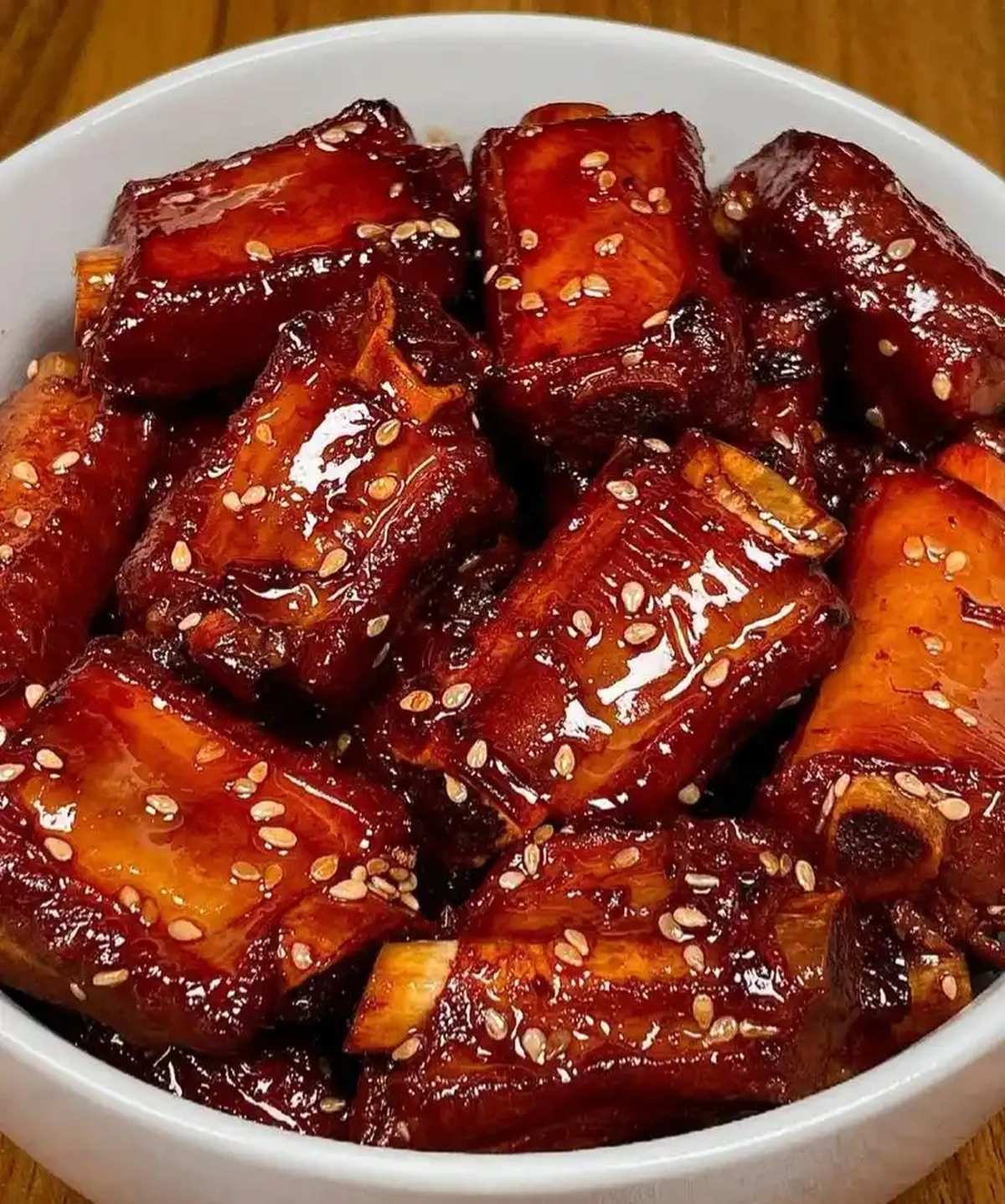
Editor’s Note: This is the kitchen companion to Tang Cu Pai Gu: The Sweet and Sour Ribs That Shanghai Won't Share. Quantities, temperatures and the failure points are below. Read the technique once before you shop.
Why the Vinegar Is Split in Two
Shanghai cooks measure this dish by the tablespoon and remember it as one, two, three, four: one of Shaoxing wine, two of light soy, three of sugar, four of black vinegar. It is a ratio, not a recipe, and it scales to any amount of ribs as long as you keep the order. What the ratio does not tell you is when the vinegar goes in, and that is where most versions go wrong.
Acid changes with heat. Vinegar added at the start and simmered for 25 minutes loses its volatile top notes, the sharp smell that makes your eyes water, and leaves behind a rounder, deeper sourness that sinks into the meat. That is exactly what you want for the braise. But the aroma is gone, and without it the finished dish tastes like sweet soy with a sour edge. So you hold back half and add it off the heat, where it stays bright. Why this matters: one vinegar, two jobs. The first half builds the flavour, the second half finishes it, and neither can do the other’s work.
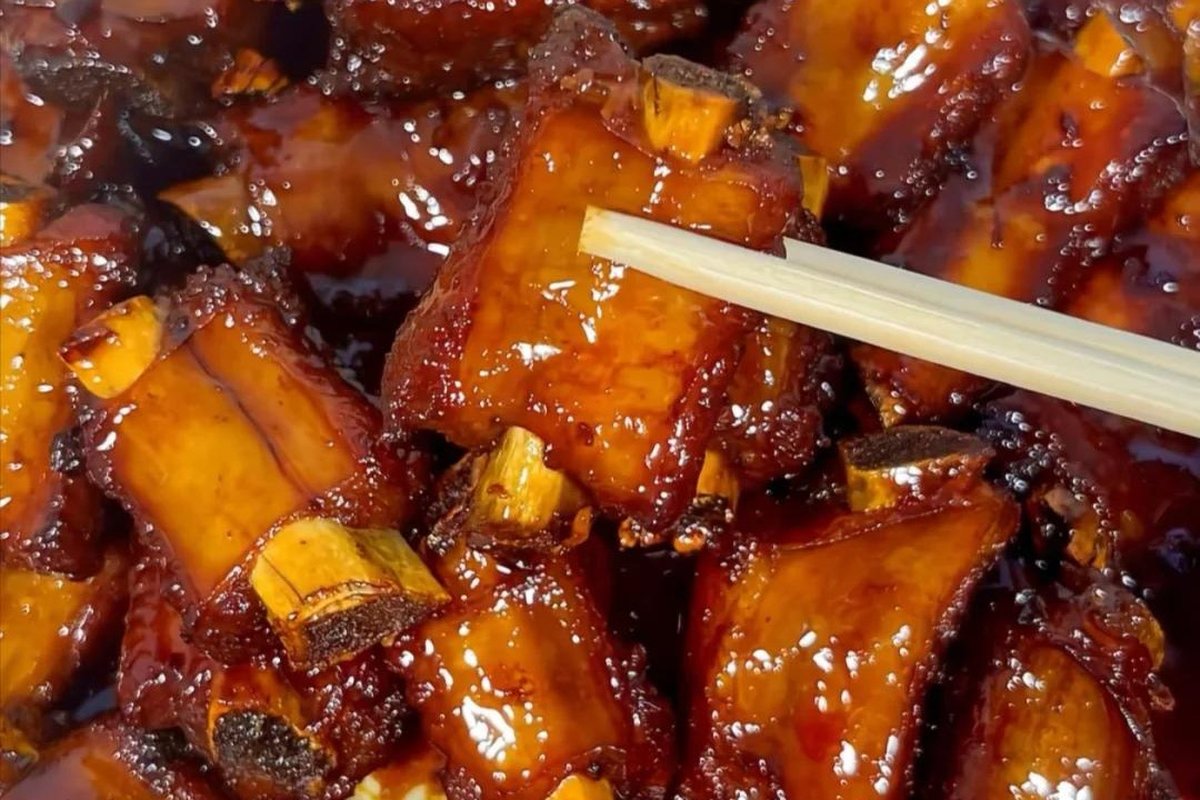
The vinegar has to be Chinese black vinegar from Chinkiang. It is brewed from glutinous rice, is dark, malty and around 5 percent acid, with a sweetness that comes from the grain rather than from added sugar. Balsamic is the usual substitute and it is the wrong one. Balsamic is grape must, sweeter, more aromatic in a woody way, and its sugars scorch during the glaze stage, so the sauce turns bitter and black before it thickens. Rice vinegar is closer in acidity but too clean; the maltiness is what makes the ribs taste Chinese.
The glaze at the end needs one more thing: stillness. Sugar, acid and heat build a syrup that sets on contact with air. Stir it constantly and you keep knocking that skin off the ribs and back into the pan.
Ingredients
For the ribs
- 700g pork spare ribs, cut into 4cm lengths between the bones
- 1.5 litres water, for blanching
- 3 slices ginger (15g), for the blanching water
- 2 tbsp (30ml) Shaoxing wine, for the blanching water
The 1:2:3:4
- 1 tbsp (15ml) Shaoxing wine
- 2 tbsp (30ml) light soy sauce
- 3 tbsp (40g) caster sugar
- 4 tbsp (60ml) Chinkiang black vinegar, divided into 2 and 2
For the braise
- 1 tbsp (15ml) neutral oil
- 20g ginger, sliced 3mm thick
- 2 scallions (40g), cut into 5cm lengths
- 1 star anise, optional
- 300ml hot water
- 1/2 tsp (3g) fine salt
To finish
- 5g rock sugar, crushed, optional, for shine
- 1 tsp (5g) toasted sesame seeds
- 1 tsp (5ml) sesame oil, off the heat
Substitution notes: If Chinkiang vinegar is unavailable, use 3 tbsp of Chinese rice vinegar plus 1 tbsp of balsamic, which restores some of the malt depth without the scorching. Do not use balsamic alone. Boneless shoulder cut into 4cm chunks works if ribs are not available; reduce the covered braise to 20 minutes, since there is no bone to hold the meat together.
Honey can replace up to 1 tbsp of the caster sugar, but no more. Honey browns faster than sucrose and will push the glaze past amber before the ribs are coated.
Prep: Cutting, Blanching, Drying
1. Cut the rack into 4cm lengths (8 minutes)
Ask the butcher to cut between the bones, then cut each strip across into 4cm lengths yourself so every piece carries a bone and a similar amount of meat. A 4cm length gives you two bites and enough surface for the glaze. Trim the thick membrane on the back of the rack with a small knife; it contracts in the braise and curls the rib. Cut away any loose flaps of fat, which burn at the glaze stage.
2. Blanch from cold water (3 minutes)
Cover the ribs with cold water, add the ginger and Shaoxing, and bring to about 85°C over medium heat. Hold for three minutes once the water turns hazy, skimming the grey foam. Why this matters: ribs carry more blood and bone dust than belly, and blanching is the only chance you get to remove it before the sauce is built.
3. Dry them thoroughly (10 minutes)
Drain, rinse under warm water, and spread on paper towel. Dry every face and leave them for ten minutes. Wet ribs will not brown; they will boil in their own water and the sugar will slide off.
Step by Step: Sear, Braise, Glaze
Step 1: Sear the ribs (6 minutes)
Heat the oil in a wide pan over medium-high heat. Brown the ribs in one layer, three minutes a side, until they have colour on the meaty faces. You are not cooking them through, only giving the sugar something to grip.
Step 2: Build the 1:2:3:4 (3 minutes)
Push the ribs aside. Add the ginger and scallions and stir for 45 seconds, then the star anise if using. Pour in the wine and let it hiss away, then the light soy, the sugar and 2 tbsp of the vinegar. Stir once to dissolve the sugar, then add the 300ml of hot water and the salt. The liquid should come about two-thirds up the ribs, not cover them.
Step 3: Covered braise (25 minutes)
Bring to a simmer, cover, and hold at 92 to 95°C for 25 minutes. Turn the ribs once at 12 minutes. The meat should pull back from the bone by about 5mm at the end, and a knife should slide between meat and bone without resistance.
Step 4: Uncovered glaze (8 to 10 minutes)
Uncover, turn the heat to medium-high, and reduce. Here you must stop stirring. Tip the pan and spoon the sauce over the ribs every 30 seconds or so, turning each rib once at the halfway mark. Constant stirring drops the pan temperature and keeps the sugar from setting into a shell. When the sauce coats the back of a spoon and a rib lifted out comes away with a glossy film, it is done.
Step 5: The second vinegar, off the heat (1 minute)
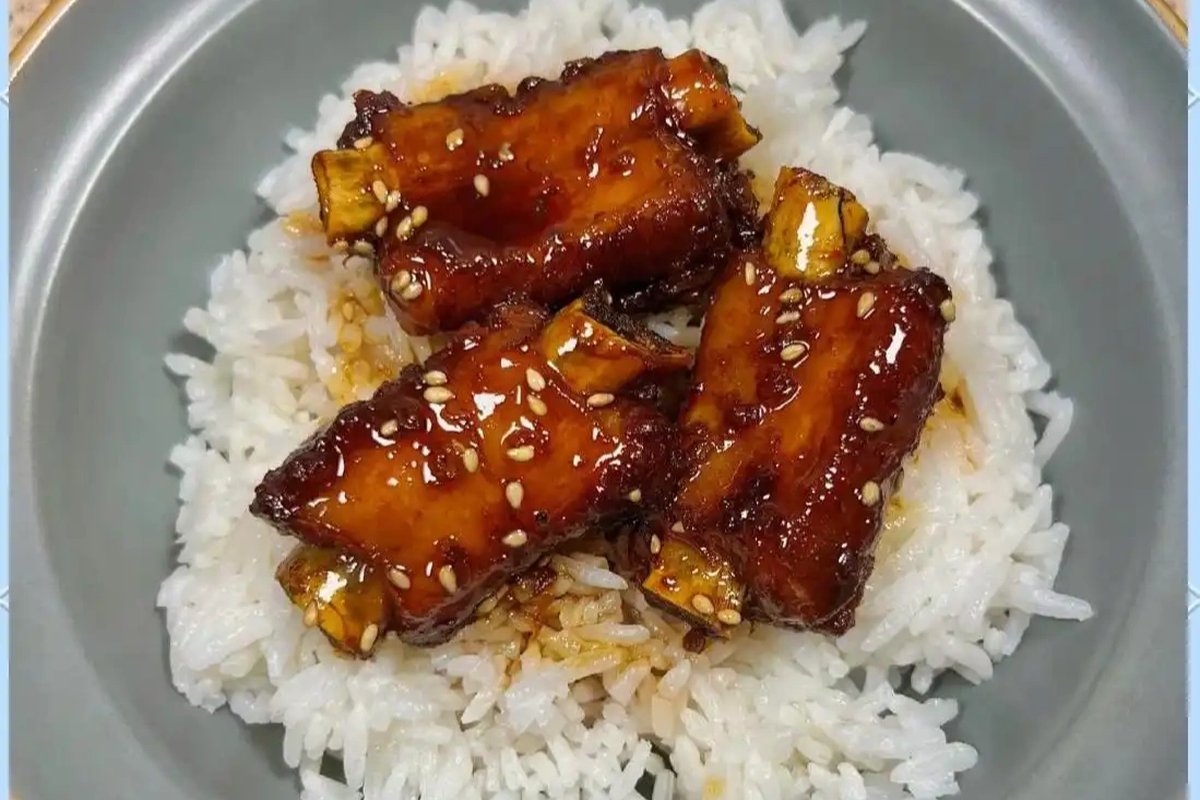
Take the pan off the heat. Add the remaining 2 tbsp of vinegar, the crushed rock sugar if using, and the sesame oil, and tilt the pan to combine without stirring hard. The smell will change immediately, sharper and brighter. Scatter the sesame seeds over and serve within ten minutes, while the glaze is still soft.
Key Pitfalls
The ribs were sour enough to make your jaw ache. You added all four tablespoons at the start and then reduced the sauce, which concentrates acid. Add 1 tsp of sugar and 100ml of hot water and simmer two minutes, then taste. If it is still sharp, add 1/4 tsp of salt before any more sugar; salt rounds acidity more effectively than sugar does at this stage.
The glaze turned thick and gluey, like syrup. Over-reduction, usually because the pan was too wide or the heat too high. Add 2 tbsp of hot water off the heat and swirl; it will loosen within 20 seconds. Serve at once. Sugar syrups thicken sharply as they cool, so pull the pan while the glaze still runs off a spoon in a thin stream.
The ribs lost their shine and looked dull and sticky. You stirred during the glaze. Stirring keeps the sauce moving over the meat and prevents the film from setting. Spoon over, tilt the pan, and leave the ribs alone between turns.
The sauce tasted bitter and looked almost black. Balsamic vinegar, or sugar taken past caramel at the glaze stage. Balsamic carries its own sugars, which scorch. Use Chinkiang, keep the heat at medium-high rather than high, and if it has already caught, add 100ml of water and 1 tsp of sugar and simmer briefly to dilute.
The meat was tough and clung to the bone. Twenty-five minutes was not enough for the ribs you bought, or the pan boiled. Hold 92 to 95°C, and give another 10 minutes covered with 100ml of hot water if the meat still resists a knife. Ribs from older animals need it.
The vinegar aroma was missing even though you used four tablespoons. It all went in early, or the second addition was stirred for too long over heat. The final vinegar goes in with the pan off the burner and is folded through once. Heat is what destroys the aroma you are trying to keep.
The sesame seeds tasted burnt. They were added during the glaze rather than at the end, or they were pre-toasted and then cooked again. Toast 5g in a dry pan for 40 seconds until they smell nutty, and scatter them over the finished ribs at the table.
Serving Suggestions
Three ribs per person over steamed rice, with the glaze from the pan spooned over. A cool cucumber salad with vinegar and salt, or blanched greens, keeps the meal from being all sugar. The ribs are rich enough that a second meat dish is unnecessary.
Serve with plain roasted tea or a cold lager. These do not improve overnight the way a long braise does: the glaze softens and the crust goes. Reheat leftovers covered at low heat for five minutes with a tablespoon of water, and add a few drops of fresh vinegar before serving to bring the aroma back.
This is the companion recipe to Tang Cu Pai Gu: The Sweet and Sour Ribs That Shanghai Won't Share. Read the story, then cook the dish.
💬 Comments