Sweet Water Noodles: Chengdu's Sweetest Lie
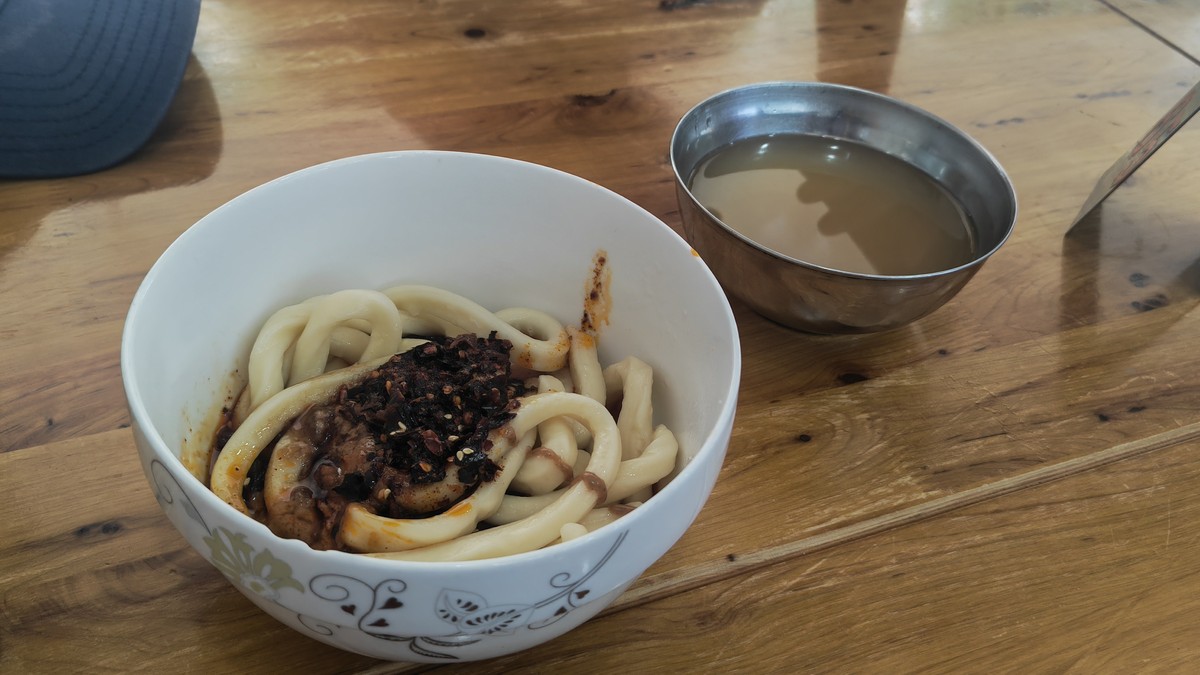
The bowl arrives and it is smaller than your coffee cup. Inside: three strands of noodle, each one as thick as a chopstick and curled in on itself like a length of rope, sitting in a spoonful of something almost black. You smell the garlic before you smell anything else.
This is 甜水面 (tián shuǐ miàn) — sweet water noodles. The name promises dessert. Nothing in the bowl agrees.
Mix it from the bottom and the whole thing wakes up. That dark spoonful is 复制酱油 (fùzhì jiàngyóu), "duplicated soy sauce" — ordinary soy reduced with brown sugar, star anise and cassia bark until it turns glossy and nearly black and coats a spoon like syrup. Under it sits chilli oil with its red sediment stirred up off the bottom, a spoon of raw garlic pounded with water, toasted sesame, crushed peanuts. You stir once, hard, and the pale noodles come up wearing all of it.
The first second is sweet — dark, malty, closer to molasses than to sugar. The second second is chilli. Then the garlic hits the back of your mouth, and underneath everything a low electric hum of Sichuan pepper. The sweetness was only ever the front door.
Everything depends on the noodle. Each strand is hand-rolled from a dough stiff enough to fight your hands, boiled, drained, and then brought down to room temperature — never iced, never served straight from the pot. That middle temperature is the whole textural trick: cool enough that 复制酱油 clings instead of sliding off, warm enough that the gluten still has spring in it. Bite through and you get two things at once, a slick outside and a dense chewy middle — 劲道 (jìndào), which is the word for food that pushes back at your teeth. The sauce sits in the twist of each strand rather than pooling at the bottom of the bowl.
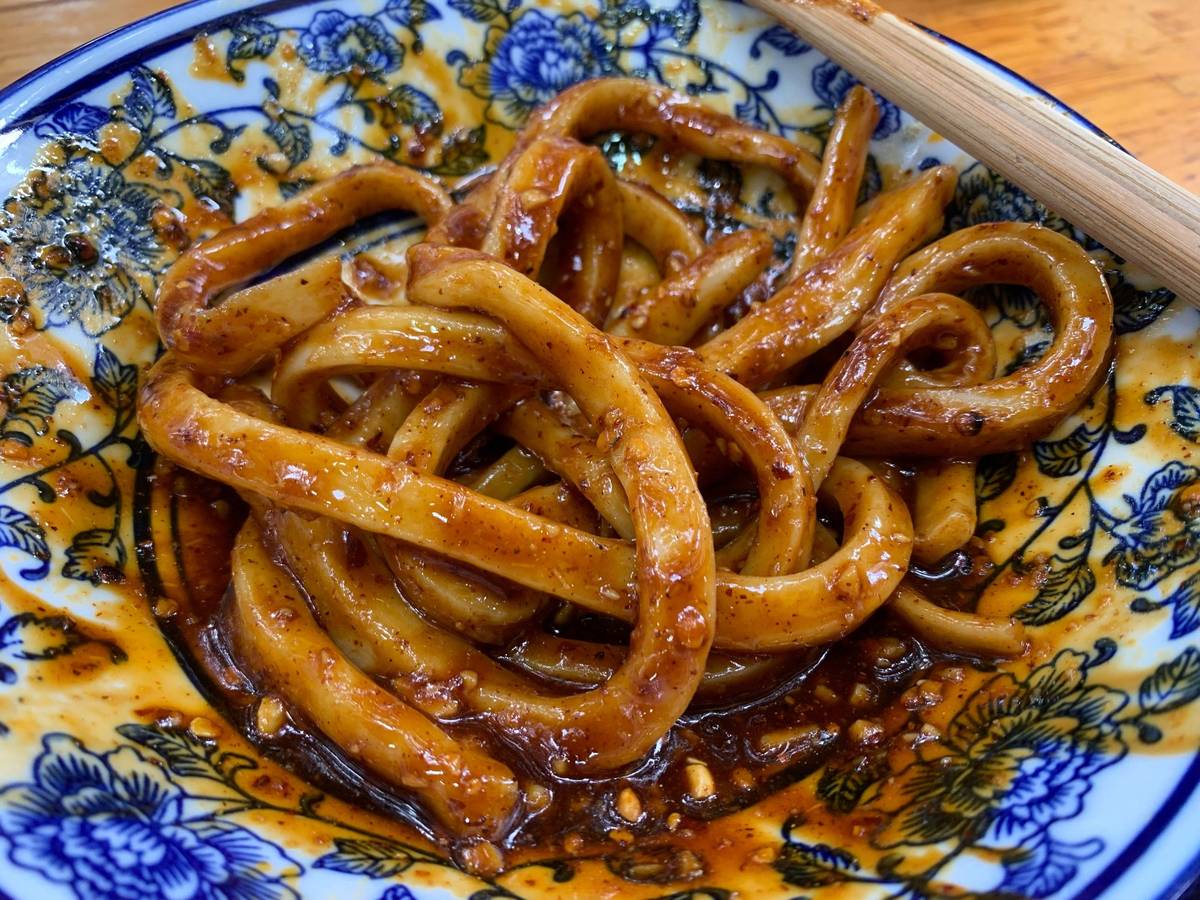
The first bowl I had was in Chengdu, a little after ten at night, in a shop with four tables and the menu printed on a strip of plastic above the counter. I was with a colleague from the city who ordered in dialect and then sat back to watch me work out what I had been handed. I have eaten it in Shanghai since, in maybe a dozen places, and I can usually tell the photocopy before the first bite — from the way the chopsticks bounce off the noodles when I try to lift them.
Chengdu has sold this at snack stalls for well over a century, in the same row as 担担面 and 抄手 — the small bowls that make up a proper 小吃 crawl, which is the closest thing that city has to a national sport. Nobody's grandmother made it at home. 复制酱油 takes an afternoon, and a stall can make a bucket of it in the morning and use it all night. That is the honest history of most Sichuan street food: too slow for a home kitchen, perfectly built for a cart.
Now the bad versions, because there are many and most of them are within walking distance of the good ones.
The wrong noodle. Thin, uniform, machine-made strands under the same sauce is 担担面 wearing a 甜水面 costume. The thick hand-rolled noodle is the dish; swap it and you have removed the only reason 甜水面 exists.
The candy-shop bowl. Some kitchens pour in white sugar instead of taking the soy all the way down. You taste sweetness with nothing underneath it, like licking a spoon — one-dimensional, gone in a second, no bass note.
The garlic-free bowl. Raw garlic is not a garnish here. It is half the architecture, and places that have decided foreigners will not like it leave it out. The result is flat, sweet and boring, and it will still be called 甜水面 on the receipt.
The cold bowl. Straight out of the fridge, the starch sets and the three strands fuse into one chewy lump. If your noodles arrive glued together, they were made earlier and chilled, not made for you.
The dripping-wet bowl. Sauce goes on noodles that are still dripping and it slides straight off. You end up with pale noodles and a puddle of brown water at the bottom, which is not the same dish by any measure.
Order it small. Two or three strands is a full serving in Chengdu, and that is not stinginess — it is a snack designed to sit beside other snacks. Pair it with 抄手 (chāoshǒu), the Sichuan wontons in chilli oil, or with a bowl of cold sweet tofu if the shop has one, because the fat-and-heat math of the two bowls works out exactly.
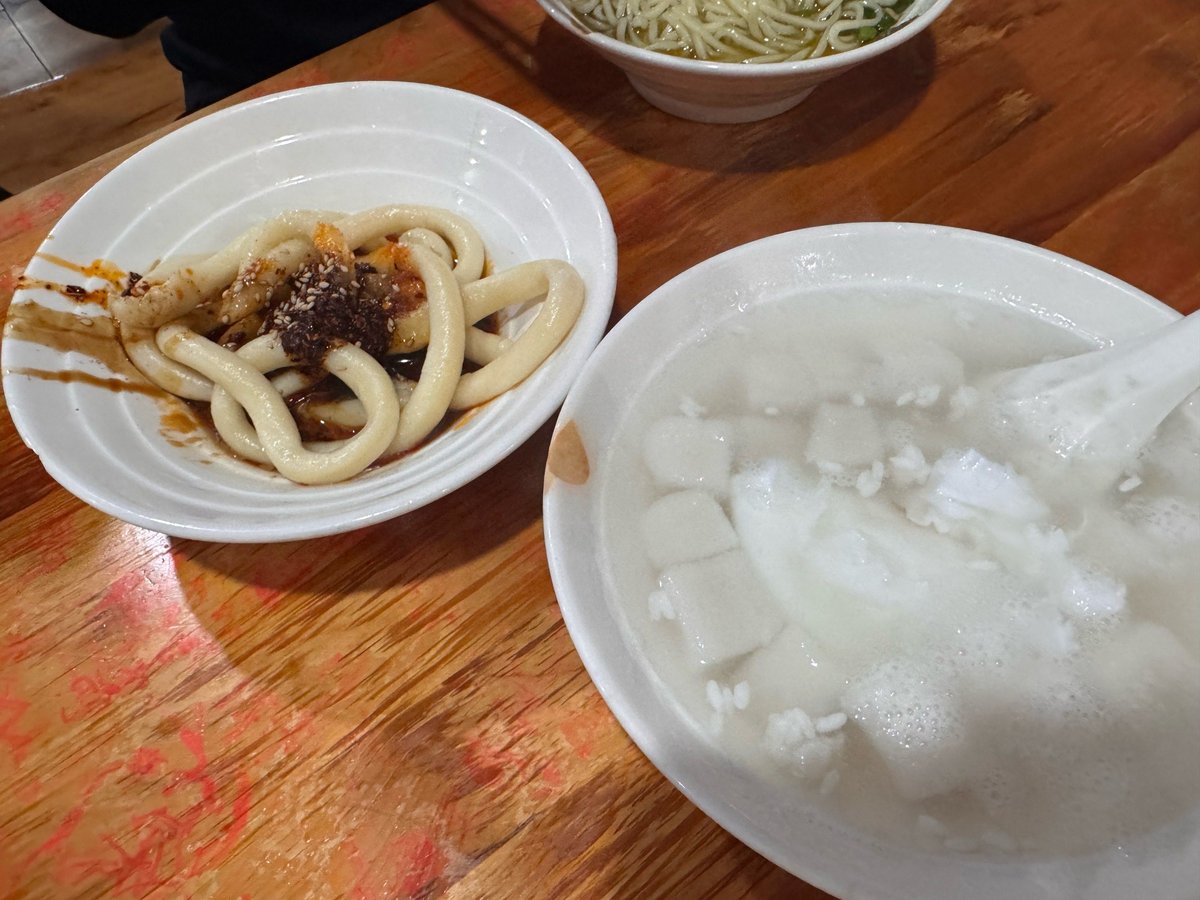
Then eat it properly. Stir all the way to the bottom of the bowl before your first bite, because the chilli sediment and the garlic both settle and both matter. Take one strand at a time — this is the only noodle in China designed for it, and lifting three at once defeats the sauce. Do not reach for the black vinegar the way you would with any other Sichuan bowl; it flattens 复制酱油 and turns the whole thing sour in a way nobody intended. Five minutes, start to finish, and nothing sweet to drink afterward. The woman at the register in that Chengdu shop watched me go for the vinegar bottle and said one word — 不用 (bú yòng), don't bother — and she was right.
甜水面 is not a lie, exactly. It is a name written by somebody who only stayed for the first second of the bite, before the garlic, before the chilli, back when the bowl still smelled like sugar. Stay for the second second. That is where the dish lives.
Doing this at home is slow rather than difficult, and the whole thing stands on one ingredient: 复制酱油, the soy you have to reduce yourself until it turns syrupy. Get that right and the rest is boiling noodles. Get it wrong and no amount of chilli oil rescues the bowl. Recipe coming soon.
💬 Comments