Sweet and Sour Pork: The Cantonese Classic the World Keeps Getting Wrong
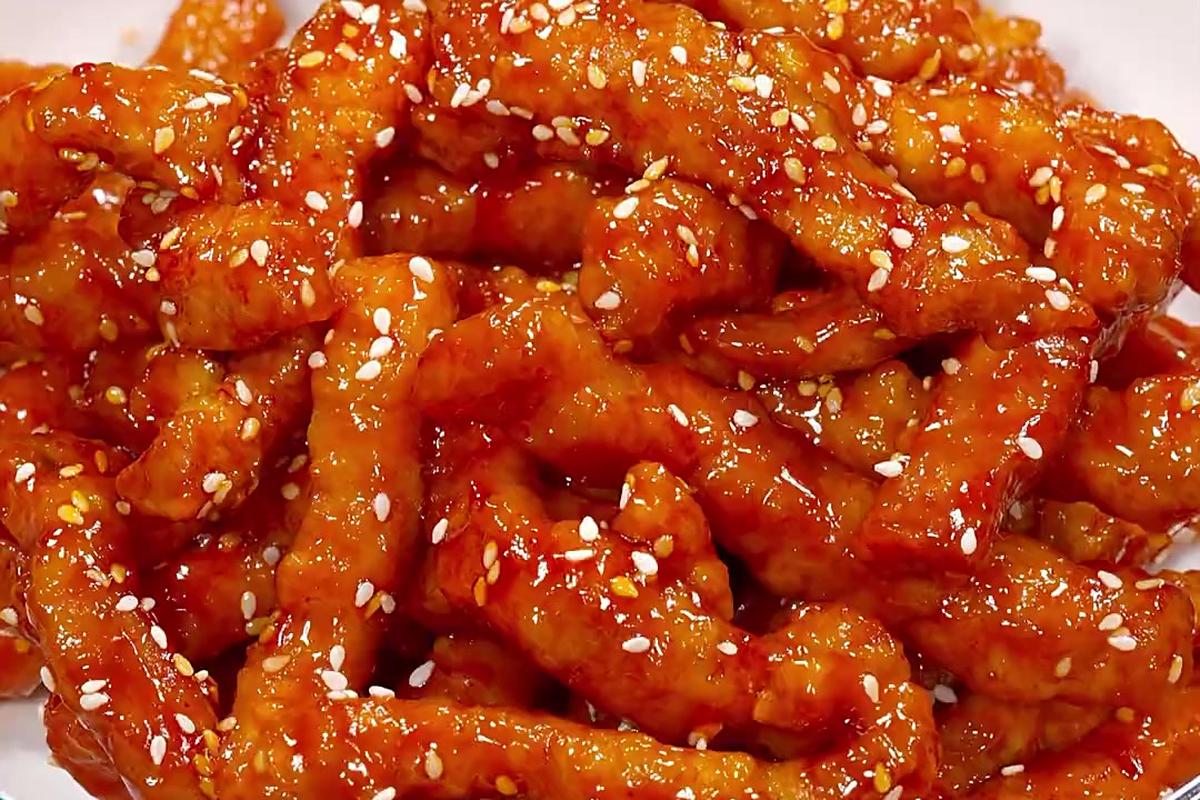
The wok. The oil hits 190°C and the kitchen fills with a specific sound — a violent sizzle that collapses into a rolling crackle. You’re in a restaurant on Huifu East Road in Guangzhou’s Yuexiu district, and the smell coming off that wok is white vinegar and rock sugar caramelizing together, sharp and sweet and completely unavoidable. The chef works fast: pork out, drain, back in. Second fry, hotter. The batter turns from pale gold to deep amber. He tips in the sauce and everything roars. Bell pepper chunks, pineapple wedges, onion petals tumble through the orange-red gloss. Ten seconds from sauce to plate.
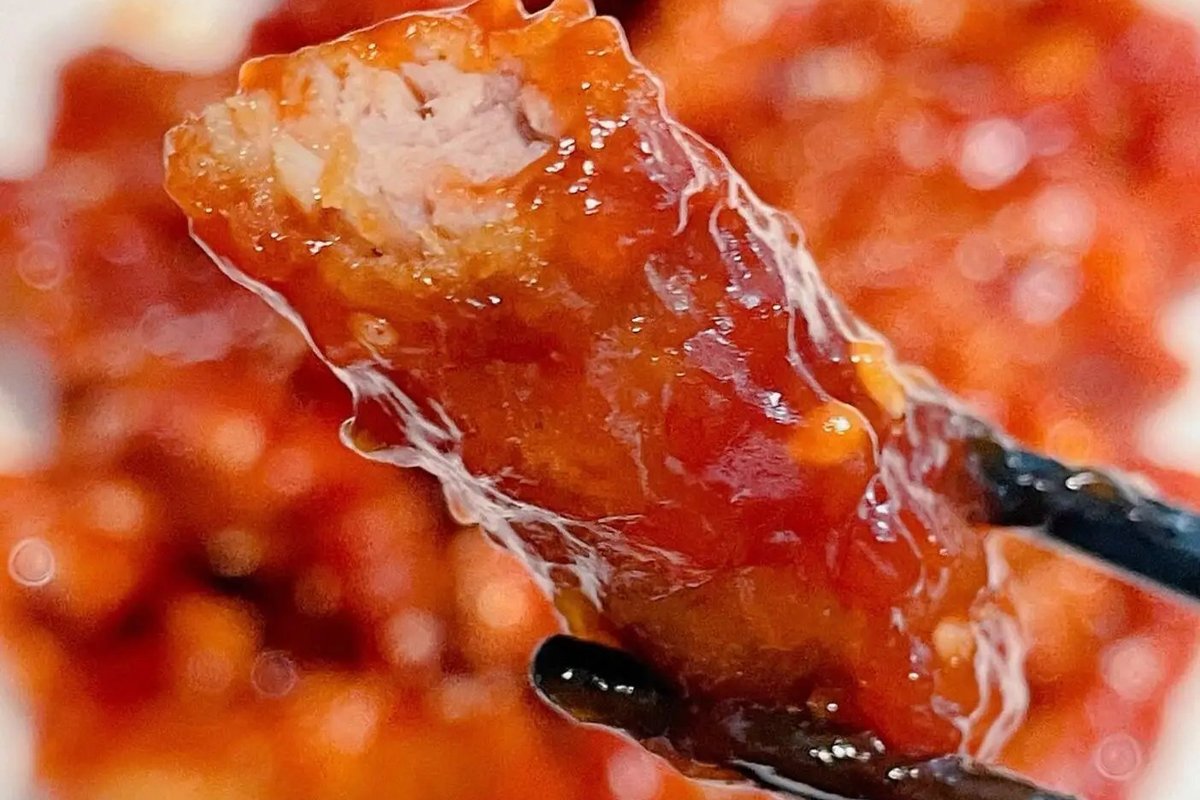
Then it’s in front of you. Glazed cubes of pork catching the fluorescent light like polished amber, sauce pooling slightly at the edge. Just enough to drag a piece through. You spear one. The batter resists, crisp but not hard, then gives way to pork you can pull apart with your tongue. Sweet lands first. Sour follows half a beat later, the vinegar cutting through the sugar like a straight razor. Then the fruit-sweet of grilled pineapple pushes back. It shouldn’t work. Sweet and sour is a contradiction. That’s what makes it dangerous.
This is Sweet and Sour Pork (咕噜肉, gūlū ròu) — the Cantonese dish the entire world thinks it knows. The dish that’s been translated, betrayed, and re-betrayed more times than any other Chinese recipe. The dish you grew up eating was probably wrong.
The Architecture of a Bite
I spent thirteen years debugging distributed systems at Microsoft, Google, and NVIDIA. The hardest bugs are the ones where two components do opposite things simultaneously and somehow produce correct output. Sweet and sour pork is that bug made edible.
The bite moves in three phases.
Phase one: the shell. Proper batter is cornstarch, flour, one egg, and the smallest possible amount of cold water — mixed by hand, lumps left in, gluten kept dormant. Double-frying is the law. First fry at 160°C cooks the pork through and sets a base layer. Second fry at 190°C flash-dehydrates the exterior into armor that stays crisp even under hot sauce. Skip the second fry and you have a sponge. Do it right and you have a shell that shatters audibly.
Phase two: the sauce. White vinegar, rock sugar dissolved until the granules disappear, a spoonful of plum sauce or Worcestershire (yes, Worcestershire — Cantonese chefs adopted it from British merchants in the 19th century and never gave it back). Some kitchens add a squeeze of ketchup for body and gloss. Purists will fight you on this. Let them. A modest amount of ketchup produces a depth white sugar alone can’t reach. The correct ratio is two parts sour to one part sweet. You’re making dinner, not candy.
Phase three: the collapse. The shell breaks. The pork inside — shoulder or collar, marinated thirty minutes minimum in Shaoxing wine and ginger — is yielding and juicy. The pineapple wedge you ignored on the side isn’t decoration. You drag your next piece through the juice pooling under it and now sweet, sour, fruit, and pork all hit at once. Bell pepper adds vegetal crunch. Onion has softened from the wok’s ghost heat. Everything does different things at once and somehow your mouth resolves it.
Bad sweet and sour pork is a children’s menu item. Good sweet and sour pork is a chemistry experiment that lands.
The Name
The dish appeared in Guangzhou kitchens in the late 18th century. The story I heard growing up: a chef’s wife was pregnant and craving — the specific craving was both sweet and sour, simultaneously, which in food terms is like wanting to be wet and dry at once. He fried pork chunks, tossed them in vinegar-sugar sauce, and she devoured it. Neighbors smelled it through the window. A year later it was on every restaurant street in the city. The name 咕噜 — gūlū — is the sound of someone gulping food down too fast to breathe. Or it’s the sound of pork tumbling through a hot wok. Both are true. Move on.
The Enemies of Sweet and Sour Pork
This dish has been murdered more times than an Agatha Christie victim. Let’s count the bodies.
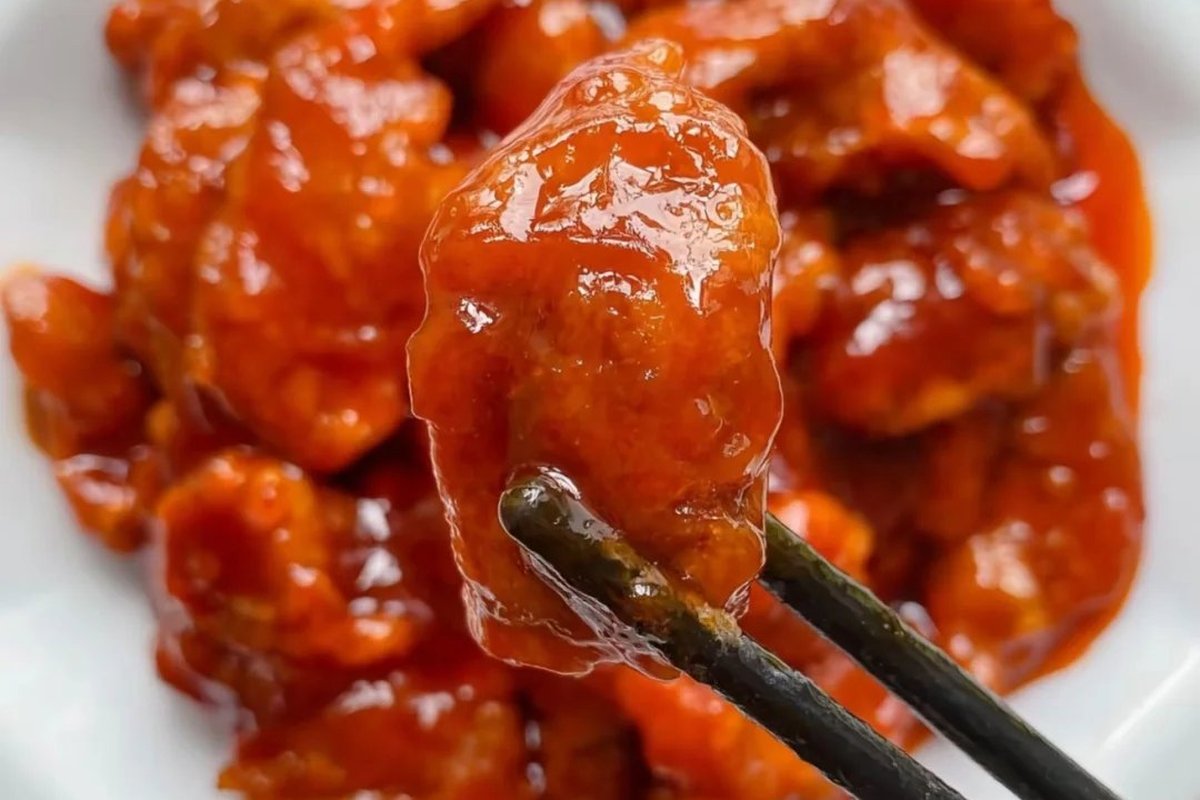
The takeout version: fluorescent orange sauce made of ketchup, corn syrup, and red dye heated in a microwave. Batter that slides off the meat in one wet sheet when you bite. Carrots — carrots — chopped into the wok like they belong there. Pork loin fried once and left to steam under a styrofoam lid until it achieves the texture of a pencil eraser. This is not sweet and sour pork. This is a crime in a paper box.
The Instagram version: pomegranate molasses, sous-vide pork belly, something described as a “Sichuan foam.” If your sweet and sour pork requires tweezers to plate, you are negotiating with a hostage-taker, not cooking.
The ingredient-creep version: cucumber, zucchini, water chestnuts, baby corn, tomato wedges. The wok becomes a vegetable landfill and the pork is an afterthought that wandered in by mistake.
Real sweet and sour pork is:
- Pork shoulder — fat renders during frying, connective tissue converts to gelatin. Loin is a desert. Belly is too rich. Shoulder is the answer.
- Double-fried batter with lumps — cornstarch and flour, mixed barely, two temperatures. The second fry is the entire difference between crisp and tragic.
- White vinegar, not black — black vinegar’s smoky depth buries the sugar. White vinegar hits bright, sharp, clean.
- Pineapple and bell pepper only — what the dish was built with. No carrots. No cucumber. No tomato. No discussion.
- Plum sauce or Worcestershire — the umami anchor. Without it you’re eating children’s candy.
How to Eat It
You eat sweet and sour pork immediately. The clock starts the second the sauce hits the wok. Five minutes of grace period where the shell holds. After that, sauce absorption kicks in and the law of diminishing returns accelerates.
Order it mid-course in a proper Cantonese meal: clear soup first, steamed fish second, then sweet and sour pork arrives when you’re warmed up and still hungry. The acidity resets your palate between bites of rice. Cantonese meals are built like a playlist, and this dish is the track that changes the energy.
I watched a table of elderly men at a Hong Kong dai pai dong demolish this dish in under four minutes — silent, focused, surgical. One piece left on the plate for politeness. The youngest man claimed it with a chopstick strike too fast to see.
That last piece, sitting in the final spoonful of sauce, is the best one. The batter has softened by one degree at the edges. The sauce has cooled and concentrated. And when it’s gone, you’re already thinking about ordering another.
Want to cook this? Here’s our step-by-step Sweet and Sour Pork recipe .
💬 Comments