Sweet-and-Sour Carp: The Fish That Stood Up
You think you know sweet-and-sour fish. It came in a carton, cut into nuggets, gluey with a sauce that tasted of ketchup and sugar, a ring of canned pineapple sliding around on top of it. That fish never swam in the Yellow River. Somewhere in the last century, it stole the name.
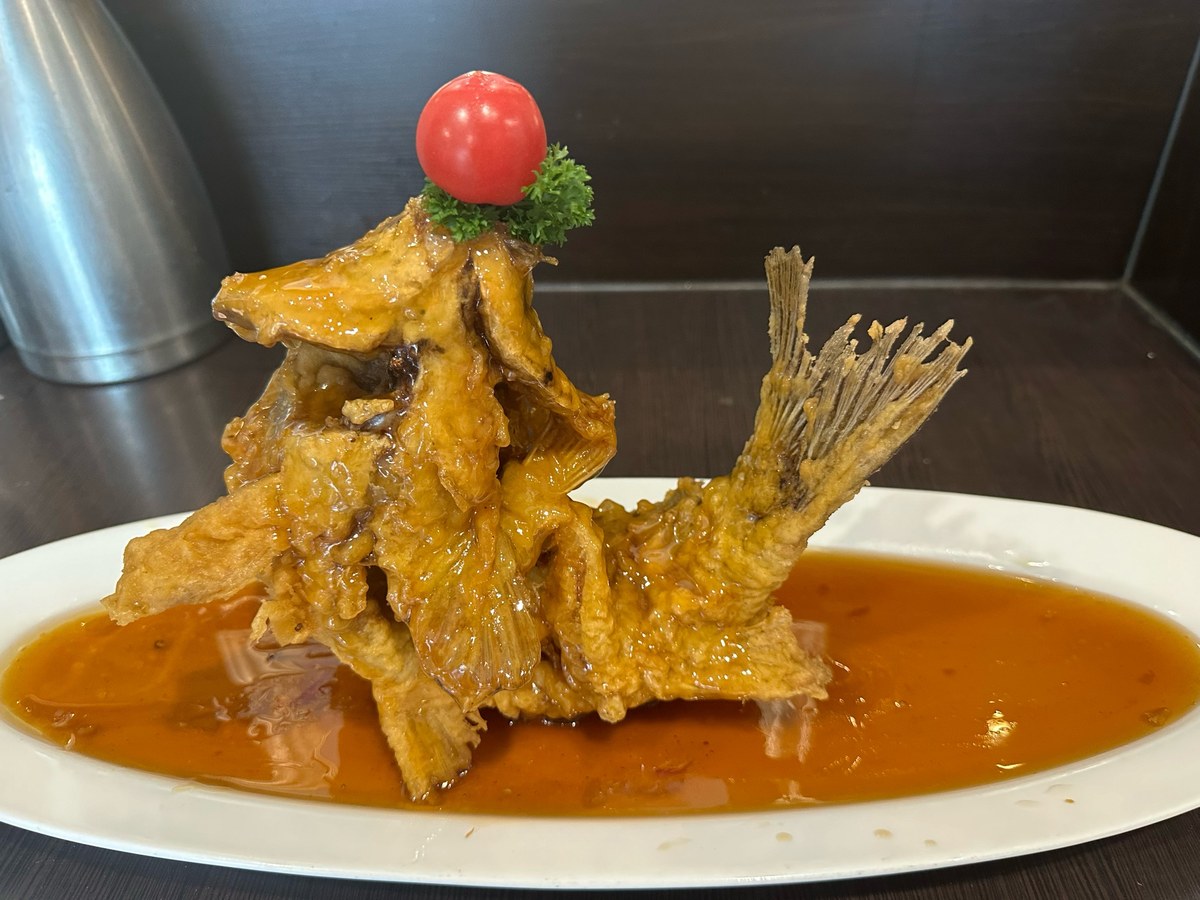
The real thing is 糖醋鲤鱼 (táng cù lǐ yú), sweet-and-sour Yellow River carp, and it could not look less like takeout. It comes out whole. Standing. Propped on the plate with its tail in the air and the scored flesh fanned open from the fryer like a pinecone, head down as if it were still diving. It is the loudest thing a Shandong kitchen can send to a table, and the proudest.
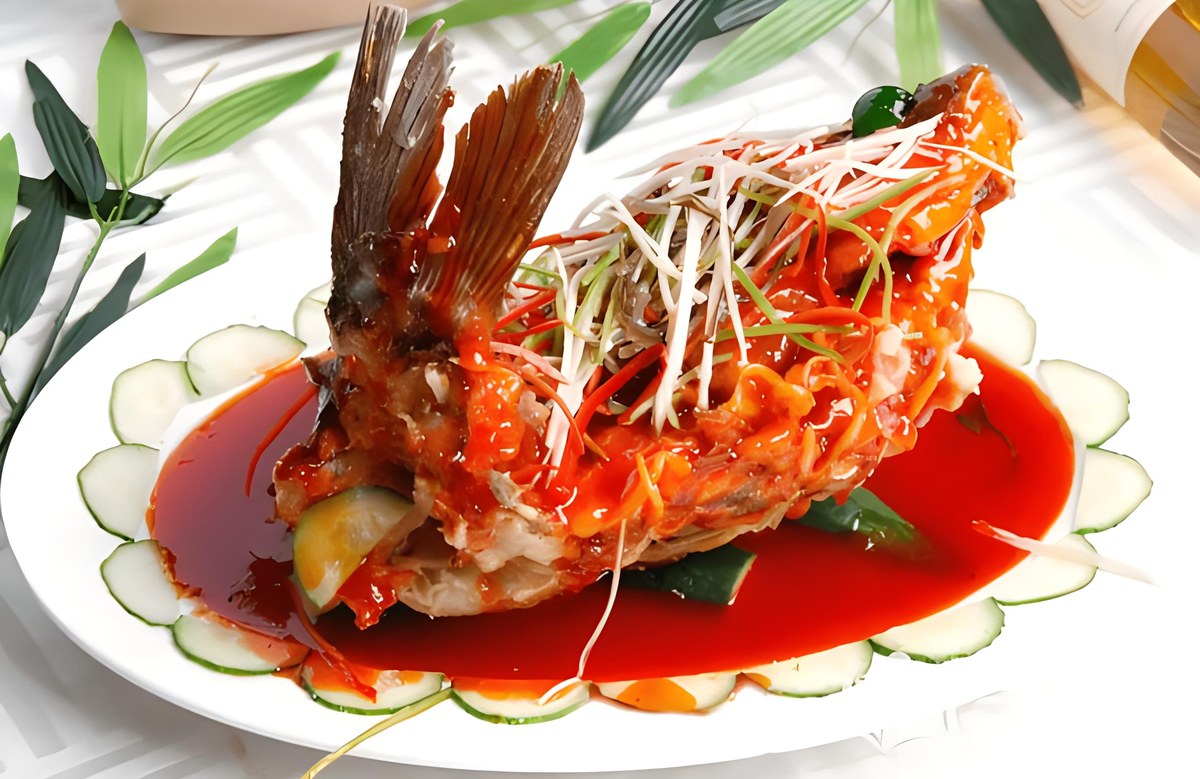
I was twenty-four, at a cousin's wedding in Jinan, when I met my first one. The banquet ran twelve courses and I can remember maybe three of them. Then a waiter set down a carp the length of my forearm, tail up, the crust still ticking as the oil cooled, and poured a ladle of boiling sauce straight down its back. Hot vinegar hit the fried shell and the whole table flinched at the smell. Sharp, bright, almost stinging in the nose. You don't forget that smell. It tells you dinner just turned into an event.
The cut that decides everything
That shape isn't luck. The cook keeps the carp whole — head, tail, fins — splits it open along the spine and scores the flesh in a deep crosshatch, the cuts close enough together that every square of meat curls outward the moment it hits the oil. Score it too shallow and the fish fries flat, a plank on a plate. Score it too deep and it lets go of the bone and falls apart in the wok. Then it is patted in starch, held up by the tail, and lowered into deep oil while someone ladles the hot oil over its back, again and again, until the flesh sets in that fanned, half-exploded shape.
Then the crust. It shatters — properly shatters, the way the sugar on a crème brûlée shatters — and the flesh underneath is still soft and barely set, because the fry is fast and the oil never gives it time to dry out. Most cooks don't get this right, and most eaters have never had it. You spend the first bite listening to your own food.
Then the sauce — and the impostors
糖 means sugar and 醋 means vinegar, and in Shandong the two are supposed to argue. The sauce is rice vinegar, sugar, a little soy for depth, a splash of Shaoxing wine, thickened just enough to cling and no more. It goes over the fish still boiling, so the crust hisses and the smell fills the room. Sweet hits first. Vinegar comes back at you on the swallow. That small wince — that is the dish working.
Almost everything else wearing the name is a lie. The famous one is ketchup: sweet, tomato-sour, which this sauce is neither. Pour that over a fish and you are eating candy that used to be seafood. If your sauce tastes of tomato, it is not this sauce.
The pineapple version is the same crime with more sugar. Who decided fish needed tropical fruit, I will never know. Nobody in Jinan did.
Then there is the fillet version: fish cut into fingers, fried flat, sauced, served in a heap. It can taste fine and still be a betrayal, because half of this dish is the silhouette. No spine means nothing to stand up, and a sweet-and-sour fish that lies down has already given up.
Worst is the soggy one. Anything that was crisp and then sat under a heat lamp or went back into a pan turns soft beneath its sauce, and a soft shell is a dead shell. The gap between perfect and sad is about four minutes.
I rarely order it in Shanghai for exactly that reason. Too many kitchens here treat it as a delivery system for sweet sauce, with the vinegar as an afterthought. A good 糖醋鲤鱼 should make you flinch a little. If it only makes you smile, someone shorted the vinegar.
The dish belongs to Jinan, in Shandong — the province that fed the imperial court for centuries, and still sends this to its most formal tables. The shape is old: a carp leaping the dragon gate (鲤鱼跳龙门), the falls at Longmen, a fish turning into a dragon on the way up. It is a very old picture of an exam passed, a posting granted, a life changed. Which is why it shows up at weddings, and why it turned up at my cousin's.
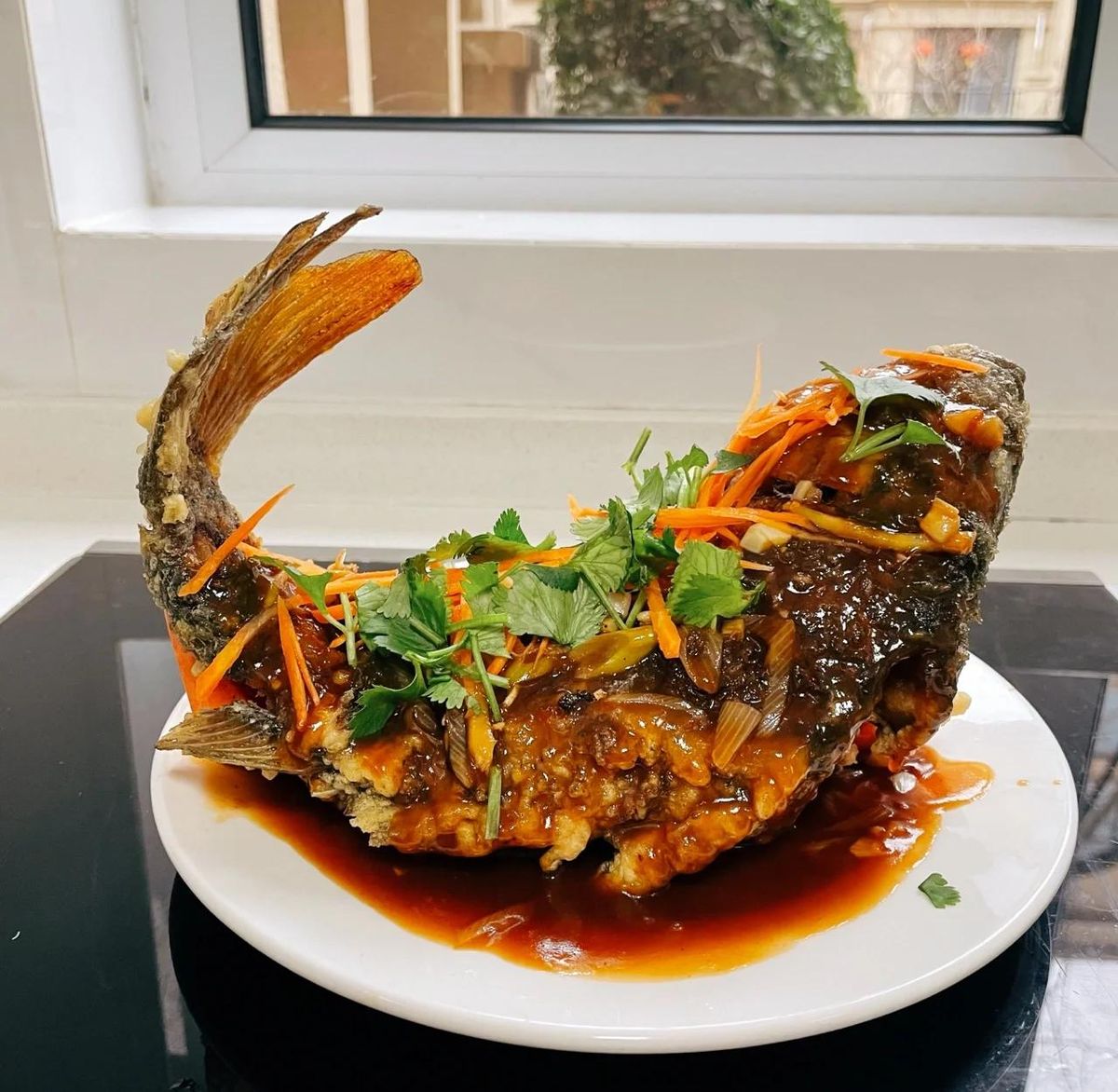
You eat it in the first few minutes, while the shell still talks. Chopsticks, never a knife. Don't saw it into polite squares. Push down through the crust and let the pieces fall into the sauce, so every bite carries crackle, soft flesh and a mouthful of hot sour-sweet. The tail and fins fry into shards — eat those too, they are the best part nobody fights over. Then push the plate away. Ten minutes later it is just a fish again.
The fish never moves again, but for about four minutes it looks like it is still falling. That is the whole trick of it, and it is why a paper carton of sticky nuggets will never be the same animal.
I'll save the home-cooking version for another post. Frying a whole fish at home — scoring it deep enough for the pinecone without cutting through to the bone, and getting a wok of oil hot enough to set the crust before the fish drinks any of it — is a problem worth its own page. Recipe coming soon.
💬 Comments