Suan Cai Yu: The Fish That Taught China to Love Sour
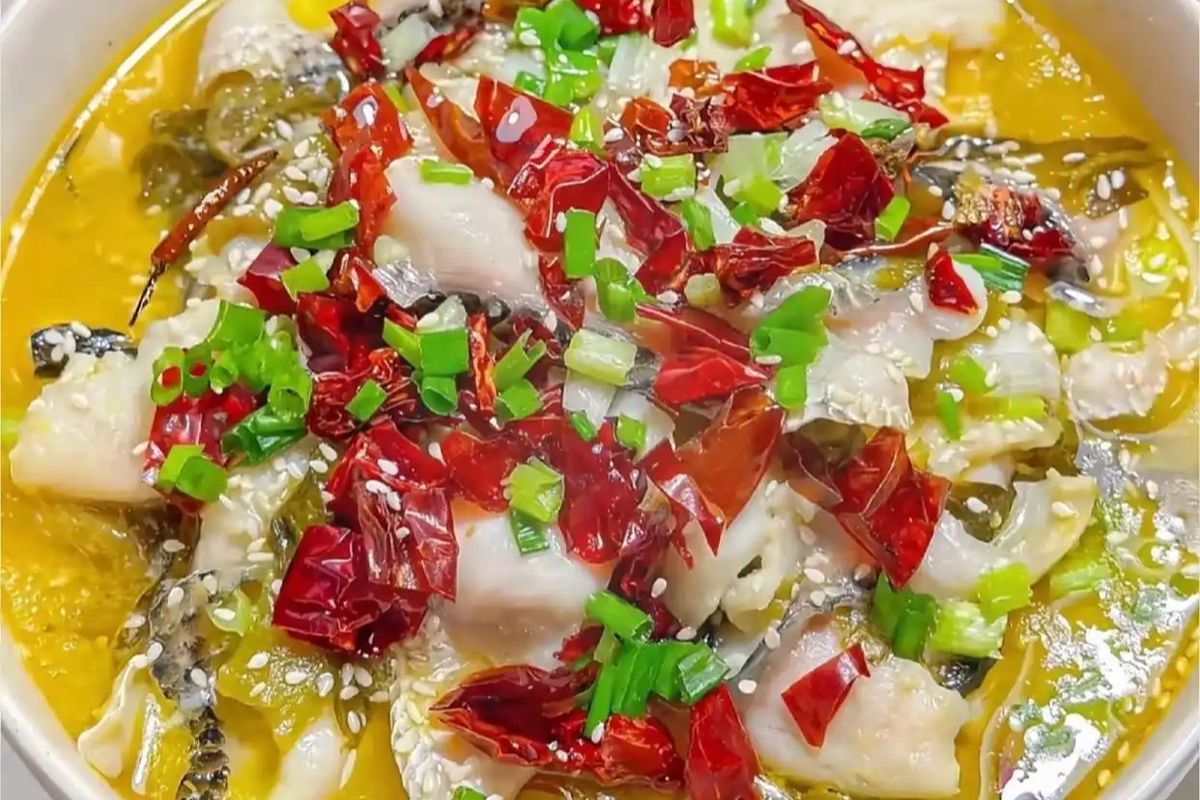
The bowl is the size of a washbasin and the steam rising off it smells like a vinegar factory caught fire.
You’re in Chengdu. It’s 9pm on a Wednesday and the restaurant has exactly three walls, eight tables, and a line of people waiting on plastic stools that stretches halfway down the block. Every table has the same thing: a massive ceramic bowl of Suan Cai Yu (酸菜鱼, suān cài yú), the surface shimmering with chili oil, green Sichuan peppercorns bobbing like tiny planets, and strips of pickled mustard greens (酸菜, suān cài) tangled among fillets so tender they threaten to dissolve on contact with chopsticks.
The first spoonful hits your tongue and your brain does a double-take. Sour. No — spicy. No — both at once, the acid from the fermented greens cutting through the fat of the chili oil, the Sichuan pepper humming at 50Hz on your lips, the fish itself landing clean and sweet underneath the chaos. You exhale sharply through your nose. Your dining companion has already stopped talking. This is not a conversation dish. This is a shut-up-and-eat dish.
Suan Cai Yu took a thousand-year-old pickling technique, a river fish nobody respected, and a handful of chilies, and turned them into the dish you’ll reorder before you’ve finished the first bowl.
The Architecture of a Bite
I spent thirteen years at Microsoft, Google, and NVIDIA writing software that processed signals from noise. Suan Cai Yu does the same thing to your taste buds, just faster and with more swearing.
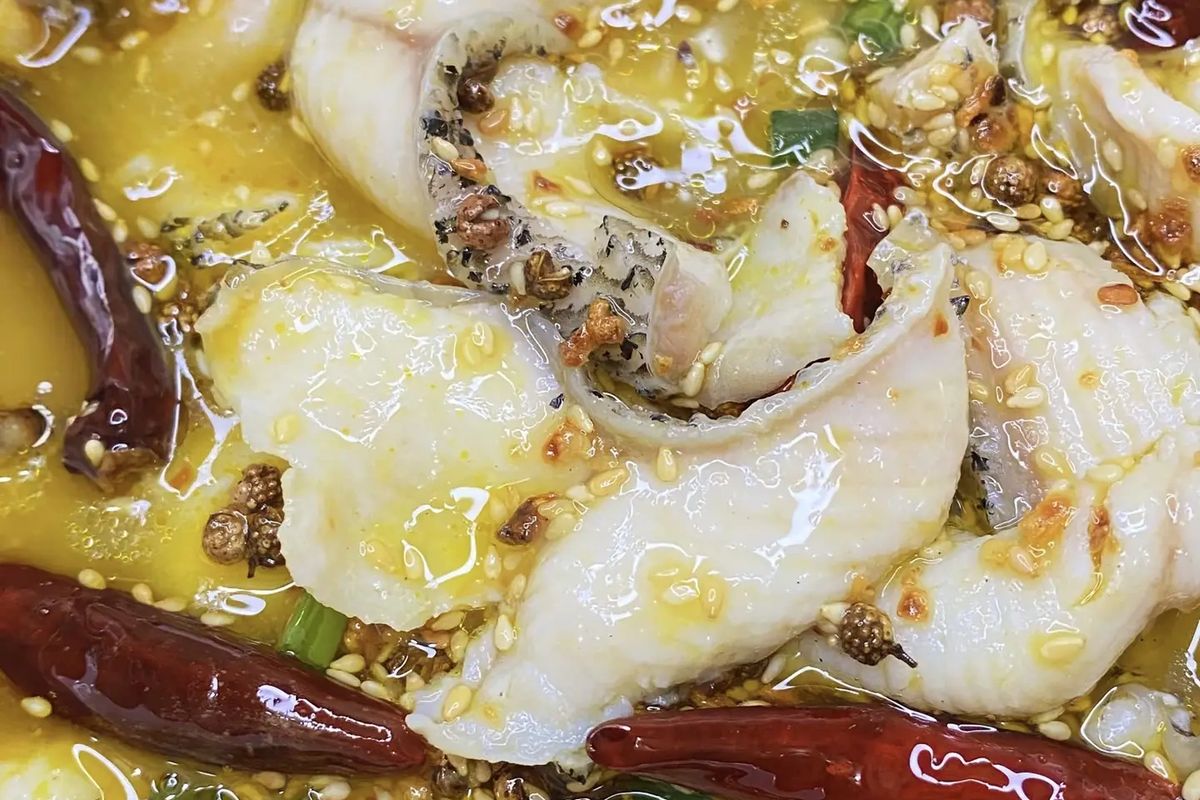
You lift a fillet from the broth. It’s freshwater carp or grass carp, sliced on a bias against the grain, each piece about the thickness of two credit cards. Before it saw the broth, it was marinated in salt, egg white, and potato starch — a velveting technique that gives the exterior a silken slip while the interior stays firm enough to hold its shape. The fish hits your tongue and splits along its grain like wet paper, releasing the broth it absorbed during its thirty-second swim through boiling liquid.
Then the sour kicks in. Not lemon-sour, not vinegar-sour. Fermented-sour — the deep, funky, almost savory acid of suān cài that’s been sitting in a clay jar for weeks or months, developing the same kind of lactic complexity you get from good kimchi or a proper dill pickle. This is the backbone of the dish. Without it, you’re just eating fish soup. With it, you’re eating something that makes you sweat from the scalp down.
The chili oil floats on top in a thin red film — mostly for fragrance, not heat. The real heat comes from the pickled chilies (泡椒, pào jiāo) buried in the broth, ones that’ve been fermenting alongside the mustard greens, their capsaicin mellowed by time into something that creeps up on you rather than ambushes you. And then, just when you think you’ve catalogued every sensation, a Sichuan peppercorn detonates on your tongue and your mouth goes electric.
That sequence — slip, sour, heat, buzz — is Suan Cai Yu. Everything else is commentary.
The Boatman’s Dinner
Suan Cai Yu came from the Jialing River in the 1980s — a boatman’s improvisation, not a chef’s invention.
The story goes like this: a fisherman on the Jialing, which runs through Chongqing before joining the Yangtze, would cook his unsold catch on the boat at the end of the day. He had river fish, pickled mustard greens from the jar, chilies, and a pot of water. He threw them all together because that’s what was there. The pickled greens masked the muddiness of freshwater fish. The chilies kept the cold out. The starch from velveting stretched a small amount of protein into a meal.
It was survival food. Then someone served it in a restaurant in Chongqing in the early 1990s, and within ten years Suan Cai Yu chains had spread to every Chinese city with a population over half a million. Not bad for a boatman’s leftovers.
The Enemies of Suan Cai Yu
Most Suan Cai Yu outside Sichuan is a betrayal.
The first enemy is the wrong fish. Frozen basa fillets from Vietnam, the kind that disintegrate into protein flakes the instant they touch hot liquid. Real Suan Cai Yu uses freshwater fish with bones — grass carp (草鱼, cǎo yú) or silver carp (鲢鱼, lián yú). The bones are annoying. They’re also what gives the broth its depth. Boneless fillets produce boneless flavor.
The second enemy is fake pickled greens. Industrial suān cài brined in acetic acid for forty-eight hours instead of fermented for months tastes like a chemistry experiment. You’ll know on the first bite — it’s sharp but empty, all bite and no bottom.
The third enemy is over-thickening. Some restaurants turn the broth into a slurry with cornstarch, trying to make it coat the fish like a sauce. Suan Cai Yu is a soup, not a gravy. The broth should be drinkable straight from the bowl — thin enough to swirl, thick enough to cling.
Real Suan Cai Yu has: freshwater carp sliced on the bias, properly fermented mustard greens aged at least a month, pickled chilies from the same jar, Sichuan peppercorns toasted and added late, garlic and ginger bloomed in the oil before the liquid goes in, and a broth built from fish bones, not bouillon powder.
How to Eat It
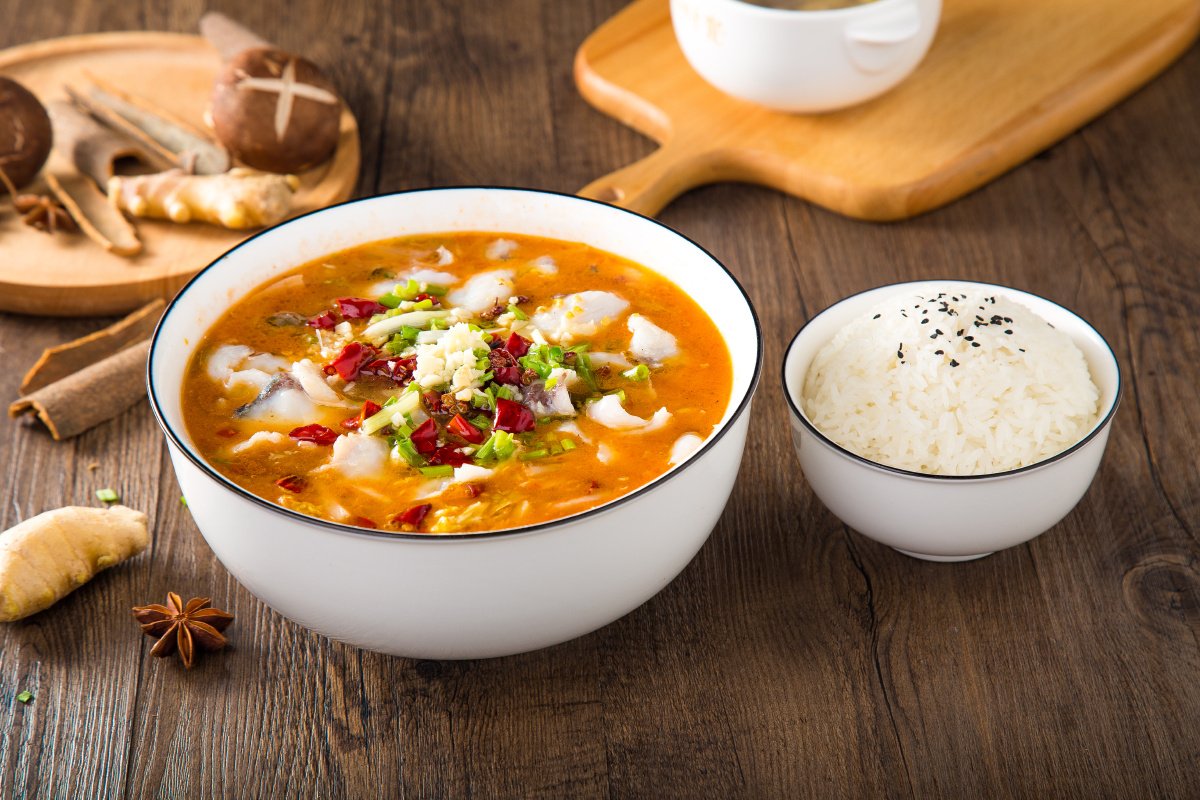
Rice first. Always rice first. A bowl of plain steamed rice sits to your left, and its entire purpose is to receive spoonfuls of the golden broth.
Start with the fish. Eat it while it’s still trembling on the edge of too-hot, the way you eat pizza — impatience as a flavor enhancer. Then go for the pickled greens. They’ve been simmering in the broth and have absorbed chili oil, Sichuan pepper, and fish essence. They’re arguably better than the fish. I will die on this hill.
Pour broth over rice. Spoon it. Drink it. The broth is the point — everything else is an ingredient in its creation. A good Suan Cai Yu broth will make you order a second bowl of rice just to finish it. The Hunanese have a saying I learned when I was twenty-three and thought I could handle real heat: a meal without sweat is a meal without respect. Suan Cai Yu will make you sweat. That’s the point.
My grandmother pickled mustard greens every autumn in Shanghai. She’d pack them into a clay jar with salt, Sichuan pepper, and a river stone on top to keep everything submerged. The jar lived on the balcony. By December, the whole hallway smelled like her pickles. I didn’t understand why she bothered until I ate my first bowl of Suan Cai Yu at twenty-eight, four years into my Microsoft stint, a thousand kilometers from her kitchen. Now I understand: she wasn’t preserving vegetables. She was preserving time.
Out of space for today — I’ll save the home-cooking breakdown for another post. The secret to Suan Cai Yu is the pickled greens, and making proper suān cài takes three weeks minimum. That deserves its own deep dive. Recipe coming soon.
💬 Comments