Suan Cai Bai Rou: The Sour Jar in Every Northeast Hallway
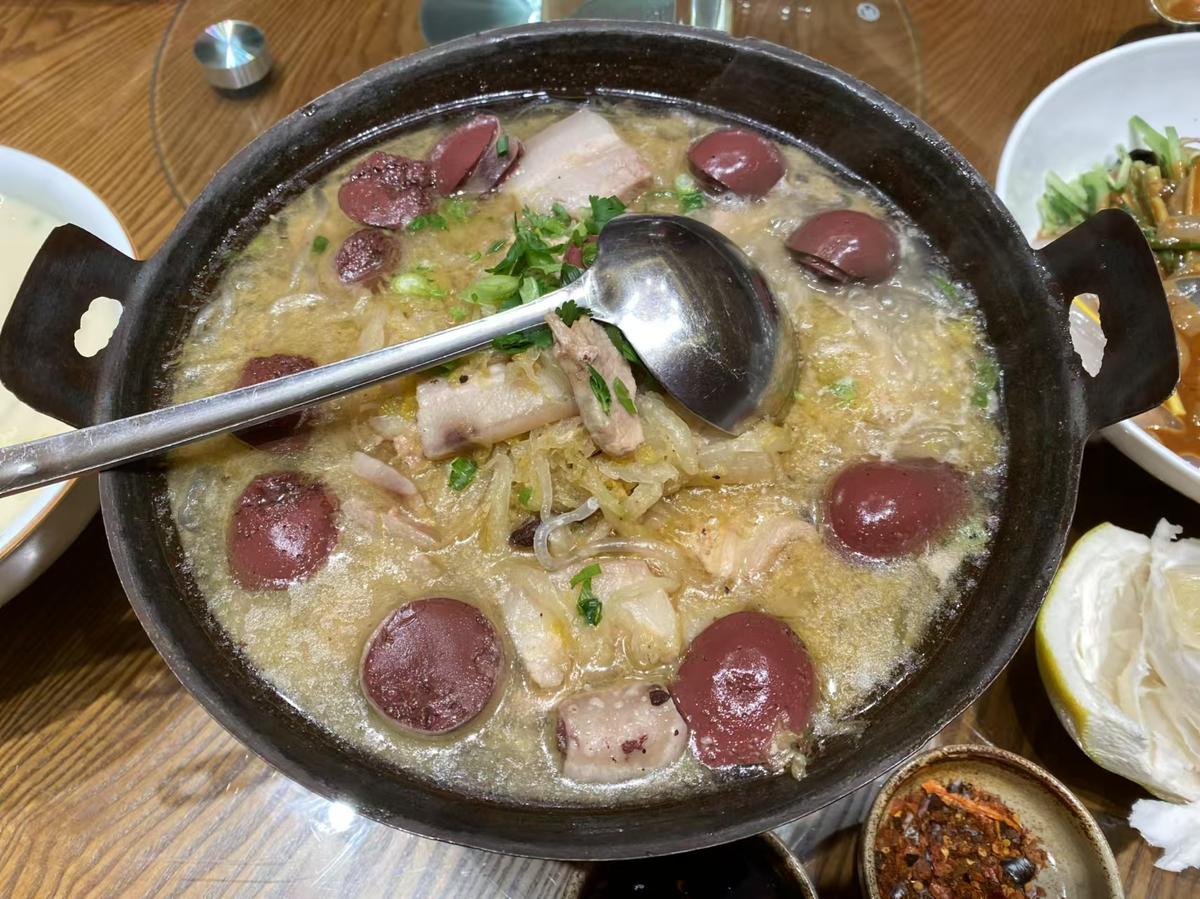
The jar comes out of storage in October. In a Dongbei apartment — Harbin, Changchun, Shenyang — the coldest room in the house is not a room at all; it is the hallway, the balcony, the unheated landing just outside the door. From the first cold week of autumn, that is where the cabbage lives: a ceramic crock or a plain plastic bucket packed with napa cabbage, a fist of coarse salt, and a heavy stone laid on top to hold everything under its own brine. By the time the first snow arrives, the whole stairwell smells sour — sharp and clean, like a pickle barrel and a cellar at once.
If you grew up outside China, your brain will reach for a word. Sauerkraut. Hold on to that word and you will eat badly. Suan Cai Bai Rou (酸菜白肉, suān cài bái ròu) runs on the same idea as a hundred pickles the world over — cabbage, salt, patience — and tastes like none of them.
What the jar actually is
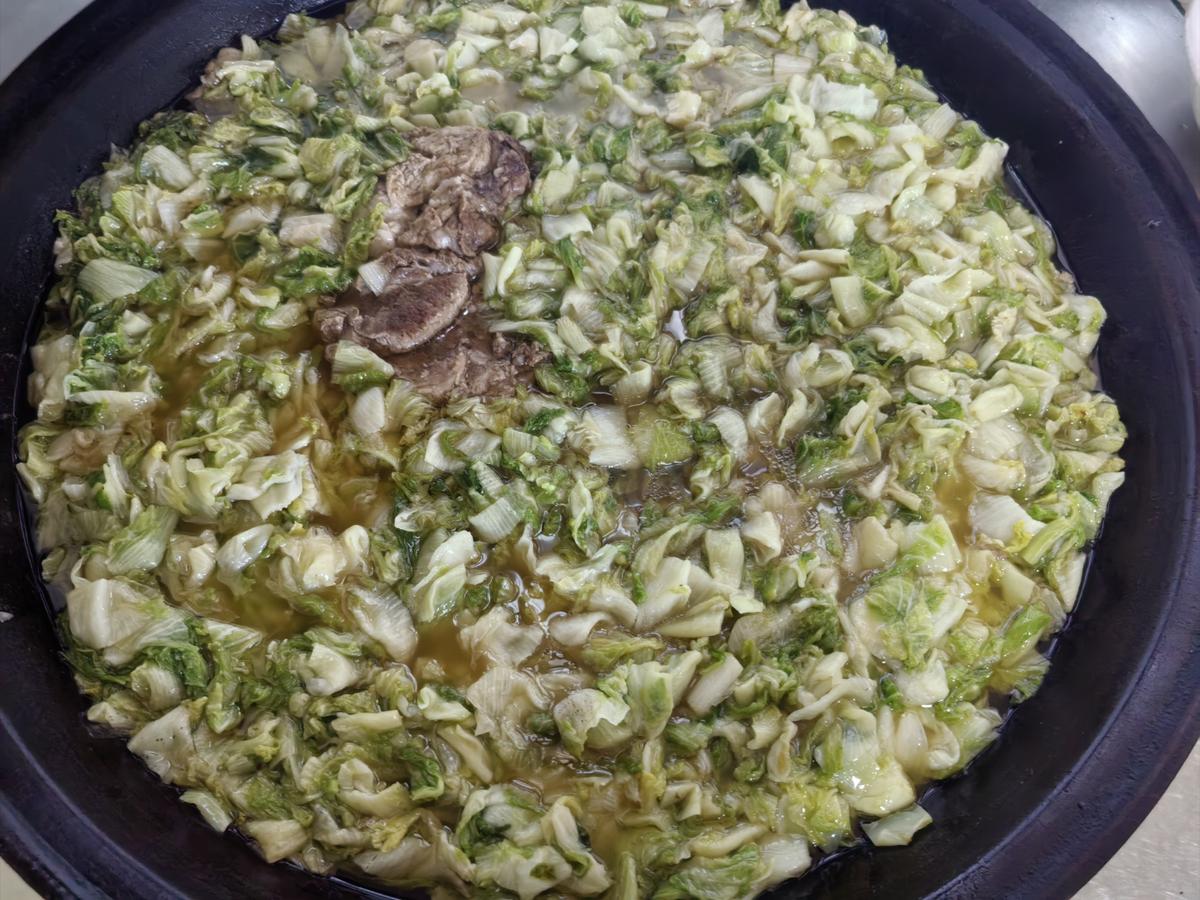
Start with the vegetable. Suan cai begins as napa cabbage (大白菜, dà báicài), the long, pale, elephant-ear cabbage you already know from a hot-pot platter. Not the round green-and-white drum you shred for sauerkraut. The napa is trimmed, split down the middle, packed into the crock, and left in the cold for a month or more. Shredded cabbage ferments in a fortnight and comes out sharp and bracing; half a napa left in a cold hallway ferments slowly, and slow is the whole point. The sourness rounds off, and underneath it there is a sweetness — a cabbage sweetness, faintly like a roasted chestnut — that no jar of German pickle has ever had.
And the 酸菜 you have met in a bowl of suan cai yu is a different pickle entirely: Sichuan's, salted from mustard greens, still green and still crunchy. If your suan cai arrived swimming in chili oil, you have not met this one.
White meat, sliced thin
The other half of the name is 白肉 (bái ròu), literally white meat, and it is as plain as it sounds. A slab of pork belly — skin, fat and lean in their three neat stripes — goes into cold water with ginger and scallion and nothing else. No soy, no sugar, no browning. It simmers gently until a chopstick slides through the skin as if it isn't there. Then it cools until it firms up, and you slice it as thin as your knife allows, thin enough that each slice turns translucent at the edge.
The suan cai gets squeezed dry, then fried in a spoonful of the pork's own rendered fat with a little scallion, until the raw sourness cooks down and the edges of the cabbage turn sweet. The pork broth goes back in. The sliced belly goes on top. Everything simmers together until the broth turns milky and thick with fat, sour enough to make the back of your jaw ache, and rich enough that one bowl is a meal.
What the first spoonful does
You eat it scalding, straight from the pot at the centre of the table. The cabbage keeps a snap — a real bite, not a slither — and the pork belly has gone soft and half-dissolved, so the two textures argue and then agree. Dip each slice in garlic-soy (蒜泥酱油, suànní jiàngyóu), cut with a spoonful of the hot broth, and eat it with a bowl of rice. There is no sizzle here to sell you on the dish. The pot only murmurs, a low bubble you can feel through the tabletop, and the sourness rides up in the steam before the spoon ever arrives.
The version that lies to you
Now the bad ones. A can of "Chinese sauerkraut" from a supermarket shelf: sweet, vinegary, faintly metallic, sugar and vinegar pretending to be a vegetable. It will wreck the broth. A cook who reaches for the Sichuan mustard pickle because that is what the supplier had — the broth turns yellow and peppery and you can taste the substitution. A broth that arrives pale and watery means nobody gave the suan cai enough pork fat to cook into. And a cabbage with no bite left means it was boiled to death instead of coaxed. If your spoon bends through the cabbage like it's soup, send it back.
The jar that never worked in Shanghai
My roommate at Fudan was from Changchun, and every November he tried the same thing: pack a jar of napa, salt it, and leave it on the dorm windowsill to ferment the way his mother did at home. It never worked. Shanghai winters are grey and damp and almost never cold enough, and cabbage that should have gone slowly sweet went slimy instead. So his mother posted it to him — vacuum-sealed bags of suan cai, a whole winter's worth, flat-packed in a box with a bag of dried vermicelli and a note. I ate that cabbage for four years. It was the first time I understood that some dishes are not recipes. They are postal deliveries.
How to eat it
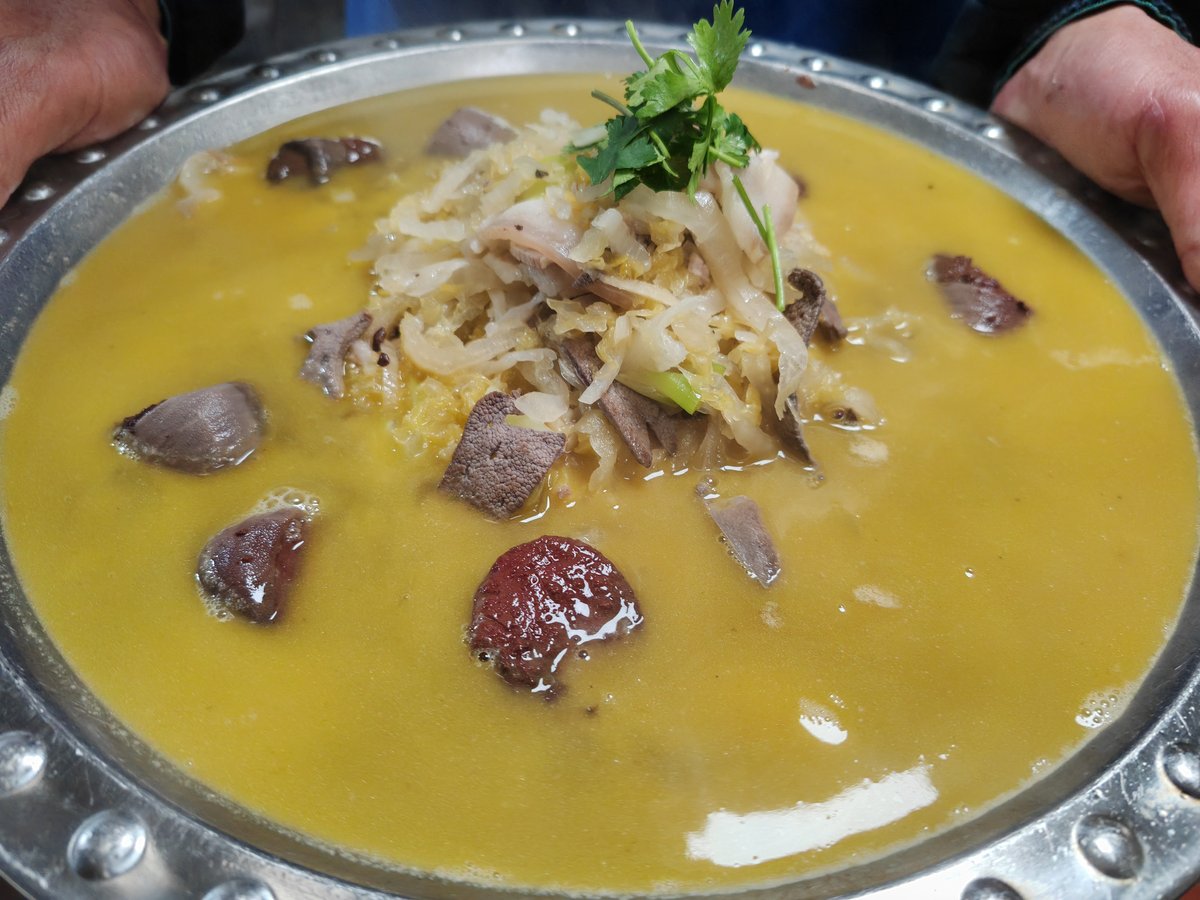
In Dongbei this pot is rarely a solo act. After the annual pig, the same base becomes 杀猪菜 (shā zhū cài): the pot fills up with blood sausage (血肠, xuě cháng), frozen tofu (冻豆腐, dòng dòufu) and sweet-potato vermicelli, and the table stops pretending to be modest. The blood sausage is optional. The 粉丝 is not; it drinks up the last of that milky sour broth, and by the end of the meal it is the thing everyone is quietly racing for. Boil a pot, put it in the middle, and keep adding vermicelli and cabbage until the broth gives out. Nothing else is required.
I'll save the home-cooking version for another post. The entire game is temperature: you want a ferment that takes four weeks, not four days, so a plastic bucket on a cold balcony will beat a warm kitchen every time. Get that right, and the rest is just pork and patience. Recipe coming soon.
💬 Comments