Steam-Pot Chicken: A Soup Made of Nothing but Steam
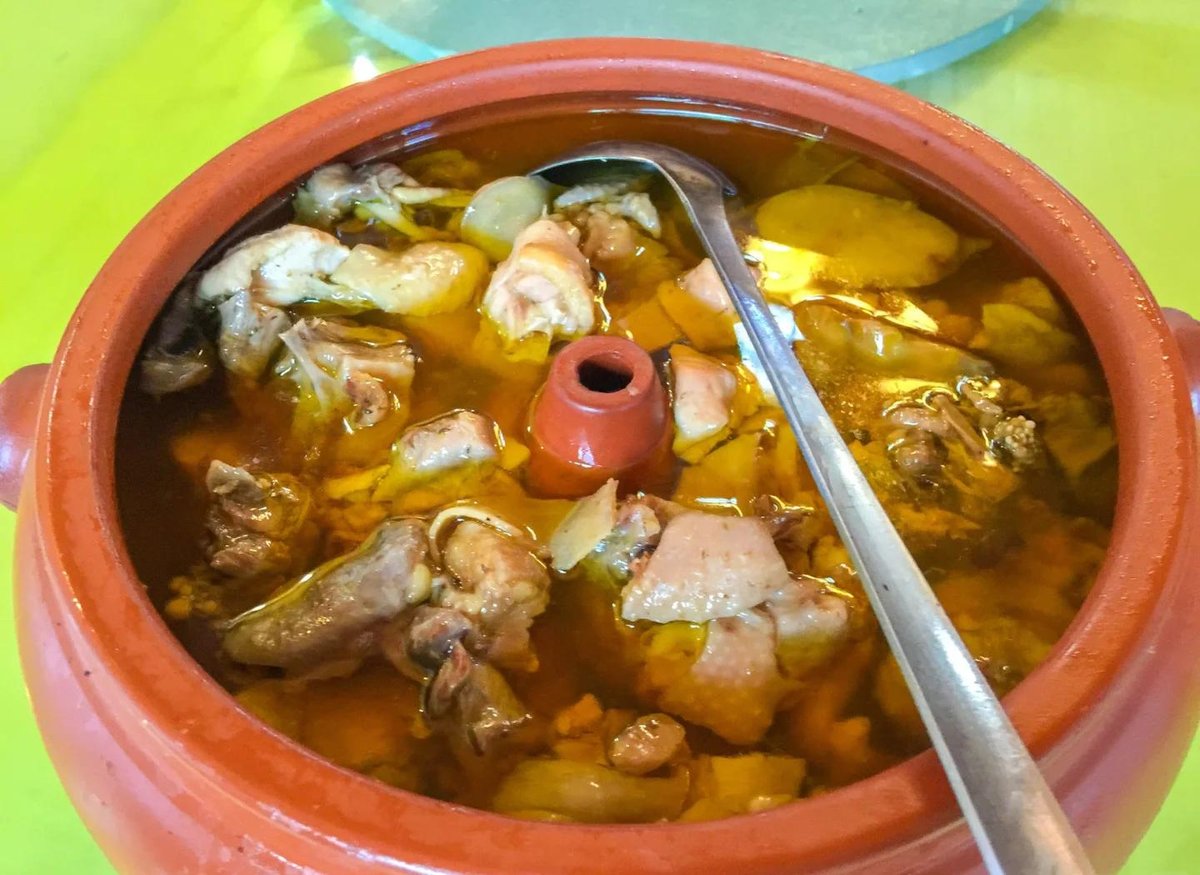
The pot arrives at the table with a thud, and the lid starts to move on its own. Steam pushes out around the rim in slow ribbons. There is no bowl of soup beside it, no ladle, nothing else on the table that would explain the liquid inside. The waiter lifts the lid, the smell rolls out — clean chicken, ginger, something faintly earthy underneath — and then he steps back to let you look.
Inside, a whole chicken sits in a shallow pool of gold. Not a deep bowl of broth. A pool. An inch of clear amber liquid with a slick of yellow fat floating on top, and a bird that looks like it has been quietly thinking to itself for four hours. Nobody poured water in there. That is the entire idea.
The first time I really understood this dish, I was in Kunming in January, in a place with eleven tables and a menu painted onto the wall sometime in the nineties. I ordered it the way you order anything in Yunnan in winter — because the table next to me already had one. It came out sealed, the lid held down with a strip of damp paper, and the owner made a small ceremony of cutting the seal in front of us. When she did, the smell landed on the whole room. Heads turned. That does not happen with soup.
Steam-Pot Chicken (汽锅鸡, qìguō jī) is a Yunnan dish built on one stubborn idea: you add no water. The bird makes its own soup, and a strange clay pot does the rest.
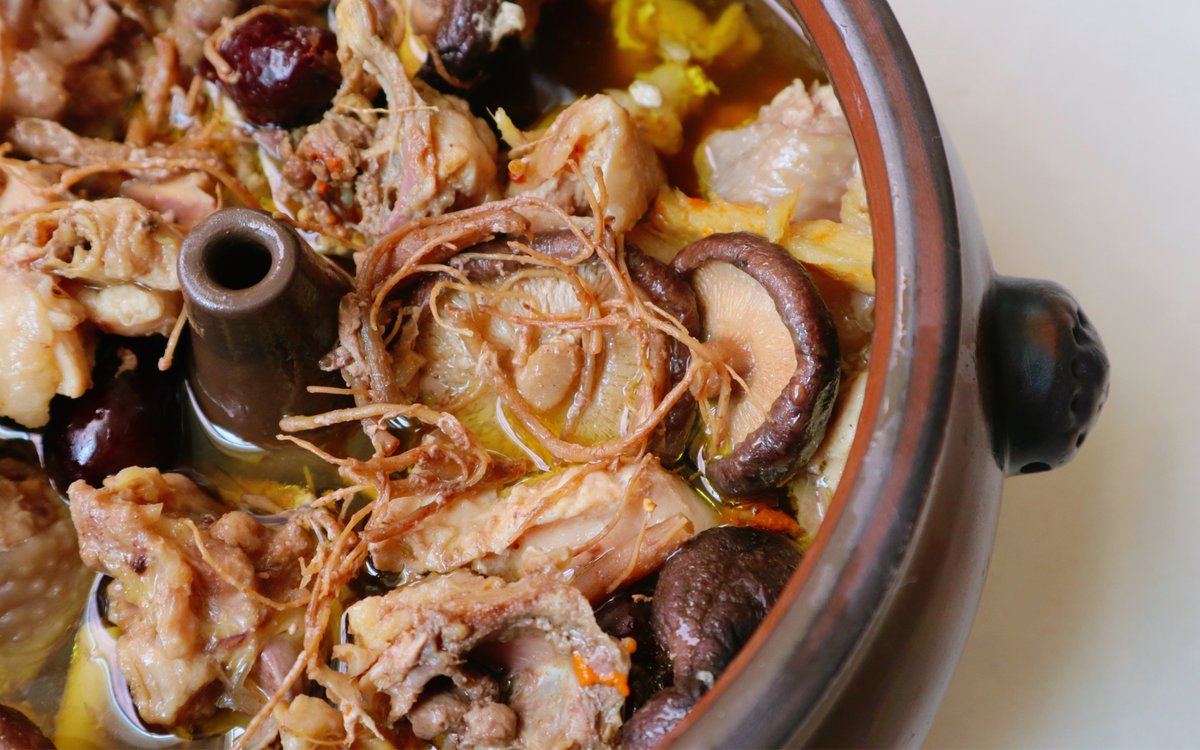
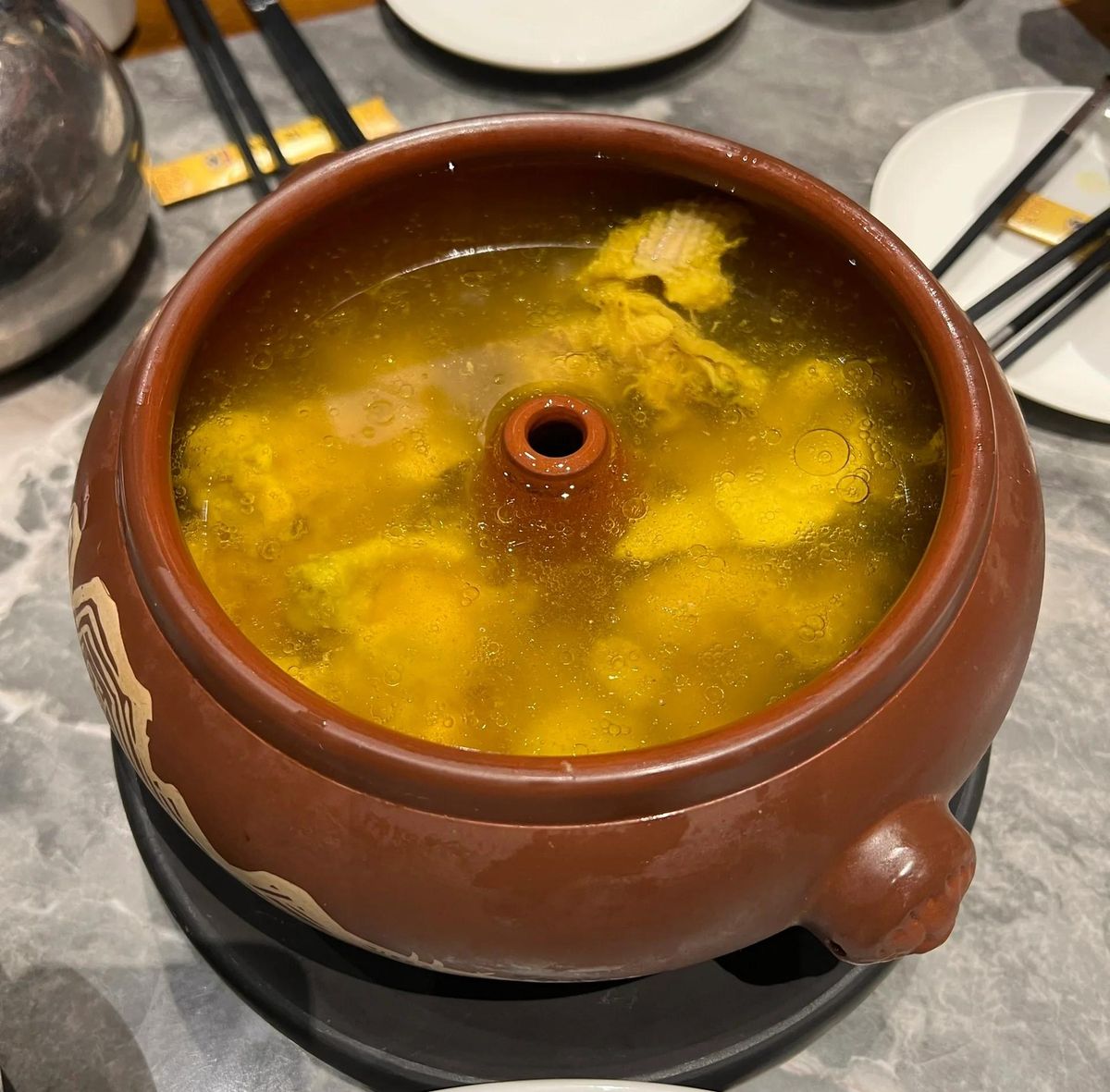
Start with the pot, because the pot is the dish. It is called a qìguō (汽锅) — a squat round clay vessel with a feature you will not find in any other kitchen: a hollow tube rising from the floor, straight up the middle, like a chimney. The chimney is the whole trick. The pot sits on top of a bigger pot of boiling water. Steam shoots up the tube, hits the cold underside of the lid, condenses into droplets, and those droplets fall back into the valley around the chicken. Four hours later, the dish has filled itself, one drop at a time.
The best of these pots come from Jianshui (建水), in southern Yunnan, where potters have worked local purple clay for centuries. The clay breathes and holds heat, and it can be shaped by hand into a chimney that actually points up. A tube that leans even slightly sends the steam sideways instead of down into the pot, and you end up with a dry pot and a puzzled cook. There is a whole town whose trade is, more or less, this one curve.
You do not put just any chicken in it. The classic is a black-boned bird — a silkie, dark skin and bluish-grey flesh — or a free-range Wuding chicken from the hills outside Kunming. Both give a deeper, darker broth than the pale supermarket type. Nothing else joins them but a few slices of ginger, a scallion, a splash of Shaoxing wine, and salt. In the medicated version that Yunnan actually drinks by the pot, a handful of sliced notoginseng (三七, sānqī) goes in too, and the dish turns into something you eat after a long climb, not before one.
What comes out is the purest chicken soup I know, and there is a reason. Normal stock gets its flavor by boiling: you simmer the bird, and the water grabs whatever it can. Steam is gentler. Nothing boils, nothing gets stirred, nothing clouds. The flavor arrives as condensation, and it stays clear as tea and gold as honey. The chicken underneath is soft enough to pull apart with a spoon, because it has been poached in its own rising steam rather than dumped into a rolling boil.
Now the enemies, because this dish has more of them than any I know. The topped-up pot is the common one: a kitchen in a hurry pours in water or stock so it finishes in half the time. You can taste the cheat in the first spoonful. A real qìguō jī is almost sweet, its flavor concentrated precisely because there is so little of it. A topped-up pot tastes like ordinary chicken soup — thin, correct, and a little sad. Then the electric version, a tabletop appliance with a coil built in that never seals properly, so half the steam escapes and what is left is a weak, watery compromise. Then the powdered version, where somebody reaches for bouillon. This dish has four ingredients, and one of them is time. Then the rushed version, steamed hard so the fat emulsifies into a cloudy, greasy bowl. Low and slow is not a suggestion here. It is the recipe.
Eat it in the order the pot gives it to you. First the broth, and first unadorned — no rice, no noodles, nothing dropped in. Just sip it hot and notice how it tastes like the idea of chicken rather than the meat itself. In Yunnan this is often what you order at the end of a long day in the mountains, and the first sip is the whole point of the exercise. Then the meat: lift the bird out, or pull off chunks with chopsticks, and dip them in light soy with ginger and scallion. The flesh comes away in pale, soft strands. If it is the sanqi version, the broth turns faintly bitter toward the bottom, which is said to be good for you, and everyone at the table will have a theory about it.
I have eaten this a dozen or so times — in Kunming, in Shanghai, and once, memorably, in a Yunnan place in Flushing that got the chicken right and the pot wrong. That last one taught me something. The bird matters less than the chimney. Four hours of nothing but rising steam, falling back as soup: that is the whole dish, all of it. The chicken just happens to be sitting underneath.
Out of room for today. The home version deserves its own post, and the hard part is not the chicken — it is the vessel. I will show you how to fake a qìguō with an ordinary steamer and a bowl. Recipe coming soon.
💬 Comments