Squirrel Mandarin Fish: Two Hundred Cuts and Forty Seconds
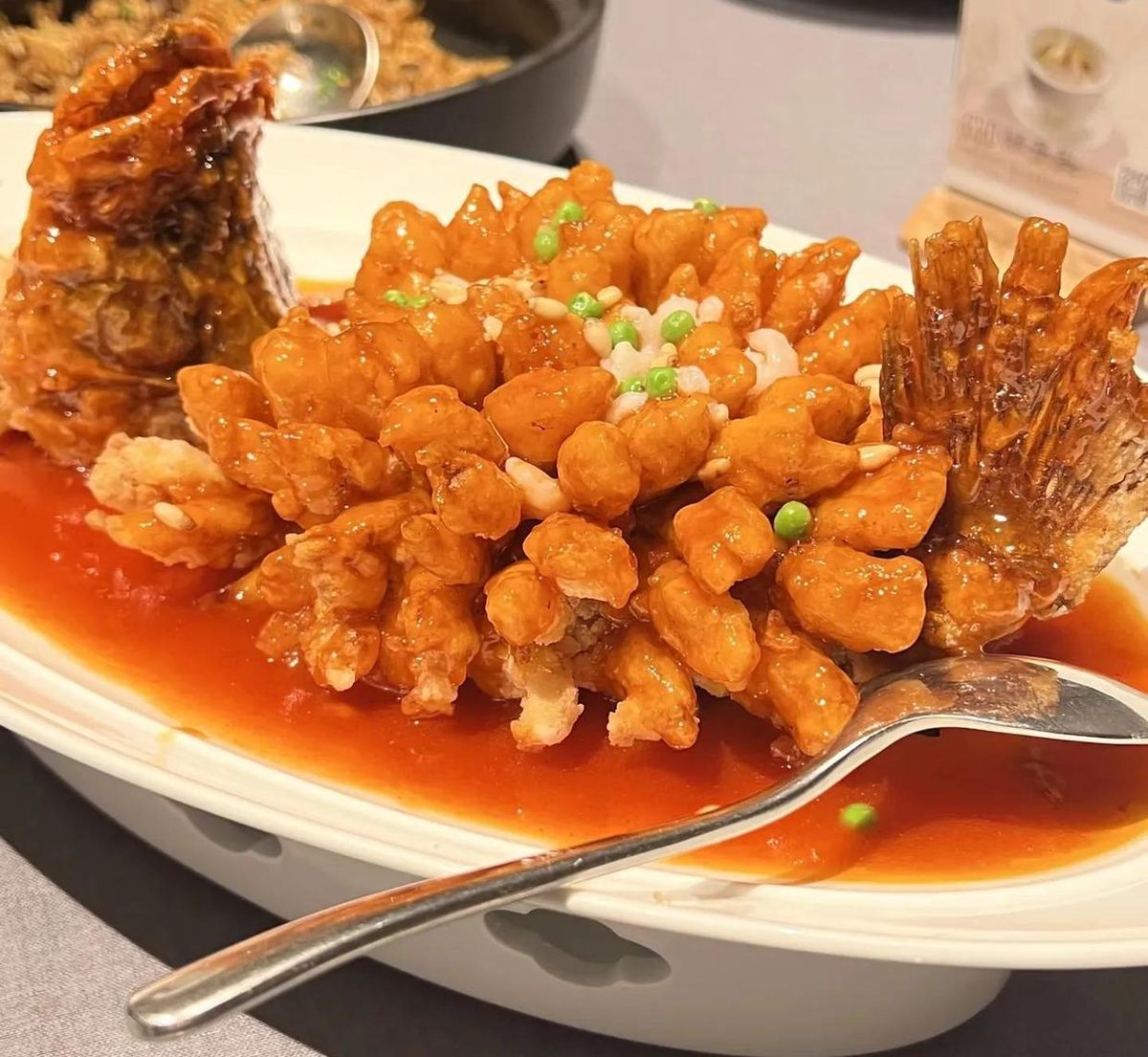
Order it in the right kitchen and the fish arrives like an argument you didn't start: whole, arched, tail straight up, mouth open, glazed in amber. Then you hear it. The sauce went on three seconds before the plate reached your table and it is still hissing against the crust, a sound halfway between bacon and rain on hot pavement. For a beat nobody talks.
Squirrel Mandarin Fish (松鼠桂鱼, sōngshǔ guìyú) is Suzhou's party trick. The name has nothing to do with squirrels. Score the fish, drop it in oil, and the flesh puffs into hundreds of small crisp spikes that curl outward, the way a squirrel's tail looks when the animal sits up to eat. Songhelou (松鹤楼) on Guanqian Street has been serving it since the Qianlong era, and there is an emperor story attached to it. The story is probably invented. Nobody in Suzhou cares, because the fish doesn't need it.
I watched one get made when I was fifteen. My grandmother's birthday, a private room at a restaurant off Shantang Street, my father ordering the fish the way you'd order a cake: early, in advance, as a ceremony. I wandered to the kitchen door and stayed there for twenty minutes, because a man was cutting a fish apart and I could not work out how it was still whole.
Here is what he did. He laid the fish flat and ran his cleaver down the back to lift out the spine in one piece, head, belly and tail still attached. The fish became a book with a single page. Then the scoring. Down the flesh in parallel strokes about a centimetre apart, the fish turned ninety degrees, the same again, until the meat was a grid of diamonds. Every cut stopped maybe two-thirds of the way through, never touching skin. That depth is the trick. Too shallow and nothing blooms. Through the skin and the whole fish falls apart in the oil like wet paper.
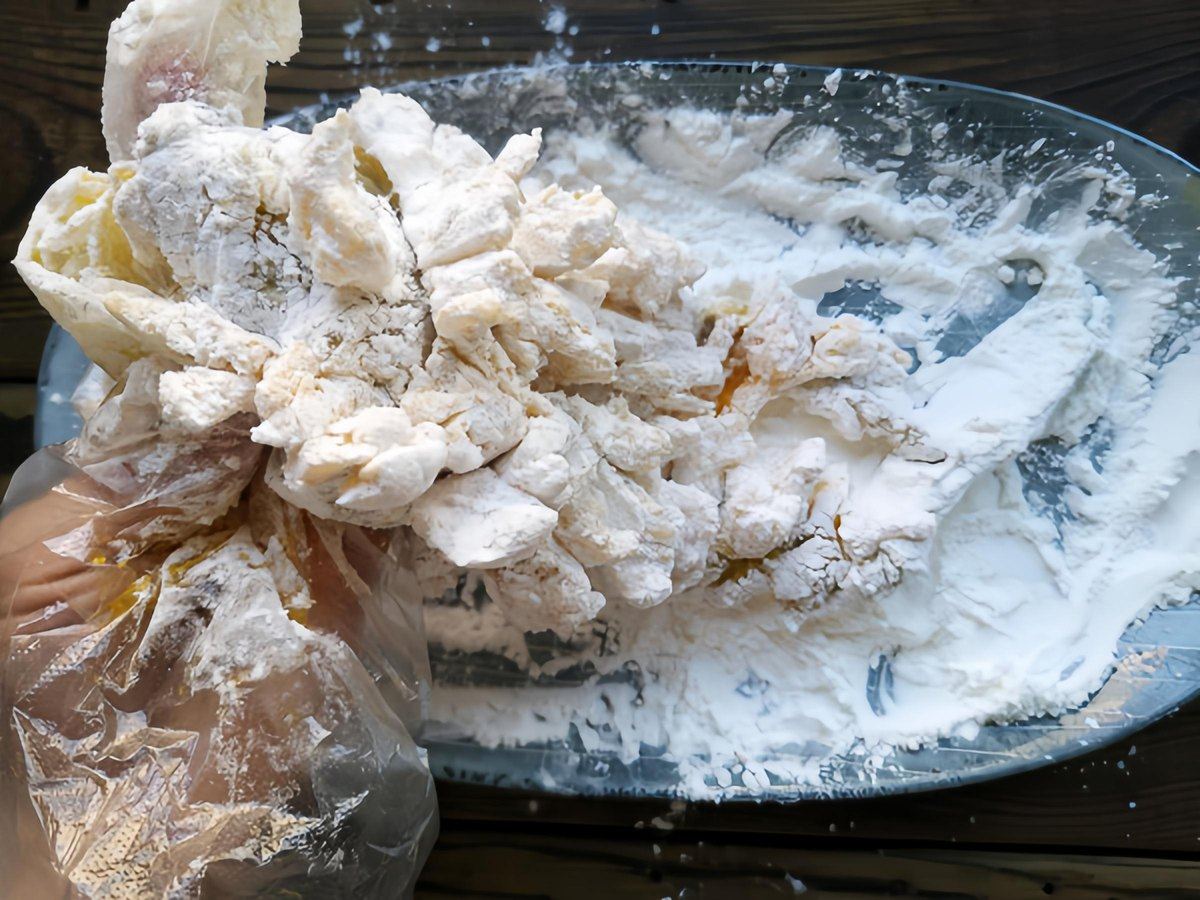
Then starch, not batter. Dry cornstarch pressed into the cuts and shaken off, nothing else. It goes into oil hot enough that the surface screams on contact, held by the tail and lowered slowly so the flesh fans out as it sets, head first, the tail curling up behind it. Forty seconds. Longer and the spikes brown before the middle cooks, and the middle is what you're protecting: soft, faintly sweet, steaming when you break through the crust.
While it drains, the sauce. Vinegar, sugar, a little soy, a spoon of tomato paste for colour, ginger, a splash of stock, reduced until it coats the back of a spoon. It should taste like vinegar first and sugar second, with salt holding both of them down. What most restaurants pour instead is candy with food colouring. The hiss when it lands on the fish is not decoration. It is the crust reporting that it is still dry enough to stay crisp.
You will also meet versions that are lies. The fish cut into anonymous fillets, battered, fried in lumps and drowned: a fish stick with ambitions, no head, no tail, no shape. The fish fried two hours ago and flashed in an oven, so the spikes have gone soft and the sauce pools underneath like soup. The sauce built on ketchup and corn syrup until it tastes like dessert topping. If nobody pours the sauce at your table, ask why. If your fish does not hiss, send it back. In Suzhou the hiss is the standard, not the bonus.
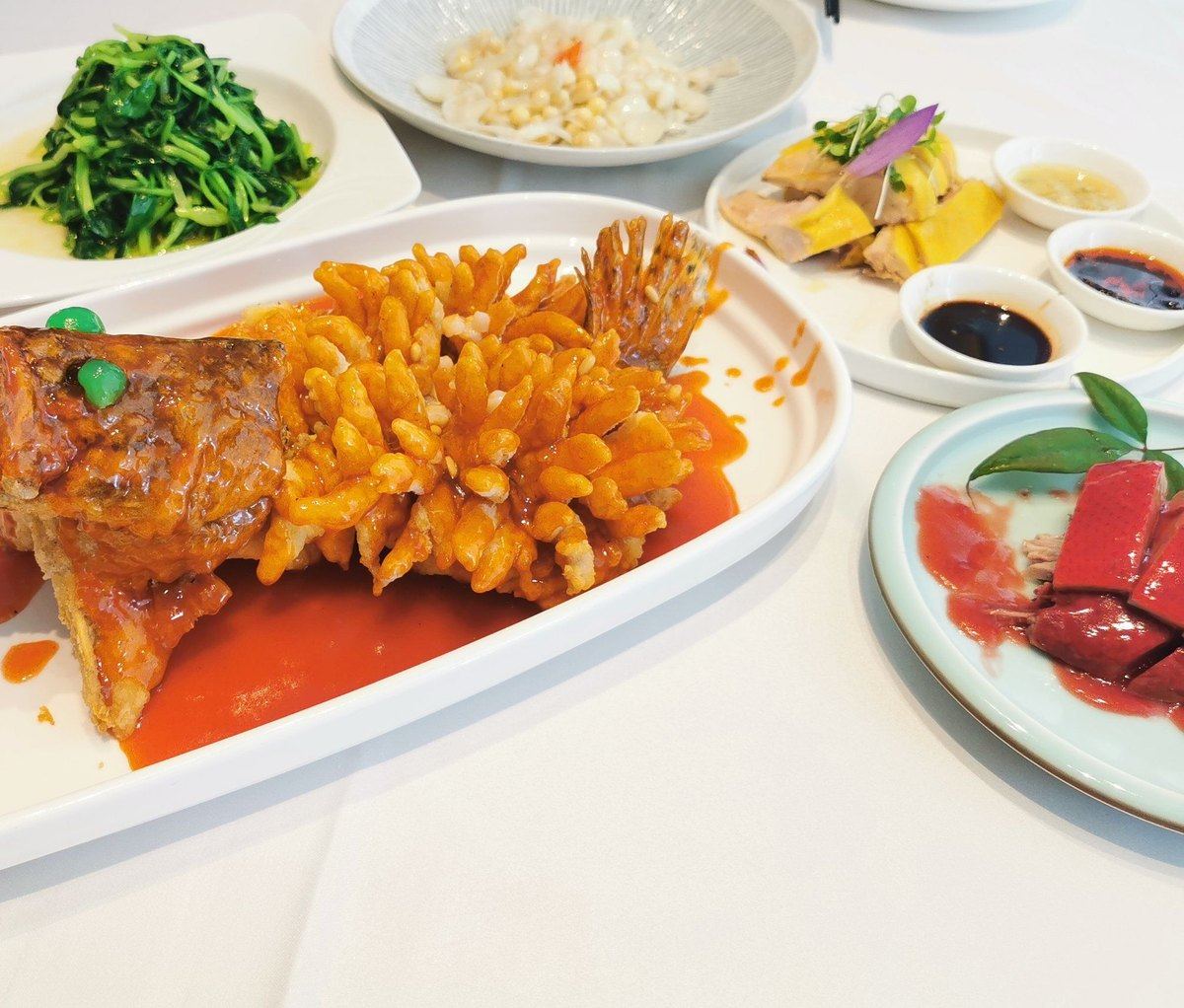
Eat it immediately. The clock is the real enemy here — this dish is spectacular for about four minutes and ordinary for the next twenty, and every minute after that you are eating a different, sadder fish. Work from the tail end upward, dragging each piece through the sauce rather than letting it sit in it. Lift, don't scoop. Somewhere near the middle the crust and the sauce meet in the middle, crisp on one side, softening on the other, and that bite is what all the cutting was for. Save the meat inside the jaw for last. It is the sweetest part of the fish and nobody will fight you for it, because most people don't know it is there.
The man at that kitchen door would have been in his fifties. He never once looked up at me. I stood there watching his wrist move through the same shallow angle, cut after cut, the way other people pray. By the time the plate came out and my grandmother laughed at the shape of it, he was already onto something else.
That is the dish, I think. Not the sweetness. The forty seconds in which ten minutes of careful cutting looks like an accident of fire and sauce.
I'll save the home version for its own post. Deboning the fish down the back and scoring it two-thirds deep without breaking the skin is slow work, and it is not forgiving. Recipe coming soon.
💬 Comments