Spring Rolls: The Golden Cylinder That Announces the New Year
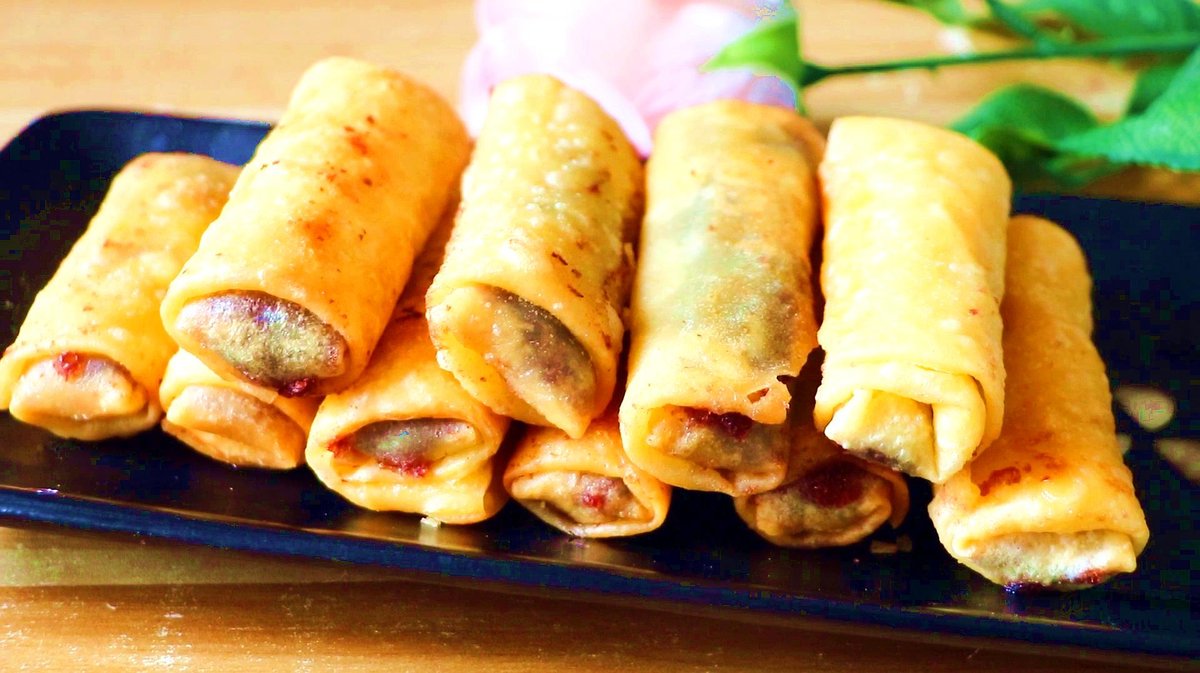
Every Chinese New Year's Eve of my childhood ended the same way. Dinner table cleared. Adults drinking tea, pretending to watch the Spring Festival Gala. My grandmother at the stove, alone, frying spring rolls. She wouldn't let anyone help — not my mother, not my aunts. This was her job. The final course. The punctuation mark on the year's most important meal. She guarded it like a conductor guards the downbeat.
The sound came first. A low crackle as each roll hit the oil, then a sharper hiss as the wrapper blistered. The kitchen filled with hot oil and something sweeter underneath — shredded pork, napa cabbage, shiitake mushroom, already cooked, already perfect, waiting inside its wrapper. She worked fast. Four at a time. Twenty seconds per batch. Golden, not brown. Brown meant lost focus. Golden meant paying attention.
Spring rolls (春卷, chūnjuǎn) are the least appreciated masterpiece in Chinese cooking. Hours to prepare, two bites to vanish, nobody writes songs about them. But on New Year's Eve, when the oil is hot and the kitchen is quiet and the first batch hits the table — they are the only thing in the world.
The Architecture of a Bite
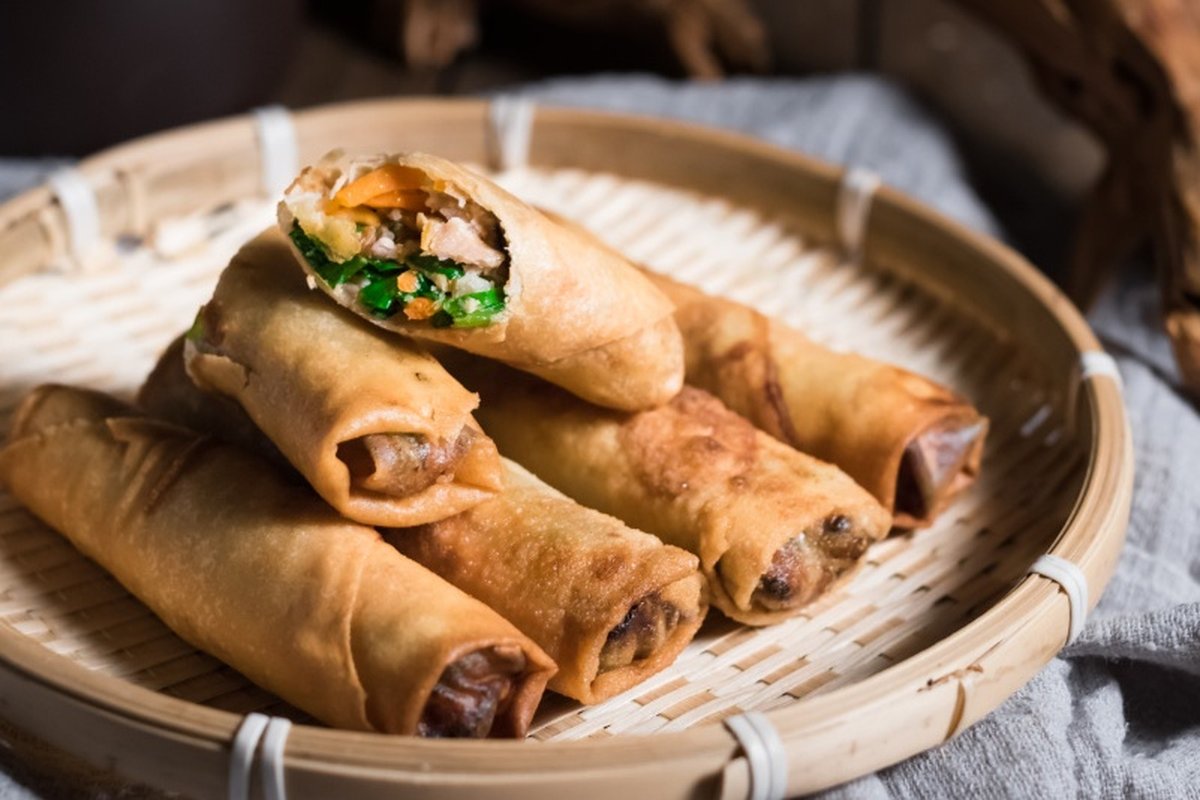
Thirteen years building software. The best code you don't notice — it just works. A spring roll has three layers, each invisible until they fail. It's never failed in my grandmother's kitchen.
The wrapper: thinner than dumpling wrappers, more water, less gluten. They blister and shatter, not stretch. My grandmother bought hers from the same stall in the same wet market for thirty years. Translucent raw, parchment-thin, tears if you look at it wrong. Handling takes practice. I never mastered it.
The filling: Shanghai style. Shredded pork shoulder, napa cabbage, rehydrated shiitake, bamboo shoots for crunch. Everything julienned to the same thickness — if the pork is thicker than the cabbage, the bite is uneven. The filling is stir-fried before wrapping, never raw. Raw filling releases water during frying and turns the wrapper soggy. Stir-fried filling seals its own moisture. My grandmother cooked it exactly three minutes — pork loses pink, cabbage keeps snap.
The seal: flour-water paste painted along the edges. Tight but not stretched — tight enough to hold shape, loose enough to let steam escape so the wrapper doesn't balloon and burst. Ends tucked like a burrito. Properly sealed: waterproof. Improperly sealed: filling leaks into oil, ruins the batch.
The fry: oil at 350°F. My grandmother didn't use a thermometer. She dropped a scrap of wrapper into the oil — sank and rose slowly, ready. Sank and stayed, too cold. Instantly browned, too hot. Four rolls, twenty seconds, golden, pulled. Drained thirty seconds on paper towel. Served immediately. The window is two minutes — after that, wrapper softens, filling cools, magic fades.
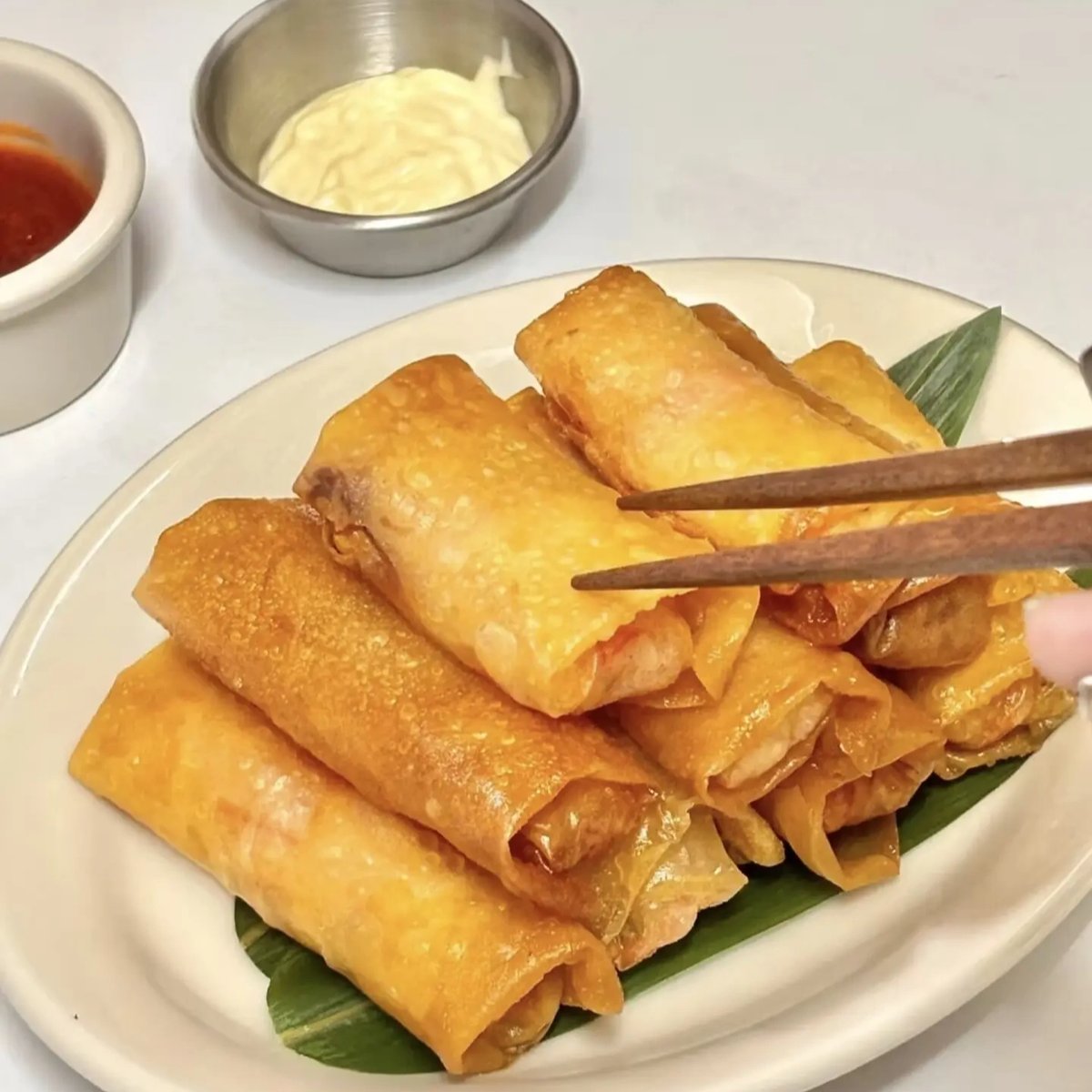
The dip: Worcestershire sauce. Not sweet chili. Not soy. Worcestershire. This is the Shanghai way and I will die on this hill. The tanginess cuts through fried wrapper and pork fat simultaneously. Sweet chili is for Vietnamese spring rolls — different category entirely. Try Worcestershire once. You'll never go back.
A perfect spring roll makes a sound when you bite it — a crack you feel in your teeth before your ears register it. You don't just taste a spring roll. You hear it.
The Origin
Spring rolls date back to the Tang dynasty, over a thousand years ago. Originally a spring festival food — the first vegetables of the season wrapped in thin pancakes. The frying came later. Everything good comes later.
The Enemies of Spring Rolls
The Takeout Spring Roll. Every Chinese takeout joint in the English-speaking world serves this: a thick greasy cylinder the size of a cigar, wrapper like corrugated cardboard, filled with bean sprouts and "mixed vegetables." Arrives in a paper bag, already soft, leaking oil. This is not a spring roll — it's a tragedy wrapped in cellulose. Wrapper-to-filling ratio roughly ninety-to-ten. If it's thicker than your thumb, it's wrong.
The Cold Spring Roll. Some restaurants pre-fry and leave them under a heat lamp. The wrapper goes from shatter-crisp to leathery in four minutes. By the time they hit your table, you're eating a warm envelope of regret. Spring rolls are a sprint, not a marathon. One job: eaten within sixty seconds of leaving the oil. Any restaurant that doesn't get this doesn't get spring rolls.
The Overfilled Version. More filling is not better. Bursting at the seams means splitting in the oil, dumping contents, ruining the frying medium. Ideal ratio: forty percent filling to sixty percent wrapper by volume. The wrapper is the star. The filling supports. Get it backwards and you're eating stir-fry that touched some dough.
The Wrong Dip. Sweet chili from a squeeze bottle. Plain soy sauce. Ketchup — yes, I've seen it. Shanghai way: Worcestershire. Cantonese: plum sauce. Northern: black vinegar with shredded ginger. Pick one. Commit.
The right spring roll: golden, three inches long, no thicker than your thumb, wrapper shattering on contact, clean julienne of pork and cabbage and mushroom inside, dipped in Worcestershire, eaten standing in the kitchen while the next batch fries. That's the only way.
How to Eat It
Fingers — not chopsticks. The wrapper is too fragile. Dip one end. Bite immediately. The first bite will burn the roof of your mouth. Accept this. The trapped steam is roughly two hundred degrees. You will make a sound — that sharp inhale through the teeth, universal human response to food too hot and too good to stop eating.
My grandmother always ate the broken ones. The lopsided ones, the ones that split, the ones that didn't make it to the platter. She'd stand at the stove, pull them out with her chopsticks, blow twice, eat them over the sink before anyone noticed. I noticed. She caught me watching once and handed me a broken one without a word.
It was the best spring roll I've ever eaten. It always is, when the oil is still bubbling and the kitchen is still warm and the person who made them is standing right there.
I'll save the wrapping technique for another post — getting the seal right and keeping the oil at temperature without a thermometer. Recipe coming soon.
💬 Comments