Spring Rolls: Dry Filling, Hot Oil, No Explosion
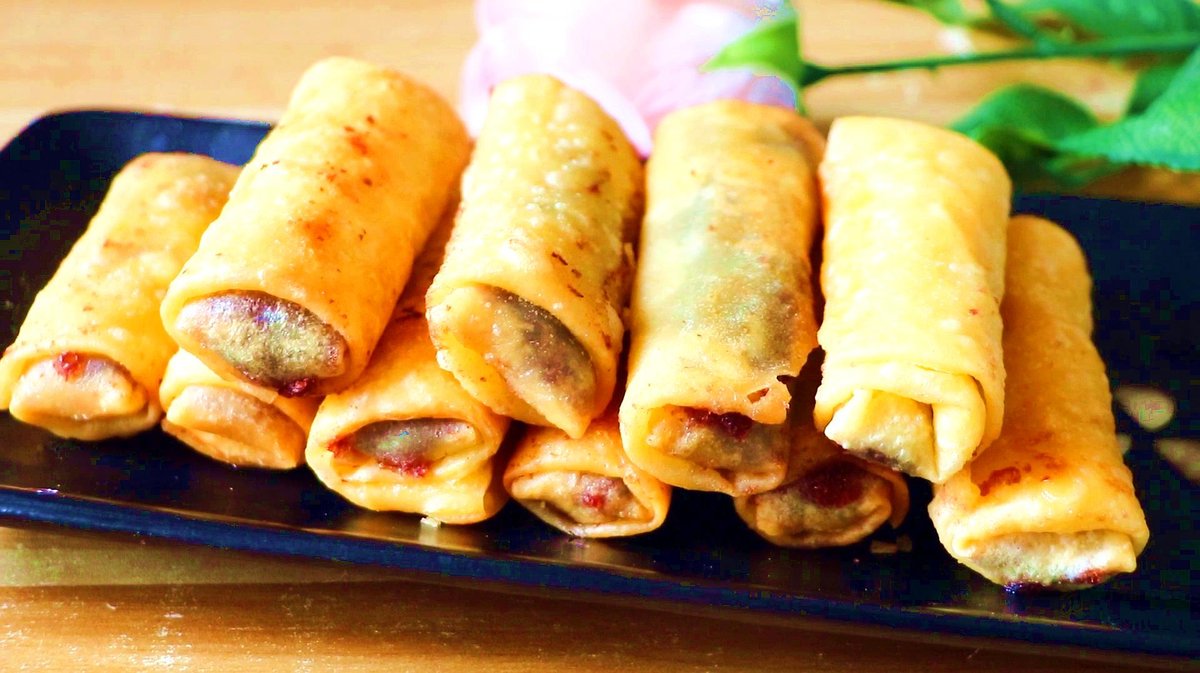
Editor’s Note: This is the kitchen companion to Spring Rolls: The Golden Cylinder That Announces the New Year. Quantities, temperatures and the failure points are below. Read the technique once before you shop.
Why Wet Filling Blows the Wrapper Apart
A spring roll is a sealed parcel of filling dropped into 170°C oil, and everything that goes wrong starts inside. The filling for twelve rolls is 200g of pork loin, 300g of cabbage, 100g of shiitake and 100g of bamboo shoot, and it is cooked before it is rolled. Not warmed through with the vegetables; cooked, seasoned, then dried until the mixture squeaks against the wok.
Water is the enemy for a physical reason. Moisture trapped inside a sealed wrapper turns to steam at 100°C, and steam expands roughly sixteen hundred times as it forms. Why this matters: a tablespoon of water becomes about a litre of steam at 100°C, and the wrapper has nowhere to put it. The wrapper cannot stretch. The pressure finds the weakest point, the seam or a fold thinned by layering, and the roll opens in the oil. Filling hits the oil, the oil spits, and the roll that survives is greasy.
So there is no sauce in this filling and no starch slurry: soy goes on the pork as a marinade, not into the pan at the end. Cabbage is shredded 3mm, salted 10 minutes and squeezed until it stops dripping, which removes about a third of its weight in water before it meets heat. Shiitake and bamboo are cut to the same 3mm, so they release their water early rather than in the fryer.
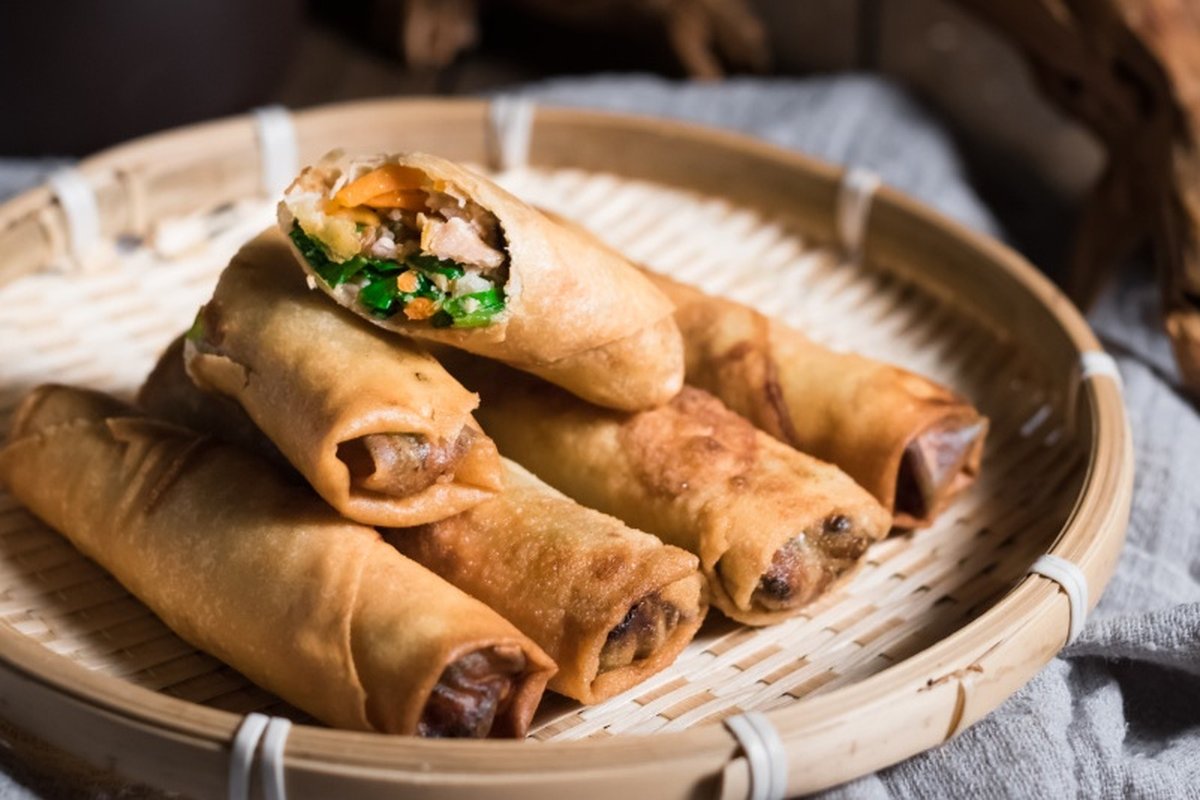
The cooked filling goes onto a tray in a thin layer and into the fridge for 30 minutes. Chilling does not remove water, but it sets the fat and firms the vegetables, so 40g of filling holds a log shape instead of slumping. Why this matters: fat firm at 4°C holds its shape, so the roll can be pulled tight without the filling smearing into the seam.
The wrappers are 12 frozen squares, about 20cm, thawed 30 minutes under a damp cloth and kept under it as you work. A wrapper left on the board for three minutes dries at the edges, and a dry edge will not seal.
Rolling has a fixed sequence. Lay the square as a diamond, corner toward you. Put 40g of filling in a log 10cm long across the lower half, fold the near corner over it, tuck once so the wrapper hugs the filling, fold the left and right corners in, then roll away, pressing the whole length with your palms. Air pockets are the second cause of explosions, and they come from a loose first tuck. Seal the last corner with flour paste, 2 tbsp of flour stirred into 3 tbsp of water.
Fry at 170°C, three rolls at a time, in 1.5 litres of oil. Three to four minutes turns them even gold; five at a time drops the oil below 160°C and the wrappers drink it. Drain on a rack, never on paper, which traps steam and softens the crust.
Ingredients
For the filling
- 200g pork loin, shredded 3mm across the grain
- 1 tbsp (15ml) Shaoxing wine
- 1 tbsp (15ml) light soy sauce
- 1/2 tsp (2g) fine salt, for the pork
- 300g white cabbage, shredded 3mm
- 1 tsp (5g) fine salt, for the cabbage
- 100g fresh shiitake, stems removed, sliced 3mm
- 100g bamboo shoot, julienned 3mm
- 2 tbsp (30ml) groundnut oil
- 1 tsp (5ml) sesame oil
- 1/4 tsp (1g) ground white pepper
For the rolls
- 12 frozen spring roll wrappers (about 250g), 20cm square
- 2 tbsp (20g) plain flour, for the paste
- 3 tbsp (45ml) cold water, for the paste
For frying and serving
- 1.5 litres neutral oil, for deep frying
- 100ml sweet chilli sauce
- 1 tbsp (10g) toasted sesame seeds, optional
Substitution notes: Chicken thigh, cut the same way, replaces the pork with no other change; it releases a little more water, so give it another minute in the pan. Dried shiitake, 30g soaked 30 minutes in hot water, is closer to the Shanghai original than fresh, but squeeze the caps hard before slicing. Bamboo shoot in a vacuum pack is fine; if you cannot find it, use 100g of peeled celeriac cut into matchsticks, which keeps the crunch without adding water.
Prep: Dry Everything Before It Meets a Wrapper
1. Shred and marinate the pork (15 minutes)
Cut the loin into 3mm slices, then into 3mm sticks, across the grain so the strands stay short. Toss with the Shaoxing, soy, salt and white pepper and leave 10 minutes. Do not add starch; the marinade should be fully absorbed, with nothing pooling in the bowl.
2. Salt and squeeze the cabbage (10 minutes)
Shred 300g of cabbage, toss with 1 tsp of salt, and leave in a colander for 10 minutes. Squeeze in handfuls over the sink. You should be left with about 200g. Spread it on a clean cloth and pat dry; the cloth should come away barely damp.
3. Slice the shiitake and bamboo (10 minutes)
Cut the shiitake caps into 3mm slices and the bamboo into 3mm matchsticks, both the same length as the cabbage shreds. Even size is what lets the whole pan come dry at the same moment.
4. Make the paste and thaw the wrappers (30 minutes)
Stir 2 tbsp of flour into 3 tbsp of water until smooth and let it sit; it thickens as it stands. Lay the frozen wrappers flat on a board, cover with a well-wrung damp cloth, and leave 30 minutes. They are ready when they peel apart without cracking.
Step by Step: Cook, Chill, Roll, Fry
Step 1: Stir-fry in order, then dry the pan (7 minutes)
Heat 2 tbsp of groundnut oil in a wok until it shimmers. Add the pork and stir 90 seconds, until it has lost its pink, then lift it out. Add the shiitake and bamboo and fry 2 minutes, until the mushroom edges brown. Add the cabbage and stir 3 minutes: it releases water, then reabsorbs it. Keep the heat high until the bottom is dry. Return the pork, season with sesame oil and white pepper, stir 30 seconds, and spread the lot on a wide tray.
Step 2: Chill the filling (30 minutes)
Cover and refrigerate. Press a spoon across the cold filling: it should hold a ridge and leave no film of liquid. If it beads water, tip it back into a dry hot wok for a minute.
Step 3: Roll one and test the seal (5 minutes)
Lay a wrapper as a diamond, corner toward you, and put 40g of filling in a log across the lower half, 3cm in from each side corner. Fold the near corner over the filling, tuck it tight, fold the side corners in, and roll away with firm palm pressure. Paint the last corner with paste and press three seconds. Hold it up: no air should move inside.
Step 4: Roll the remaining eleven (20 minutes)
Work under the damp cloth, one at a time, and set each roll seam-side down on a floured tray, not touching.
Step 5: Fry at 170°C in threes (12 minutes)
Heat 1.5 litres of oil to 170°C; a cube of bread should brown in 40 seconds. Lower three rolls in, seam-side down, and turn after 90 seconds. Fry 3 to 4 minutes, until the wrapper is the colour of straw and the bubbles slow to a faint fizz. Lift onto a rack and hold in a 100°C oven while the rest fry, letting the oil return to 170°C between batches.
Step 6: Or freeze them raw for later
Open-freeze the rolls on a tray for 1 hour, then bag them. Fry from frozen at 165°C for 6 minutes, turning twice. The lower temperature lets the cold centre heat through before the wrapper darkens.
Key Pitfalls
The rolls burst in the oil and spat. There was water in the filling or air in the roll. Dry the filling until the pan is clean, chill it 30 minutes, tuck the first fold tight, and press the seam for a full three seconds.
The wrappers cracked before they reached the oil. They thawed uncovered or sat on the board too long. Keep them under a damp cloth, take one at a time, and cover finished rolls if you work slowly.
The filling was wet and the rolls went soggy. The cabbage was under-salted and never squeezed, or soy was added in the pan. Salt the cabbage 10 minutes, squeeze hard, and keep all liquid seasoning in the pork marinade.
The ends tasted of raw flour. The roll was too thick at the corners, where four layers overlap. Trim 1cm off each wrapper corner, and keep the filling 3cm clear of the side corners.
The rolls came out greasy rather than crisp. Oil under 170°C, or five rolls at once. Three to 1.5 litres, wait for 170°C between batches, and drain on a rack so steam escapes.
The frozen rolls burst when fried from frozen. They went into oil that was too hot, so the outside set before the centre thawed. Hold 165°C for the full 6 minutes and turn twice; do not raise the heat to speed it up.
The filling tasted flat. There was no salt in the vegetables and the soy stayed in the marinade. Salt the cabbage before squeezing, taste the cooked filling, and add a pinch more salt at the end rather than more soy, which brings water with it.
Serving Suggestions
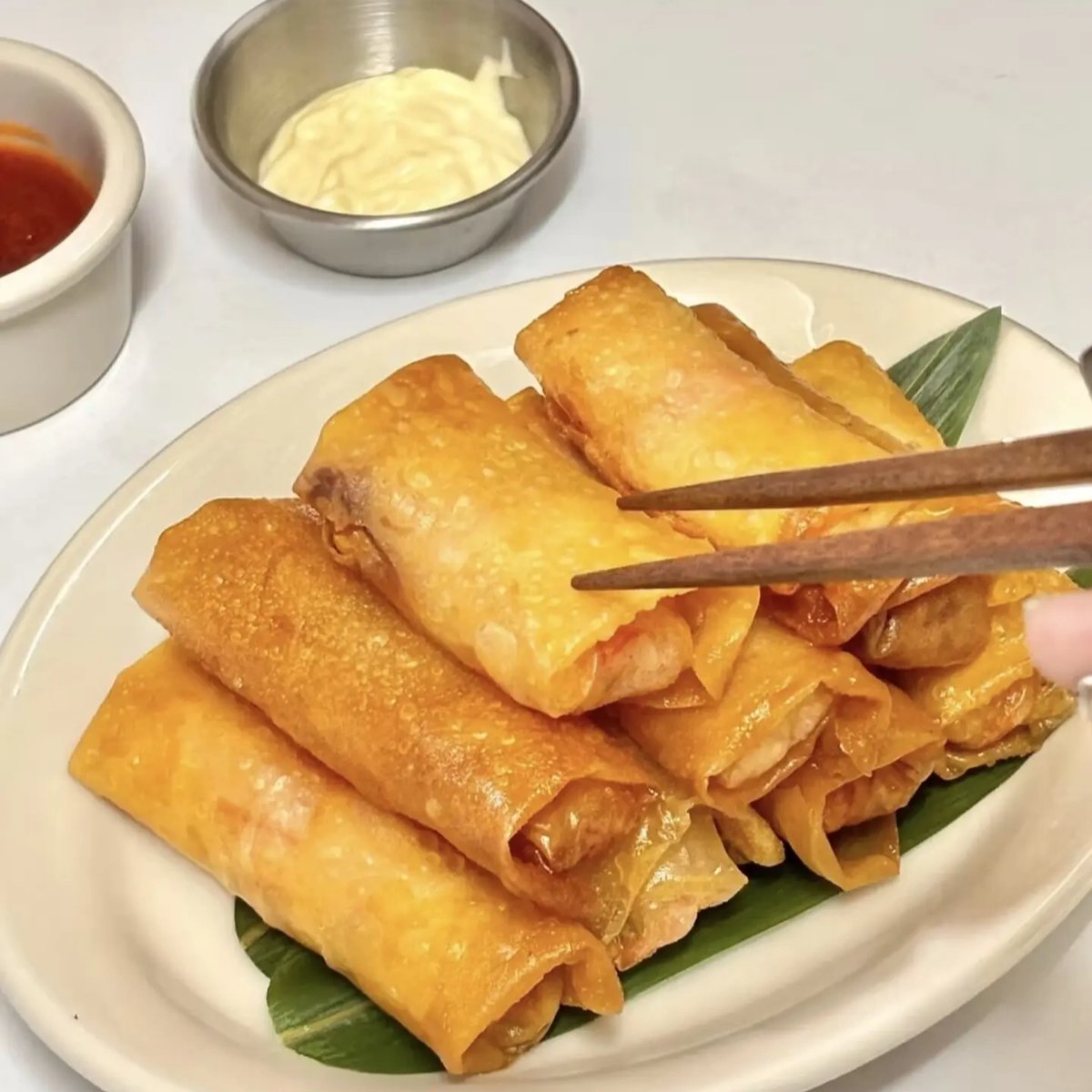
Pile them seams down with sweet chilli sauce in a bowl in the middle, or make the Shanghai dip of 2 tbsp Worcestershire sauce and 1 tsp sugar warmed together. They are finger food, eaten within ten minutes, while the wrapper still shatters.
On a festive table they sit beside braised pork and cold chicken, and disappear first. Leftovers reheat in a 200°C oven for 6 minutes, never in a microwave, which turns the wrapper to leather.
This is the companion recipe to Spring Rolls: The Golden Cylinder That Announces the New Year. Read the story, then cook the dish.
💬 Comments