Sour Soup Fish: The Sourness That Never Touched a Vinegar Bottle
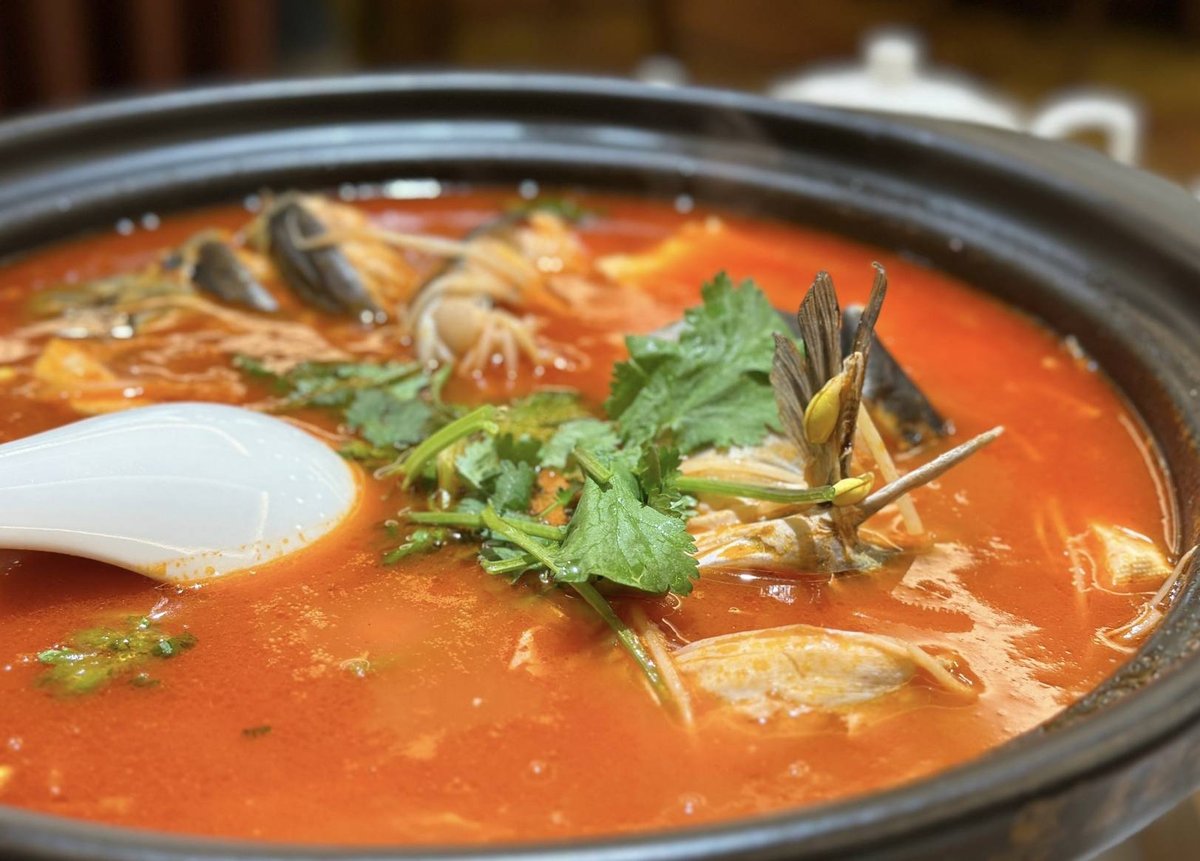
The pot comes to the table with two hands on it, because it is heavy and because it is still going. Somewhere under the surface a bubble breaks, then another, and the smell arrives before you have picked up a spoon: fermented tomato, something green and sharp like a leaf crushed under a thumbnail, woodsmoke from burnt chili, and under all of it the deep sweet-sour funk of something that has been sitting in a jar for a month and is better for it.
Then you taste it, and the sourness comes late. It does not hit the front of your tongue the way lemon or vinegar does. It lands at the back of your mouth, warm, round, faintly fruity, and instead of making your face contract it makes you reach for the spoon again. That is your first honest mouthful of 酸汤鱼 (suān tāng yú), sour soup fish, and it will ruin a lot of other soups for you.
China has a hundred sour dishes. This is the one where the sour is the entire argument. It comes from the mountains of Guizhou, from the Miao and Dong villages around Kaili in 黔东南 (qián dōng nán), where the windows are small and the jars are big.
There is no vinegar in it
Every first-timer assumes the same thing. Sour soup must mean vinegar, or lime, or something pickled and dropped in at the end. So they brace for a hit of acid, and what they get instead is soft, and layered, and a little sweet, and they ask what kind of vinegar that was.
None. There is no vinegar in the pot. Not a drop.
The sour is fermented, from one of two bases. 白酸 (bái suān), white sour, starts as the cloudy water left from washing rice. You pour it into a crock, leave it somewhere warm for two or three days, and it turns gently sour, almost milky, with a sweetness underneath. 红酸 (hóng suān), red sour, is the one most pots of fish use: small wild tomatoes fermented hard with salt, chili, ginger and garlic until they collapse into a bright, dense paste. That is what colours the pot red. Not paprika. Not food dye. Not ketchup.
The crock under the counter
Every household in that part of Guizhou has one, and it is never empty and never washed out. A spoonful of the old sour goes into every new batch, the way a baker keeps a starter alive, so the flavour of the pot you are eating tonight is partly the flavour of a hundred pots before it. Cooks get attached to their crocks the way people get attached to dogs.
So the honest question at the table is not what is in the soup. It is how old the jar is.
The mountains had no salt
Here is why sour became the taste of an entire province. Guizhou is inland, mountainous and historically salt-poor. Salt had to be carried in over the passes and it cost real money — for poor villages, the most expensive thing in the kitchen. Fermentation was the workaround, and it became the identity. There is a saying: 三天不吃酸,走路打蹿蹿. Three days without sour and your legs wobble. It is usually said with a laugh. It is also basically true.
The fish and the little green thing
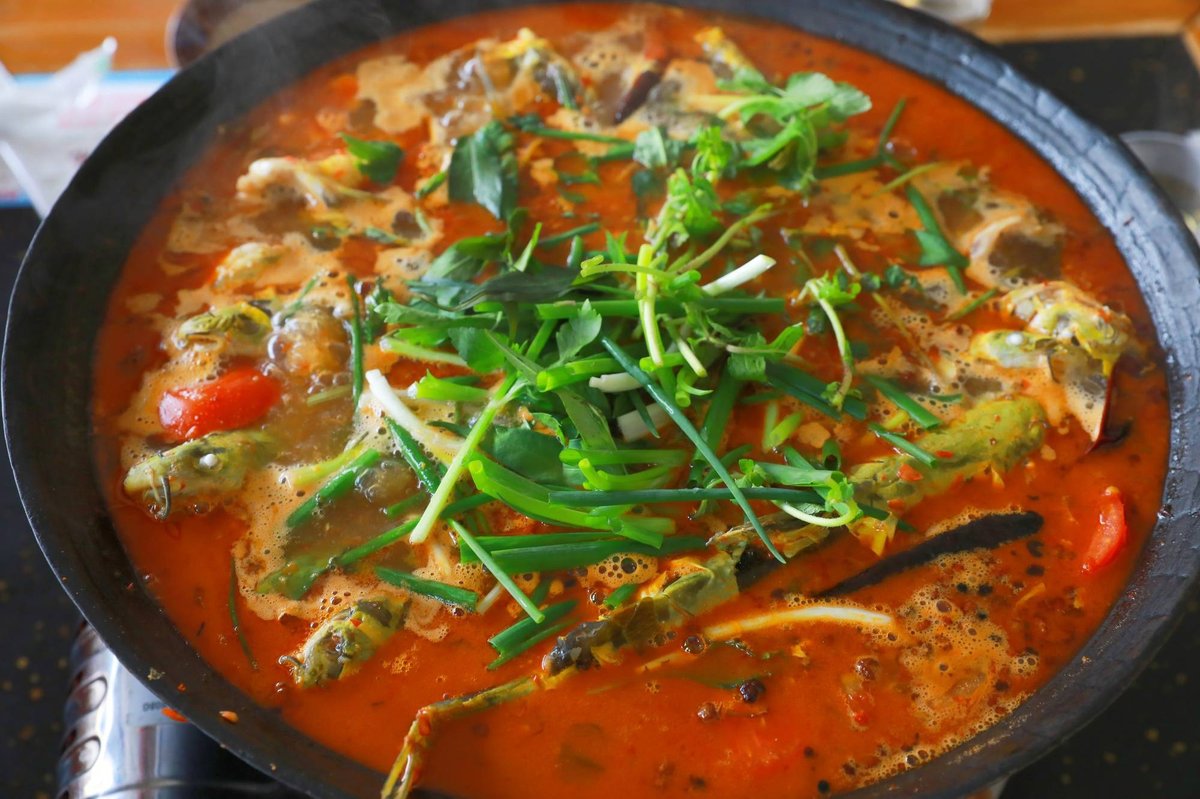
The fish matters less than people think, as long as it is fresh and whole. In the villages it was 稻花鱼 (dào huā yú), paddy fish grown in the rice fields and fat on fallen rice flowers. In restaurants today it is more often 江团, 黄辣丁 or plain grass carp, and they will bring it to the table live so you can approve it, which is theatre, but useful theatre. It goes into the rolling sour broth in pieces, skin on.
Then the thing that makes it unmistakable: 木姜子 (mù jiāng zǐ), the fruit of the mountain litsea tree. It looks like a hard little green peppercorn and it smells like lemon peel and eucalyptus and something medicinal you cannot place. Crushed and dropped in at the end, it lifts the whole pot and stops the sourness from turning flat.
You will also get a bowl of 蘸水 (zhàn shuǐ), the dipping sauce: chili toasted until it is nearly black and ground coarse, garlic, scallion, a little 木姜子 oil, and a spoonful of the pot's own broth to wet it. Sometimes 折耳根 goes in as well. You either love houttuynia or you do not, and there is no middle position, so start with a small taste instead of a whole leaf.
What passes for sour soup
The packet. Sold as 酸汤鱼调料: tomato paste, vinegar, sugar, MSG, in a foil sachet with a cartoon on it. The broth comes out bright orange, sharp and thin, and the sourness slaps you in the nose on the first sip. Real sour sits at the back of the mouth and asks for a second spoon. If it stings your sinuses, someone opened a bottle.
The clear version. Frozen basa or tilapia fillets in a pale broth with a couple of tomato wedges floating on top, ordered by restaurants that have read the menu item and never eaten the dish. Frozen white fish in a watery soup is not sour soup fish. It is a fish in water.
The Sichuan costume. The pot arrives with an inch of red chili oil on the surface, numbing peppercorns, and no fruit at all. That is 水煮鱼 wearing a Guizhou hat. Fine dish, wrong soup.
The MSG rescue. A bowl that tastes of salt and loudness and nothing underneath. Sour soup should taste like a place and a season.
Eat it in this order
Fish first, straight out of the boiling pot. It keeps cooking in the broth while it sits, so the pieces you leave for later are the pieces that fall apart. Lift a piece with a slotted spoon, drag it through the 蘸水, eat it while your mouth is still deciding.
Then the vegetables: sour cabbage, bean sprouts, tofu skin, whatever the kitchen put in, and they will be the best thing on the table twenty minutes from now because they have been soaking.
Then rice. Spoon the broth over plain white rice until the rice is pink and sour, and eat it slowly. This is what the Guizhou table is actually built around — 酸汤泡饭, sour soup poured over rice, one of the great cheap meals in China.
And last, the broth. Ask for a refill of soup, not of fish, and drink it out of the bowl. If nobody at the table does that, you are at the wrong table.
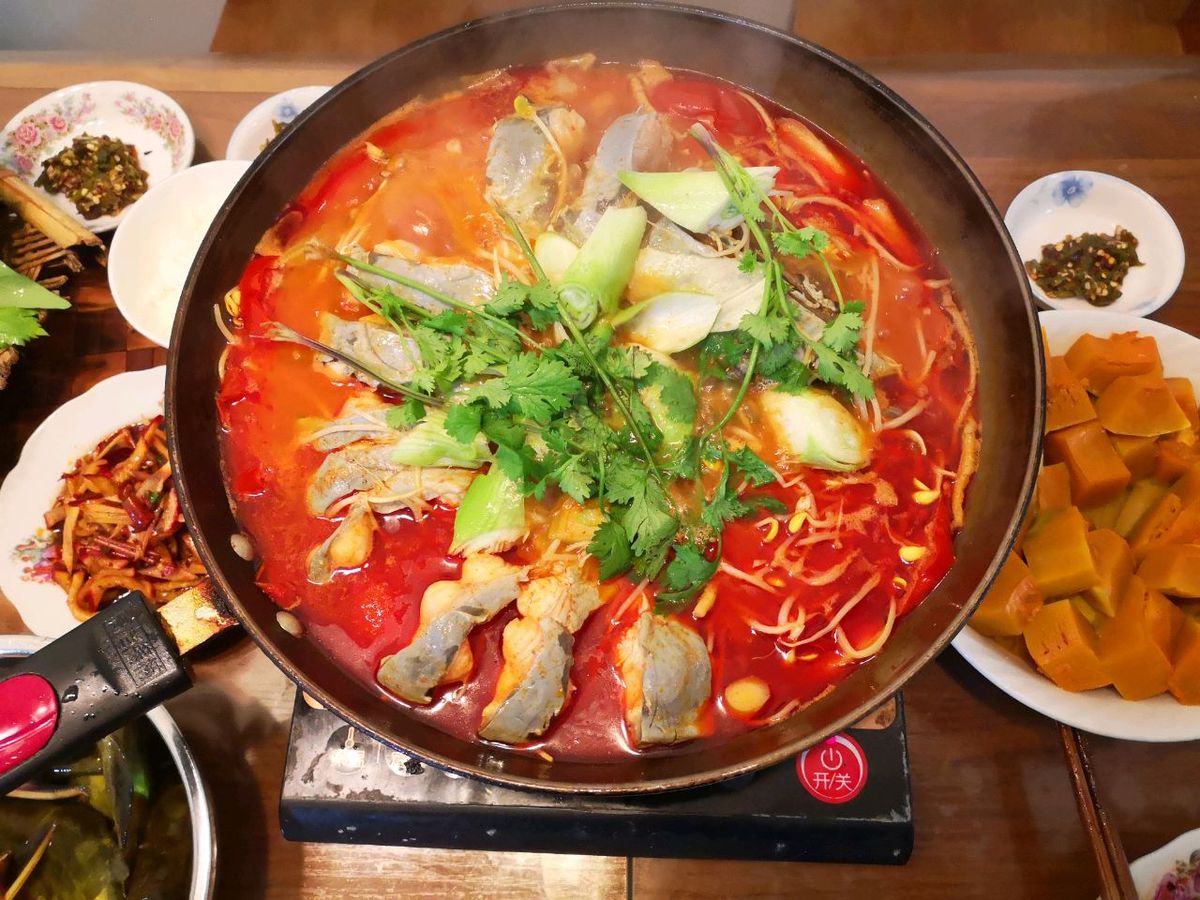
My own first bowl was not in Guizhou. It was in Shanghai, years ago, in a Guizhou place tucked behind a bus stop, plastic stools, hand-written menu, and the woman who ran it kept her sour in a bucket under the counter. She refilled the pot from it twice without being asked. When I finally asked for the recipe she looked at me like I had asked for her mother's phone number, and said there wasn't a recipe, there was a jar, and the jar was older than me. Then she gave me an extra bowl of broth.
That is the whole dish, really. Not a technique you learn in an afternoon, but a jar you keep and feed and pass on. Which is why the packet version will always be a cartoon of it, and why the broth you drink at the end, slightly too sour, is the one you remember.
💬 Comments