Sichuan Boiled Fish: The Dish Whose Name Lied to You
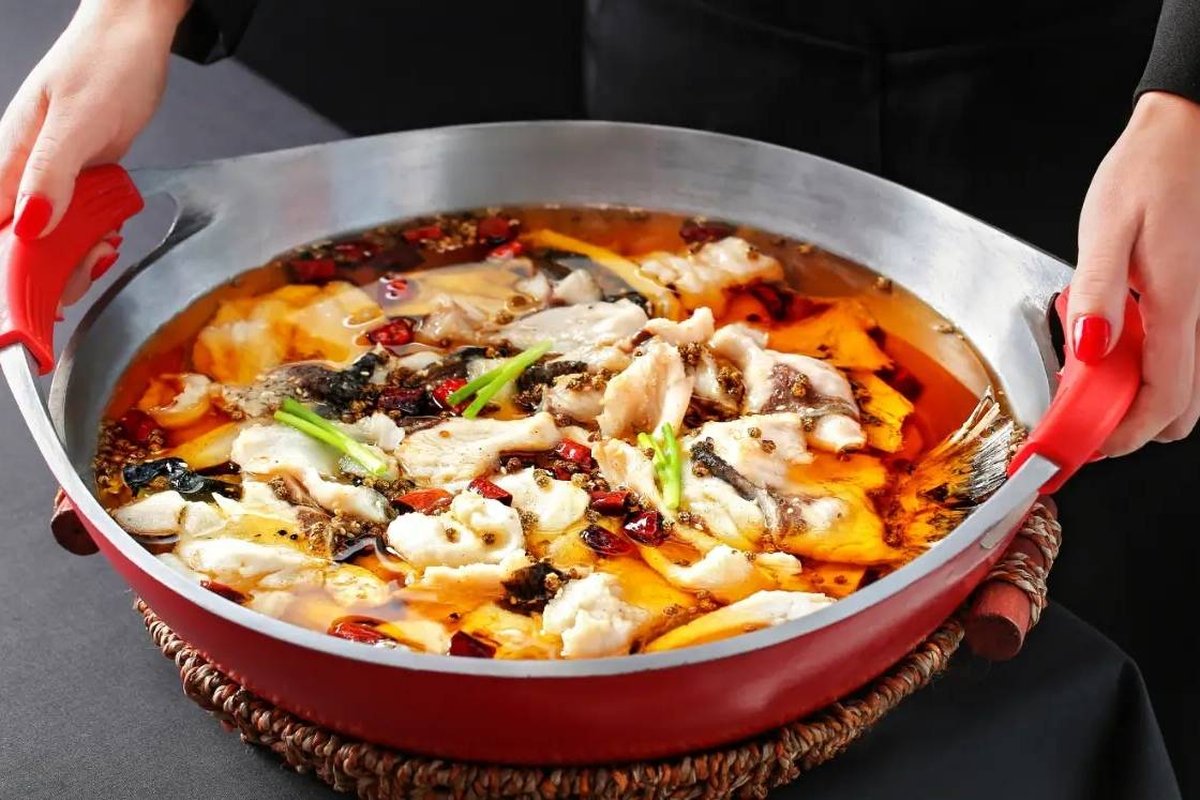
You walk into a restaurant on Yulin West Road in Chengdu and the first thing that hits you isn’t the noise or the heat. It’s the smell — hot rapeseed oil hitting a mound of dried chilies and Sichuan peppercorns, releasing something between toasted nuts and an electrical fire. The sound arrives half a second later: a violent sizzle that makes every table in the room look up.
A server carries the bowl past you. It’s the size of a wash basin. Floating on top: maybe forty dried red chilies, a dark archipelago of Sichuan peppercorns, and a film of chili oil so deep and red it looks like it could stain porcelain. You can’t see the fish. You can’t see anything except red. The bowl goes to a table of three university students, chopsticks already moving, and before you’ve even sat down you’ve pointed at their table and told your server: that one.
Twenty minutes later the bowl lands in front of you. The oil is still shimmering, tiny bubbles clinging to the rim. You push your chopsticks through the surface — past the chilies, past the peppercorns, into the depths — and pull up a slice of fish so white and tender it looks like it shouldn’t have survived that journey. It’s still steaming. You blow on it once, twice, then eat it before you’re ready.
The name lied. There is nothing boiled about this.
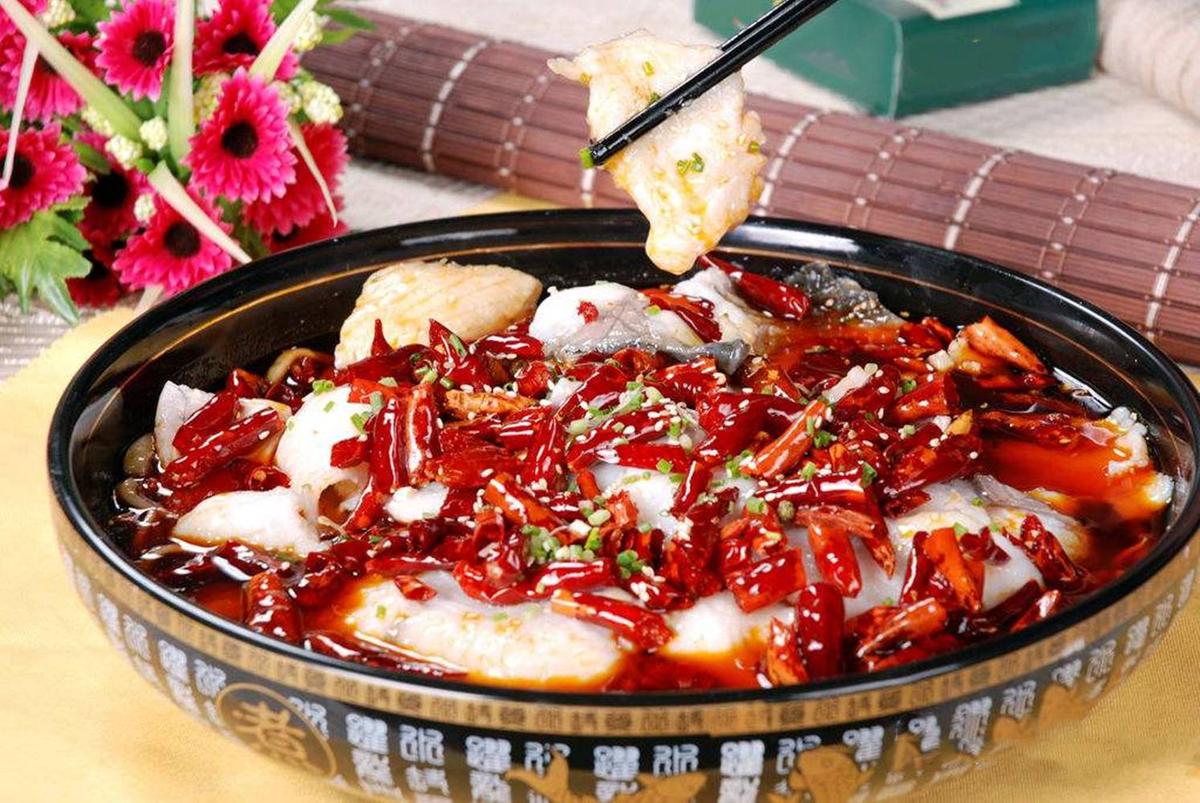
This is Sichuan Boiled Fish (水煮鱼, shuǐ zhǔ yú). The name means “water-boiled fish” — a translation so misleading it should be prosecuted. What you’re eating is fish poached in seasoned stock, then drowned in a ladleful of chili oil brought to smoking point and poured over everything at the last second. The “water” is a memory. The “boil” is a technicality. What arrives at your table is a controlled detonation.
The Architecture of a Bite
I spent thirteen years at Microsoft, Google, and NVIDIA debugging systems where the hardest problem was never the code — it was the naming. Variable names that promised one thing and delivered another. Shuǐ zhǔ is that variable. And the dish itself is a four-stage pipeline where every stage is a lie about the one before it.
Stage one: the broth. Before any oil touches the pan, the fish is barely poached in a pot of water seasoned with ginger, scallion, and Shaoxing wine. Just long enough to turn opaque — maybe ninety seconds. The goal is not to cook the fish through. The goal is to set a canvas.
Stage two: the bed. At the bottom of the serving bowl, a layer of blanched bean sprouts (豆芽, dòuyá) and sometimes celery or Napa cabbage. These aren’t garnish. They’re a thermal buffer and a texture counterweight, something crisp and watery waiting under all that oil.
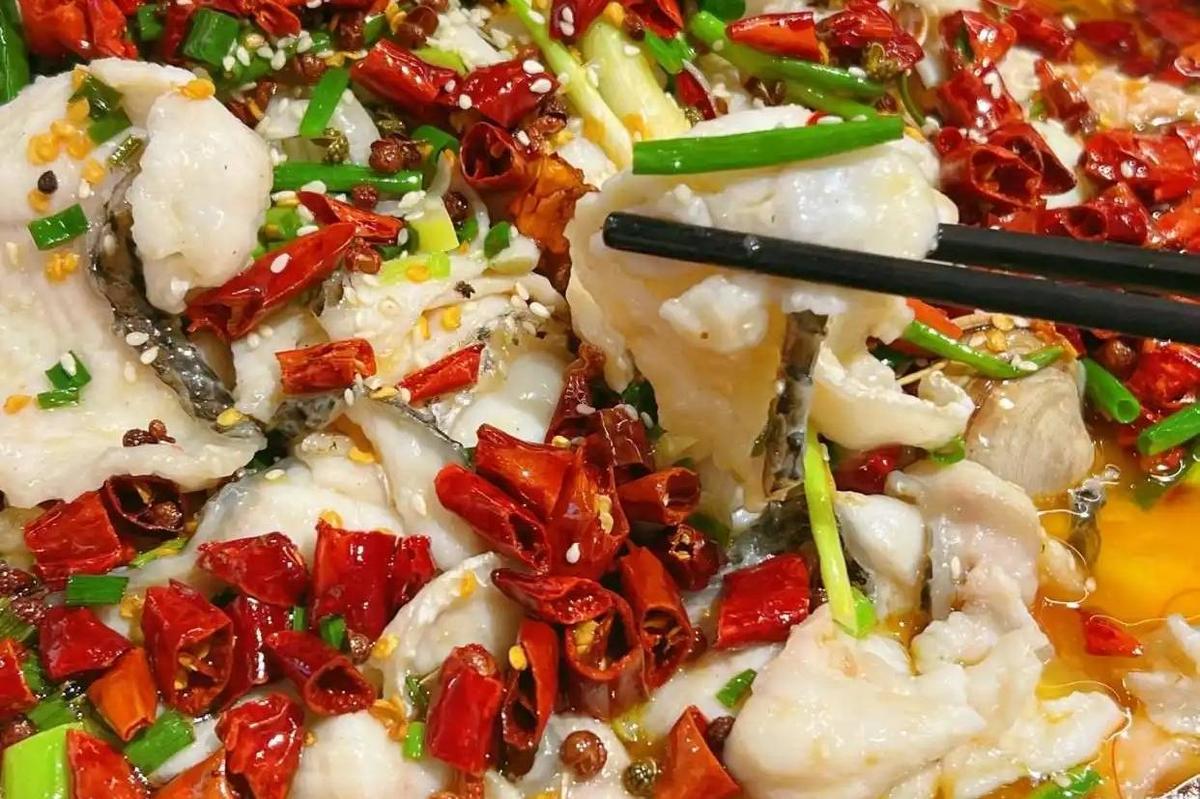
Stage three: the pour. This is the moment. A ladleful of caiziyou rapeseed oil (菜籽油) heated until it shimmers, then poured over a mountain of dried èr jīng tiáo chilies (二荆条) and Sichuan peppercorns (花椒, huājiāo) piled directly on top of the fish. The oil hits the spices at somewhere above 180°C. Everything blooms at once. The chilies release a fruity heat into the oil. The peppercorns crackle and release their numbing agent, hydroxy-α-sanshool, into the fat. The fish underneath absorbs both through conduction and chaos.
Stage four: the first bite. Your chopsticks push through the oil slick. The fish — usually grass carp (草鱼, cǎoyú) or basa, sliced diagonally against the grain — separates at the lightest pressure. The texture is velvet. The flavor arrives in layers: first the clean sweetness of freshwater fish, then the warmth of ginger-wine marinade, then the chili heat spreading across your tongue like a sunburn, and finally the Sichuan peppercorn numbness that makes your lips feel like they’ve been replaced with someone else’s.
A good bowl of Sichuan Boiled Fish should make you nervous and hungry at the same time.
The Cook Who Named It Wrong
The dish came out of Chongqing in the 1980s — not ancient, not imperial, just a few decades old. A restaurant cook, the story goes, had spent all day braising and frying and was tired. He threw fish into simmering water, scooped it out, piled on dried chilies, and poured hot oil over the top because it was fast and looked dramatic. Customers lost their minds. Within five years every Sichuan restaurant in the country had a version on the menu.
The Enemies of Sichuan Boiled Fish
This dish has exactly one variable you can get wrong and a hundred ways to get it wrong regardless. The variable is the oil temperature. Everything else is carelessness.
The worst version: oil poured at 120°C. The chilies and peppercorns steam instead of bloom. You get a bowl of warm, vaguely spicy oil with the aromatic depth of a damp towel. The fish underneath has absorbed nothing. You eat it and think: this is just fish in oil. You would be right.
The second-worst version: bean paste in the broth. Some cooks add doubanjiang (豆瓣酱) to the poaching liquid, turning the whole thing into a mapo-tofu-flavored soup. Doubanjiang is a great ingredient. It belongs in many dishes. It does not belong here. This dish is about clean heat — chili and peppercorn, nothing fermented, nothing competing.
The restaurant-overseas version: tilapia fillets cut too thick, oil that’s more orange than red, Sichuan peppercorns omitted entirely because someone decided foreigners can’t handle málà. If your Sichuan Boiled Fish doesn’t make your lips tingle, you’re eating a different dish wearing the same name.
Real Sichuan Boiled Fish requires exactly:
- Freshwater white fish — grass carp, basa, or snakehead. Saltwater fish have the wrong texture. You want the flesh to flake into petals under your chopsticks, not fight back.
- Caiziyou rapeseed oil (菜籽油) — the stuff that smells faintly toasted and slightly industrial. Peanut oil works in a pinch. Olive oil is a crime.
- Dried èr jīng tiáo chilies (二荆条) — the long, wrinkled ones from Sichuan, fruity rather than purely aggressive. Not Thai bird chilies. Not generic crushed red pepper.
- Sichuan peppercorns (花椒) — freshly toasted and roughly ground. The pre-ground powder in a jar has been dead for months. You can taste the difference in the first ten seconds.
- The pour at the right temperature — oil that shimmers, not smokes. You want the chilies to darken but not blacken. You want the peppercorns to release their numbing compound into the fat without burning into bitterness. This is the only thing that matters.
How to Eat It
You eat this with rice. You need rice. Anyone who tells you otherwise is either superhuman or has never eaten this dish. The bowl of fish arrives, you order a second bowl of rice preemptively, and you don’t apologize.
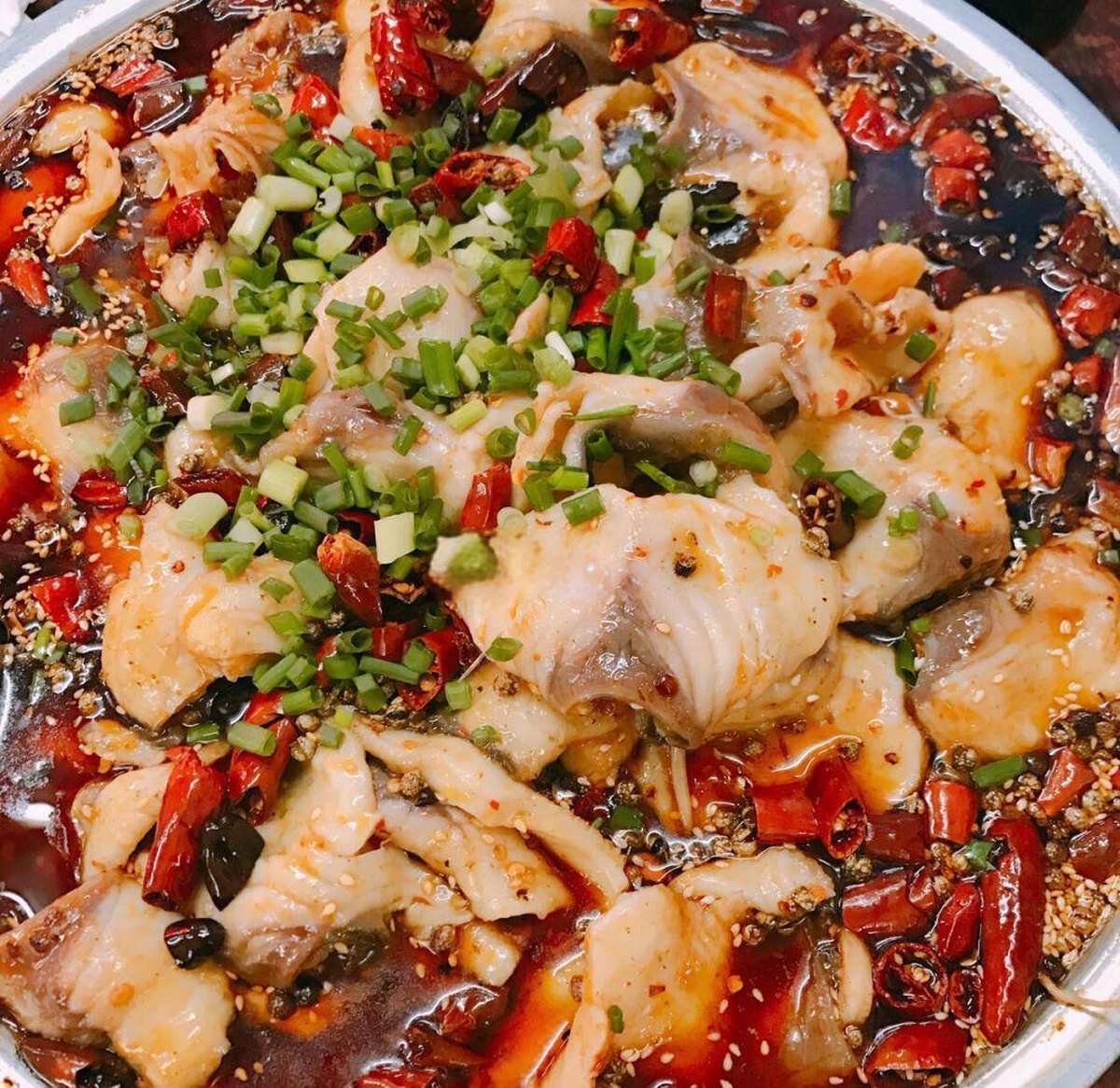
First bite: fish only. Get the clean hit — the tender flesh, the chili oil coating, the peppercorn tingle. Second bite: fish with a dried chili, if you can handle it. The chili itself has softened in the oil and carries a deeper, smokier heat than the oil alone. Third bite: fish plus bean sprouts from the bottom of the bowl. The sprouts have been sitting in seasoned oil for ten minutes and taste like everything concentrated.
Don’t drink the oil at the bottom. No one does this. The server who clears your table after will see if you tried. You will be judged.
The first time I ate this dish properly was 2014 — I was 23, two years into my first job at Microsoft’s Shanghai office, and a Chengdu-born colleague named Xiao Liu took me to a place near the Sichuan University north gate. The restaurant had exactly six tables and a framed photo of a man holding a fish the size of his torso. Xiao Liu ordered for the table, then watched my face during the pour. “This is the real version,” he said. “Not the one they make in Shanghai.” He was right. He was also smiling the way people smile when they’ve just set you on fire and are waiting to see if you reach for water or reach for more.
Want to cook this? Here’s our step-by-step Sichuan Boiled Fish recipe .
💬 Comments