How to Cook Sichuan Boiled Fish: The Chili Oil Bath
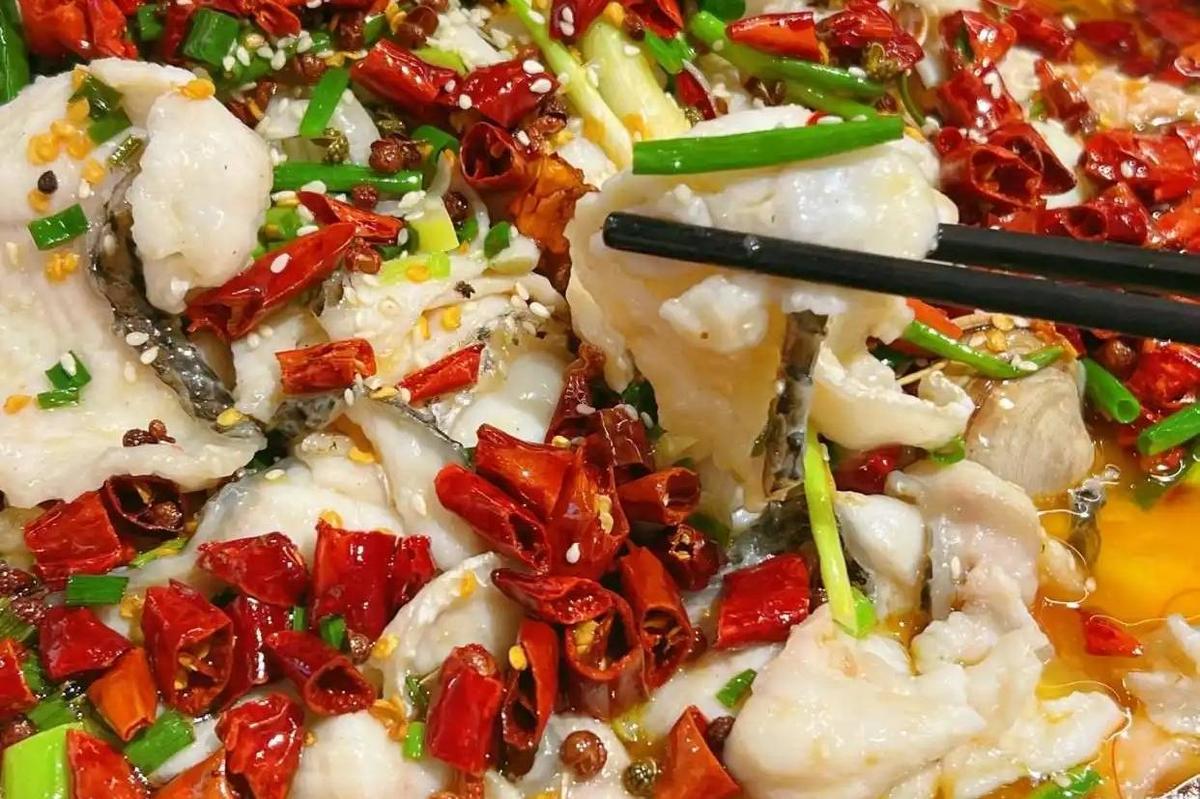
Editor’s Note: Since launching this column, we’ve heard one request more than any other: the stories are great, but how do we actually cook these? Today we’re fixing that — six classic recipes, dropping at once. Here’s how to make 水煮鱼的正宗做法。 This is the practical companion to Sichuan Boiled Fish: The Dish Whose Name Lied to You — read that first for the story, then come back here to cook.
The name is a lie, and once you understand why, everything about cooking this dish makes sense. 水煮鱼 (shuǐ zhǔ yú) translates to “water-boiled fish,” but what arrives at your table is fish poached in seasoned stock and then submerged in a lake of chili oil that’s been brought to smoking point and poured over a mountain of dried chilies and Sichuan peppercorns at the last possible second. The water is a technicality. The boil is a memory. What you’re making is a controlled detonation — and it’s one of the fastest, most dramatic dishes in Sichuan cooking.
Ingredients
For 2–3 servings. Served over rice. Always rice.
| Ingredient | Amount | Notes |
|---|---|---|
| Firm white fish fillets | 400g | Grass carp (草鱼) is traditional. Tilapia or basa work. No salmon, no cod — texture is everything. |
| Bean sprouts (豆芽) | 200g | The thermal buffer under the fish. Celery or Napa cabbage work as substitutes. |
| Dried èr jīng tiáo chilies (二荆条) | 15–20 whole | The long, wrinkled Sichuan variety. Fruity, not purely aggressive. |
| Sichuan peppercorns (花椒) | 2 tbsp | Whole. Toast and grind half, leave half whole for the pour. |
| Pixian doubanjiang (豆瓣酱) | 1.5 tbsp | Fermented broad bean paste. This is your oil-base backbone. |
| Garlic | 4 cloves, sliced | |
| Ginger | 1 thumb-sized piece, sliced | |
| Shaoxing wine (绍兴酒) | 2 tbsp | For the marinade. |
| Egg white | 1 | For velveting the fish. |
| Cornstarch | 1 tbsp | Plus 1 tsp for the slurry. |
| Caiziyou rapeseed oil (菜籽油) | 1 cup (240ml) | Non-negotiable. Peanut oil is the only acceptable substitute. Olive oil is a crime. |
| Salt | 1 tsp | |
| White pepper | 1/2 tsp | |
| Scallions | 2 stalks | Cut into 2-inch sections. |
Step by Step
1. Prep the Fish (10 minutes)
Slice the fish against the grain into pieces about 5mm thick — thin enough to cook through in under a minute, thick enough to hold together. You want slices that will turn opaque and tender in the time it takes to count to forty, not steaks that need a temperature probe.
In a bowl, combine the fish with egg white, 1 tbsp cornstarch, 1 tbsp Shaoxing wine, salt, and white pepper. Massage gently with your hand for 60 seconds — this is velveting (上浆), the technique that gives Chinese poached fish its silken texture. Set aside to marinate while you prep everything else.
2. Build the Mise en Place
Toast 1 tbsp of the Sichuan peppercorns in a dry pan over medium heat until fragrant — about 90 seconds, or until you can smell them from across the room. Grind half to a powder in a mortar. Leave the other half whole. Snip the dried chilies into 2cm segments, keeping the seeds — they carry heat and visual drama.
Blanch the bean sprouts in boiling salted water for 30 seconds, then drain and arrange them in the bottom of your serving bowl. This is your thermal bed.
3. Poach the Fish (2 minutes)
Bring a pot of water to a gentle simmer — not a rolling boil. Add the remaining 1 tbsp Shaoxing wine and a few slices of ginger. Slide in the fish pieces one at a time. They will turn opaque within 30–45 seconds. The moment the last piece turns white, kill the heat and lift the fish out with a spider strainer. Arrange the fish over the bean sprouts in the serving bowl.
Why the fish goes in last and comes out fast: Fish flesh is delicate. Overcook it by even 20 seconds and you’ve made rubber. The fish will finish cooking when the hot oil hits it in the final step, so at this stage you want it just barely done — opaque on the outside, still trembling.
4. Build the Oil Base (3 minutes)
Heat 2 tablespoons of the rapeseed oil in a wok over medium heat. Add the doubanjiang and stir continuously for 45–60 seconds until the oil turns a deep brick-red and the paste releases its fermented aroma. Add the garlic and remaining ginger slices. Stir for 20 seconds until fragrant.
Pour in 1 cup of water and bring to a boil. Let it simmer for 2 minutes to let the doubanjiang infuse the liquid. Taste — it should be salty, funky, and deeply savory. Pour this broth over the fish in the serving bowl. It should come about halfway up the fish, not submerge it.
5. The Sizzling Pour (30 seconds)
This is the moment. Pile the snipped dried chilies, whole Sichuan peppercorns, and ground peppercorn powder directly on top of the fish.
Heat the remaining rapeseed oil in a clean wok or small saucepan until it shimmers — about 180°C / 350°F. You’ll know it’s ready when a single Sichuan peppercorn dropped in sizzles violently and darkens within 3 seconds. If the oil smokes, it’s too hot — let it cool for 30 seconds.
Pour the hot oil directly over the chili-peppercorn mound. It will erupt — a violent sizzle, a billow of fragrant steam, the chilies darkening from red to deep crimson, the peppercorns releasing their numbing compound into the oil. This is the sound of the dish coming alive. Let it settle for 30 seconds, then scatter scallion sections over the top and serve immediately.
Technique Notes
Why the fish goes in last: The fish is the most fragile element. It’s poached briefly, set aside, then finished by the hot oil pour. If you poach it fully, the oil pour overcooks it. If you skip the poach, the oil alone won’t cook the center. The brief poach sets the canvas; the oil pour completes the painting.
Why the final pour is essential: This is not garnish. Hot oil hitting dried chilies at smoking temperature releases fat-soluble capsaicin and aromatic compounds that water-based cooking cannot extract. The Sichuan peppercorns release hydroxy-α-sanshool — the numbing agent — directly into the oil, which then coats every piece of fish. Without this step, you’ve made poached fish with chili garnish. Different dish.
Temperature control: The oil should shimmer, not smoke. 180°C is the sweet spot — hot enough to bloom the chilies, cool enough that they darken without blackening. Burnt chilies taste like regret. Under-heated oil tastes like warm salad dressing.
Key Pitfalls
Overcooking the fish. Fish cooks fast — 30–45 seconds in the poaching water is all it needs. It will cook further under the oil pour. If your fish flakes apart when you lift it with chopsticks, you went too long. You want slices that hold their shape and yield to gentle pressure.
Using the wrong fish. Firm white fish only. Grass carp, tilapia, basa, or snakehead. Oily fish like salmon disintegrate and release fat that clouds the oil. Shellfish like shrimp or scallops have the wrong texture entirely. This dish is a freshwater fish dish. Respect that.
Skimping on oil. A cup of oil sounds like a lot. It is a lot. That’s the point. The oil is not a cooking medium you discard — it’s the sauce, the vehicle for the málà, and the visual drama. Cut the oil and you’ve cut the dish. You don’t drink the oil at the bottom (no one does, and you will be judged if you try), but you need enough to bloom the chilies and coat every piece of fish.
Pre-ground Sichuan peppercorn. The numbing compound dies within weeks of grinding. Toast whole peppercorns fresh, grind them yourself. The difference is the difference between this dish and something you’d send back.
Serving
Over steamed white rice. The rice is not optional — it absorbs the chili oil that pools at the bottom of the bowl and turns each grain into a tiny crimson bomb. Serve with cold beer (Tsingtao or a crisp lager) to cut through the oil and numb. A side of smashed cucumber salad (拍黄瓜) with garlic and vinegar provides the cool, acidic counterpoint that makes the heat feel earned rather than punishing.
Eat the fish first — clean, tender, coated in chili oil. Then go for the bean sprouts at the bottom, which have been marinating in seasoned oil for ten minutes and taste like everything concentrated. Chase with rice. Repeat until the bowl is empty and your lips are buzzing.
Start with the story: Sichuan Boiled Fish: The Dish Whose Name Lied to You — the history, obsession, and why the name is a four-stage pipeline where every stage is a lie.
💬 Comments