Shengjianbao: The Shanghai Breakfast That Fights Back
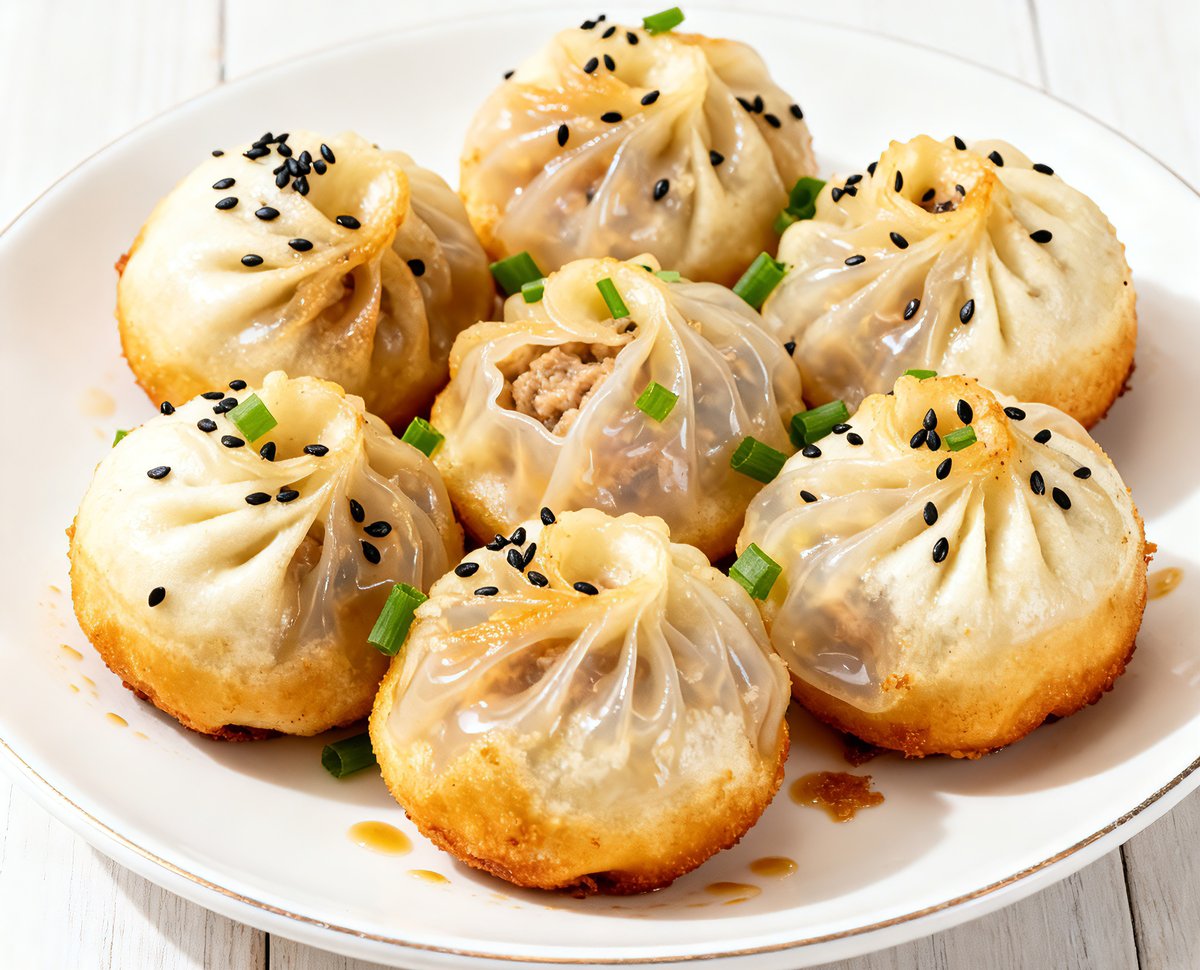
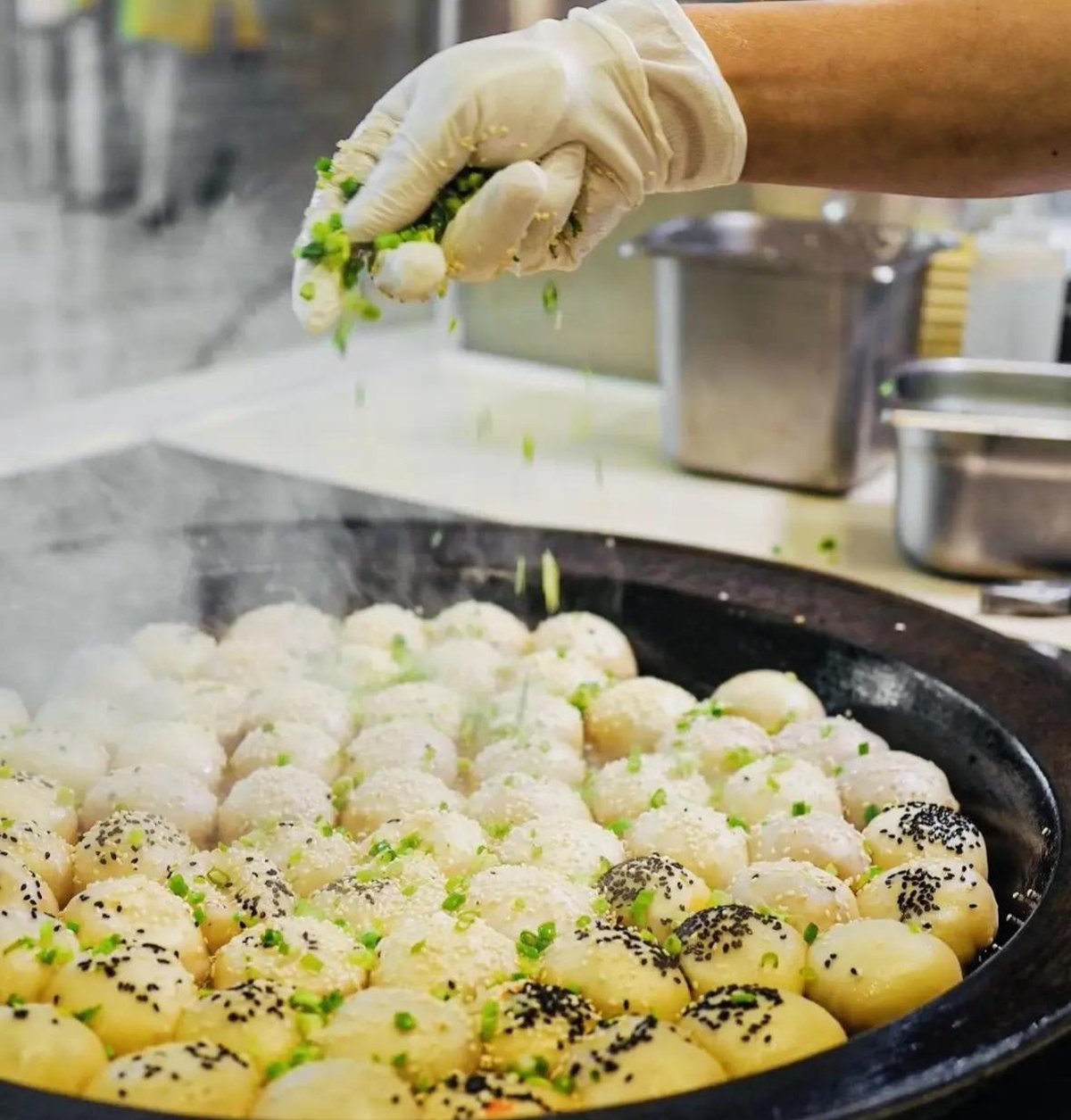
I was nine years old, standing on tiptoe outside a shop on Yunnan Road with my grandfather, watching a man in a white apron arrange sixty raw white buns in a spiral across a cast-iron pan the size of a manhole cover. He poured water from a tin cup, clapped on a wooden lid, and the whole pan roared. Steam shot out the sides like a dragon exhaling. Three minutes later, the lid came off. He drizzled oil around the edge. The buns hissed. A second later — zhā zhā zhā — they started talking back to the pan, loud enough to cut through morning traffic. Sesame seeds went on. Scallions went on. He slid a steel spatula under a cluster of eight and flipped them onto a plate, golden bottoms facing up like medals.
My grandfather handed me a pair of chopsticks and said the only thing he ever said about food I could burn myself on: “小口, 小口” — small bites, small bites.
I did not take small bites.
Shengjianbao (生煎包, shēng jiān bāo) is not a polite dumpling. It doesn’t sit quietly in a bamboo steamer like its softer cousin the xiaolongbao. It’s fried hard in a wide pan, served with its burn scars showing, and if you eat it wrong, it will hurt you. It is Shanghai’s most honest breakfast — loud, impatient, and completely uninterested in whether you’re ready for it.
The Architecture of a Bite
I spent thirteen years in big tech — Microsoft, Google, NVIDIA — and if there’s one thing debugging kernel panics taught me, it’s that the simplest systems are the hardest to get right. A shengjianbao has four components: dough, pork filling, soup, and a fried bottom. You eat it in one motion. Four failure points, one chance.
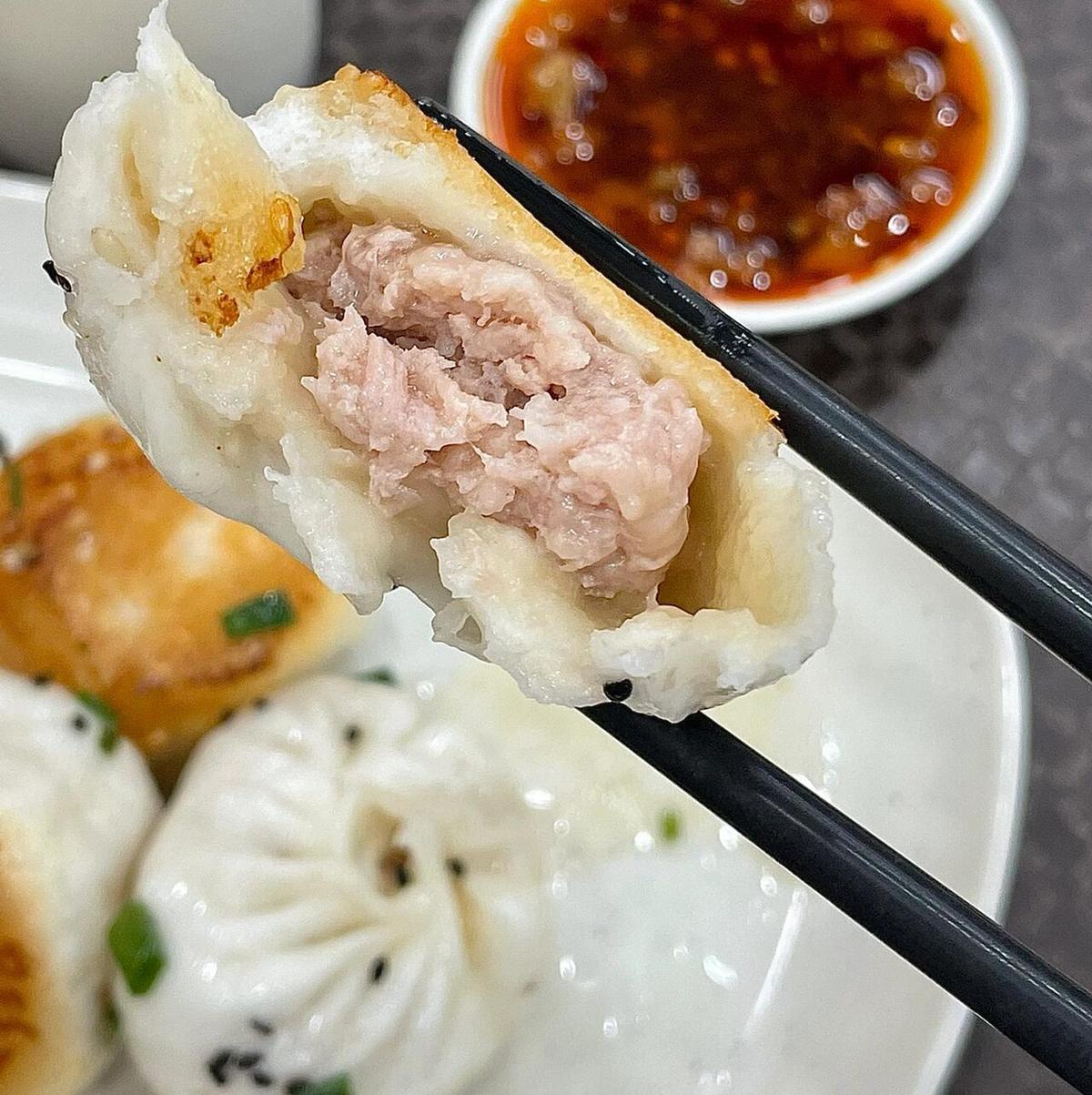
You pick one up with chopsticks — the golden bottom faces you, crisp and dimpled from the pan, dark brown where the oil clung longest. The top is soft and white, steamed through from the water bath, with a single twist of dough at the crown where the skin was pinched closed. Sesame seeds and chopped scallion cling to the surface. The whole thing weighs about the same as a golf ball and radiates heat like it has a grudge.
First bite. You go in from the side, not the top. The dough tears — thin, elastic, slightly chewy — and the soup hits. Hot pork broth, gelatin-rich, the flavor of bone and ginger and Shaoxing wine concentrated into a spoonful of liquid. It’s not a polite amount of soup. It’s an aggressive amount. The kind that makes you pull your head back and breathe through your teeth. The filling is minced pork mixed with spring onion, ginger, soy, and white pepper — a clean, savory punch that doesn’t hide behind sugar. The bottom crust shatters when your teeth reach it, a sound somewhere between a cracker and a potato chip, releasing a wave of toasted flour and hot oil.
Then it’s gone. One bun, maybe fifteen seconds. You reach for the next one before you’ve finished swallowing. This is how shengjianbao works. It does not reward restraint.
A good shengjianbao hits you three times: soup first, pork second, crust last. The sequence never changes. The intensity does.
The Man Who Fried Instead of Steamed
Shengjianbao appeared in Shanghai in the 1920s. A food vendor — nobody agrees on the name — took the soup-filled steamed dumplings that were already popular in the city and dropped them into a hot pan with water and oil. The bottom fried. The top steamed. The soup stayed inside. Street breakfast was never the same.
The Enemies of Shengjianbao
Shanghai locals can identify a bad shengjianbao before the first bite. Here’s what they’re looking for — and what they’re running from.
First enemy: Thick skin. A shengjianbao is not a burger. It’s not a steamed bun from the frozen aisle. The dough should be thin enough that you can see the shadow of the filling through it. If the wrapper feels like a memory foam mattress, you are eating a baozi that wandered into the wrong kitchen.
Second enemy: No soup. This one is unforgivable. The broth forms when the pork gelatin melts during cooking. If the filling is lean — if someone decided to “health it up” with chicken breast — there will be no soup. There will only be a dry, sad meatball. Throw it away.
Third enemy: Soggy bottom. The bottom of a shengjianbao should be fried to the color of a copper penny, crisp enough to audibly crack when you bite it. If it’s pale and soft, the pan wasn’t hot enough, the oil wasn’t enough, or the cook wasn’t paying attention. All three are fireable offenses.
Fourth enemy, and the most common outside Shanghai: The miniature overpriced version. Some dim sum restaurants serve shengjianbao the size of a cherry tomato, arranged four to a bamboo steamer, priced at twelve dollars. These are not shengjianbao. These are appetizers that have forgotten who they are. A real shengjianbao is the width of a soup spoon. It costs maybe two yuan. It comes by the dozen in a styrofoam box with a corner of black vinegar.
Real shengjianbao has: thin semi-leavened dough, pork belly filling with enough fat to generate soup, a golden-brown fried bottom fried in shallow oil, sesame seeds and scallion scattered after the fry, and black vinegar on the side — not in the bun, not on the bun, next to the bun.
How to Eat It
You will burn yourself the first time. Everyone does. I did, on Yunnan Road in 1995, with my grandfather watching. The soup shot across my chin and left a red mark that lasted two days. I kept eating. My grandfather laughed — the only time I ever saw him laugh at the breakfast table. Then he showed me the method.
Nibble a small hole in the side of the bun — the thin part, not the fried bottom. Let some steam out. Wait three seconds. Now suck the soup out through the hole. This is the best part. Don’t rush it. When the soup is gone, dip what’s left in black vinegar and eat the rest in one bite. The crust will crunch. The pork will yield. The vinegar will cut through the fat like a clean edit.
There is a specific satisfaction in eating shengjianbao at a street stall at 7am, standing elbow-to-elbow with people who are about to start a workday you don’t have to start. When I quit my last tech job, this was one of the first things I did — not to celebrate, just to remember what mornings felt like before they got colonized by Slack notifications.
The last bun is always the best one. By then the pan is nearly empty, the remaining buns have been frying just a little longer, and the bottom crust is a shade darker than the first batch. More sesame. More scallion. More everything. You eat it slower than the others. You owe it that much.
Want to cook these at home? The home-cooking breakdown — what cut of pork, how to seal the soup inside, and why your pan matters more than your recipe — deserves its own deep dive. Recipe coming soon.
💬 Comments