Scallion Oil Noodles — Shanghai's Midnight Alchemy
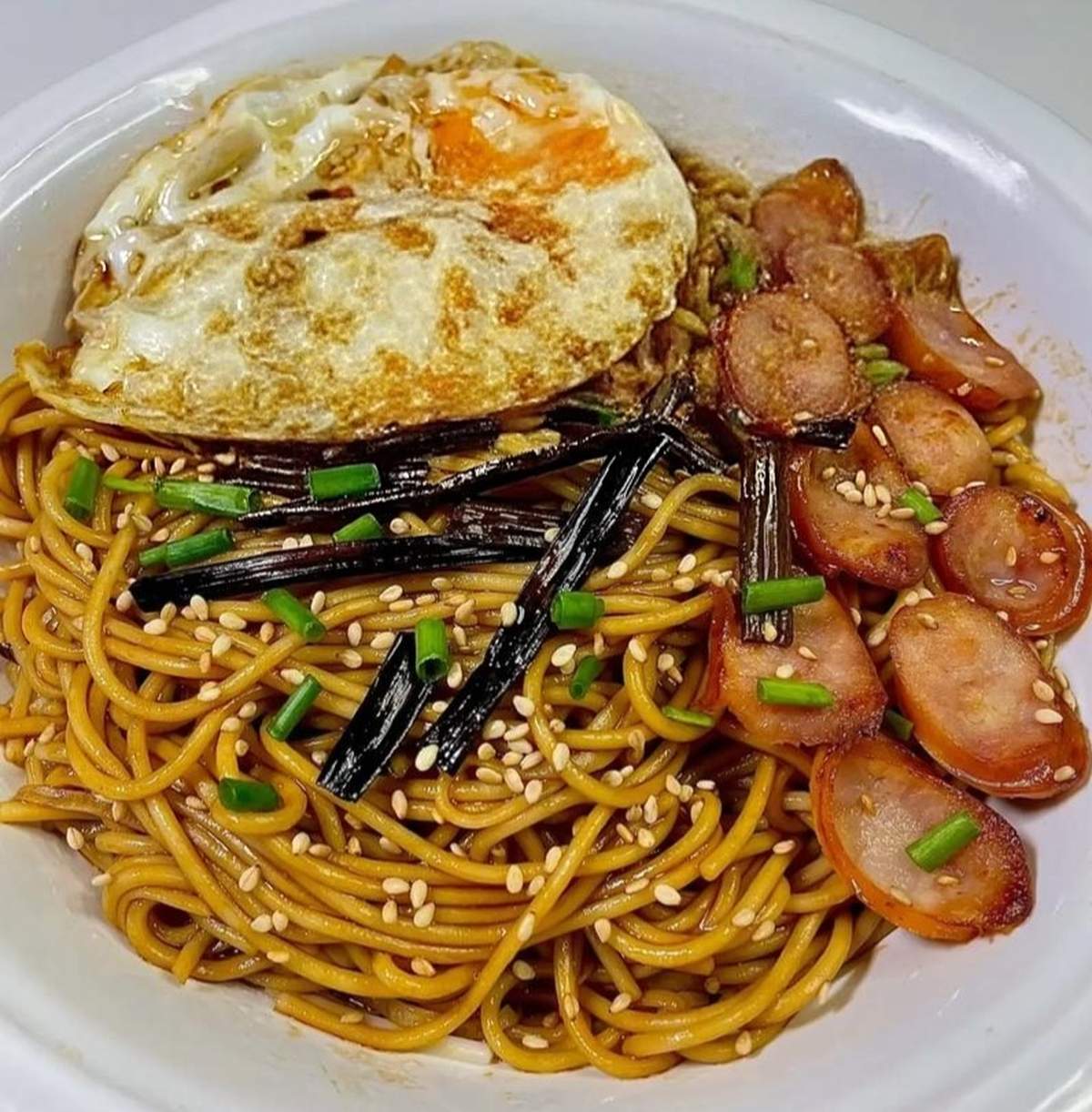
It’s 2am. You’ve just gotten off a late conference call with the Redmond office — the kind where you spent forty minutes explaining the same architecture decision three different ways. Your brain is fried. Your stomach is empty. The only place still open is the noodle cart at the end of the lane, run by an old man who’s been there since before your apartment building existed.
He doesn’t ask what you want. He already knows. Oil hits a smoking wok. Scallion whites go in, and the sound is exactly right — a sharp hiss that cuts through the humid Shanghai night. Thirty seconds later the greens follow, and the whole lane fills with something that bypasses language entirely. Your mouth waters before your brain can name what it’s smelling.
That’s scallion oil noodles (葱油拌面, cōng yóu bàn miàn). Four ingredients — noodles, scallions, oil, soy sauce — and somehow more than the sum of their parts. It’s not luxury. It’s not complicated. It’s the dish that proves the best things in Chinese cooking don’t need a recipe. They need timing, heat, and someone who’s made it a thousand times.
The Architecture of a Bite
I spent thirteen years debugging software for a living. Here’s what I learned: the best systems, like the best dishes, are simple. Not easy — simple. Every component pulls its weight, every interaction has a reason, and nothing exists just because someone thought it would look nice in a diagram.
Scallion oil noodles is that system, executed in food.
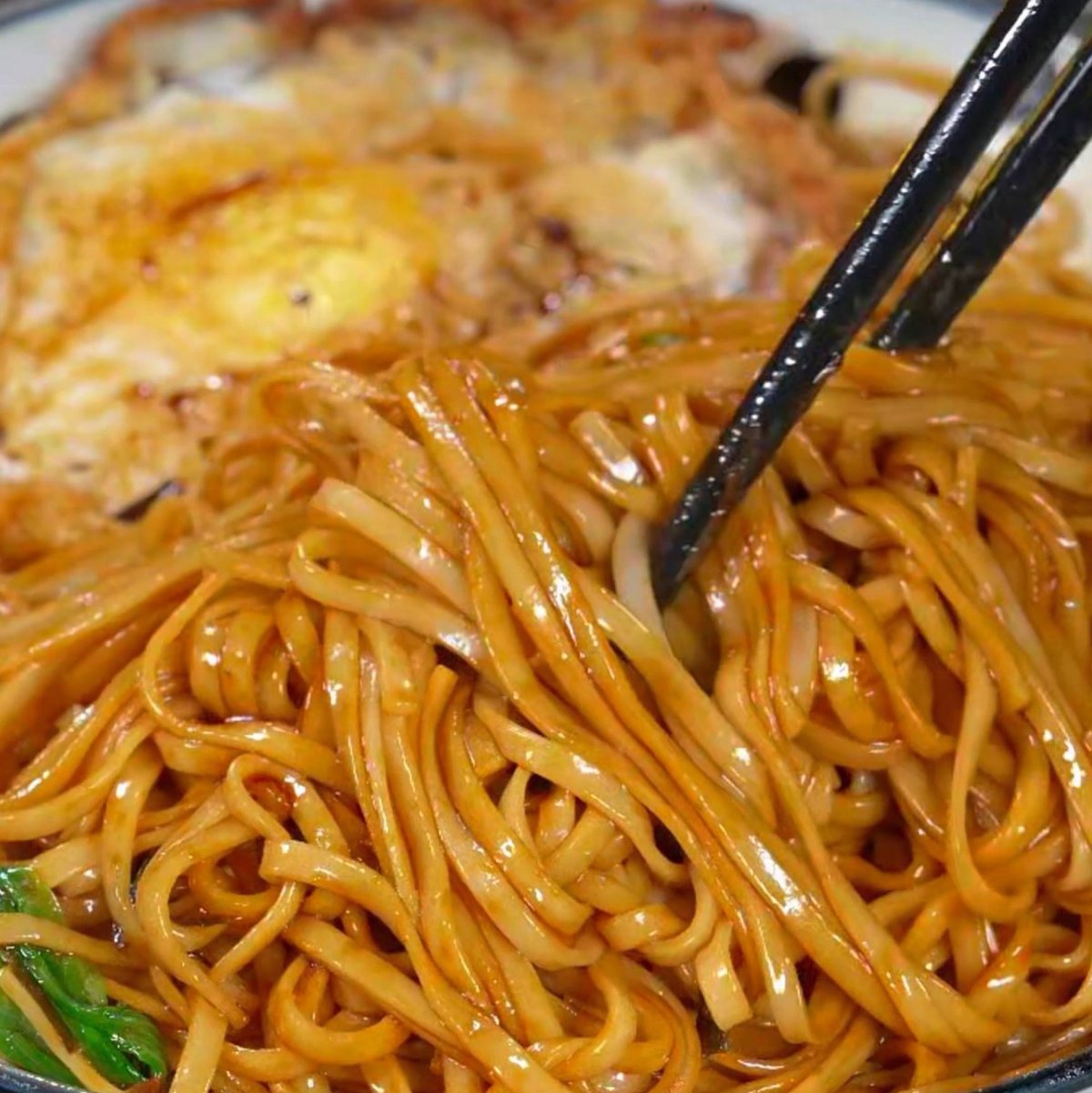
Your chopsticks lift a tangle of noodles. The first thing you register is the gloss — that dark amber sheen that tells you the oil and soy have emulsified properly. Then the aroma: scallion, yes, but deeper than raw scallion. Caramelized. Almost nutty. The oil has been infused slowly, low heat, until the scallions gave up everything they had and turned to dark, friable threads.
The bite hits in layers. First the chew — the noodles are yangchun mian (阳春面), thin wheat noodles with a specific bounce. Not al dente like Italian pasta. More of a spring. Then the soy — not the raw salt of cheap soy sauce, but the rounded depth of lao chou (老抽) balanced with sheng chou (生抽), dark for color, light for umami. Then the oil, coating your tongue, carrying the scallion’s ghost. Then — if the cook is good — a flicker of sugar. Barely there. You’d miss it if you weren’t paying attention. But it makes everything else land.
A good bowl of scallion oil noodles doesn’t announce itself. It haunts you.
A Brief Word on Origins
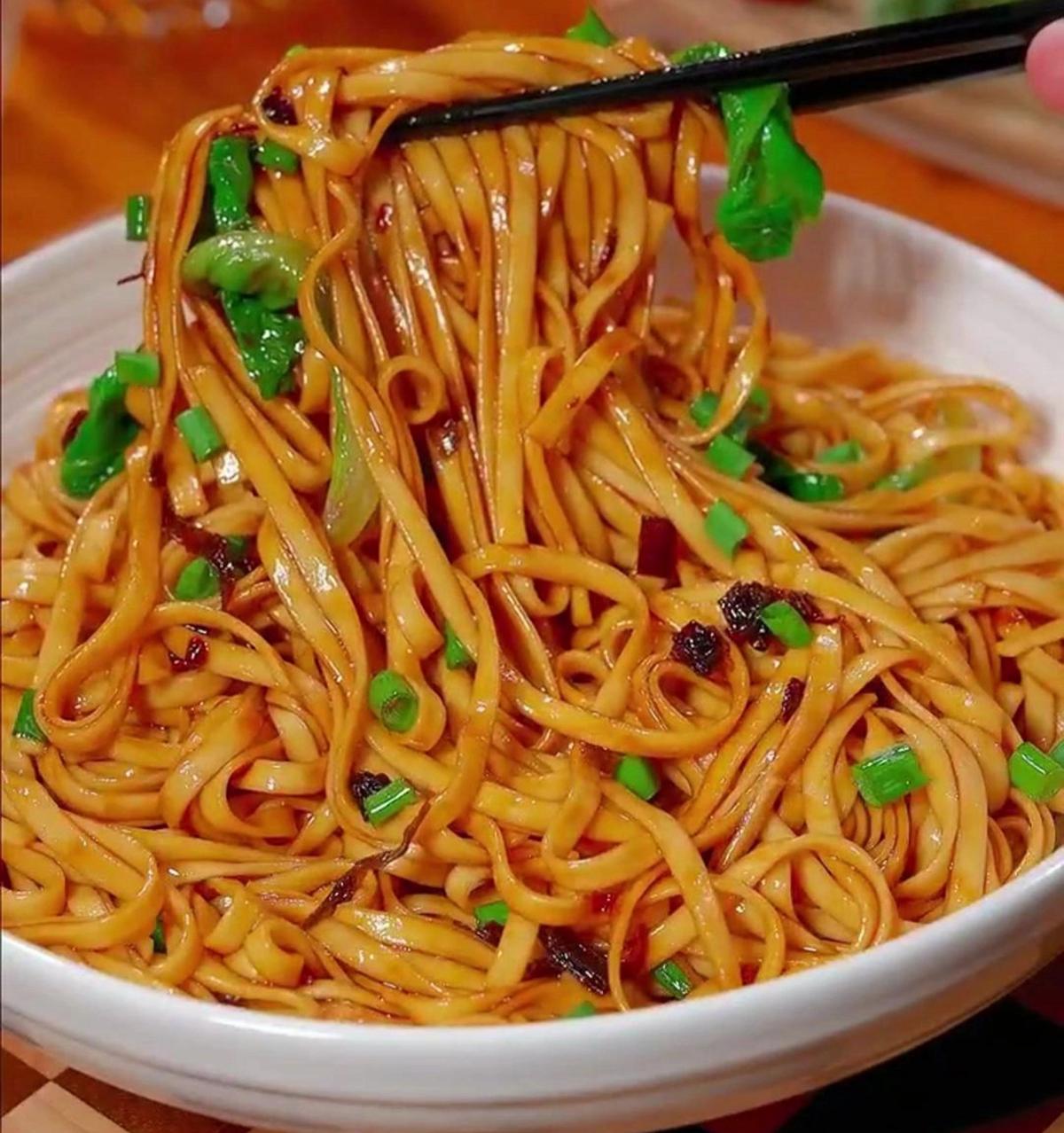
Shanghai’s lane houses (弄堂, lòngtáng) birthed this dish. No emperor, no palace kitchen — just working families stretching oil, scallions, and soy into something that could feed a table. The exact origin is lost to a thousand identical kitchens. That’s the point.
The Enemies of Scallion Oil Noodles
This dish is so simple that every shortcut shows.
The restaurant that uses too much oil. You’ve seen this version — noodles swimming in a dark pool, leaving a slick on the plate that could lubricate an engine. Scallion oil noodles should coat the noodles, not drown them. If you tilt the bowl and oil pools at the bottom, they failed.
The version with limp, pale scallions. The scallions need to be fried until they’re dark. Not burnt — fried. Golden brown is the minimum. The dark, almost-black strands are where the flavor lives. Pale scallions mean the cook rushed the oil.
The delivery app version. You cannot deliver scallion oil noodles. By the time they arrive, the noodles have absorbed all the oil, turned gummy, and lost their spring. This is a dish you eat standing at a cart, or sitting in a kitchen, or nowhere.
The “elevated” version. Some chef in a white-tablecloth restaurant will add truffle oil, or shrimp, or a poached egg, and call it a “modern interpretation.” No. This dish has four ingredients for a reason. You add a fifth and you’ve made a different dish. A fine dish, maybe. Not scallion oil noodles.
The sauce-too-thick version. Some cooks over-reduce the soy base until it’s syrupy, thinking intensity equals quality. It doesn’t. The sauce should be thin enough to coat each strand evenly, thick enough to taste. Between water and syrup. Exactly there.
What you want:
- Yangchun mian (阳春面) — thin wheat noodles with spring. Not udon. Not lo mein. Not spaghetti. If the noodle doesn’t bounce when you bite it, it’s wrong.
- Scallions fried in stages — whites first for sweetness, greens later for fragrance. This is the only “technique” in the dish and it’s non-negotiable.
- Lao chou + sheng chou — dark soy for color, light soy for umami. Using one without the other gives you either pale noodles or a salt bomb.
- A pinch of sugar — dissolves into the sauce, rounds the edges. You shouldn’t taste it as sugar. You should notice when it’s missing.
The Japanese version — negi abura soba — uses thicker noodles and often adds a raw egg yolk. It’s good. It’s a different dish.
How to Eat It
You eat scallion oil noodles fast. Don’t photograph it, don’t compose it, don’t wait for the perfect light. The oil cools. The noodles stiffen. You have maybe five minutes from the moment the noodles hit the bowl.
I learned this at eight years old, in my grandmother’s kitchen on Fuxing Road. She’d toss the noodles in the wok — no ladle, just chopsticks, a flick of the wrist I still can’t replicate — and slide them onto a plate. “吃” (eat). Not “be careful, it’s hot.” Just eat. I burned my tongue every time and never regretted it.
Here’s how it works:
Stir. The oil and soy settle at the bottom. You want every strand evenly dressed, so give it a few quick turns with your chopsticks before anything else.
Lift high. Pick up a generous clump — half the bowl if you can manage it — and let the steam rise. The first bite is always too hot. That’s fine.
Chew slowly. You’re looking for texture: the spring of the noodle, the crunch of fried scallion, the slickness of the oil. Let it coat your mouth. There’s no prize for finishing first.
Don’t save any. Scallion oil noodles don’t reheat. They don’t keep. They are a dish that exists in one moment, and if you’re not there for it, it’s gone. Like late-night Shanghai. Like a noodle cart that might not be there tomorrow.
My grandmother used to say: “The simplest things are the hardest to get right, because there’s nowhere to hide.” She was talking about noodles. She could have been talking about everything.
Out of space for today — I’ll save the home-cooking breakdown for another post. Doing scallion oil noodles justice at home means nailing the scallion-infusion timing, and that deserves its own deep dive. Recipe coming soon.
💬 Comments