Salt-Baked Chicken: Buried in Salt, Seasoned to the Bone
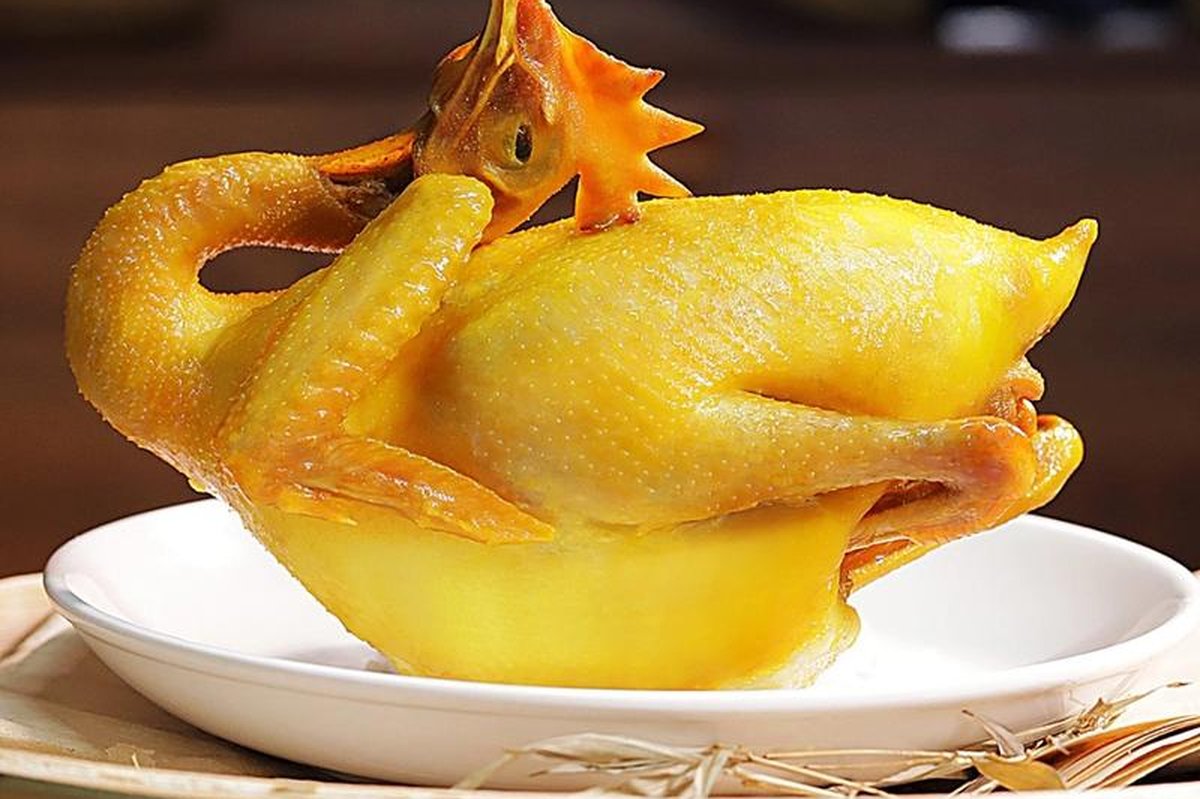
The chicken in the vacuum bag at the train station has never met a grain of salt.
Neither has the sliced one at the banquet hall, the one that arrives cold and glossy yellow, every piece the same color from skin to the middle. Both were steamed. Somewhere along the line somebody rubbed them with powder out of a packet — salt, MSG, sand ginger, and enough turmeric to make them look the part — and now half of Guangdong calls that Salt-Baked Chicken (盐焗鸡, yán jú jī). I have eaten a lot of it. It's fine. It is not the thing.
The thing is a wok full of coarse salt.
That is the entire apparatus. No oven, no steamer, no water. You heat the salt dry in a heavy wok until it starts to move on its own, ticking and snapping like gravel under a boot, until the air above it stings your knuckles. A whole chicken gets rubbed inside and out with salt and sand ginger, then wrapped in a couple of sheets of coarse bamboo paper with the seams folded under. You dig a grave in the salt, put the chicken in it up to its neck, and bury it. Lid on. Rim sealed with a rope of wet dough or a strip of foil. Forty minutes later you dig it out, and the paper comes away stained amber and stiff, and when you unfold it the smell arrives all at once — salt, chicken fat, and that odd cool-sweet note of sand ginger, concentrated into something closer to perfume than to dinner.
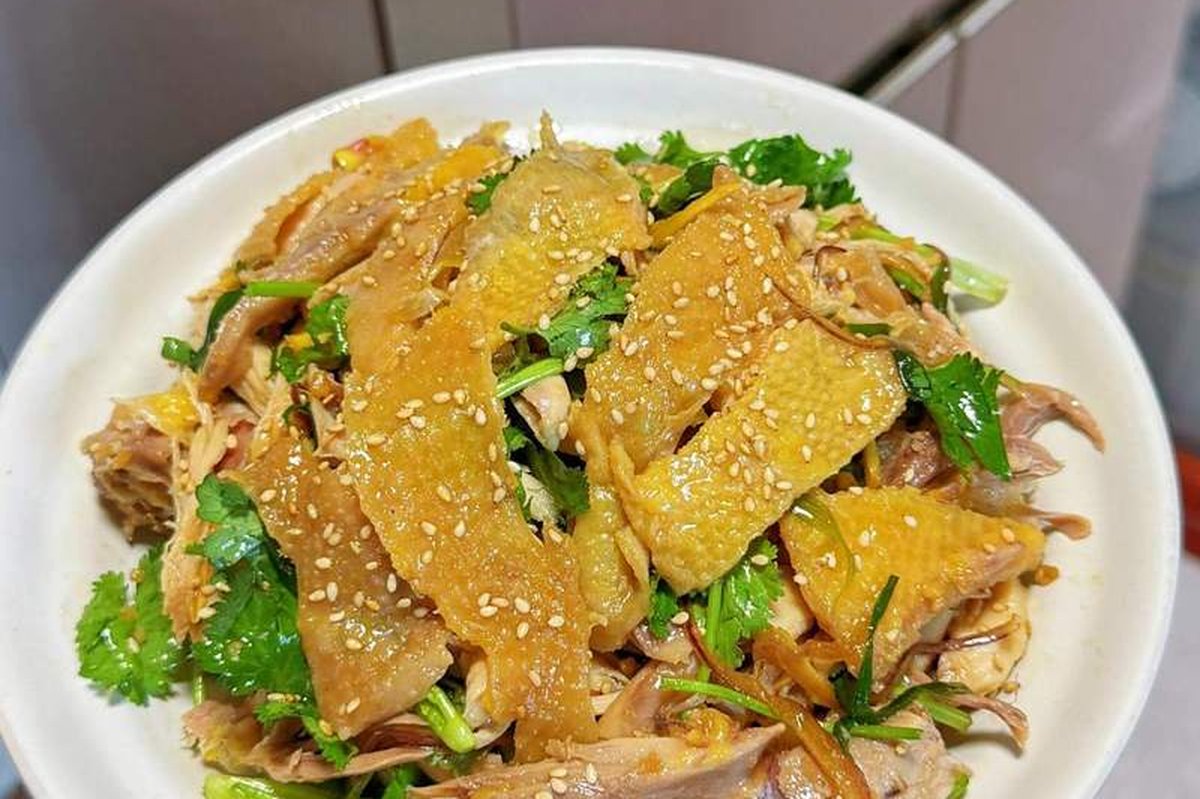
The skin is the first thing you notice. Pale gold, the color of old paper rather than dye, pulled so tight over the muscle it looks lacquered. Press it and it does not give the way steamed chicken skin gives. It's firm, faintly translucent at the edge, dry on the surface. Then you tear off a piece and the meat does not shred so much as separate. And the salt has gone all the way through. Not just the skin. Through. The meat next to the bone is seasoned. That is the whole point, and it is the thing no bag of powder can fake, because powder only ever reaches the surface it was rubbed on.
The reason it works is boring and it is everything: salt is a terrible conductor and a wonderful battery. A wok of it, heated through, radiates energy evenly from every side at once. The chicken isn't roasting in air, it's baking inside a block of hot mineral. The paper keeps the moisture in; the salt keeps it from getting back out. Nothing boils, nothing dries out. The bird cooks in its own steam, in a sealed oven made of the same stuff that's flavoring it.
I learned that in a kitchen in Meizhou, at the house of a colleague named Ke, whose mother had been making this chicken for forty years and had never once timed it. What stayed with me was the salt. She kept it in a cloth bag, gray and clumped and older than Ke, and every time a chicken came out of the wok she scraped the salt back into the bag with the edge of a bowl. Years of chicken fat and sand ginger had gone into it, and it smelled like nothing else in the kitchen — the seasoning had become the tool, and the tool kept getting better. I have since learned that fine table salt does not work. It packs too tight and fuses into a brick with the chicken welded inside it. Coarse salt or nothing.
In Shanghai, the plain chicken of my childhood was white cut — poached, then shocked in ice water, skin cold and snapping, served with nothing but a saucer of soy and ginger. Two opposite ways to eat a chicken with almost nothing done to it. One puts the bird in water and takes it out barely changed. The other gives it heat and salt and lets it come out denser than it went in. If you grew up on the first, the second tastes like a different animal. It is.
The Hakka (客家, Kèjiā — guest people) moved south for centuries, into the hills around Meizhou and Huizhou, and ended up in country where there was little that would keep. Salt was their refrigerator. Salt-field workers and porters carried dressed chickens packed in it, and at some point a cook noticed the salt had been cooking the chicken all along. Every Hakka town tells that story slightly differently, which is usually how you can tell a dish is genuinely old.
The dip matters as much as the bird. Sand ginger (沙姜, shā jiāng) is not ginger at all but a cousin with a taste that sits somewhere between camphor, white pepper and something faintly floral. Pound it with salt and a splash of hot oil, or stir it into light soy with a pinch of sugar. No sand ginger on the table and the shop has told you what it thinks the dish is for. A place that hands you chili sauce has told you twice.
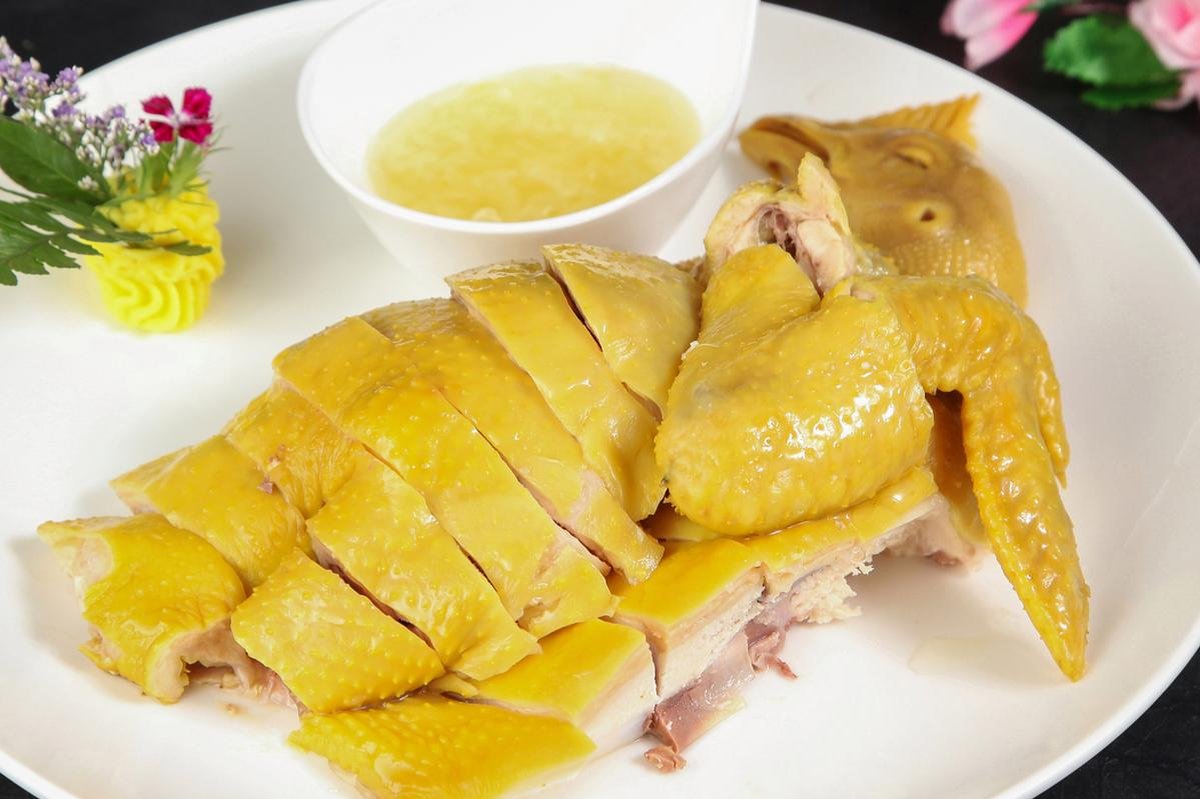
You can spot the fake before you taste it. Look at the fold under the leg, the crease at the wing joint. If the skin is yellow there, deep in the creases, it was dyed — no amount of salt powder turns skin yellow in a place the powder never reached. Real salt-baked chicken is uneven: pale where the paper pressed against it, faintly tan at the hip, gold at the back of the thigh. Then tear it. If it separates in fine strands and the meat tastes salted next to the bone, it was baked in salt. If it's uniform, wet and soft through the slice, it was steamed in a bag and dressed up.
Eat it with your hands. Hand-torn is how Hakka families do it, and it isn't only about manners — a cleaver smears the meat and presses the salt inward, and the strands lose their bite. Take the wing first, then the leg, then deal with the breast, which everyone leaves for last because they have already made their decision. No sauce needed, though the sand ginger is right there, and you will use it. What surprises people is the second day. Cold out of the fridge, the same chicken is firmer, more aromatic, almost cured. The bones go into congee. The rice that cooked under the leftover chicken is better than the chicken was, and Ke's mother never once called any of it leftovers.
Salt is the oldest thing in a Chinese kitchen and the least fashionable. Every new technique in the last twenty years has been about adding — more oil, more spice, more fire. Salt-baking is the other direction. It takes one ingredient and one hot vessel and a paper wrapper, and it does the one thing no sauce can do: it seasons the meat all the way to the bone.
The home version is a heat problem before it's a flavor problem — coarse salt, a wok that can take forty minutes of dry heat, and a chicken dried thoroughly enough that the paper doesn't tear. Get those three right and the rest is waiting. I'll work it out properly in a later post.
💬 Comments