Roast Goose: The Bird That Makes Duck Feel Like a Compromise
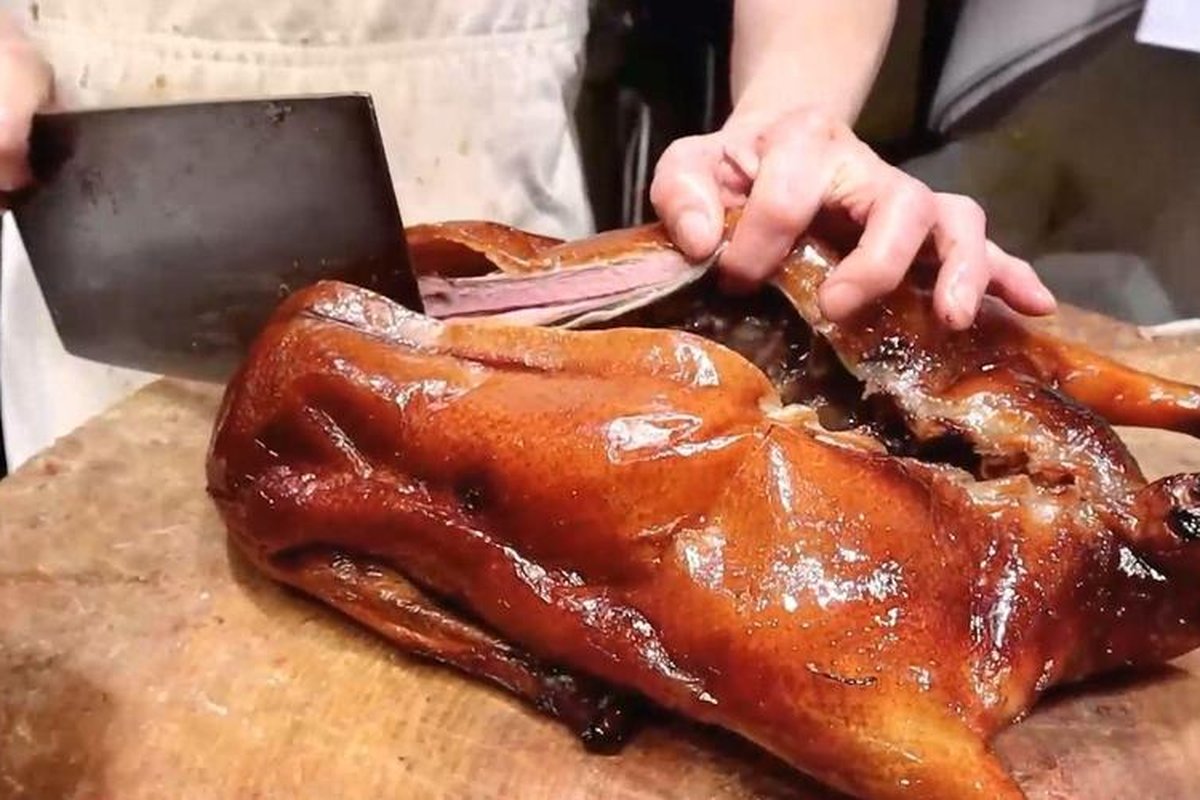
Ask for roast goose in most of the world and you'll be handed duck.
Not out of malice. The waiter doesn't know either. The menu says goose, the invoice from the supplier says goose, and what lands on your table is a smaller bird with paler meat and a friendlier price, tasting like chicken that has been through something. You eat it, you call it fine, and you never think about it again.
Real roast goose (烧鹅, shāo é) does not leave you saying fine. It is the most expensive thing hanging in a Cantonese roast shop's window, and often the one the family behind the counter is quietly saving for its own dinner. It comes out of the oven the color of lacquer, the skin pulled so tight over the fat beneath that it shines. A man takes it off the hook, lays it on the block, and brings down a cleaver. Bone cracks. Juice runs.
I ate "goose" for years without knowing I hadn't. In Shanghai the Cantonese barbecue counters sell roast duck by the bird and goose almost never — too big, too costly, too easy to ruin. I used to stand outside a window on Huaihai Road watching ducks turn on their spit, believing I understood something. Then a university friend, Wai, whose family lives out past Tsuen Wan, asked what I thought roast goose tasted like. I described it. He laughed for a full ten seconds and then said he'd drive.
Sham Tseng is not a destination. It is a village swallowed by Hong Kong's western edge, a lane of roast-meat shops that grew up around a kiln-baking tradition — the name means "deep well" — and cooks have been hanging birds over fire here since the 1960s. Wai's father took us to the shop he had been using for thirty years.
Inside, the oven is not an oven. It is a brick well, waist-high, glowing orange at the bottom, with birds hanging from hooks along a steel bar across the top, dripping. The cook turns them one at a time with a long iron hook. The fat that falls lands in a tray and spits. What reaches you first is not the smoke but the smell of rendered goose fat meeting the wood smoke — sweet, faintly resinous, closer to a bakery than a barbecue. Good shops burn lychee wood. You can taste it: sweetness in the char, never bitterness.
The bird itself is the argument. A goose weighs three to four kilos, twice a duck, and carries a thick layer of fat directly under the skin. Roast it properly and that layer does two jobs at once. It renders, basting the meat from inside, while the skin above it fries in its own oil and turns amber and glass-crisp. The meat underneath is dark and dense, closer to steak than to poultry. Duck gets you about seventy percent of the way there. Goose is the whole thing.
Then there is the part nobody photographs. Before the bird meets real heat, it is blanched, its skin is washed with a maltose and vinegar solution, and it hangs in front of a fan for hours, sometimes overnight. Skin that goes into the oven wet can only ever steam. This is the step home cooks skip, and it is why a backyard "roast goose" comes out with skin like a deflated balloon. The glaze is sugar. The fan is what turns sugar into glass. Inside the cavity: five-spice, star anise, sometimes fermented bean paste, a bundle of aromatics. It steams the meat from within while the outside roasts, which is how you end up with a bird juicy at the bone and crisp at the surface — two things that should not be possible in the same mouthful.
When it reaches you, it has already been through the cleaver. Cantonese roast meat is chopped, not carved: the cook works down the bird with a heavy rectangular blade, bone and all, into pieces you can pick up with your fingers. You hear it across the room — a thwack, then another. A roast goose sliced with a knife like a Sunday chicken is a warning sign. The bones are where the flavor lives, and the juice that runs out of them soaks into whatever you put underneath.
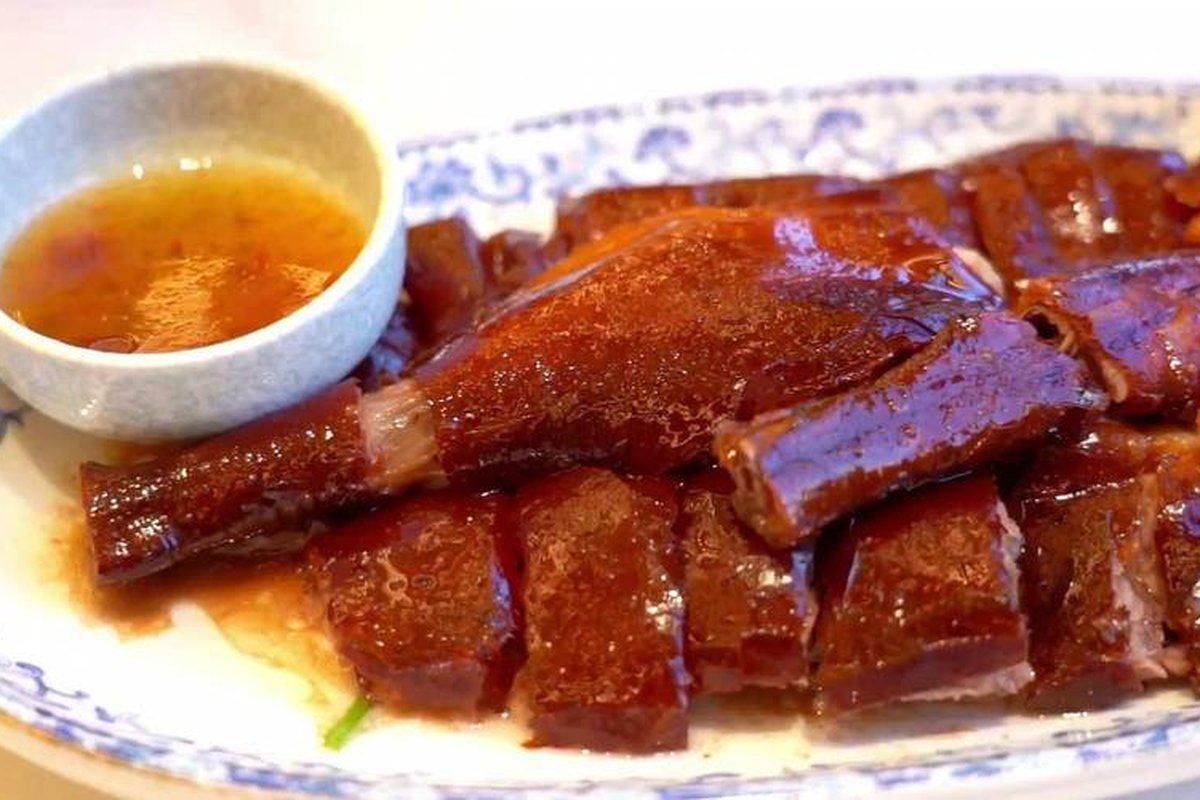
You will know a bad one on sight. Good skin is amber, taut, and shattered-looking. Bad skin is pale, slack, and sweating under a heat lamp that has been on since noon. Some shops serve it at room temperature, which is the single greatest insult available to a bird that took a day of drying and an hour of fire. Others drown it in sauce until the crackle is gone, which is a way of admitting the skin never worked. And plenty of kitchens, especially outside Guangdong, will call a duck a goose and hope nobody at the table has eaten both. If you are paying goose money — and you will be, two or three times the price of duck — the skin should talk back when you bite it. If it doesn't, send it back.
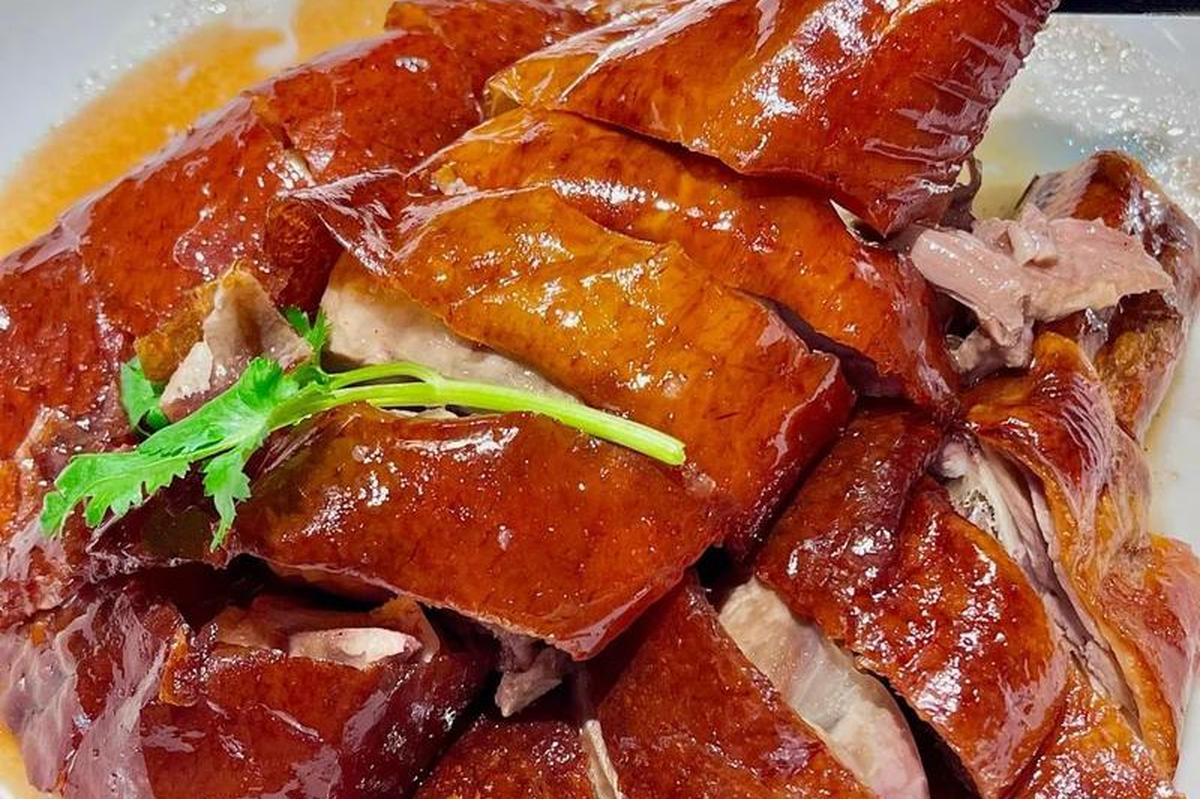
Timing matters more than ordering. Big shops roast in batches, roughly late morning and late afternoon, so ask when the next bird comes out of the oven and come back for that one. Order half a bird for two people, or a plate if you are eating alone. Eat the skin first, while it is still talking — it only crackles for about ten minutes, and after that it is merely delicious. The plum sauce (酸梅酱, suānméi jiàng) is a dip, not a dressing: a touch on the edge of a piece, and only when the fat asks for it. Put rice underneath and let it catch what falls. Finish with hot tea, which cuts the richness better than anything cold will.
Wai's father ate the skin first too, then the leg, and left the breast on the plate like a man who had made his decision decades ago. He didn't dip. He didn't talk through the first three pieces. When he finally did, he said the thing about that afternoon I have never managed to forget: a good roast goose shop is a clock, and you either arrive when it chimes or you're eating yesterday.
Out of room for today. The home version is mostly a drying problem — a maltose wash, a fridge, a fan, and an oven that will hold high heat for an hour without complaint. Get the skin dry enough and the rest nearly takes care of itself. Recipe coming soon.
💬 Comments