Poon Choi: You Eat It From the Top Down
The basin comes out of the kitchen carried by two men, one hand on each rim, and the crowd makes way. Not a platter. Not a bowl. A stainless steel basin the size of a bicycle wheel, and they walk it to the middle of the table like it's something that might wake up. It lands on a gas ring. The lid comes off. What rises is fermented red bean curd first, then star anise, then the darker thing underneath both — five hours of pork and dried seafood arguing in a closed pot.
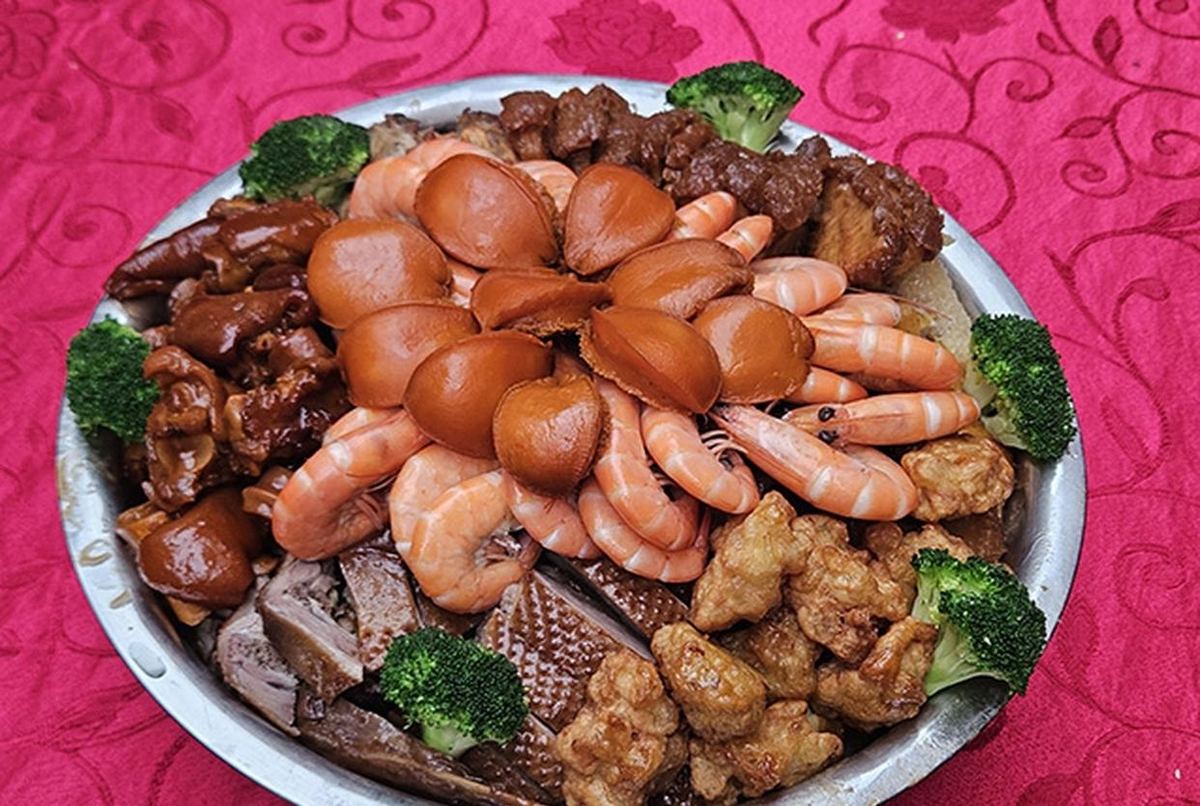
In the villages of Hong Kong's New Territories, this is how you feed two thousand people at once. Poon Choi (盆菜, pún chói in Cantonese, pén cài in Mandarin) — basin dish. It shows up at weddings, at Lunar New Year, at the lantern-lighting feast for a newborn son, at the ancestral rites of families who have lived in the same village for six hundred years. There are no plates. One basin for ten people, a flame under it, and three hours of straight eating.
I grew up in Shanghai, where dinner is a dozen small plates and a seating chart. The first poon choi I ate was at twenty-five, at a friend's wedding in Kam Tin, on a folding table set out on what was normally a football pitch. I remember the sound more than the food — a hundred burner rings hissing at once, that low jet hum under a whole village talking. Then our basin arrived and I did the thing every outsider does. I reached straight in with my chopsticks to hunt down the best piece. My friend's uncle put a hand on my wrist. Top down, he said. Don't dig.
He was right, and it's the one rule that matters. A poon choi is not a stew with a fancy serving vessel. It's a vertical structure, and the layering is the entire argument. Stir it and you get a very expensive bowl of brown.
So, from the bottom up. First: white radish, taro, cabbage, fried bean curd sticks, dried pork skin. Cheap, thirsty things, and they are down there on purpose — their job is to absorb what falls on them. Then the middle, the working heart of the dish: pork belly braised in nam yu (南乳, nán rǔ), the fermented red bean curd that gives Cantonese cooking its deep pink bloom, plus pork knuckle, fish balls, dried shrimp, shiitake, dried squid. Then the top, the layer you came for: abalone, dried oysters, prawns, roast duck, poached chicken, sea cucumber, fish maw.
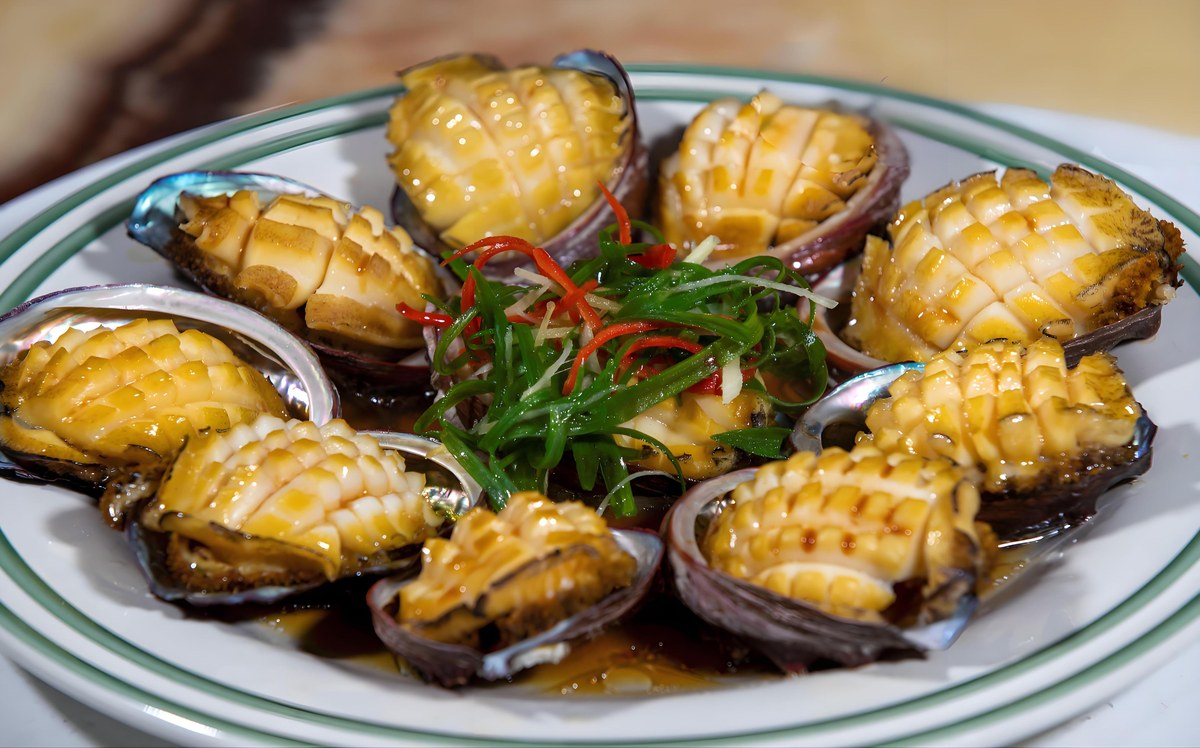
The cook finishes it at your table with two ladles of the braising liquid poured over the top. Gravity does the rest. The duck fat sinks into the mushrooms. The abalone stock reaches the pork skin, which turns from leather into something gelatinous that you'll fight over. By the time you get down to the taro it has taken everything the layers above it had to give, and it is possibly the best thing in the basin — and it cost almost nothing.
The story told in the walled villages of Ping Shan and Kam Tin, where the Tang clan has been burying its dead for longer than most countries have existed, is that poon choi started in the 1270s. A Song emperor, running from the Mongols, reached the village with his court, and the villagers had nothing fit for an emperor except what they happened to have. So they put all of it into wooden basins and carried it out. Maybe. The practical reason is easier to believe: no village kitchen scales to a thousand guests, and no one owns a thousand plates. The basin is the only piece of cookware that does.
You can buy a bad one in Hong Kong any winter. It arrives in a van, in a foil tray, with a plastic ladle. There will be fish balls that taste of nothing, taro boiled to paste, and abalone cut from a can into coins you could read a newspaper through. But the giveaway is the sauce. Real poon choi isn't sauced; each layer carries its own. A fake has one brown gravy poured over everything, and after that you can no longer tell the radish from the chicken.
Second test: the bottom. If the radish down there is still pale and firm when you finally reach it, nobody ladled anything and the layers just sat next to each other for an hour. The taro should be dark all the way through. And if a menu swears the black moss on top is the real thing, it isn't. Fat choy (发菜) hasn't been legally harvested in China since 2000 — pulling it up was turning grassland into dust — so what's on the plate is dyed kelp fiber wearing its name. The name is a pun on prosperity anyway. You're eating a wish, not a vegetable.
One more thing about the van version. Poon choi is a food-safety problem wearing a party hat. Cooked food held at warm room temperature for hours is exactly how bacteria run a buffet, which is why Hong Kong's Centre for Food Safety puts out a poon choi advisory every Lunar New Year: keep it above 60°C, or cool it fast and reheat it properly. The flame under your basin is not decoration. If nobody at the table is watching it, you're not at a feast, you're at an experiment.
Eat it the way the villages eat it. Top down, one layer at a time, chopsticks for the top and a spoon for everything below. Plain rice on the side, because the sauce at the bottom is too strong to face alone. Never reach past the abalone to get at the radish; you take the layer that's being eaten, and then you wait. There's no clock and no courses, just a flame and ten people working down through the same structure.
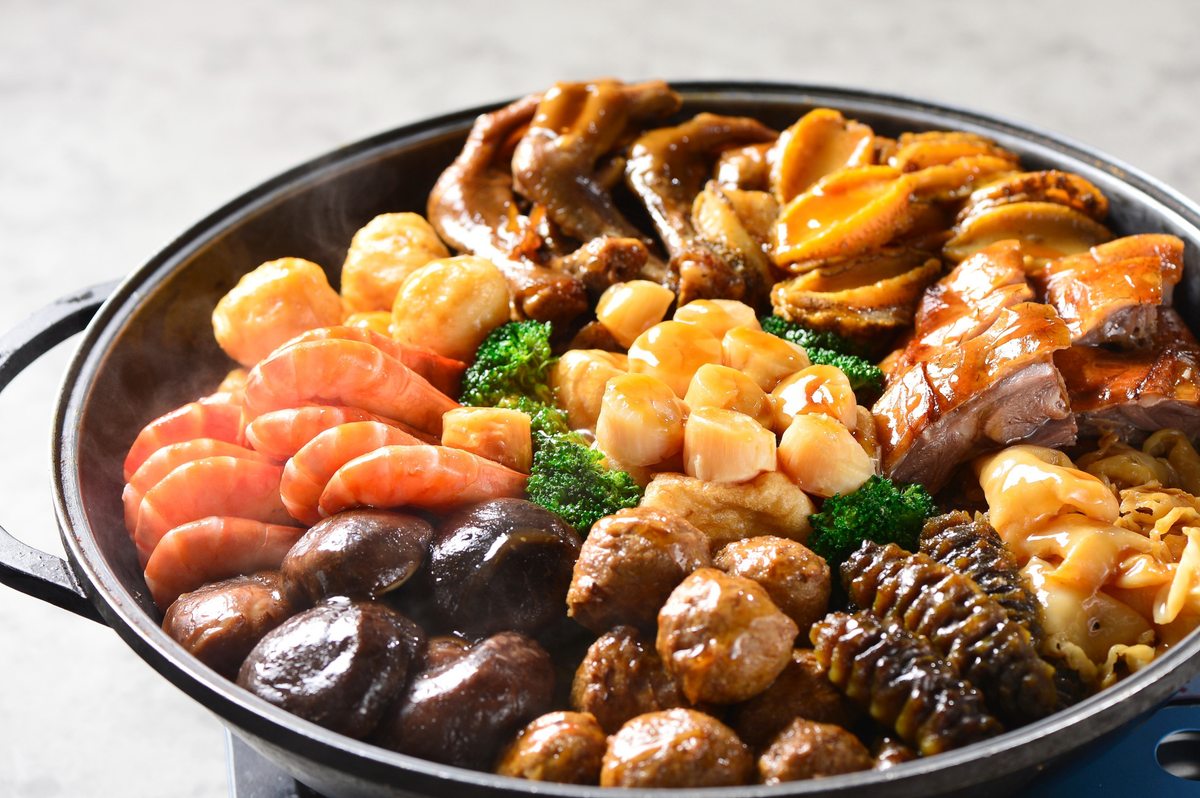
And when it's done, the leftovers go into a pot and get reheated the next day. Some people in the villages will tell you day two is better. They're not wrong. The layers have had a night to finish negotiating.
I've eaten poon choi maybe six times since that wedding. Twice more in the New Territories, twice in Hong Kong restaurants where it came with a printed card naming the abalone, twice in a tin sent home by a colleague for New Year. The best one was still that first one, at a folding table, with my wrist being held. Nobody at that table got an individual plate, and nobody seemed to notice.
Poon choi is one of the few Chinese dishes that's genuinely hard to fake at home, and the reason isn't the abalone — it's the order. Which layer goes down first decides how the whole thing tastes at the end. That deserves its own post rather than a paragraph here. Recipe coming soon.
💬 Comments