Peking Duck: The Skin That Shatters Like Glass
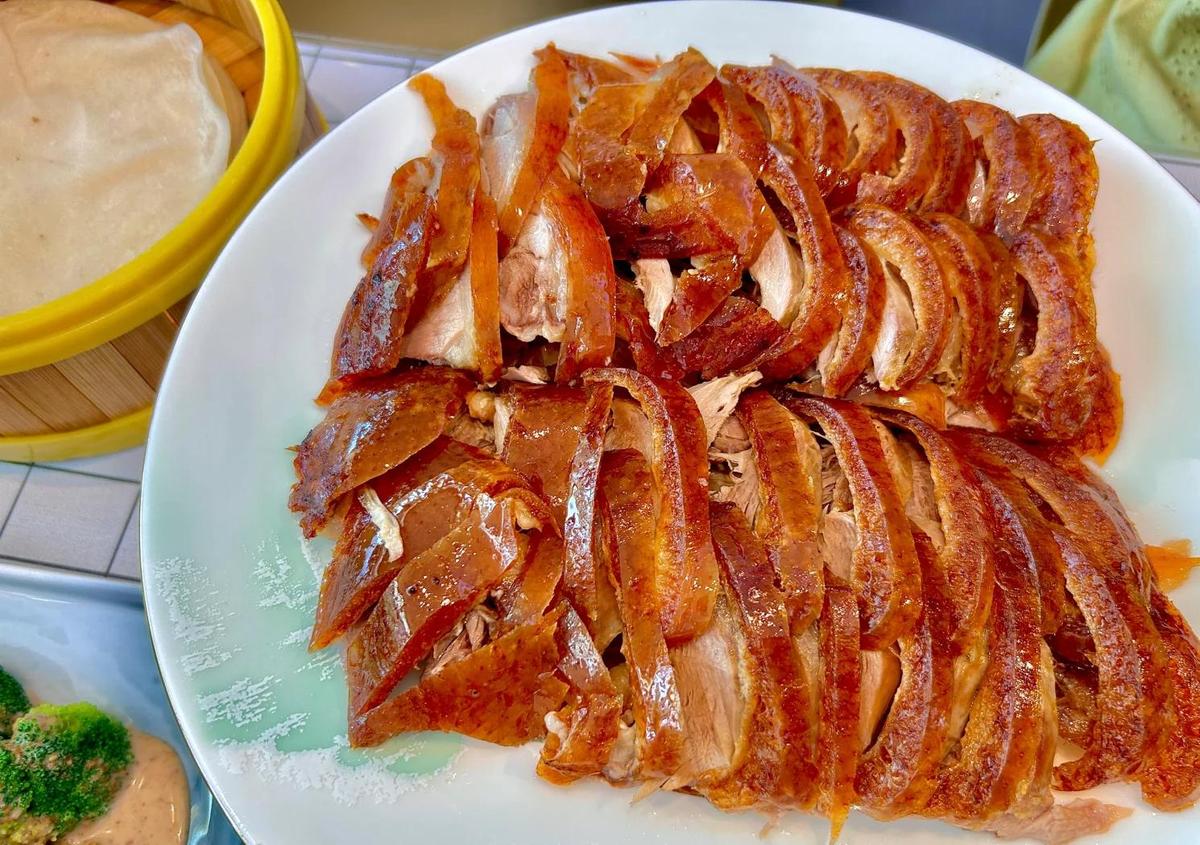
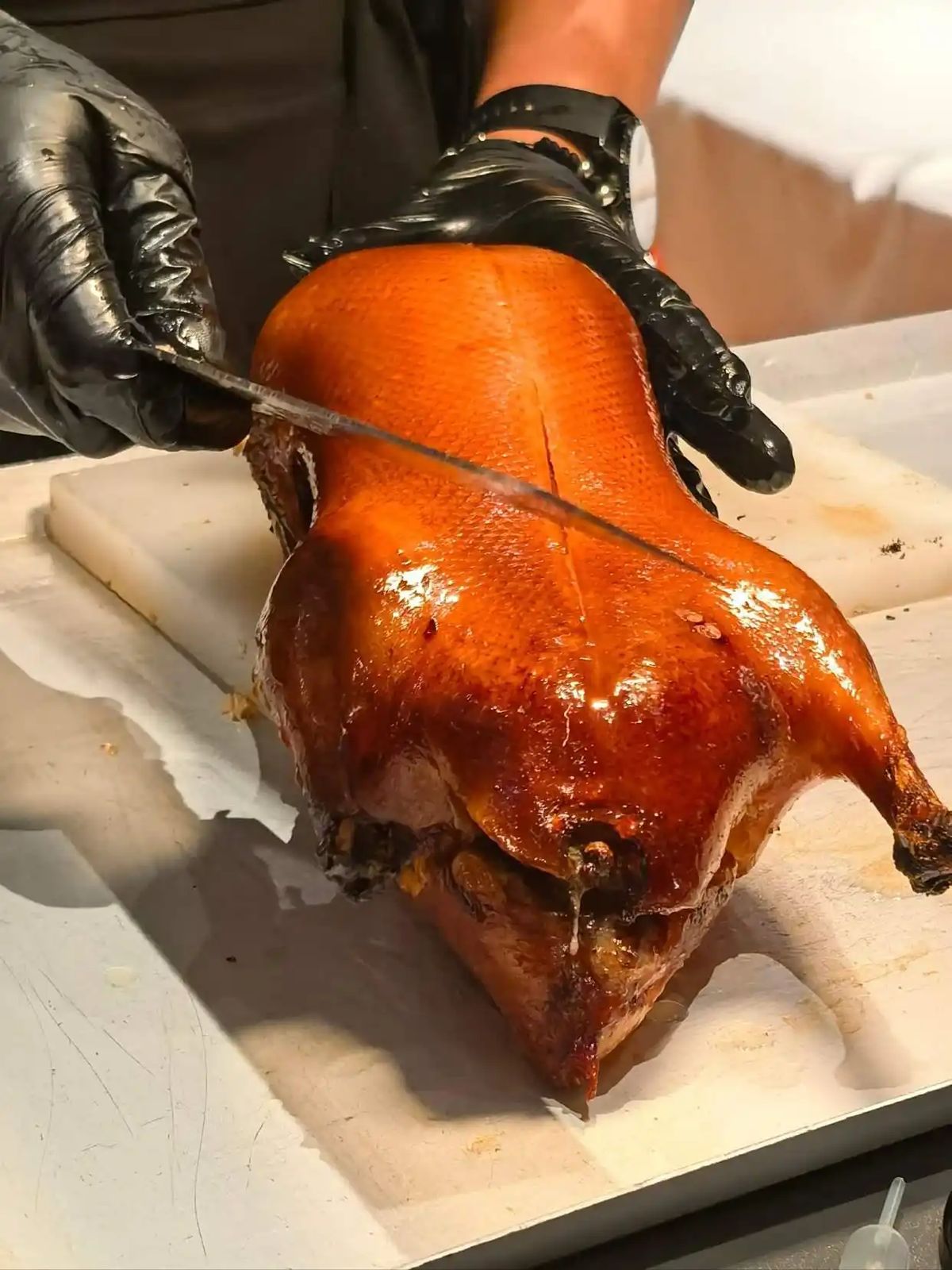
The cart rolls up to your table and the room quiets. On it: a whole duck, skin the color of polished mahogany, glistening under restaurant lights like lacquer on a Ming vase. The chef doesn’t pause. Thwack thwack thwack — the cleaver falls in a staccato rhythm, skin from flesh in neat rectangles, meat into thin pinkish petals. The aroma reaches you before the first piece touches the plate: malt sugar caramelized into amber glass, five-spice humming underneath, fruitwood smoke weaving through roasted fat. You inhale and your stomach answers.
This is Peking Duck (北京烤鸭, Běijīng kǎoyā). You’re not here for poultry. You’re here for what might be the single greatest textural experience in Chinese cooking.
I first understood this on a 2017 NVIDIA trip to Beijing — three days of CUDA roadmaps and thermal optimization white papers, the kind of trip where meals are hotel lounge sandwiches between meetings. On the last night, a local engineer grabbed four of us: “You’re not leaving this city without eating duck.” We protested — early flight, packing. He ignored all of it. At 8pm we were in a Qianmen alleyway where the walls smelled of decades of fruitwood smoke. The first shard of skin hit my mouth and crackled like a sugar crust, and I forgot every GPU architecture detail I’d memorized that week. I’d eaten Peking Duck before — Shanghai, San Gabriel, Sydney. None of it was this.
The Skin Is the Point
Let’s establish this immediately: Peking Duck is a skin delivery system. The meat is delicious, sure — but the meat is not why this dish survived six centuries of palace intrigue and revolution. The meat is the bonus round.
The skin must shatter. Not tear, not pull, not come away in a sad chewy strip. Shatter. Like crème brûlée, but savory. Like the top of a perfect croissant, but richer. You bite down and the entire structure collapses into brittle, glassy fragments that dissolve into the most concentrated duck flavor you’ve ever encountered — rendered fat, caramelized sugar, salt, smoke, and something floral you can’t quite name (that’s the jujube wood).
This takes days. Workers pump air between skin and fat to separate them. The bird is blanched, then hung to dry for twelve to twenty-four hours while a glaze of maltose syrup (麦芽糖, màiyá táng) and vinegar sets into the skin. Only then does it enter a hung oven (挂炉, guàlú) burning fruitwood — traditionally jujube or pear. The sugar caramelizes. The fat renders. The skin transforms from flabby poultry covering into a lacquered, amber-brown shell. When it emerges, it’s not duck anymore. It’s architecture.
Two Schools, One Obsession
Beijing’s duck tradition splits between Quanjude (全聚德, 1864), famous for 108 perfect slices from a hung oven, and Bianyifang (便宜坊, 1416), which does a closed-oven roast that separates skin and meat into two courses. Both chase the same thing: skin that shatters.
How to Build the Bite
The duck arrives with its entourage:
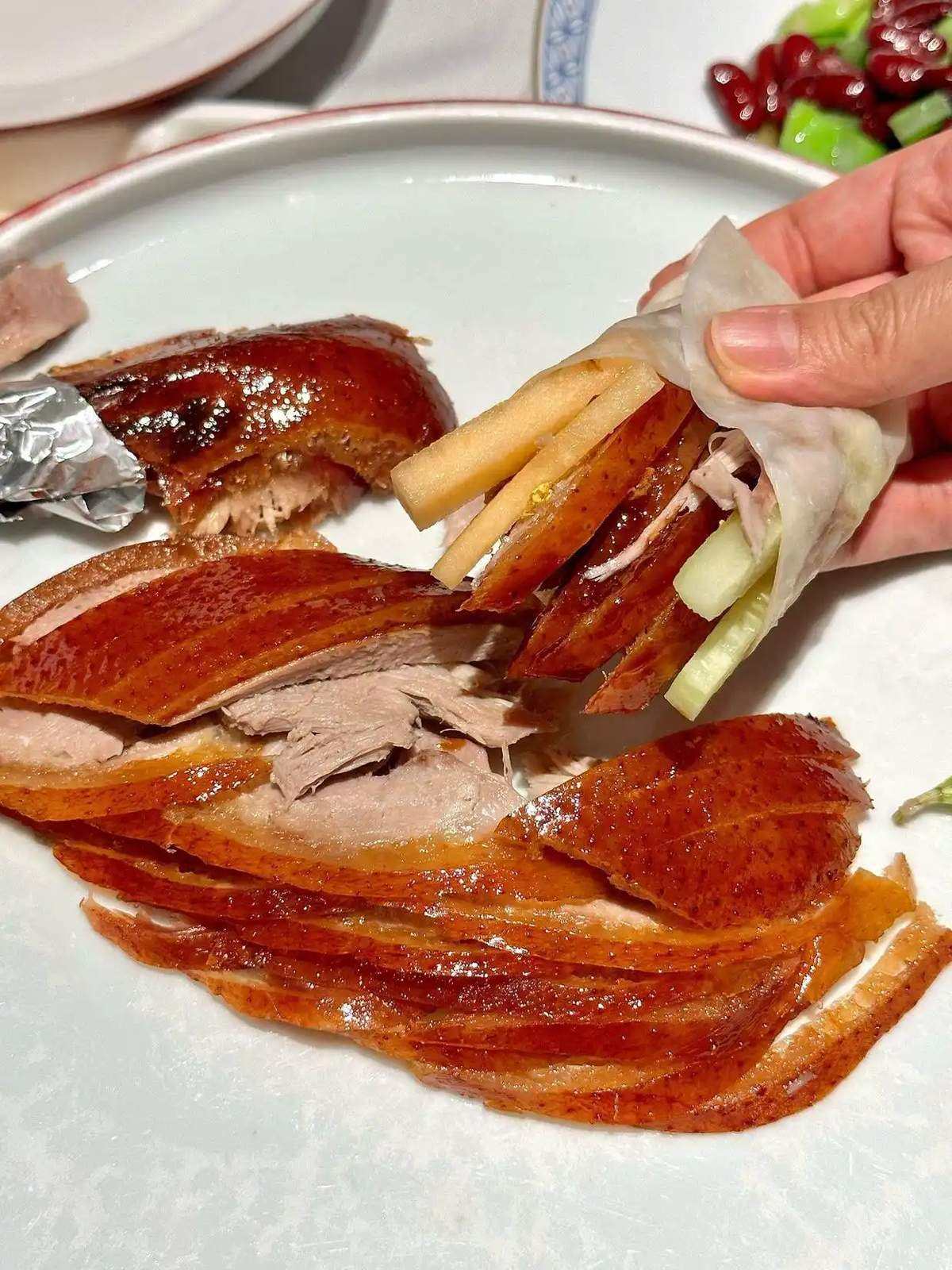
- Lotus-leaf pancakes (荷叶饼, héyè bǐng) — steamed, translucent, the diameter of a CD. You should be able to read a menu through them.
- Sweet bean sauce (甜面酱, tiánmiàn jiàng) — dark, glossy, fermented wheat paste. It goes on the pancake like butter on toast, a thumbprint’s worth.
- Scallion brushes — white parts only, shredded into fine bristles that snap when you bite them.
- Cucumber matchsticks — cold, crisp, the vegetal counterpoint that cuts through all that richness.
Now build. Lay the pancake on your palm. Smear sauce across the center — a thumbprint, not a paint job. Place two or three pieces of duck, skin-side up (hiding the best part would be insane). Add three scallion brushes, four cucumber slivers. Fold the bottom edge up, then roll from the side like a tiny burrito. One bite delivers crunch, chew, smoke, sweet, fresh snap — all at once.
Your first wrap will be clumsy. The pancake will tear, the sauce will squirt, a cucumber will escape. This is normal. The second wrap is where the religion starts.
The Bones Get a Second Life
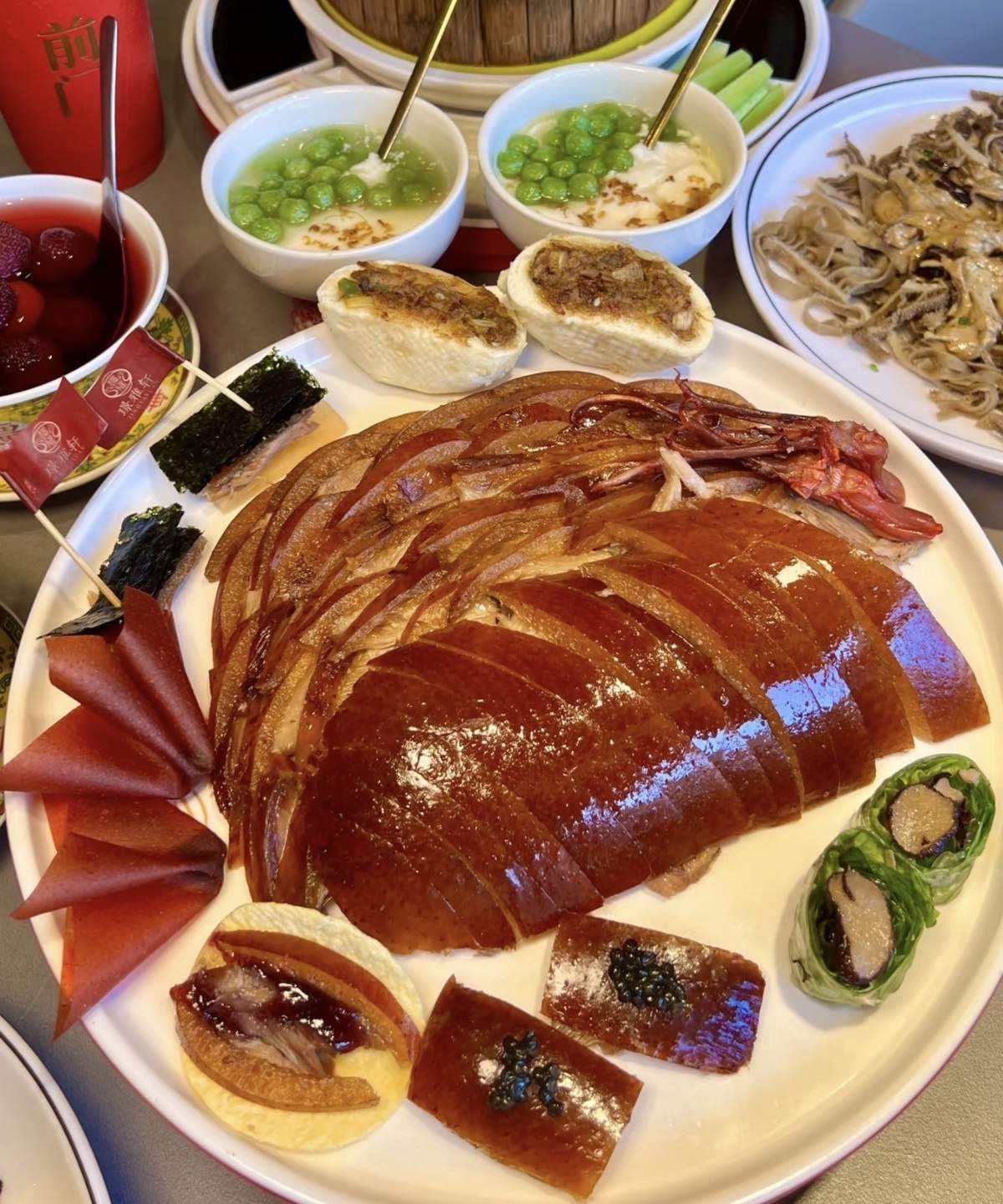
A proper Peking Duck dinner doesn’t end when the skin is gone. The carcass goes back to the kitchen and returns as duck bone soup (鸭架汤) with tofu and cabbage, or salt-and-pepper stir-fried frame (椒盐鸭架). Order both. You’ve already committed.
Don’t Settle
Bad Peking Duck exists. You’ve probably eaten it. I’ve definitely eaten it — at hotel buffets, at airport food courts, at that one “pan-Asian fusion” place in Mountain View that Google Maps promised was authentic and absolutely was not.
Here are the tells. The skin is flabby and pale, Band-Aid-colored. The meat tastes boiled because some kitchen skipped the air-pumping step and roasted the duck like a chicken. Pancakes thick as tortillas, stuck together in a gummy stack. Sauce that’s colored corn syrup from a jug labeled “hoisin-style.” Duck carved in the kitchen and brought out on a plate, because the kitchen knows the skin stopped crackling twelve minutes ago.
If the skin doesn’t shatter when you bite it, send it back. If the pancakes aren’t translucent, send it back. If the duck wasn’t carved in front of you — the skin loses its crackle within minutes of leaving the carcass — you’re not eating Peking Duck. You’re eating a lie.
The Thing You Chase
Great dishes encode a worldview. Peking Duck encodes patience — three days of prep for thirty seconds of shattering texture. Next time you’re in Beijing, skip the conference hotel. Walk into an alleyway off Qianmen. Follow the smell of fruitwood smoke. Wait for the cart, the cleaver, the first shard of skin landing on your tongue and cracking like glass.
That crackle is worth more than any stock option I ever vested.
💬 Comments