Oil-Braised Prawns: The Sauce Is the Prawn
You peel the head off first. Of course you do. It's a shell, a leg assembly, a thing to be discarded before the real food starts — you eat the tail, you leave the head on the rim of the plate, and you move on.
I ate prawns that way for the first eighteen years of my life. I was doing it wrong. On a plate of 油焖大虾 (yóu mèn dà xiā), oil-braised prawns, the head is not the wrapper. The head is the dish.
Here is what the name hides. 油焖大虾 translates, flatly, as "oil-braised big shrimp," which sounds like a warning, like something drowning in grease. It's the opposite. The oil in the pan, when a good prawn hits it, stops being oil and turns into sauce, and the prawn does it by itself. You sear the shells hard, press the heads down, and the roe packed inside liquefies and bleeds out: a thick, rust-red, briny-sweet richness that stains the oil and then coats the prawn. A little sugar, a splash of soy, a spoon of stock to loosen it. But the body of the sauce came out of the animal. You didn't make it. You just didn't throw it away.
Stand next to the pan while it happens and you get the whole thing at once: sugar hitting hot oil and going nutty, the sharp briny hit of the heads, a sound like the prawns applauding themselves as the shells crackle and tighten. Six minutes from a cold pan to the plate, if the prawns are good.
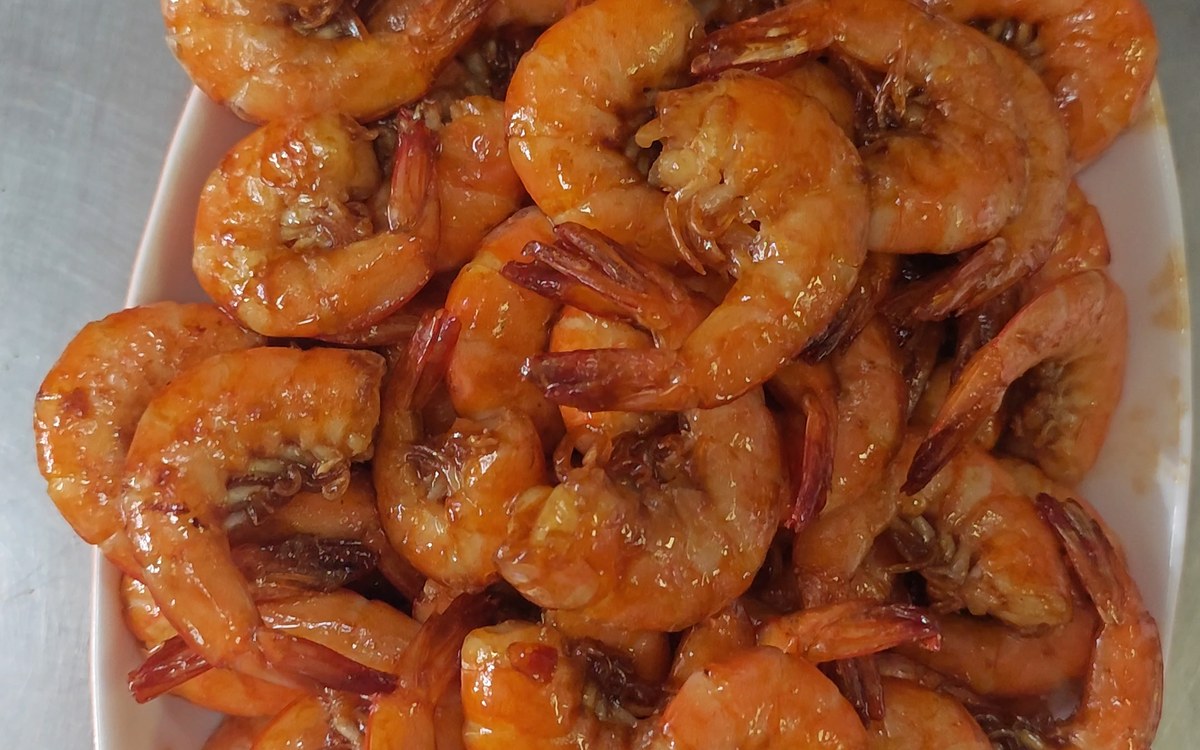
The first time I understood any of this I was nine, at my grandmother's table in Shanghai, at a birthday. A platter of prawns arrived, the big ones, the kind that showed up two or three times a year. My mother peeled mine, and before she handed it over she did something I didn't understand: she twisted the head off, tipped it toward my mouth, and said, "Suck." I did. It was the best thing on the plate. I have never since been able to look at a discarded prawn head without a small private grief.
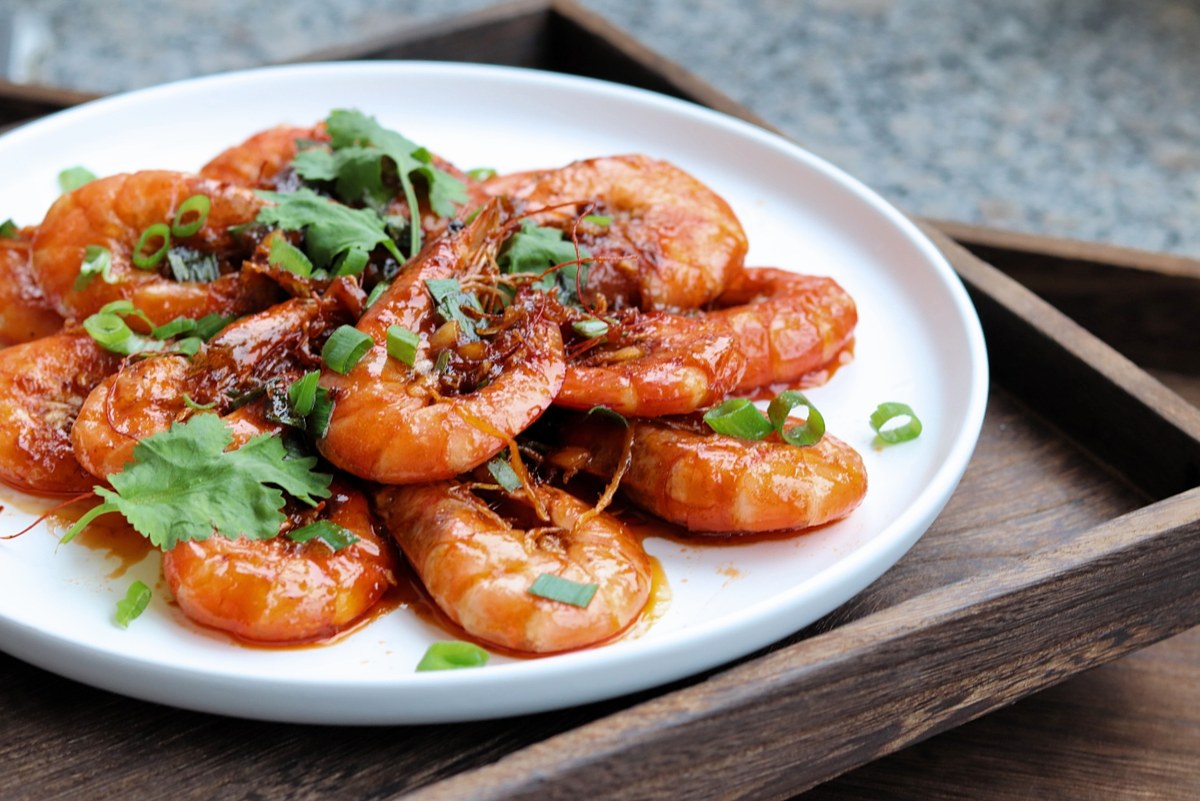
The prawn matters more than the recipe. On the Jiaodong peninsula around Qingdao, 油焖大虾 is built on 对虾 (duì xiā), the Chinese white prawn — big, cold-water, and packed with autumn roe. The mèn in the name is the move that separates it from a stir-fry: sear it hard, then let it sit in its own juices under a lid until the flesh is just set. That's the whole method, and it's why the dish lives or dies on the prawn. Seasonal animals don't travel well, and most kitchens stopped waiting for them.
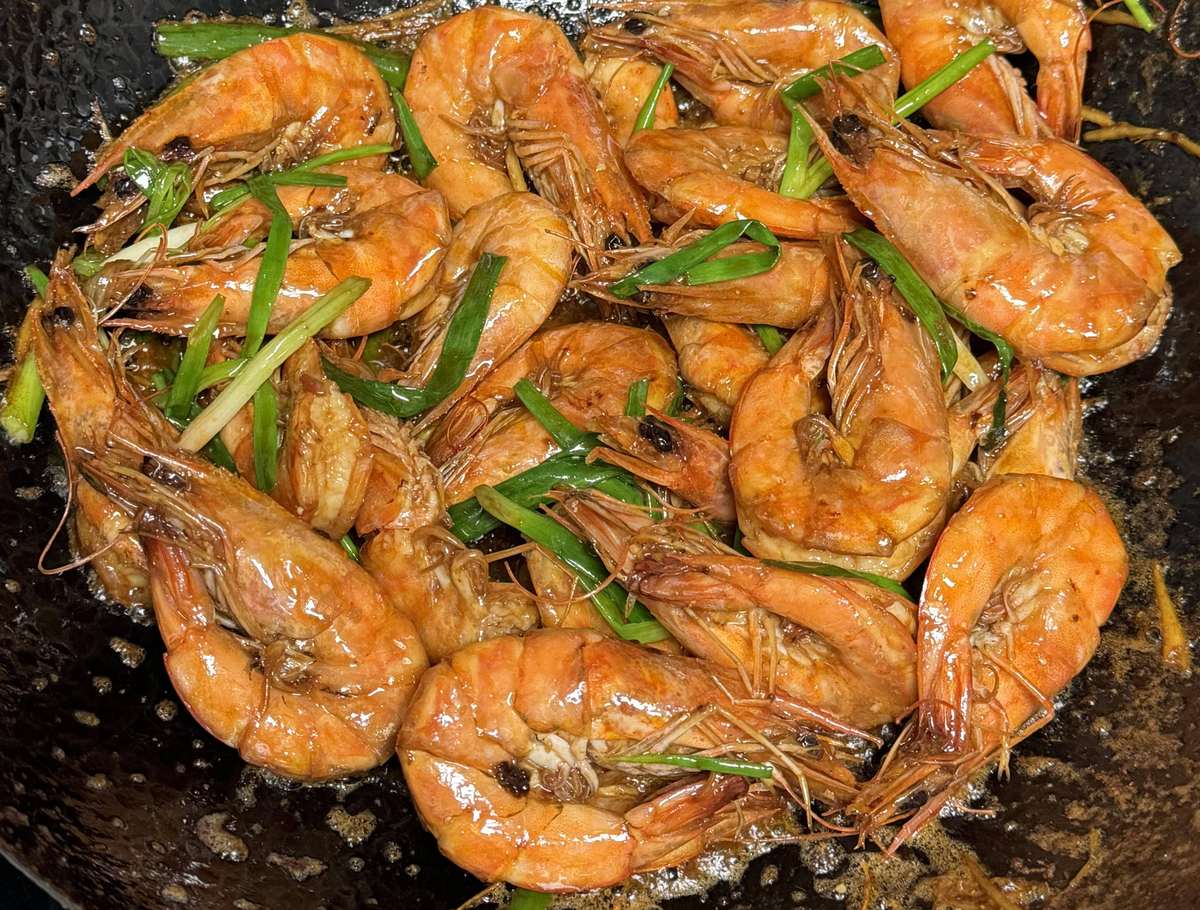
Which brings me to the fakes. Nearly every plate of braised prawns you meet outside China is built on frozen 南美白对虾 (nánměi bái duì xiā), the whiteleg shrimp of industrial aquaculture. The problem isn't that it's farmed. It's that a frozen head is an empty head. There is nothing inside to bleed. So the kitchen does what kitchens do when a dish has no soul to hide behind: it fakes one. Ketchup. Cornstarch. A slick of sweet-and-sour goo dyed a confident orange to imitate the roe that was never there.
If the sauce tastes of tomato, if the shells slip off in a wet, mealy pull, if the head is grey and hollow, send it back. You're eating an illustration of the dish, not the dish.
There's a second kind of wrong, worse because it isn't even cheating: prawns served already peeled. Clean pink curls arranged on ice. That's a shrimp cocktail, and a shrimp cocktail is a kitchen telling you it thinks you're squeamish. The head is where the argument is. Peel it away and you've removed the only reason this dish exists.
Eating it properly takes three moves. Pick the prawn up by the head and, before you think about the tail, suck the head — the roe first, then the juice pooled in the shell. Work the shell off the body but leave the last knuckle of tail on, so you have something to hold. Dip the meat back through the red oil at the bottom of the plate. Then the move most people miss: spoon that oil over plain white rice. The prawns are the headline. The rice is where the dish actually ends. Keep a bowl for the heads and shells, not to be polite, but because half the table, if they were honest, would eat those too.
My Ohio friend came around on the second try. He sucked the head without being told, and for a second he looked genuinely betrayed, by every shrimp he had eaten before. "Why does nobody say this?" he asked. I don't have a good answer. Some things you only learn at a table, from someone who hands you the head and tells you to hurry up.
Out of room for today. The home version deserves its own post — doing it right means pressing the heads against the pan until the roe gives, and pulling the sugar back before it burns. Recipe coming soon.
💬 Comments