Nine-Turn Intestine: The Best Bite on a Pig Is the One You Throw Away
Ask a butcher in Ohio what happens to the large intestine and he'll give you a short, honest answer. Most of it goes in the bin. A few feet get cleaned for sausage casing. The rest is waste.
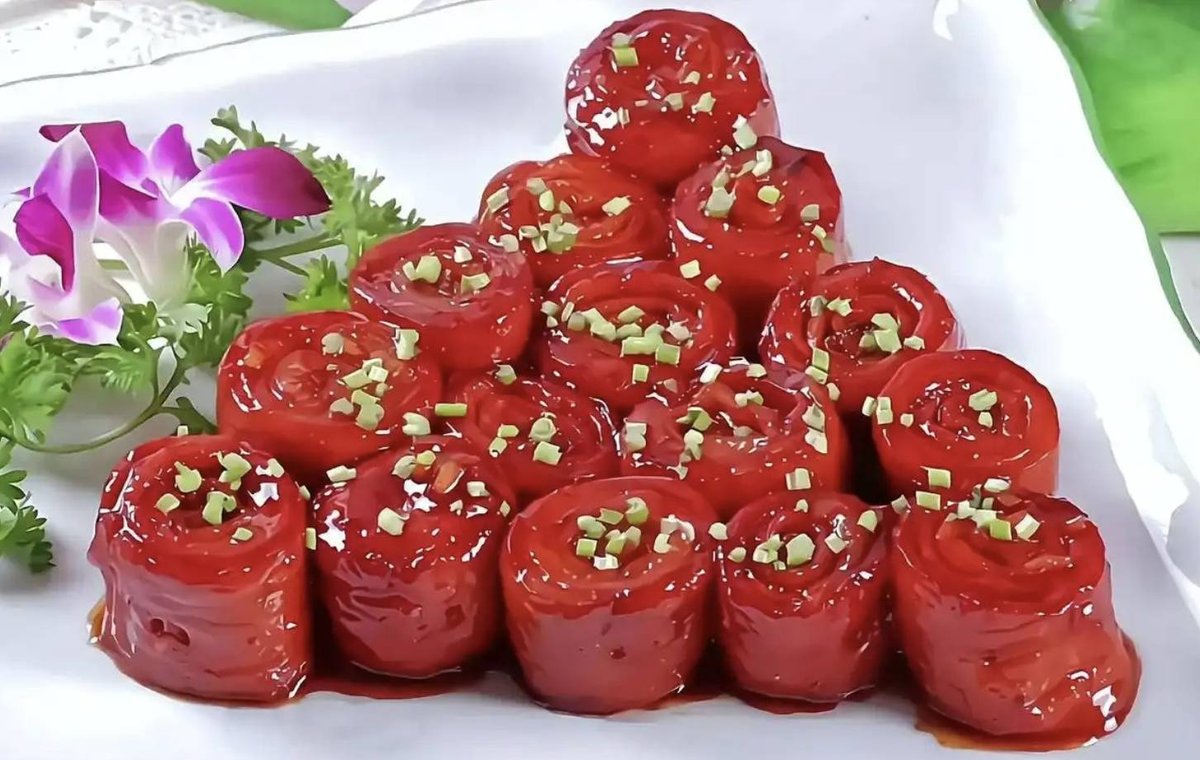
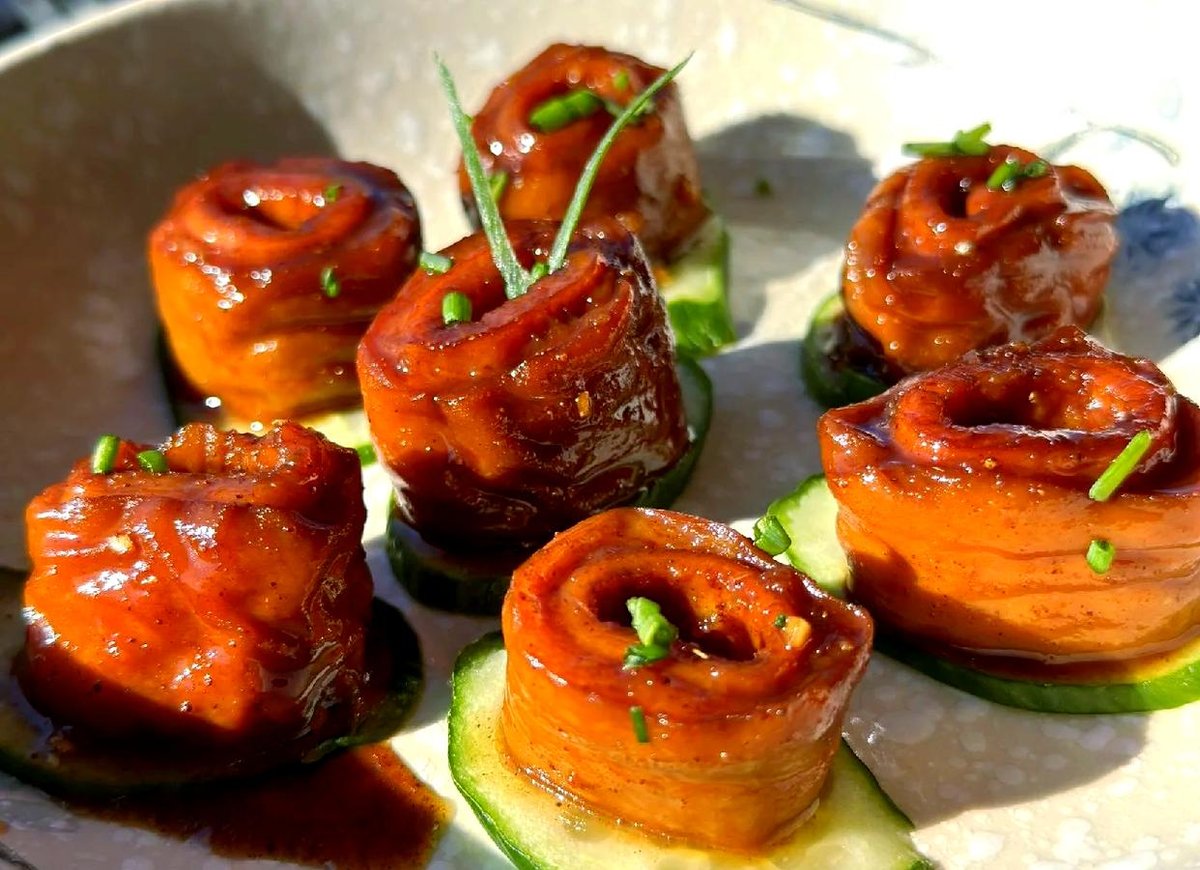
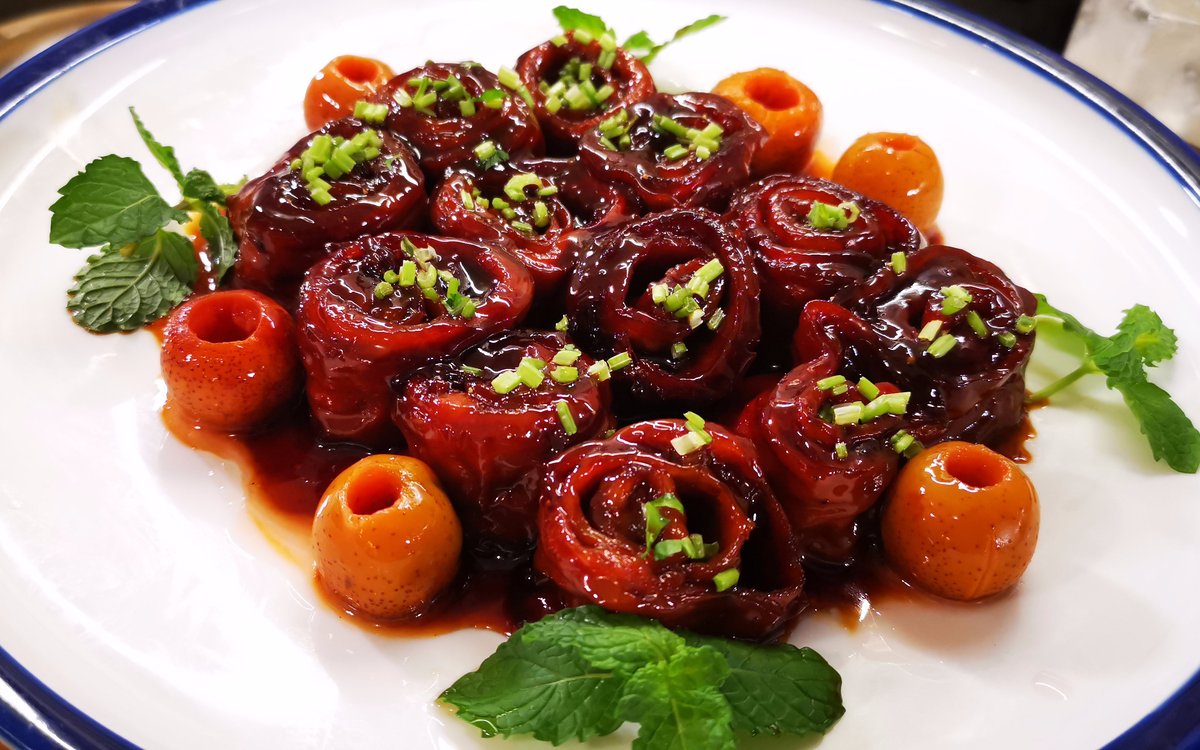
Now sit down in a Shandong restaurant in Jinan and order 九转大肠 (jiǔ zhuǎn dà cháng). What arrives is a plate of thick, glossy rings, each one a closed loop, lacquered the colour of old mahogany. The smell is sweet first — caramel, rice vinegar — and then something lower underneath, the smell of meat that has been worked over for a long time. You put one in your mouth and it comes apart: sweet, sour, salty, bitter, a flicker of pepper heat, all inside a single bite. It is the most complicated mouthful in Chinese cooking, and it's made from the part you throw away.
I didn't find this dish in a fancy restaurant. I grew up eating 大肠面 (dà cháng miàn), the Shanghai noodle soup with braised intestine sitting in it, at a shop near the wet market where my grandmother did her shopping. I thought I knew intestine. Then a few years ago, on a work trip, I ate Nine-Turn Intestine in Jinan and understood that I had known nothing at all.
Scraped, turned, and fried
Everything about this dish is the cleaning. Understand the cleaning and the rest of it makes sense.
A large intestine is not a tube you can rinse. It is a muscle, folded and pleated like a curtain, lined with fat and a membrane the colour of a used sponge. A cook turns it inside out and scrapes it with the back of a cleaver — warm water only, never hot, because hot water sets the smell into the fat instead of lifting it out. Then coarse salt, rubbed in by hand. Then vinegar. Then a long soak in the cloudy water left over from washing rice, which is just alkaline enough to pull the rawness out. Then the whole thing again, two or three more times, until the water runs clear and the smell is neutral. I once watched a cook do this for forty minutes without looking up from the board.
Only then does it get cooked, and this is where the name comes from. 九转, nine turns, is not a recipe and not a trick. It's the local way of saying that a cheap cut gets treated like alchemy. The intestine is blanched in ginger and Shaoxing wine, dried properly, then dropped into hot oil; the oil answers with a hard, dry crackle, and the outside of each ring tightens and goes faintly crisp. That fry is the whole texture of the dish, the line between soft and mushy. Then it braises, slowly, in caramelised rock sugar, dark soy, rice vinegar and whole spices: star anise, cassia bark, clove, Sichuan peppercorn, and a few grains of shārén (砂仁), the medicinal pod that gives the dish its bitter edge. An hour, sometimes ninety minutes. Then the lid comes off and the sauce reduces until it coats every ring in a thin, sticky glaze.
An honest plate of nine-turn intestine is not chewy. It gives way with almost no pressure — the outside just taut enough to snap, the inside soft and gelatinous, with one thin layer of fat left in the middle to melt into the sauce. If your jaw has to work, something was rushed.
Five flavours, one bite
Shandong cooks say the dish is 五味俱全 — all five flavours present. Not blended. Present, one after another, inside the same mouthful.
Sugar comes first, because caramelised rock sugar is the base the whole sauce sits on. Vinegar arrives behind it, sharp and bright; it goes in late, at the very end, so it stays alive instead of cooking down into flatness. Salt next, from two soy sauces — dark for colour, light for seasoning. Then the bitter note, which is the part that throws foreigners: almost nothing else in Chinese cooking lets bitterness show up this plainly. It comes from the edge of the caramel and from the 砂仁, and its job is to stop the dish turning into candy. Last is the heat, white pepper and a little chilli, more warmth than fire.
People assume five flavours in one bite must fight each other. They don't. They take turns. That's why the plate is small and a serving is three or four rings, not a pile — this is a dish you taste, not one you fill up on.
How to tell a real one
It smells like a bathroom. If there's ammonia anywhere near the plate, the cleaning was skipped. No sauce on earth fixes that, and you should send it back without embarrassment.
It bounces. Rubber means the fry was skipped, or the braise got cut to twenty minutes to save gas. This is the most common failure in cheap Shandong restaurants, and it's what happens to frozen pre-cleaned intestine, which goes spongy when it thaws and never comes back.
It's buried in sauce. Some kitchens hide a mediocre intestine under a thick sweet-and-sour glaze — ketchup, cornstarch, the 咕咾肉 treatment. A real nine-turn sauce is thin, dark and barely there. If it's glossy red, you're eating a cover-up.
It isn't fried at all. 干炸肥肠, dry-fried intestine, is a fine dish and a completely different one. Don't pay a nine-turn price for it.
Then there's the well-meaning Western version. I've eaten "nose-to-tail" intestine in America, braised for forty-five minutes in tomato and wine and served with a polite warning. It isn't close. That isn't snobbery. The dish lives or dies on two hours of cleaning and frying, and neither of those short-cuts into a weeknight ragù.
Order it right
You find this in Shandong, and mostly in Jinan, where it's as much a banquet dish as a working-class one. Order it early, before anything sweet, because it's the loudest thing on the table. Ask for it at a proper 鲁菜 restaurant, not a noodles-and-dumplings place. Have white rice or a stack of lotus-leaf pancakes alongside. Take a bite of plain cucumber or cold vinegar-dressed greens between rings; the contrast resets your palate and makes the next ring taste new. Drink something cold and clean. Tsingtao is brewed two hours away in Qingdao and it's the right beer for this, though a light, non-aromatic 白酒 is the Shandong way if you want to do it properly.
My grandmother would have understood the dish instantly. She never ate anything for texture alone, and she never judged food by what it cost. She judged it by how much of it was done right. By that measure a plate of nine-turn intestine is one of the most expensive things China makes. It just costs hours instead of money.
Out of room for the home version today. What still beats me at home is the fry: getting the rings dry enough that the oil doesn't spit, and dark enough that the outside snaps, without turning the fat inside to leather. That deserves its own post. Recipe coming soon.
💬 Comments