Nanchang Rice Noodles: The Bowl You Have to Mix Yourself
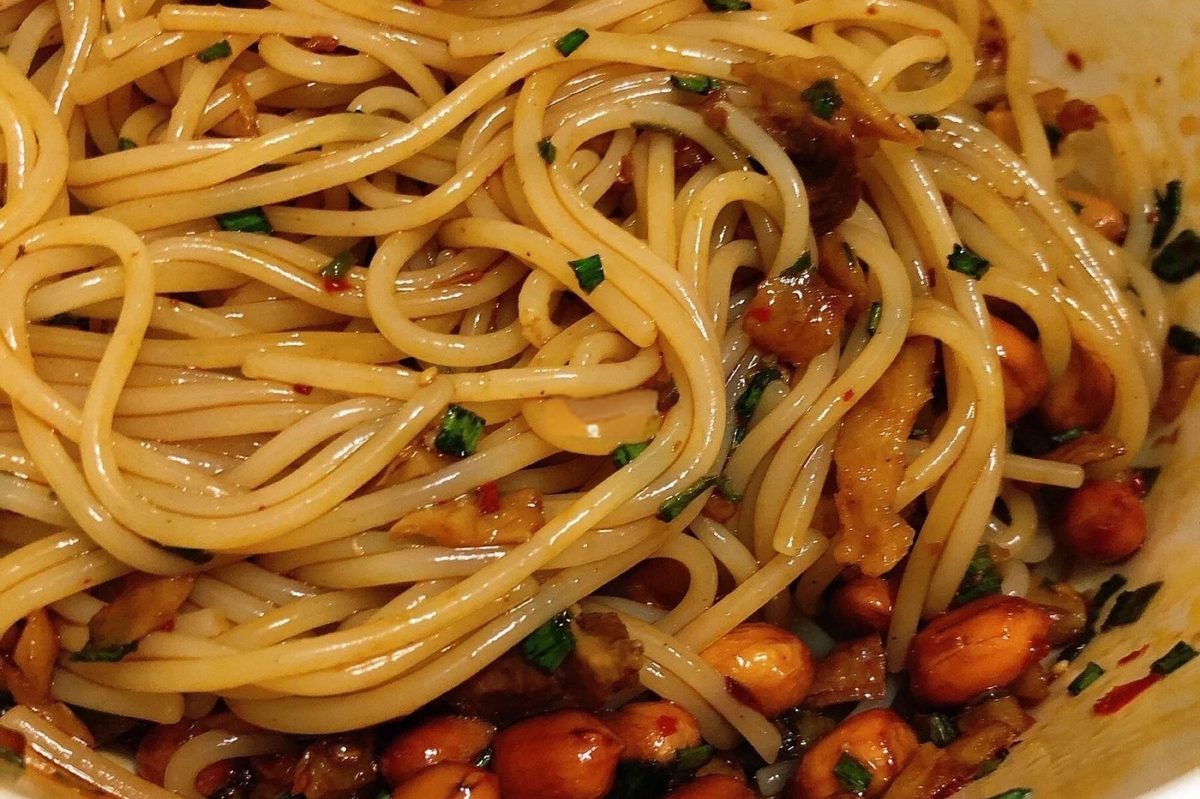
At seven in the morning on a side street off Yangming Road, Nanchang is already eating. A woman on the next stool has her bowl up in both hands, chopsticks working from the bottom, and she isn't talking to anyone. Between her feet sits a small clay jar with the lid off, steam going straight up into the cold. In eight minutes she'll be on a bus. Right now nothing else exists.
Your bowl arrives with no broth in it. Rice noodles, pale and cool, a spoon of lard melting down into them, dark soy, chili oil the color of rust, pickled radish diced to the size of rice grains, fried peanuts, a fistful of scallion. It looks like the cook stopped halfway through the job. That's the whole dish: 拌 (bàn) means toss. Until you mix it you have a bowl of ingredients, not a bowl of noodles.
Chopsticks to the bottom, lift, turn, drop. The noodles slap against the steel and the smell comes up at you all at once — vinegar-sharp radish first, then the chili, then pork fat waking up against something warm. Thirty seconds in, the bowl goes from white-and-brown to a single even rust. That's when you eat.
The noodle matters more than anything else on that counter. It's fresh rice noodle (米粉, mǐfěn), round, maybe a millimeter and a half across, delivered to stalls in damp bundles before dawn. Jiangxi grows rice the way Shaanxi grows wheat, and the province has been pressing it into noodles for longer than anyone bothered to write down. Fresh ones are silky outside with a bite still at the center — 韧 (rèn), tough in the good sense. Dried rice noodles, soaked and boiled, go chalky and snap. You can taste the difference in the first mouthful, and no amount of chili oil hides it.
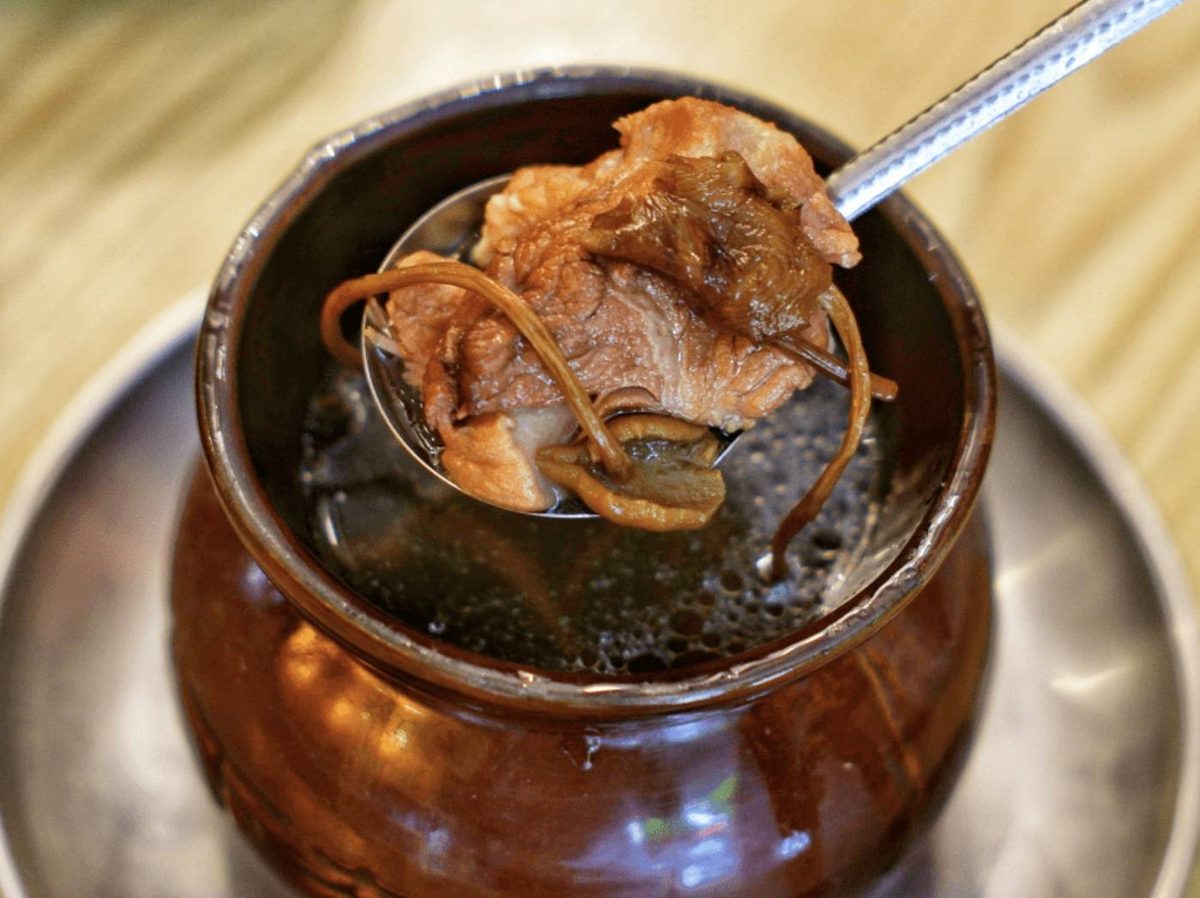
Then there's the jar. 瓦罐汤 (wǎguàn tāng) is the other half of a Nanchang breakfast: a squat clay pot, one per customer, cooked overnight inside a waist-high ceramic urn with charcoal at the bottom. You order 肉饼汤 — a flat pork patty pressed into the base of the jar and steamed under clear broth — or 皮蛋肉饼汤, the same thing with a century egg dropped in, for people who like their breakfast to have an opinion. It arrives scalding. The noodles are barely warm. That gap is the point: slippery, chili-hot noodles at room temperature, then a mouthful of soup that burns the roof of your mouth and tastes of pork and salt and nothing else.
Nobody invented this. Stalls open at five-thirty and are wiped down by ten — banfen is a city habit, not a restaurant dish, priced for people who have somewhere to be. The urn of clay pots is the tell. No urn, walk on.
Which brings me to the versions that are wrong.
The soupy bowl. If there's broth in the bowl you're eating 汤粉 (tāngfěn), a different dish, and a lesser one at breakfast. Banfen is dry by definition.
The thick noodle. Udon-width strands, or wide flat sheets. Both fight the sauce instead of holding it. Thin and round, so every strand comes up coated.
The sweet one. Some kitchens outside Jiangxi add hoisin, or a pinch of sugar to "round it out." Now it tastes like a peanut butter sandwich that lost a fight.
The dried-noodle shortcut. Rehydrated dried rice noodles go chalky and break under the chopsticks. If the strands snap instead of bending, they aren't fresh, and the bowl is already over.
The vacuum pack with the sauce sachet. Yes, they exist. No, we don't talk about them.
A teammate of mine at Microsoft was from Nanchang, and he kept a jar of his mother's chili oil in the office fridge with his name on the lid in marker. Once a quarter he'd come back from a trip home with a bag of fresh noodles in his carry-on and make banfen in the pantry at ten at night, for whoever was still on the floor. He never measured anything. He'd toss a bowl, taste it, add more vinegar, and hand it over without a word. I asked him once what the ratio was. He said, "However much your mouth says."
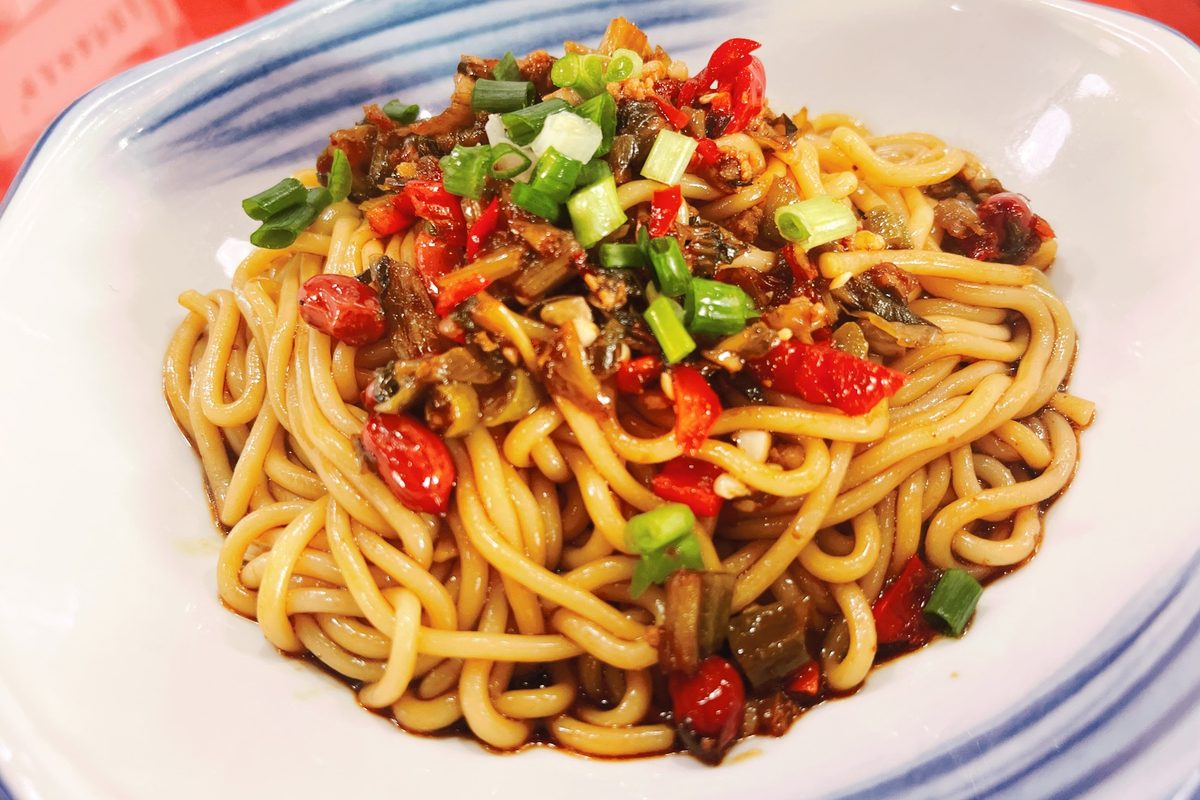
Order at the counter, not from a menu. Point at the noodle pot, say 拌粉, and let them ask about the soup — you want the pork patty one.
Toss it the second it lands, from the bottom up, for a full minute. Nobody has ever regretted mixing too much. Plenty have regretted stopping early and eating plain noodles for the last third.
Eat in eight minutes. Fresh rice noodles keep drinking the sauce and go claggy while you sit there talking.
Add black vinegar near the end, not at the start. It cuts the lard and sharpens the radish. Early, it just makes the whole bowl sour.
Then the soup. Spoon it out of the jar after the noodles are gone. Not before, and never poured over the bowl.
Some breakfasts are about abundance. This one is about speed and a very narrow set of flavors doing exactly what they were hired to do. You finish, you lay the chopsticks across the top of the empty bowl, and the woman beside you has already been replaced by someone else in a coat. The stool is still warm. Sit down.
No recipe today. The sauce is nothing — soy, chili, lard, radish, done. The problem is the noodle: fresh rice noodles with a live bite are almost impossible to buy outside Jiangxi, and dried ones will break your heart. That hunt deserves its own post. Recipe coming soon.
💬 Comments