Mei Cai Kou Rou: The Pork Belly That Steals Your Rice
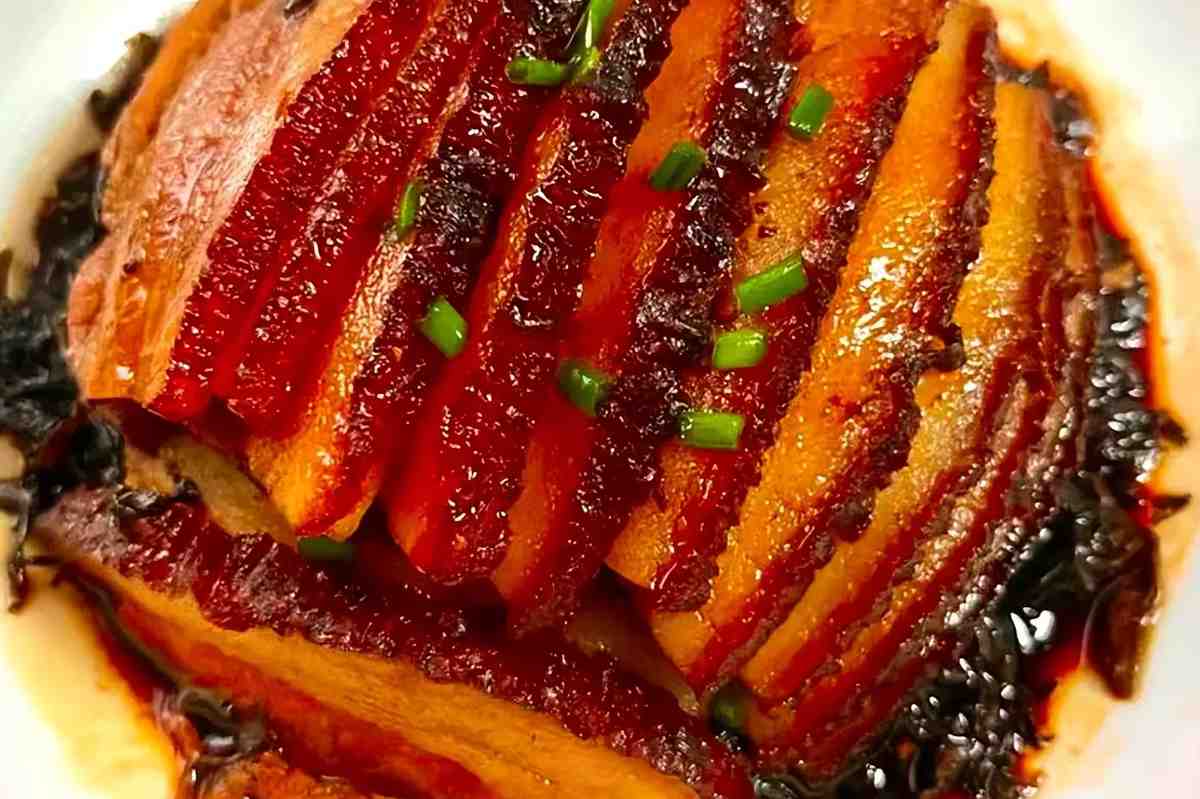
The bowl arrives upside down. This is the first thing you need to know about Mei Cai Kou Rou (梅菜扣肉, méi cài kòu ròu): it shows up hiding. The waiter sets down a deep ceramic bowl that looks like a brown dome of nothing, pauses for dramatic effect — and flips it. The bowl lifts away. What’s underneath is a perfect spiral of pork belly slices, skin-side up, glistening the color of old mahogany, resting on a bed of something so dark it almost reads as black.
The smell hits a full second before your brain registers what you’re looking at. It’s deep. Earthy. There’s star anise in there, and the faint caramel edge of rock sugar that’s been pushed to the edge of burning. But underneath all of that is the funk — fermented mustard greens that have been dried in the sun, salted, packed into clay jars, and left to develop a flavor that Western cooking doesn’t really have a word for. Umami is too polite. This is the flavor of patience.
I was eight the first time I saw one flipped at a wedding banquet in Shanghai. The entire table of twelve adults stopped talking for five full seconds. My grandmother leaned over and whispered: “That’s the dish that decides if the chef gets paid.” She wasn’t joking.
The Architecture of a Bite
I have spent thirteen years debugging code at Microsoft, Google, and NVIDIA, and I can tell you this: Mei Cai Kou Rou is the closest thing Chinese cooking has to a perfectly layered software stack. Every component talks to the one below it.
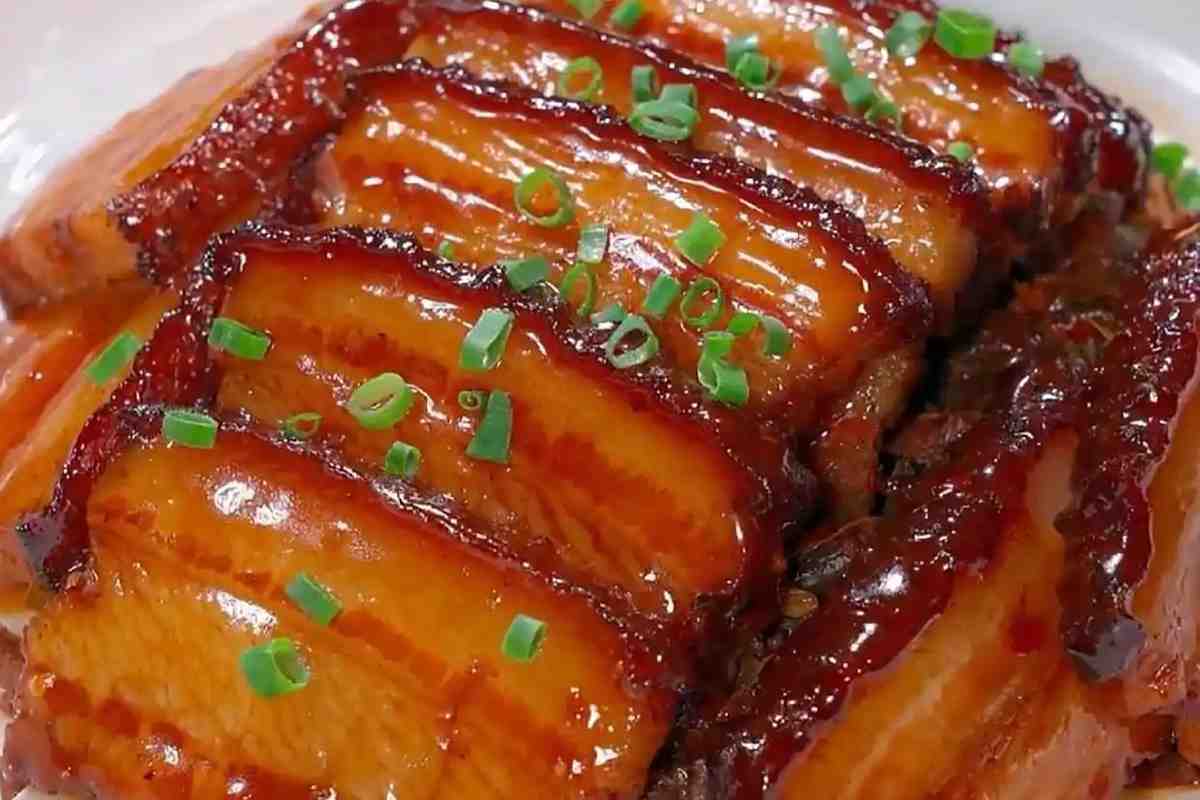
You pick up a slice with chopsticks. It trembles. The skin has been fried, then braised, then steamed for two hours — it’s gone past tender into something closer to custard. The fat layer underneath has rendered so completely that it collapses under the slightest pressure, no chewing required. The lean meat beneath that holds its shape just enough to remind you this was once a solid thing. And then, below everything, the mustard greens — salty, faintly sour, threaded through with pork fat that dripped down during the steam and transformed them into something that tastes like a hundred family dinners compressed into one ingredient.
The flavor doesn’t build gradually. It arrives all at once: the sweet caramelized soy on the skin, the clean richness of pork fat, the salt punch of the méi cài, and then the background warmth of spices that never announce themselves individually. Star anise, cinnamon, ginger — they’re scaffolding, not stars. The dish knows this.
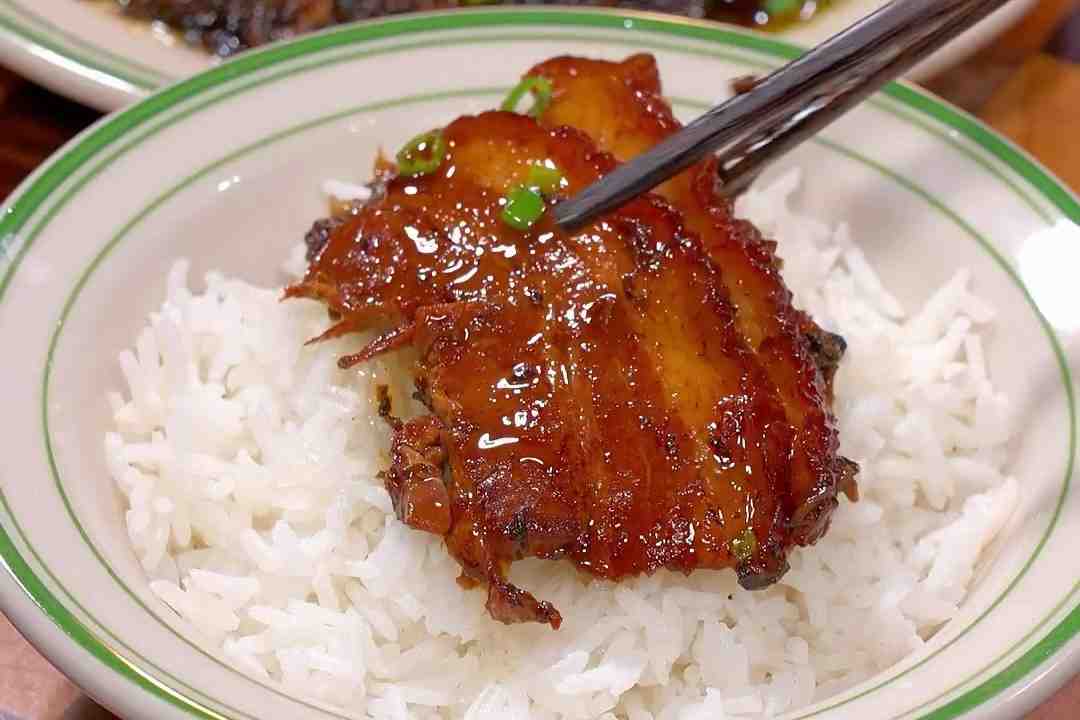
A good bowl of Mei Cai Kou Rou makes you forget side dishes exist. You’ll eat it over plain rice and wonder why the rice suddenly tastes like the best thing you’ve ever eaten.
The Hakka Grandmother’s Gambit
Mei Cai Kou Rou comes from the Hakka people (客家, Kèjiā), a migratory ethnic group who spent centuries moving through southern China carrying their food traditions in clay pots. The dish was born from necessity: fresh meat was scarce, preserved vegetables lasted months, and fat was fuel for farm labor.
The trick no tourist cookbook tells you: the mustard greens aren’t just a side ingredient. They’re the engine. During the three-hour steam, the greens absorb pork fat, transform it, and return it to the meat as something deeper. The greens and the pork trade places in flavor profile. By the end, the meat tastes like vegetables and the vegetables taste like meat. This is the kind of thermodynamic elegance that would make a chemical engineer weep.
The Enemies of Mei Cai Kou Rou
Bad Mei Cai Kou Rou is everywhere, and it always makes the same mistakes.
The first enemy is the dry slice. If the pork belly wasn’t blanched and fried before braising, the skin stays rubbery. You’ll saw at it with chopsticks and the table will shake. Send it back.
The second enemy is the sweet sauce. Some restaurants drown the dish in a syrupy soy glaze that tastes like diluted hoisin. This is wrong. The sweetness should come entirely from rock sugar caramelized during the fry — a whisper, not a shout. If your Mei Cai Kou Rou reminds you of teriyaki, you are in the wrong restaurant.
The third enemy is fake preserved greens. Real méi cài (梅菜) takes weeks to make — sun-dried, steamed, sun-dried again, then aged. What some restaurants use instead is fresh bok choy tossed with soy sauce and called “preserved.” It has none of the fermented depth. It’s a prop, not an ingredient.
Real Mei Cai Kou Rou needs exactly: pork belly with the skin on (never loin, never shoulder), real aged méi cài from Huizhou, rock sugar, dark soy, Shaoxing wine, star anise, ginger, and three hours of steam. That’s eight ingredients. Master them and you’ve inherited a Hakka grandmother’s entire culinary philosophy.
How to Eat It
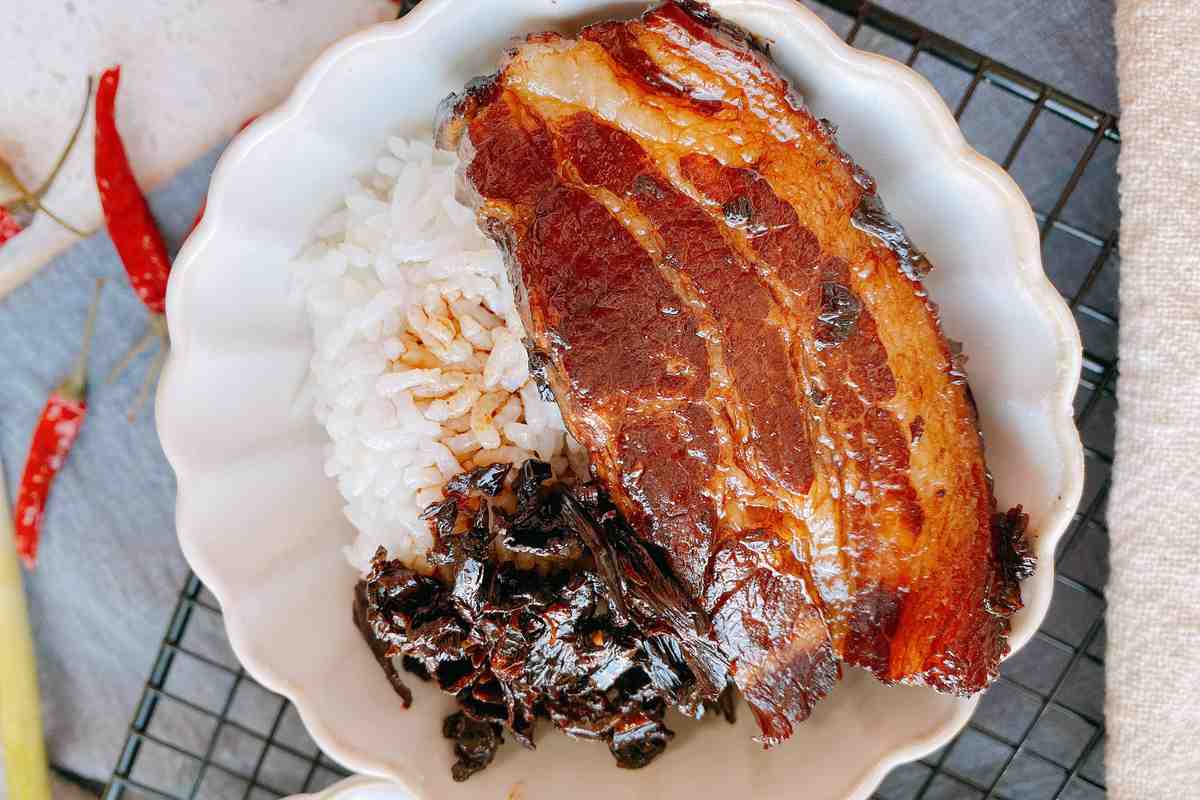
You need rice. This is non-negotiable. The rice is not a side dish — it’s a sponge, a vehicle, a co-conspirator.
Take a slice of pork belly and lay it flat over a mouthful of rice. Press down gently so the rice grains absorb what’s pooling underneath. Then add a small clump of the mustard greens — they’re saltier than the meat, so a little goes a long way. Eat the whole thing in one bite. Don’t separate the components. Don’t try to be delicate.
If the pork is good, the fat should dissolve the instant it touches your tongue. If the méi cài is real, you’ll taste something that reminds you of a cellar — dark, cool, patient. The rice will taste like it was blessed.
My grandmother used to say there are two kinds of people at a banquet table: those who reach for the last slice of Mei Cai Kou Rou, and those who regret not reaching faster. Be the first kind.
Out of space for today — I’ll save the home-cooking breakdown for another post. Getting Mei Cai Kou Rou right at home means mastering the skin-frying step — one wrong move and your kitchen ceiling wears the oil. That deserves its own deep dive. Recipe coming soon.
💬 Comments