Mapo Tofu: The Pockmarked Granny's Revenge
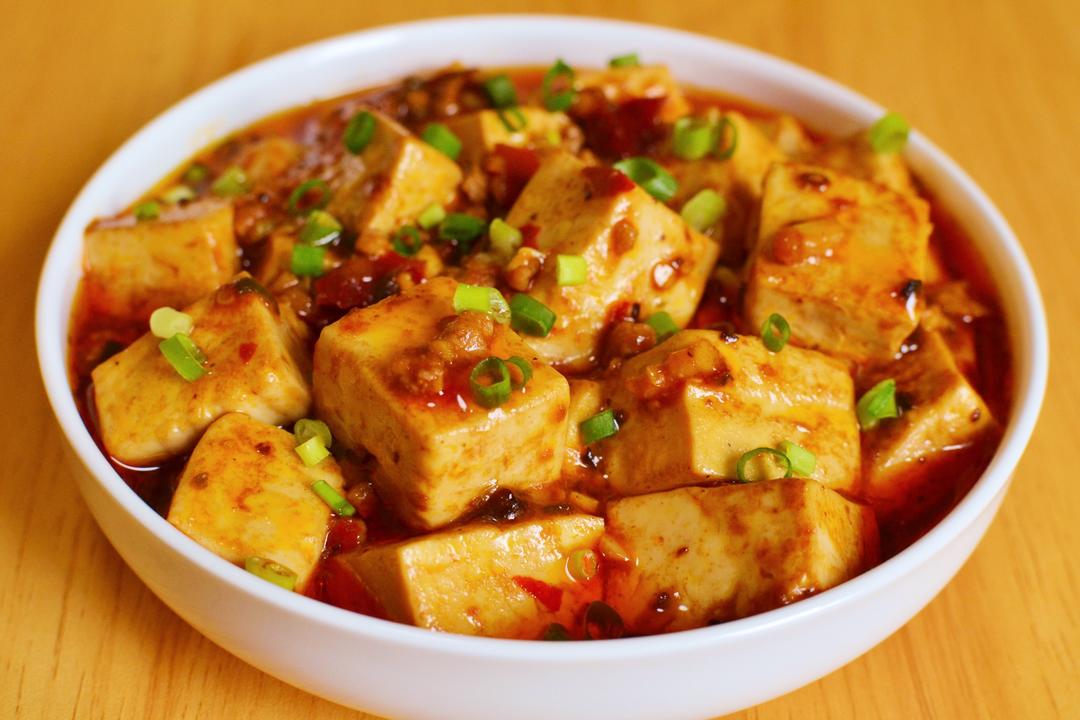
The first time I ate real Mapo Tofu, I was nineteen years old, one year into my computer science degree at Fudan, and deeply suspicious of anything that made my face go numb. A Sichuan roommate dragged me to a hole-in-the-wall near Wujiaochang — the kind of place with plastic stools, grease-stained walls, and a line of taxi drivers out the door. “This is the test,” he said. “If you can finish the bowl, you’re allowed to date a Sichuan girl.”
The bowl arrived hissing. Not metaphorically — the sauce was still bubbling against the ceramic, little crimson volcanoes popping through the oil. The smell hit me in layers: first the fermented funk of doubanjiang (豆瓣酱, dòubànjiàng), aged in clay jars until it goes dark and dangerous; then garlic and ginger fried to the edge of charcoal; then something metallic and electric that I couldn’t place. That last one was the Sichuan peppercorn — freshly toasted, freshly ground, released onto the dish like a cloud of static electricity.
I took a spoonful. The tofu collapsed on my tongue before I could chew. The sauce was so red it should have been a warning label, and the heat built like a recursive function — slow at first, then exponential. By the third spoonful my lips were buzzing, my forehead was wet, and my chopsticks were moving independent of my brain. I finished the bowl. I did not, for the record, ever date a Sichuan girl. But I have eaten Mapo Tofu at least once a month for the sixteen years since.
What Real Mapo Tofu Does to You
Most restaurants outside China get Mapo Tofu (麻婆豆腐, mápó dòufu) wrong. They treat it like a spicy stew — crank the chili and call it a day. That’s like saying a GPU is just a fast calculator. Technically true, completely missing the point.
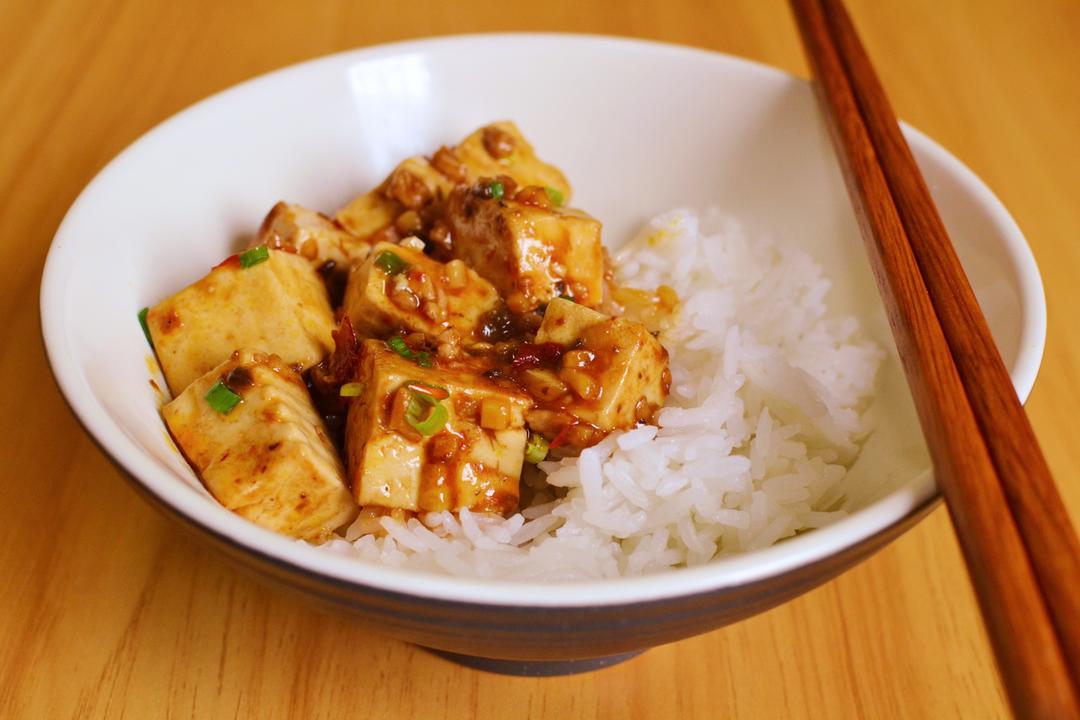
Real Mapo Tofu is a full-body event. The doubanjiang heat punches your throat. The Sichuan peppercorn (huājiāo, 花椒) doesn’t burn — it numbs, a 50Hz tingle spreading from your tongue to the roof of your mouth. Together they create málà (麻辣), the numb-spicy double helix of Sichuan cooking. It’s not pain. Your nervous system is being rewritten in real time.
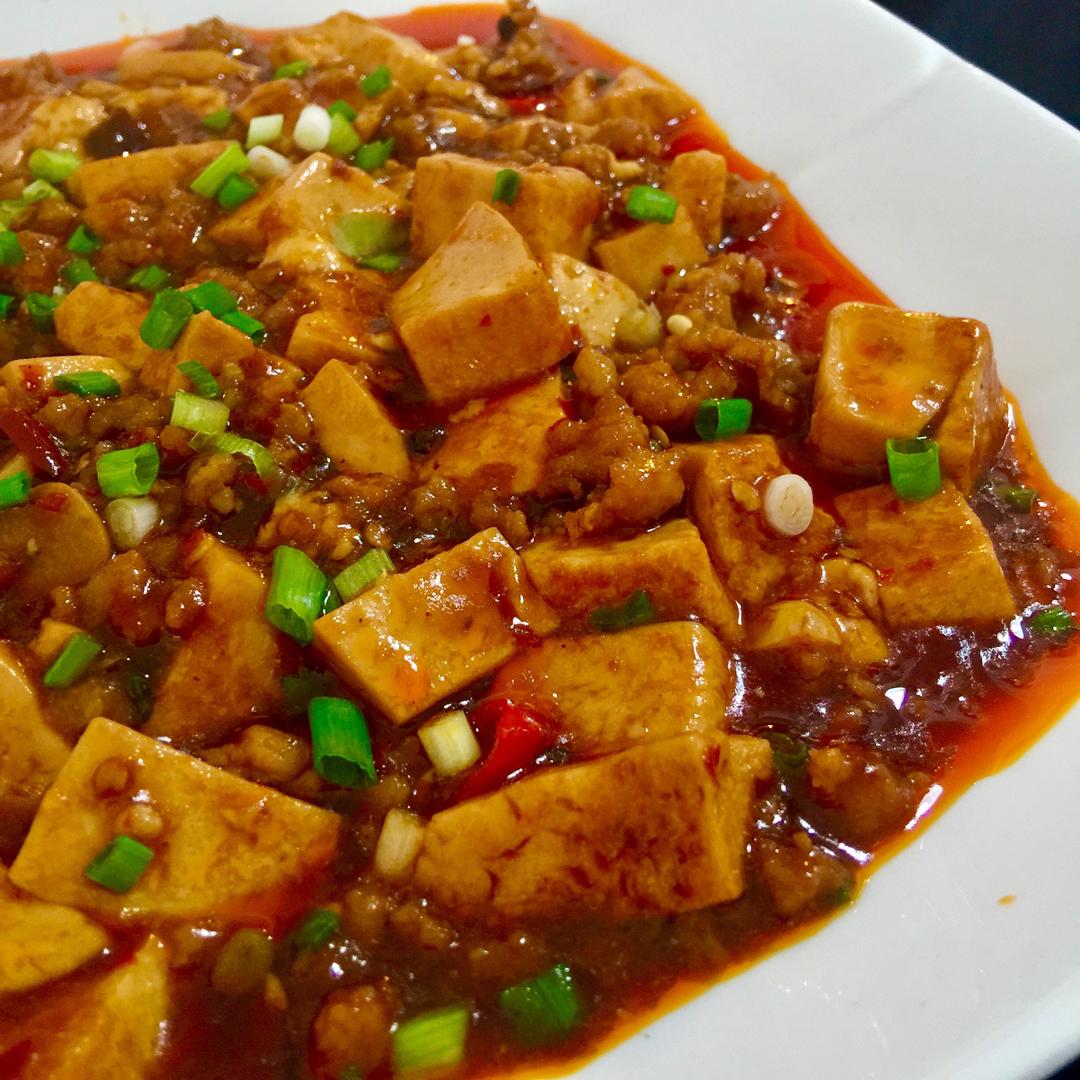
The texture is the quiet genius. The tofu — silken, custard-soft — gets blanched in salted water before the wok, creating a microscopic skin that keeps the cubes intact while the inside stays trembling. You push with your spoon, never stir. Broken cubes are sad cubes. The sauce should stain your rice a deep, aggressive red, spreading through the white grains like blood through snow. If your rice stays white, you’ve been served bean paste soup.
And the meat isn’t just protein — it’s a flavor delivery system. Every granule of minced beef absorbs the doubanjiang and carries it into the tofu’s crevices. You don’t notice the meat. You’d miss it if it were gone.
The Pockmarked Woman Who Started It All
In 1862, a woman named Chen ran a roadside stall near Wanfu Bridge in Chengdu. Smallpox had scarred her face — customers called her Chén Māpó (陈麻婆): “Pockmarked Old Woman Chen.” Her tofu-and-beef stew cost nothing and filled laborers for a day. They started calling the dish Má Pó’s tofu. The name stuck. Her restaurant still runs in Chengdu today, same recipe, 160 years later.
The Four Non-Negotiables
Mapo Tofu is deceptively simple — tofu, meat, bean paste, peppercorns — but every element has exactly one correct answer. I’ve spent years debugging this dish the way I used to debug CUDA kernels. Here is what breaks.
The doubanjiang must be from Pixian. Pixian doubanjiang (郫县豆瓣) is fermented broad bean paste aged one to three years in clay jars under the Sichuan sun. Brick-red, deeply salty, faintly funky. Hoisin is not doubanjiang. Gochujang is not doubanjiang. If your recipe starts with sriracha, you have been lied to. Close that tab.
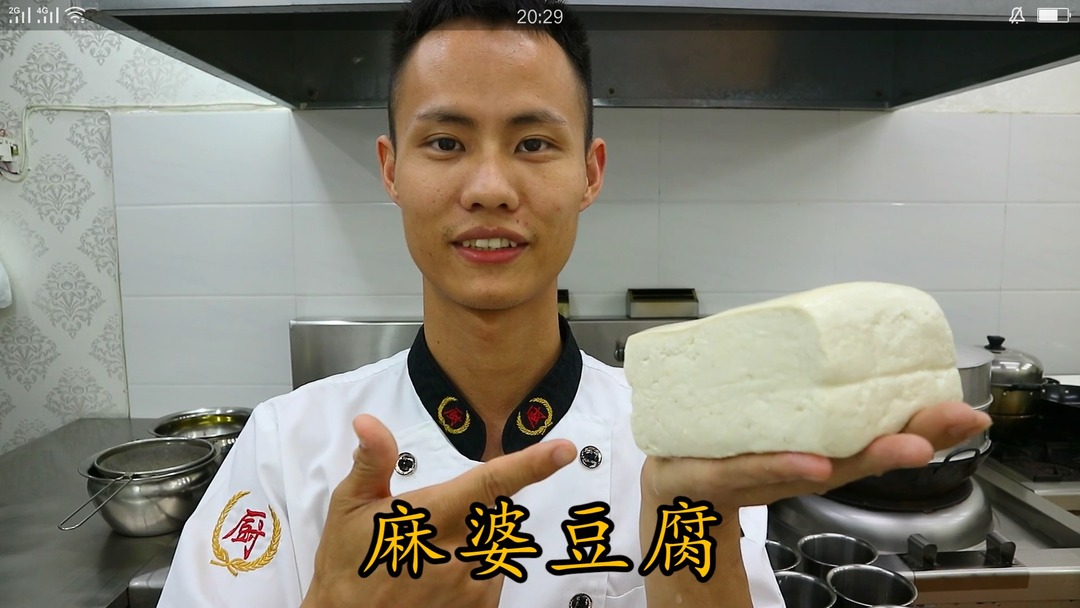
The tofu must be silken. Not firm. Not medium. Silken. Blanched thirty seconds in salted water to set the exterior. The cubes must be uniform, about 1.5 centimeters — uneven cubes cook unevenly, and unevenly cooked tofu is a failure of attention. I learned this from my grandmother in Shanghai, who was not Sichuan but made Mapo Tofu every Sunday. She cut tofu with the same precision she used to trim dumpling wrappers. Her knife never hesitated.
The meat should be beef. The original 1862 recipe used minced beef. Some modern versions use pork, arguing fat carries flavor better. I’ve run this experiment. Beef wins — mineral depth that pork can’t touch. Chen Mapo used beef. I don’t argue with 160-year-old data. Fry the meat first until the fat renders and the edges crisp, then remove it. You’re cooking in the rendered fat now.
The Sichuan peppercorn must be freshly ground. Whole peppercorns, toasted in a dry pan until they smoke, then crushed in a mortar. Never pre-ground powder — the numbing compound degrades within weeks. Fresh-ground peppercorn is a live wire. Pre-ground is a dead battery. And it goes on LAST, off the heat. Heat kills the numbing. Cook the peppercorn and you’ve made spicy bean stew with tofu. Different dish. Worse dish.
My Enemies
The version of “Mapo Tofu” at Panda Express and 90% of Chinese-American buffets is not Mapo Tofu. It’s ground chicken in brown cornstarch slurry with a whisper of chili flake and cubed firm tofu that gave up hours ago. It doesn’t numb. It exists to fill a steam-table tray next to the orange chicken.
The Japanese version — mābō dōfu — is sweeter and milder, a 1950s adaptation by Sichuan-born chef Chen Kenmin. It’s a valid remix. It’s not Mapo Tofu.
And the vegetarian version — minced shiitake mushrooms instead of beef — is not Mapo Tofu. It’s Mapo-Style Tofu. The distinction matters the same way “vegetarian bacon” matters. Call it what it is and we’re fine.
How to Eat It
Over white rice. Never brown rice, never quinoa, never cauliflower “rice.” White rice is the canvas. The Mapo Tofu is the paint.
Spoon it over. Let the sauce pool and stain. Chase every chunk of tofu with grains of beef buried in the crevices. Eat the scallions — they’re not garnish, they’re the green counterpoint. If your lips aren’t buzzing when the bowl is empty, you didn’t eat Mapo Tofu. You ate spicy bean curd, and those are different words for a reason.
Fifteen minutes from wok to table. One of the fastest serious dishes in Chinese cooking. One of the hardest to get right. That’s the kind of optimization problem I understand — simple rules, infinite failure modes, one correct output. Like a well-written function. Like a life worth chasing.
Want to cook this? Here’s our step-by-step Mapo Tofu recipe .
💬 Comments